Tag: Ship

  • The Appalling loss of the Grimeneza

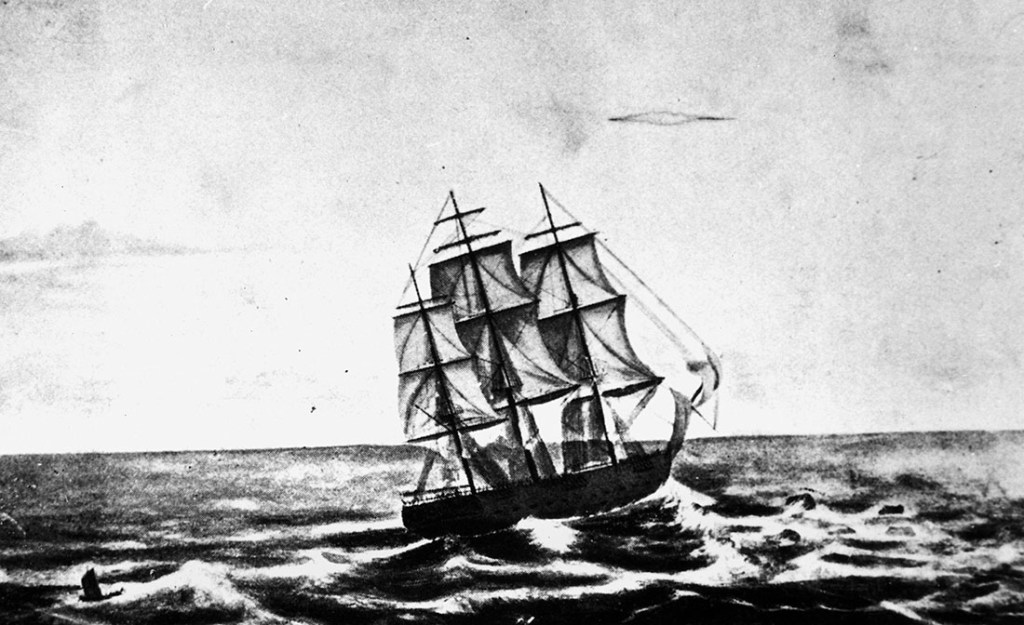
    Artist’s impression of the Grimeneza lost on Brampton Shoals. Courtesy: State Library of Queensland.

    On 3 July 1854, the Peruvian ship Grimeneza struck a reef at Bampton Shoals in the Coral Sea.    The Captain, first mate, ship’s surgeon, and four sailors immediately abandoned the ship leaving the rest of the crew and about 600 Chinese passengers to their fate.

    Twenty-eight days later Captain M.H. Penny and five others reached safety at New Ireland after a gruelling 4,000kms passage in an open boat.   They had suffered severely from hunger, exposure, and disease, but they had survived their ordeal. The first mate was not so fortunate for he had been killed at New Britain when they stopped seeking food.

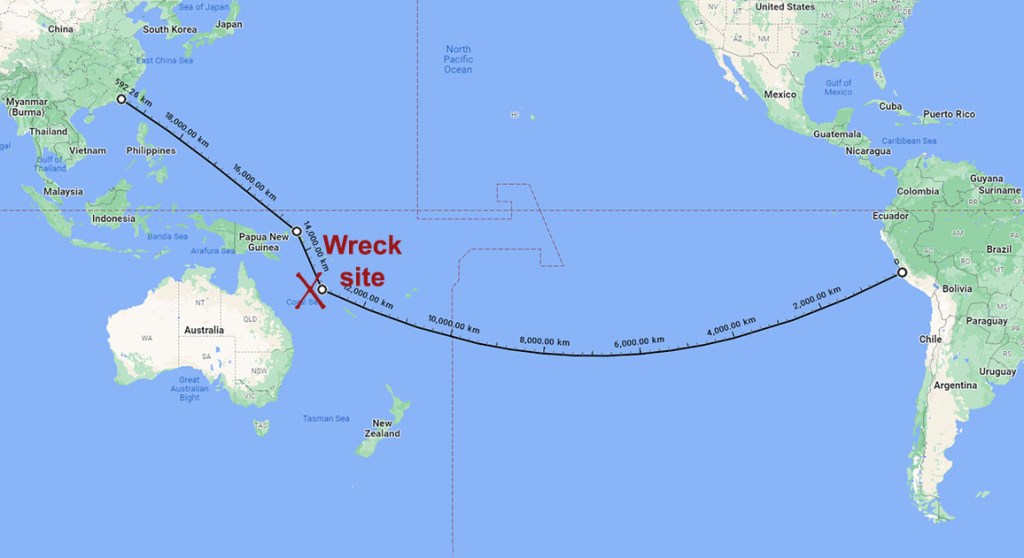
    Captain Penny reported that the Grimeneza had been sailing from Shantou in China bound for Callao (present day Lima) in South America when its voyage was cut short. The night his ship crashed onto the reef it was blowing a gale. He claimed to have done all that was possible to ensure the safety of everyone on board before he and the others were forced to abandon the ship.   Justifying his hasty departure, Penny said the Chinese passengers panicked and had tried to attack him and the rest of the crew.   And had no one else made it off alive, that is all anyone would have known of a disaster that claimed over 600 lives.

    The Courier (Hobart), 5 Mar 1855, p. 2, Shipping News.

    But others also survived.   One was the second mate, who later reported that the captain fled the ship immediately after she struck the reef stopping only to secure the hatch’s leading to the hold where the passengers were accommodated.    After the captain’s departure, the remaining crew tried to back the vessel off the reef but when that failed, they too left in the remaining two lifeboats leaving the passengers to their fate.   After six days at sea without food or water the castaways contemplated killing a 12-year-old cabin boy for food to keep the rest of them alive.   Fortunately, they were discovered by a passing ship and the boy’s life was spared.

    Back on the Grimeneza, the Chinese passengers eventually broke out of the hold to find they had been deserted.    Sometime after that the ship slipped off the reef on the high tide and immediately started filling with water.    The passengers manned the pumps and baled for all they were worth to keep the vessel afloat.    For three days they toiled as they sailed before the wind towards the Queensland coast.   They could have come within a few hundred kilometres before disaster struck.   After three days of unrelenting effort, everyone was exhausted, and some began giving up.   They could not or would not keep going.   The sense of common purpose that had got them thus far broke down.   A few began plundering what they could from the ship as water filled the hold.  Others made preparation for the inevitable.

    Map showing Grimeneza’s likely sailing route. Courtesy: Google Maps.

    The Grimeneza soon foundered.   A few men took to small rafts they had hastily built, others jumped into the sea with nothing more than a single timber plank to keep themselves afloat.    According to one of only six Chinese passengers to survive, most drowned or were soon taken by sharks.   The lucky few were rescued by a passing ship after several days in the water.   They were cared back to health and taken on to Madras where their appalling story came to light through the aid of an interpreter.

    Captain Penny briefly touched in Melbourne on his return to South America but was never held to account for his callous actions.    Years later it was revealed that the Chinese “coolies” had boarded the Grimeneza believing they were being taken to the Californian goldfields.   Instead, they had been bound for Peru to work in the Chincha Island guano mines as indentured labourers.

    © Copyright, C.J. Ison / Tales from the Quarterdeck, 2022.

    To be notified of future blog posts, please enter your email address below.
  • The May Queen’s Long and Lucky Life

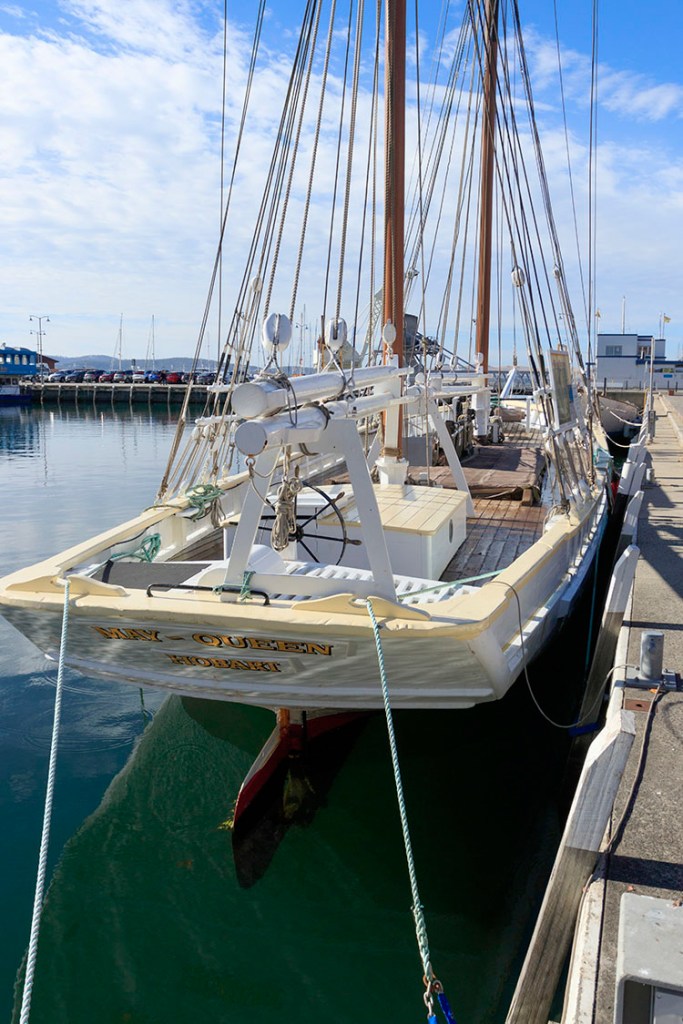
    The May Queen is Australia’s oldest sail trading ketch. Photo C.J. Ison

    Launched in 1867, the May Queen is Australia’s oldest sailing ketch still afloat.   During her century long working life she twice sank, survived several collisions and a myriad of other mishaps that could have been her demise.

    The 36-ton May Queen was purpose built for carrying timber, but over her long career she transported all manner of cargos between Hobart and settlements along the Derwent River and Tasmania’s east coast.  But she was more than a simple workhorse.   She could sail and won her class in the annual Hobart Sailing regatta nine times over the years and placed in many more.

    May Queen competing in the Annual Hobart Regatta.

    One night in June 1883 the May Queen found herself becalmed off Cape Raoul with a load of timber from Port Arthur bound for Hobart.    Then, out of the dark they saw the Sydney bound steamer Esk bearing down on them.   As she got closer and showed no sign of deviating from her course the captain and crew yelled “LOOK OUT AHEAD” at the top of their lungs.   The steamer’s lookout only saw the stationary vessel when they were about 50 metres away.   The helmsman pulled the wheel over but it wasn’t quite enough and the steamer struck a glancing blow and took away the ketch’s bowsprit.   The May Queen was otherwise undamaged and limped into Hobart once a breeze picked up.  

    Six weeks later while sailing off Bruny Island her mizzen mast snapped off at deck level during a powerful storm.   She came close to being driven ashore during another fierce gale the following year when her anchors started dragging.  Only the addition of a third anchor prevented disaster.   On a separate occasion, another vessel dragged its anchors and crashed into the May Queen punching a hole in her bulwark and caused other serious damage.

    Trading Ketch May Queen. Photo C.J. Ison

    Her worst accident happened on 4 February 1888 when she sank in the Huon River.   It was 2 o’clock in the afternoon and the May Queen had just taken on extra ballast in readiness for a deck cargo of long timber piles.   A squall blew out of nowhere.  The ketch heeled over.  The ballast in her hold shifted and she foundered in 16 fathoms (30 metres) of water.

    That could have been the end of her for there was no air pump available that could get a salvage diver down to that depth.   HMS Egeria had diving equipment but it could only operate at half that depth.    Somehow, the May Queen’s owner managed to hook a line onto his vessel and dragged it into shallower water.  From there she was raised, pumped dry and towed back to Hobart where she received extensive repairs.

    Then in 1940 she sank again, this time in Port Esperance south of Hobart.   While about to deliver a cargo of timber, the May Queen struck Dover Wharf and started taking on water.    At low tide her deck was awash but at high tide only her masts broke the surface.   

    The ketch May Queen tied up at Constitution Dock, Hobart. Photo C.J. Ison.

    She was again raised, repaired and continued working until she was finally retired in 1973.   So ended a working career spanning 106 years.   She was gifted to the Tasmanian Government and has since been maintained as a reminder of Tasmania’s maritime heritage.   As of 2022 she is 155 years old and can be seen tied up at Hobart’s Constitution Dock.

    ©Copyright C.J. Ison / Tales from the Quarterdeck, 2022.

    Enter your email address below to be notified of future blog posts.

  • The Tragic Loss of RMS Quetta

    In 1890 the Quetta sank bow first in just 3 minutes. Courtesy: State Library of Queensland.

    In 1890 Queensland experienced one of its worst maritime disasters when the passenger steamer Quetta sank in Torres Strait in just three minutes with the loss of 133 lives.

    The R.M.S. Quetta was a 3,300-ton coal-powered, iron-clad steamer measuring 116 metres (380 feet) in length and could travel at a top speed of 13 knots (24 kms per hour).   She was built in 1881 and on this voyage from Brisbane to London she carried nearly 300 people – passengers and crew.

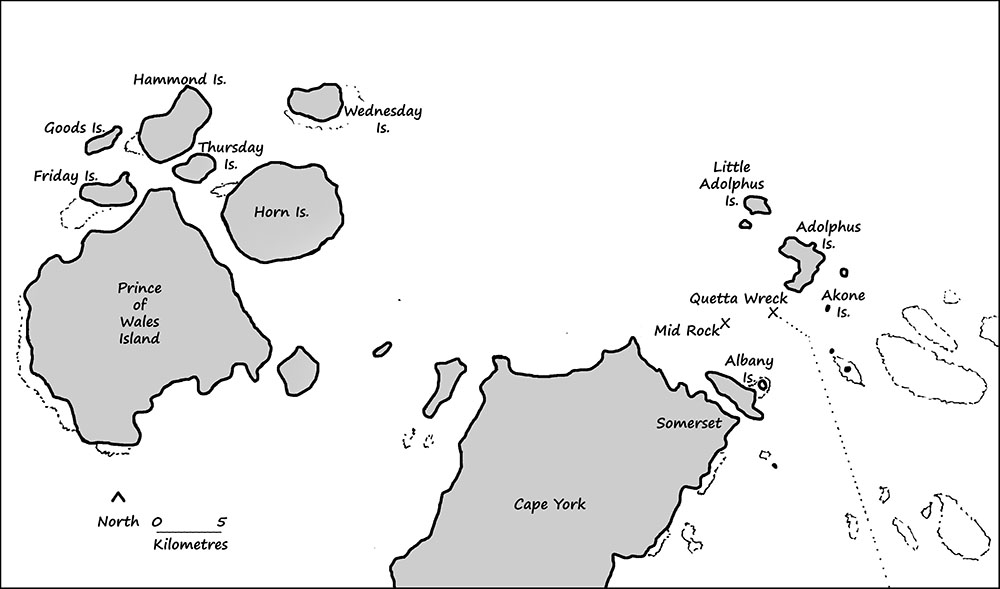
    At 9.14 on the evening of 28 February a sharp jolt and a shudder ran through the Quetta as she was being piloted through the Albany Passage.   Initially, the pilot and captain were more perplexed than alarmed.  The pilot was sure they were miles from any known hazards and it didn’t feel like they had hit anything substantial.  None-the-less Captain Sanders followed protocol and ordered the engines stopped, the lifeboats got ready and the carpenter to sound the wells.

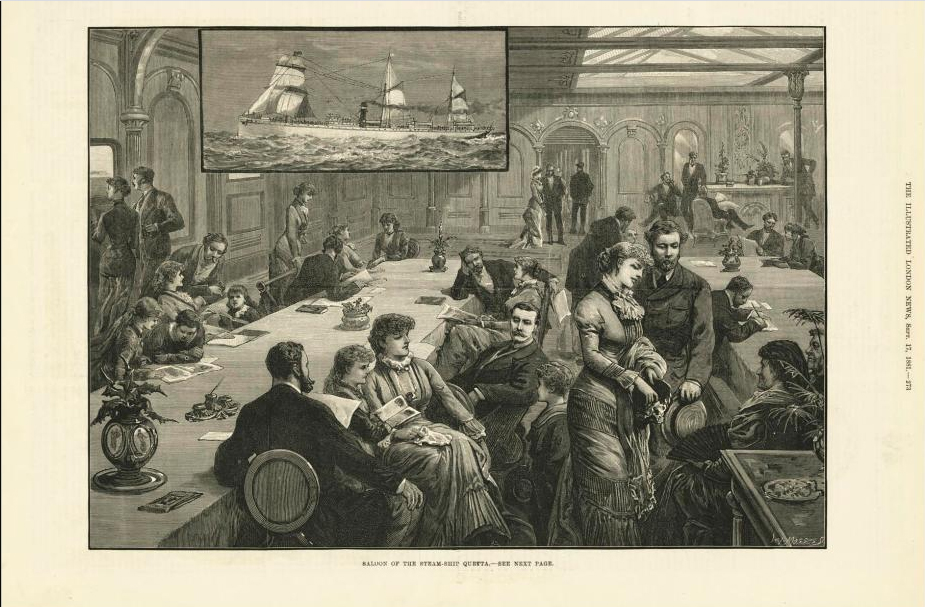
    The Quetta Saloon from The Illustrated London News, 1881.

    Moments later the carpenter cried out “she’s sinking.”   Water was pouring into the ship at an unimaginable rate.    What no one realised at the time was they had struck an uncharted rock pinnacle right in the middle of the main shipping channel through Torres Strait.   A gapping hole had been torn in the Quetta’s hull from bow to midship one to two metres wide.  

    The ship was already starting to settle by the bow as Captain Sanders ran aft encouraging passengers to make their way there.    At the time many of the first-class passengers were in the saloon rehearsing for an upcoming concert and were oblivious to what was taking place outside.   The crew were still frantically trying to get the lifeboats out when water began lapping at their feet only a minute or two later.

    Then the stern reared up out of the water and the ship plummeted below the surface of the sea spilling scores of people into the water.   Many others were trapped in the saloon, their cabins or under the ship’s sun awnings and drowned.  

    RMS Quetta showing the sun awnings covering the decks. Photo courtesy SLQ

    The Quetta sank in just 3 minutes.   Most of those who survived were already on the aft deck when the ship sank or were lucky to swim clear as she slid below the surface.  

    All was confusion in the water as people thrashed around in panic trying to find something to keep themselves afloat.  Eventually a measure of order was restored and one of the lifeboats, now floating free, was used to rescue as many people as it would hold.   A second lifeboat, though damaged, was filled with people and they all made their way to land a few kilometres away.

    About one hundred people made it to safety on Little Adolphus Island where they spent an uncomfortable night but they were alive.   Captain Sanders was among them.   The next morning he set off in the lifeboat manned by some of his men and made for Somerset to report the loss of the ship and get help for those still missing.   Apart from the people he had left on the island without food or water, there were many others who had washed up on other islands or were still clinging to pieces of wreckage out in the Strait.

    When the news reached authorities on Thursday Island a government steamer was dispatched to search for survivors.   Fishing boats from Somerset also combed the waters in the days that followed.    In all, about 160 people were saved, many had stories of lucky escapes.

    The full story of the Quetta’s loss is told in A Treacherous Coast: Ten Tales of Shipwreck and Survival from Queensland Waters, available as a kindle eBook or paperback through Amazon.

    © Copyright C.J. Ison, Tales from the Quarterdeck, 2022.

    To be notified of future blog posts please enter your email address below.

  • The Norna and the Conman Commodore

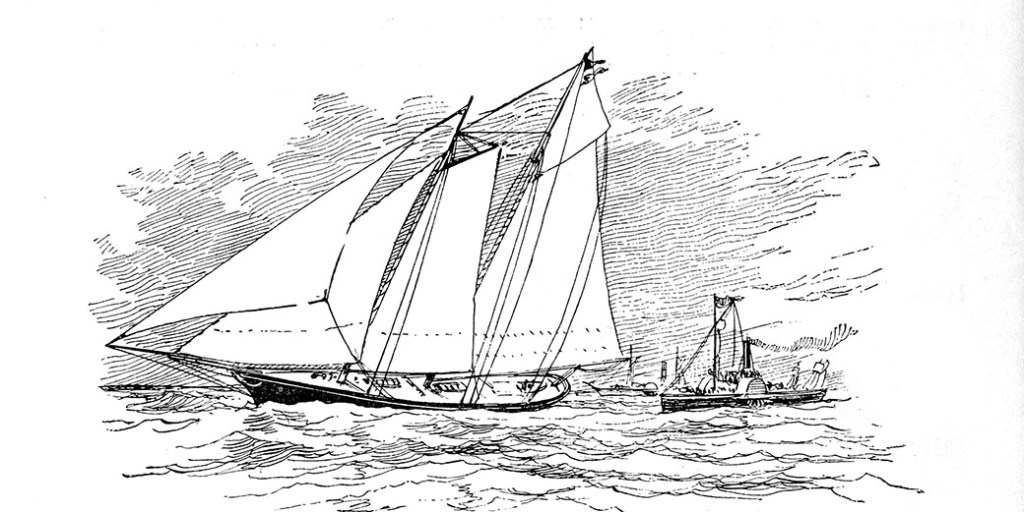
    The Norna’s sister ship Cornet.

       In the early 1900s, many hard-working sailing vessels saw out their days plying the waters between Australia and the islands of the South Pacific. Few, however, would have had such a fascinating history as that of the Norna.

       The Norna was built in New York in 1879 as a luxury ocean-going schooner rigged yacht. She was lavishly fitted out and built to be a fleet-footed racer. For the next decade or more, she held her own in many long-distance ocean races.

       Then, in 1895, she was purchased by self-styled “Commander” Nicholas Weaver, who claimed to represent a Boston newspaper empire seeking to establish a presence in New York. He was, in fact, a brazen conman.

       A few years earlier, Weaver had fallen foul of the law and only escaped gaol by testifying against his partner. He then hustled himself off to the West Coast, where he no doubt perfected his craft.

    Nicholas J Weaver, The Pacific Commercial Advertiser (Honolulu), 17 April 1900, p. 7.

       Now back in New York, he planned to take the Norna on a round-the-world cruise, sending back stories of his adventures which would be syndicated in America’s Sunday newspapers. He found several financial backers willing to cover his expenses in exchange for a share of the syndication fees. They founded a company, and Weaver sailed for the warm climes of the Caribbean.

       There, he made himself a favourite among the members of the Royal Bermuda Yacht Club, representing himself as the “Acting Commodore” of the prestigious Atlantic Yacht Club. The good people of Bermuda were not necessarily any more gullible than anyone else whom Weaver had separated from their money. But when someone sails into harbour aboard a 115-foot luxury yacht with a sailing crew of ten plus a cook and steward, few questions are likely to be raised. It also helped that Weaver himself was handsome, self-assured, and very charismatic.

       Weaver lived life to the full and spared himself no expense. He began hosting poker parties on his yacht, inviting only Bermuda’s most well-heeled residents. Though he proved to be uncannily lucky at cards, the winnings could not have covered his expenses. He funded his lavish lifestyle by chalking up credit with local merchants where possible, passing dud cheques if necessary, or forwarding invoices to his financial backers in New York.

       However, it was only a matter of time before things began to unravel. But before the inevitable day of reckoning, Bermudans awoke one fine morning to find the Norna and its flamboyant owner had cleared out in the dead of night.

    Yacht Norna leaving Honolulu. The Pacific Commercial Advertiser (Honolulu), 17 April 1900, p. 7.

       Weavers’ backers eventually realised they had been scammed and that they would never recoup their money. They wound up the company and stopped sending him money. But that did not deter Weaver from continuing on his round-the-world cruise.

       He visited many ports over the next couple of years, where he dazzled the wealthy with his largesse, while taking them to the cleaners at the poker table. He cruised around the Mediterranean, stopping long enough to run his con but always skipping out before debts became due.

       At the outbreak of the Spanish-American War, in April 1898, he and his American-flagged Norna found themselves in hostile waters. Realising his yacht might be seized, he set sail at his best speed with the Spanish navy in hot pursuit. Despite Weaver’s many character flaws, he was a superb mariner. Thanks to his skill and the luxury yacht’s fast sailing lines, the Norna outpaced the Spaniards, crossing into the safe waters of British-owned Gibraltar. There, he repaid his welcome by passing a fraudulent cheque for $5,000 and was once again on his way.

       During his travels around Europe, Weaver made the acquaintance of a man named Petersen, a fellow grifter. Together, they would prove a formidable team.

       Weaver and Pedersen would arrive in a new city independently, only to be introduced to one another by someone local, or they would fabricate a chance meeting as if they were strangers. Regardless of how they met, the result was always the same. They would get a high-stakes poker game going where one or the other would clean up.

       When Weaver reached Ceylon (present-day Sri Lanka), he was introduced to Petersen, who just happened to have recently arrived by steamer. They quickly got to work separating the wealthy from their wealth before moving on again. The pair repeated the same stunt in Sumatra, in the Dutch East Indies (now Indonesia), as well as in Hong Kong and Yokohama, Japan. At each port, they fleeced the local high society and vanished before alarm bells rang.    In Yokohama, Weaver passed himself off as the commodore of the New York Yacht Club and flew its pennant from his vessel. Weaver and Pedersen befriended each other and enjoyed many an evening with others playing poker on the Norna. Then, one morning, the yacht was gone. Pedersen joined the chorus baying for Weaver’s blood, claiming he, too, had been taken for a fortune. He then quietly slipped away on the next steamer leaving port.

    Schooner Norna circa 1911 now sporting a cabin on her aft deck. The Sun, 17 July 1911, p. 1.

       From Yokohama, the Norna made its way to Honolulu, where Weaver and Petersen briefly reunited. But when Weaver left Hawaii, Petersen remained. It seems as though the partnership had come to an end. The Norna stopped at Samoa long enough for Weaver to fleece the locals, then sailed on to New Zealand. At Auckland, Weaver began his now well-honed con, though this time without the able assistance of Petersen.

       Weaver racked up considerable debts, but before he could make his departure, the Norna was seized as surety. Realising the game was up, Weaver caught the next steamer bound for Sydney, vowing he would return to Auckland with the necessary funds to have his beloved yacht released. Not surprisingly, he vanished, and the yacht was put up for sale. It was purchased by a Sydney merchant and brought across the Tasman in June 1900.

       The Norna was stripped of her luxurious fittings, and the cabins were removed to make way for a spacious hold more fitting for her new working life. The Norna passed through several hands over the next 13 years. She served as a pearling lugger in Torres Strait and a trading vessel among the Pacific Islands. One owner even used her to salvage copper and other valuables from old shipwrecks far out in the Coral Sea. But, in June 1913, she, herself, was wrecked on Masthead Reef 50 km northeast of Gladstone Harbour. So ended the Norna’s fascinating and colourful career.

    © Copyright Tales from the Quarterdeck / C.J. Ison, 2022.

    To be notified of future blog posts, enter your email address below.

  • Elegant and Fast: The Huia schooner

    Huia topsail schooner

    The New Zealand topsail schooner Huia has long been heralded as the best-looking vessel of her type and one of the fastest sailing.  

    Launched at Kaipara Harbour New Zealand in 1894, the Huia was built using Kauri planks over a puriri timber frame.   Measuring 35 metres (115 ft) in length and registered at 196 tons, she was purpose built for the timber trade.   For the first few years of her long career she shipped lumber to Sydney and brought coal back from Newcastle.

    The Huia soon earned a reputation as a very fast sailer on the notoriously dangerous Trans-Tasman route.   In 1895 Captain McKenzie reportedly made the run from Newcastle to Kaipara Harbour heads in four days and six hours.   For most of the passage she was pushed along by gale force winds while the seas continuously swept over her deck.   

    Topsail schooner HUIA

    On another voyage she was said to have logged 510 nautical miles (944 kms) in the first 48 hours after clearing Newcastle.   With every square inch of canvas out she clipped along at 14 to 16 knots.    That is a staggering 26-30 kilometres per hour.

    Her fast Tasman Sea crossings, however, did not come without risk.   After one “tempestuous passage” the Newcastle Herald reported, “the gales met by the little vessel were from south-west and south, and they were accompanied by heavy seas throughout, the decks being kept in a chronic state of flood.   Whilst diving bows into the seas on Tuesday last Huia lost her jibboom, and a day or two previous her fore shroud was carried away.”(1)

    In 1897 the little ship was fitted with an auxiliary engine and continued making record breaking passages between New Zealand ports and across the Tasman.   In 1912 she was sold to the Nobel Explosives Company.   And, through the first few decades of the 20th Century her classic lines made her a favourite vessel in many Australian ports from Cairns to Hobart, and from Melbourne to Fremantle.

    By the 1930s the age of sail had past. The beautiful “white-hulled” sailing vessel was one of only two top-sail schooners working out of Melbourne.

    Huia schooner. Photo courtesy State Library of Victoria.

    In 1950 the ship began carrying cargo and passengers between islands in the South Pacific.   Her time came to an end in 1951 when she was wrecked on a coral reef in New Caledonia.  

    © Copyright Tales from the Quarterdeck / C.J. Ison

    (1) Newcastle Herald, 8 June 1895, p. 4.

    To be notified of future blog posts please enter your email address below.