Category: RN / RAN Ships

  • William Dampier: Navigator, naturalist, writer, pirate.

    Life and adventures of William Dampier. Source: Tales of Shipwrecks and Adventures at Sea, 1856.

    William Dampier visited Australian shores twice in the 17th Century. The first time was when he served on the Cygnet in 1688, and the second, 11 years later, when he commanded HMS Roebuck. Dampier was the first Englishman to describe the land, its fauna, flora and people to a European audience. While his contribution to Australia’s history is relatively minor, his story is nonetheless a fascinating look into the golden age of exploration. Navigator, naturalist, writer, and pirate are all words that describe aspects of Dampier’s colourful life.

       Born in Somerset in 1651, William was the son of a tenant farmer. He does not appear to have had any interest in following in his father’s footsteps. Instead, when he turned 17, he went to sea and began his apprenticeship as a mariner. He joined the Royal Navy around 1673 and saw action during the Third Anglo-Dutch War. When hostilities ceased, he left the navy and travelled to the West Indies. Then, when war broke out between England and Spain, he became a privateer, which could best be described as a state-sanctioned pirate. In 1678, now aged 27, he returned to England and married his fiancée. However, he would spend just one year with her before he put to sea again.   

    This time, he would be gone 12 long years. After hunting down Spanish ships off Central America, he joined another privateer and crossed the Pacific Ocean in search of plunder. He visited ports in the Philippines, China and Southeast Asia. Then, in January 1688, he was on the Cygnet when it stopped on Australia’s northwest coast. The ship had pulled in for repairs at King Sound north of present-day Broome and would remain there for a couple of months. Dampier spent his time documenting the unusual fauna and flora. He also wrote at some length about his observations on how the indigenous people lived, but not in particularly flattering terms. To his Eurocentric eye, they existed in appalling conditions, and he thought them to be the most miserable people he had ever encountered.

    A map of the world showing the course of Mr Dampiers voyage round it: From 1679 to 1791. By Herman Moll.

       In 1691, Dampier joined a very exclusive club of men who had circled the globe when he returned to England via the Cape of Good Hope. His various exploits and adventures became the subject of his hugely successful book, “A New Voyage Round the World,” published in 1697. Through his book, Dampier came to the attention of both the Royal Society and the Admiralty. They commissioned him to chart the east coast of New Holland, some 70 years before James Cook would eventually do so. Had Dampier succeeded, he may well have changed the trajectory of modern Australian history. However, as will soon become evident, circumstances would conspire against him.  

    HMS Roebuck sailed from England on 14 January 1699 with a crew of 50 and provisions to last them 20 months. Dampier originally planned to sail around Cape Horn and then cross the Pacific Ocean until he reached Australia’s east coast. However, his ship was long past its glory days, and its refit for this hazardous voyage had taken far longer than anticipated. By the time he reached the southern tip of South America, it was winter, the worst time to try rounding Cape Horn. Instead, he decided to cross the South Atlantic and round the Cape of Good Hope. He would then cross the Indian Ocean to New Holland’s west coast and begin his survey there.

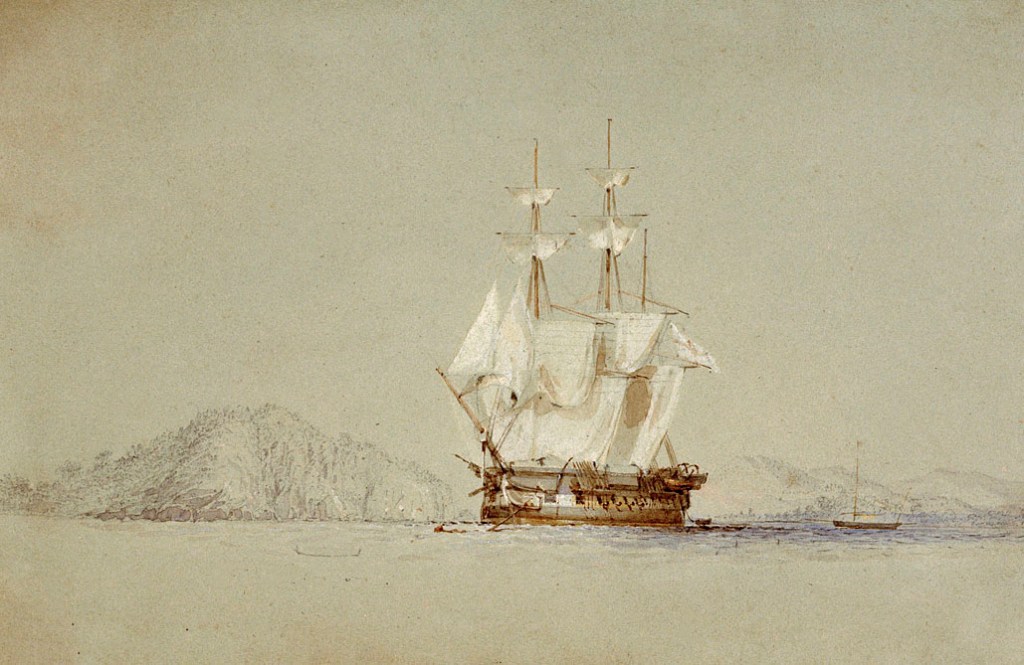
    HMS Roebuck.

    They made landfall near Dirk Hartog Island in early August 1699.   On 7 August, he sailed past Cape Peron and into Shark Bay, where he spent a week exploring.   Dampier named it for the abundance of sharks he found in those shallow, enclosed waters. He made a detailed chart of the bay and described many of the fish, birds and plants he saw there. Though fish, fowl, and turtles were easily procured and made a welcome addition to the men’s diet, they were unable to find a supply of fresh water. On 14 August, Dampier left Shark Bay by the same passage he entered after encountering shoals and dangerously shallow water between Dorre and Bernier Islands and the mainland.

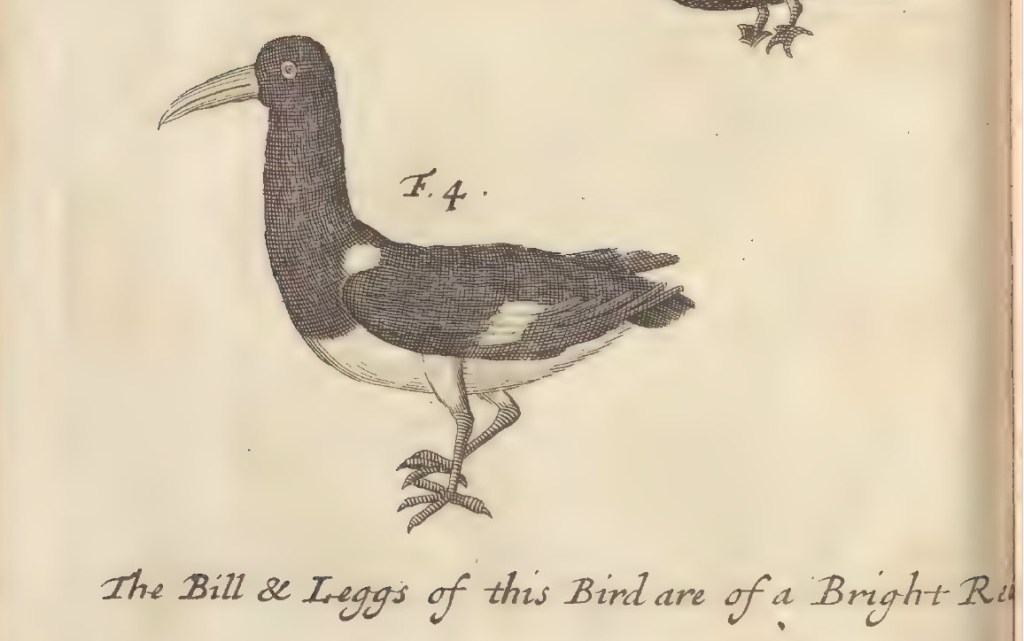
    A Pied Oyster Catcher. Source: A Voyage to New Holland, in the year 1699.

    They continued north along the coast for another 750 kilometres until they arrived at a small group of islands, now known as the Dampier Archipelago. Freshwater remained elusive, so they continued sailing north until they were at latitude 18° 21’ south, about 60 to 70 km south of present-day Broome. Again, they went in search of water. And, again, they returned empty-handed. Only this time, an encounter with the local inhabitants ended in violence. One of Dampier’s men was speared through his cheek while a Karajarri man was wounded by musket fire. In early September, Dampier resigned himself to temporarily abandoning New Holland and made for Timor to resupply.   

    From Timor, Dampier continued sailing northeast and charted the northern coast of New Guinea. By now, the Roebuck was in such poor shape that he abandoned his plan to locate New Holland’s east coast and turned back towards England. He stopped briefly at Batavia, then crossed the Indian Ocean, rounded the southern tip of Africa, and sailed north through the Atlantic. In February 1701, they reached Ascension Island, but HMS Roebuck would go no further. Her planking was riddled with seaworms. And she was taking on a lot of water. Dampier had to run her ashore to stop her from foundering in deep water. He and his crew would remain stranded there for five weeks until a passing East Indiaman rescued them. Dampier and his men returned to England in August 1701.

    1966 Australian postage stamp commemorating William Dampier.

    William Dampier was court-martialled on his return to England on a charge of ill-treating his first mate on the voyage out. Found guilty, he was stripped of the money the Admiralty owed him, and he was ruled unfit to command any of His Majesty’s ships in the future. Undeterred by the setback, he published a book about his most recent exploits and would go on to circumnavigate the world twice more. When Dampier died in London around 1715, he was the only person to have circled the globe three times.

    Sun sets over Flinders and Stanley Islands in Bathurst Bay with a fishing boat in the forground at Cape Melville on Cape York Peninsular, Far North Queensland. Photo Chris Ison / Wildshot Images.

     © Copyright C.J. Ison / Tales from the Quarterdeck, 2024.

    Please enter your email address below to be notified of future blogs.

  • Surviving the Centaur sinking.

    A poster urging Australians to “Avenge the Nurses” after the sinking of the Centaur in 1943. Image courtesy Australian War Memorial.

       On a quiet Saturday afternoon on 15 May 1943, the senior Royal Australian Naval officer in Brisbane received a message reporting that a USN destroyer had picked up survivors from the Australian Hospital Ship (AHS) Centaur. This was the first anyone knew of the tragedy that had unfolded a short distance off the Queensland coast.

       The Centaur left Sydney bound for Port Moresby to pick up sick and wounded diggers and return them to Australia. Fighting had been raging in New Guinea for over a year, and casualties had been high. As she steamed north this time, she had a full crew, and she was also delivering members of the 2/14th Field Ambulance to Port Moresby. In all, there were 332 souls on board.

       Around 4 a.m. on Friday, 14 May, the Centaur was about 30 nm (55 km) off Moreton Island when she was struck by a torpedo fired by a Japanese submarine. Merchant seaman Alfred Ramage had just finished his watch and was climbing into his bunk when he was rocked by the powerful explosion. Ramage immediately knew what had happened, so he quickly donned his lifebelt and began making his way to the boat deck. Urgency spurred him along, for he had never learned to swim.

       The torpedo had hit the portside fuel bunker, which sent flames ripping through the ship, burning and trapping many people below decks. Those same flames soon engulfed the boat deck and then the bridge as the crew struggled to get the lifeboats away.    Steward Frank Drust was standing outside the ship’s pantry when the floor collapsed and a wall of flames separated him from the closest companionway leading to the deck. By now, the Centaur was sinking by the bow. He waded through swirling waist-deep water and eventually made it onto the deck. He and a few comrades began throwing hatch covers and life rafts over the side to help those already floundering in the water. They continued their efforts until they, too, were washed off their feet as the sea rose around them.

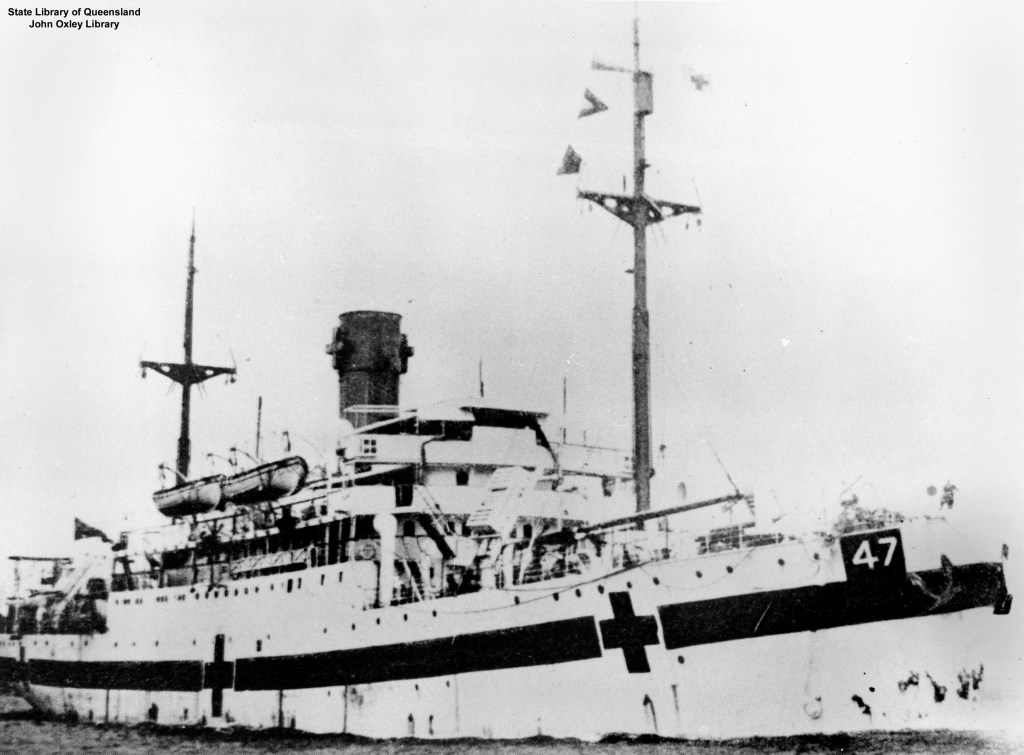
    AHS Centaur. Photo Courtesy State Library of Queensland

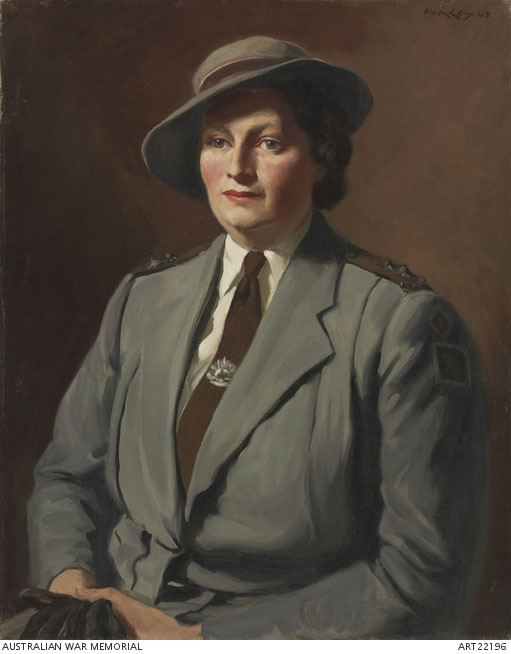
        Sister Ellen Savage, one of 12 nurses on board, was woken by the loud explosion reverberating through the ship. She and fellow nurse Merle Morton fled their cabin in their pyjamas and were told by their commanding officer to get topside as quickly as they could. They had no time to retrieve warm clothing or anything else from their cabin before they took flight.

       By the time they reached the deck, the Centaur was already sinking. The suction dragged Ellen Savage down into a maelstrom of whirling metal and timber, cracking her ribs, breaking her nose and bruising her all over. But suddenly, she found herself back on the surface in the middle of a thick oil slick. She never saw her cabinmate or her commanding officer again.

       Savage could see a large piece of wreckage a short distance away and swam for it. It turned out to be a portion of the ship’s wheelhouse where several others had already taken refuge. In time, as many as 30 survivors climbed onto the fragile floating island. Others who had escaped the ship kept themselves afloat on pieces of debris or the few rubber liferafts that had been deployed in the hectic minutes after the torpedo struck.

    Sister Ellen Savage GM. Image courtesy AWM.

          Ship’s cook Frank Martin survived by clinging to a single floating timber spar. For the next 36 hours he held on for dear life, half-naked and nothing to eat or drink until he was plucked from the water.

       Seaman Matthew Morris was a little luckier. At first, he found himself alone in the water, blinded by salt and oil. But when his vision returned, he spied a small raft a short distance away, so he swam over and climbed into it. Then he spotted his mate, Walter Tierney, and hauled him onboard. As daylight came, the pair saw something floating in the distance and paddled towards it. It turned out to be the wheelhouse, so they lashed their raft to it and joined the 30 or so people already there.

       The survivors spent all that day huddled on the makeshift raft. There was less than 10 litres of water on hand, and that was doled out sparingly. Several of the survivors had severe burns to their bodies. One was Captain Salt, a pilot from the Torres Strait Pilot Service, who had run through a wall of flame to escape the sinking ship. Despite his painful injuries, he kept morale up, reassuring everyone that help would soon be on the way.

       Matthew Morris led choruses of “Roll out the Barrel,” “Waltzing Matilda,” and other wartime favourites to keep people from thinking about their plight. Sister Savage tended to the wounded with what little she had on hand, never complaining of her own injuries. She kept her broken ribs to herself until after they had all been rescued.

       One poor man, Private Jack Walder, had been badly burned. He drifted in and out of consciousness until he passed away on the raft. Savage prayed over his body before it was gently pushed away to sink from sight.

    The Brisbane Telegraph front page, 18 May 1843.

        According to several survivors, sharks were constant and unwelcome companions, circling as they clung to wreckage or perched precariously on makeshift rafts.

       The survivors spent all of Friday, Friday night and Saturday morning hoping and praying that they would soon be rescued. Several said they heard aircraft flying overhead or saw ships passing in the distance, but the Centaur survivors went undiscovered. At one stage, those on the wheelhouse considered dispatching one of the rubber rafts to try to make landfall to raise the alarm. However, that idea was eventually discarded when it was decided that the chances of surviving the large ocean swells in the small craft were unlikely.    On Friday night, the Japanese submarine surfaced briefly near the wheelhouse, sending a chill through the survivors. Everyone remained quiet, and a short time later, the sub disappeared below the waves again. The survivors never gave up hope of being rescued. Then, on Saturday afternoon, an Australian Air Force aircraft on a routine flight saw something strange floating in the water. On investigation, the pilot realised it was wreckage and guided the US Navy destroyer, USS Mugford, to the location. They quickly began searching the surrounding waters for more survivors.

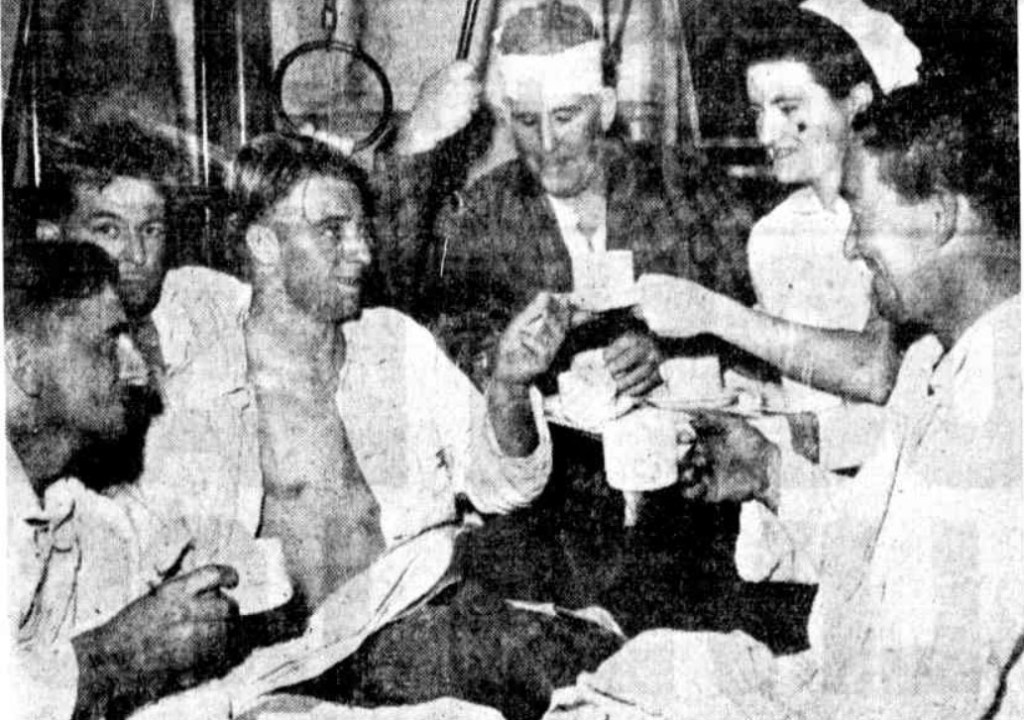
    AHS Centaur survivors being cared for in hospital. Telegraph, 18 May 1943, p. 2.

       In all, 64 people were saved, but another 268 were not so lucky. Sister Ellen Savage was awarded the George Medal for her devotion to duty, tending to the wounded despite her own injuries.

    Lest We Forget.

    © Copyright C.J. Ison / Tales from the Quarterdeck, 2023.

    To be notified of future blogs, please enter your email address below.

  • The Krait’s Remarkable Career

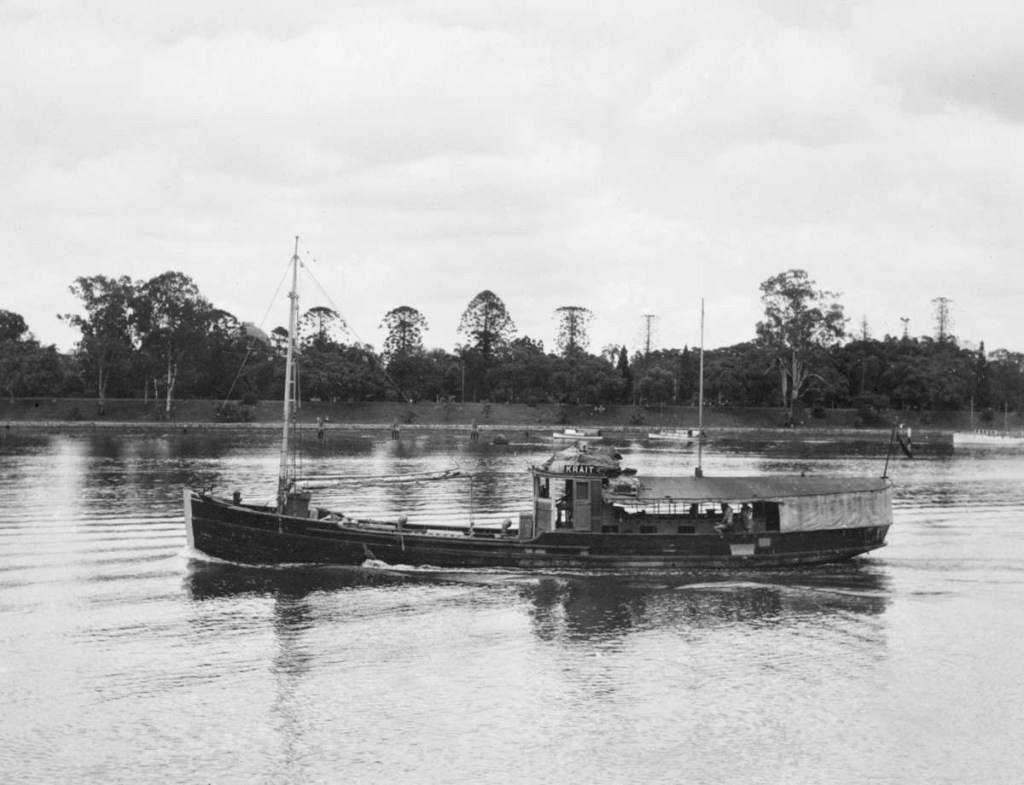
    MV Krait anchored at Darwin. Courtesy AWM.

       The small fishing vessel MV Krait holds a special place in Australian maritime and military history. Named after a small, deadly snake, it played an important part in Operation Jaywick, which saw commandoes sink several Japanese ships anchored in Singapore Harbour in September 1943.

       The MV Krait started life as a Japanese fishing vessel named the Kofuku Maru, which was launched in 1934. She was a motorised gaff-rigged ketch measuring 20 metres in length, with a two-metre draft and a displacement of 23 tonnes. At the outbreak of the Second World War, the Kofuku Maru was owned by a Japanese fishing company based in Singapore. They used the vessel to ferry water, food, and other supplies to fishermen working in the Riau Archipelago and to bring their catch back to the city’s seafood markets.   

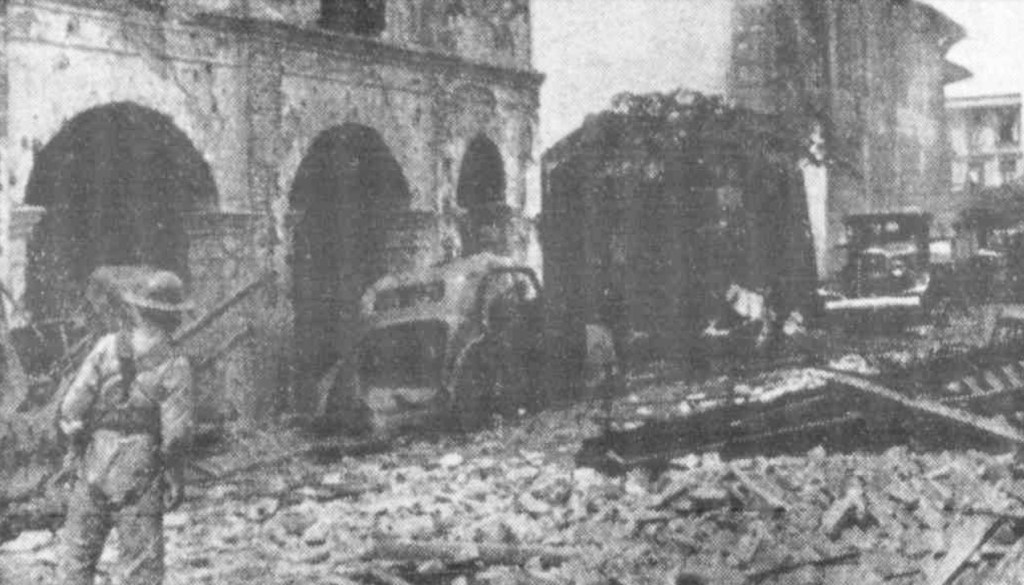
    When Japan entered the war, the British authorities seized the Kofuku Maru. As Japanese troops advanced down the Malay Peninsula, an Australian merchant mariner, Bill Reynolds, used the fishing boat to evacuate over 1000 civilians to Sumatra in the Dutch East Indies (present-day Indonesia).

    Singapore shortly before the Japanese landed on the island. Photo Central Queensland Herald, 26 Mar 1942, p. 20.

        Then, in January 1942, when it was clear that Singapore was about to fall, Reynolds sailed the Kofuku Maru to Colombo in Ceylon (present-day Sri Lanka). There, some officers from the Allied Intelligence Bureau saw the potential of having a Japanese fishing vessel at their disposal. With any luck, they thought, the Kofuku Maru might be able to traverse enemy waters without raising suspicion. Reynolds had likely told them that Japanese aircraft had ignored the vessel while he had been operating around Singapore. The Kofuku Maru was then sent to Australia, where she was made ready to begin her clandestine career.

       The Krait, though still going by its Japanese name, Kofuku Maru, was chosen to take part in Operation Jaywick, an audacious mission to destroy enemy shipping moored in Singapore Harbour. It was a high-risk, high-reward mission, but with any luck, the Japanese would not suspect the Krait of being anything other than one of the numerous small Japanese fishing vessels plying the waters around Malaya and Indonesia.   

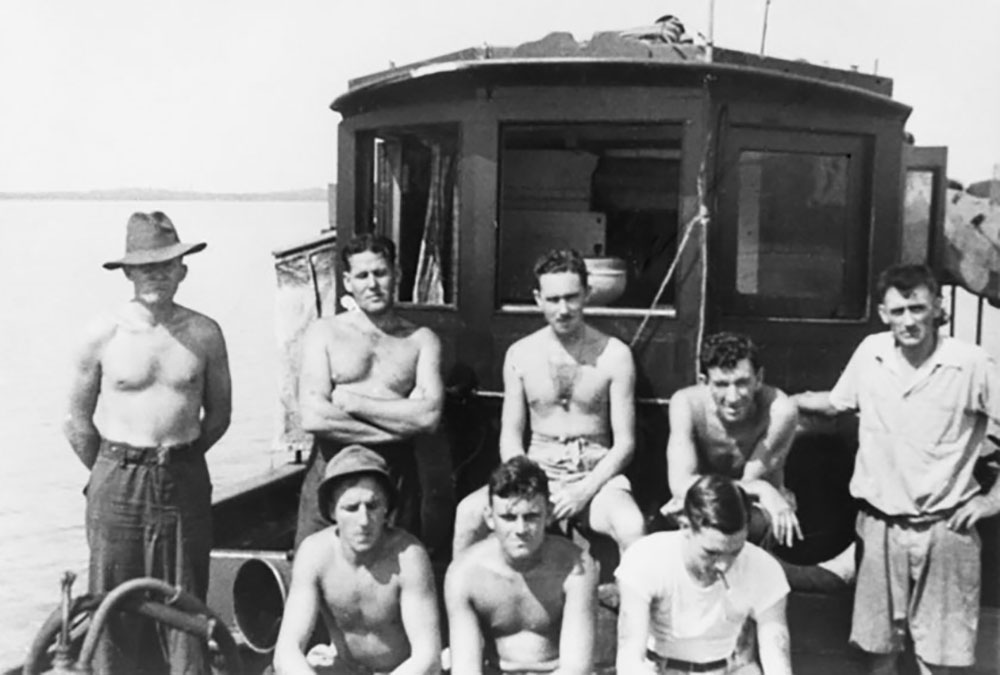
    A 14-man team was selected for the operation under the command of Major Ivan Lyons, a British Army officer attached to the Z Special Unit, better known simply as Z Force. The men chosen were a mix of British and Australian Army and Navy personnel. After completing specialised training and rehearsals at Refuge Bay north of Sydney, the Krait then made the long voyage up the east coast, through Torres Strait, past Darwin and down the Western Australia coast to Exmouth Gulf.

    A group on board MV Krait enroute to Singapore during Operation Jaywick. Courtesy AWM.

       The 7500 km long passage was not without problems. The engine quit while they were off Fraser Island, and the Krait had to be towed to Townsville, where she remained until a replacement could be found and installed. More repairs had to be made before they finally reached Exmouth Gulf, further delaying the operation.

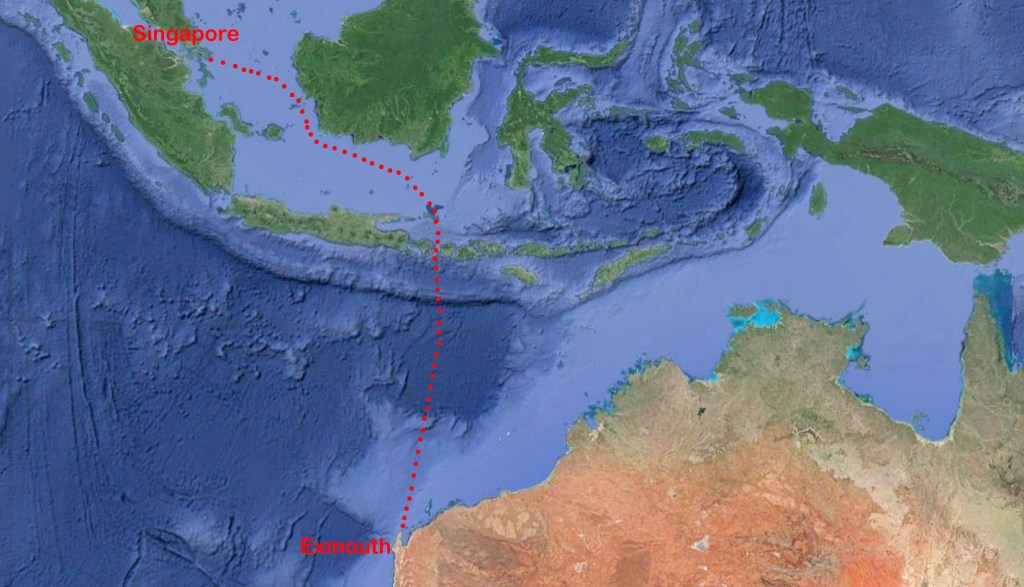
       But on 2 September 1943, the Krait left Exmouth Gulf with the Z Special Unit men on board. The plan called for the eight-man naval contingent to sail the vessel to within striking distance of Singapore Harbour. Then six Army commandos would take to three folding kayaks, paddle into the harbour, and sink as much Japanese shipping as they could by attaching magnetic “limpet” mines to their hulls below the waterline.

       Four days after leaving Exmouth, the Krait motored through the narrow Lombok Strait with a Japanese ensign flying from her mast. Once clear of the strait, they bore west through the Java Sea towards their intended target. The men had stained their skin so they resembled local fishermen and were meticulous about what rubbish they threw overboard.   

    Towards the end of September, the Krait had made it to the small island of Pulau Panjang, just 30 km away from Singapore Harbour. The six commandos then set off in their two-man kayaks and island-hopped north to a small island where they could observe the entrance to the harbour. Meanwhile, the Krait made for safer waters near Borneo but not before agreeing on a rendezvous point with the commandos for the night of 2 October.

    MV Krait’s route from Exmouth Gulf to Singapore. Courtesy Google Maps.

       On 26 September, the six men paddled into the harbour and planted their mines on seven Japanese ships. Singapore’s early morning quiet was shattered by a series of loud explosions as the mines went off. One failed to detonate, but six ships were sunk or badly damaged. But by then, the commandos were long gone and were holed up on a small island to await the return of the Krait.

       The Japanese did not realise that the attack had come from the sea, thinking instead that it was the work of local saboteurs. Several local Chinese and Malays, along with some prisoners of war and European civilian internees, were suspected of the bombings. They were rounded up by the Japanese Military Police and interrogated. Most were tortured, and some were executed in the aftermath, an unfortunate and unforeseen consequence of the raid.

       Meanwhile, the commandos rendezvoused with the Krait as planned without incident. The Krait then set off for home. Two and a half weeks later, they were safely back in Exmouth Gulf. Major Lyons would lead a second similar raid on Singapore Harbour the following year, but Operation Rimau would end in disaster.

    MV Krait in Brisbane 1943. Courtesy AWM.

       Following the success of Operation Jaywick, the Krait was based in Darwin and used to support coast watchers and other intelligence operations, which reported on Japanese activities to Australia’s north. Commissioned into the Royal Australian Navy (RAN) in 1944, she was officially renamed HMAS Krait and, in September 1945, was present for the local Japanese surrender at Ambon.

       After the war, the Krait was employed by the British administration in Borneo until it was sold to a British-owned timber sawmill and renamed Pedang, meaning sword in Malay. In the late 1950s, a pair of Australian businessmen recognised the vessel’s historical significance and began fundraising to purchase her and have her returned to Australia.

       In 1964, the Krait came back to Australia, where it was operated and maintained by the Royal Volunteer Coastal Patrol. Then, in 1984, the Krait was handed over to the Australian War Memorial and berthed at the Sydney Maritime Museum. It is now on display at the Australian National Maritime Museum in Sydney.

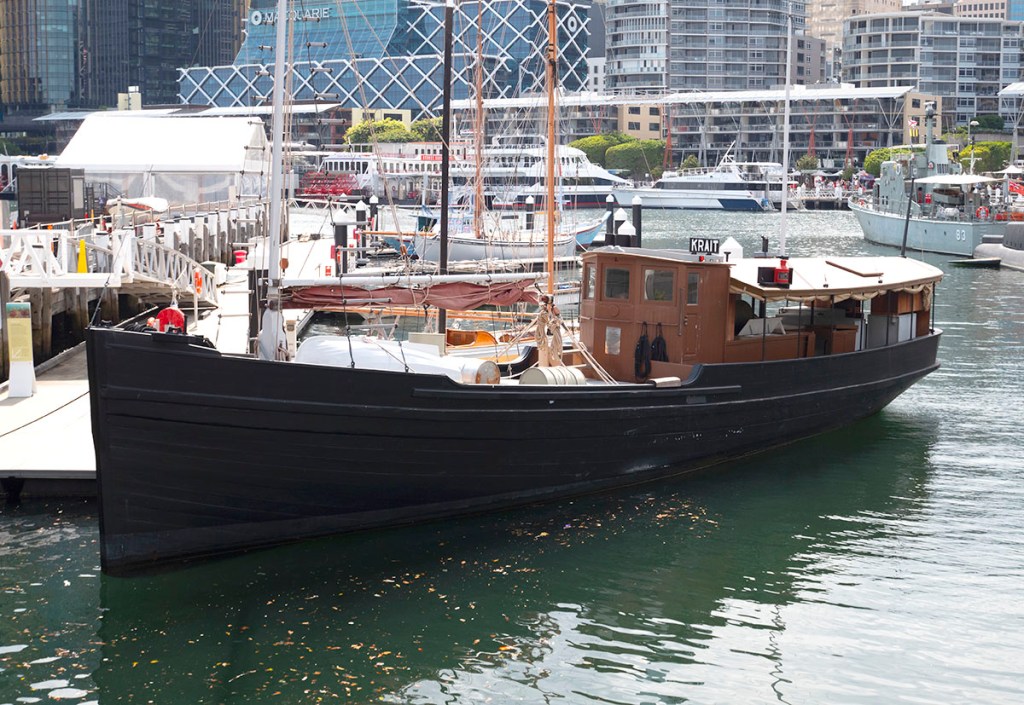
    MV Krait at the Australian National Maritime Museum, Sydney. Photo CJ Ison.

    Sources: 

    Australian National Maritime Museum: Articles on the Krait and Operation Jaywick.

    Royal Australian Navy: Article on the Krait and Operation Jaywick.

    Australian War Memorial: Article on Operation Jaywick.

    © Copyright C.J. Ison / Tales from the Quarterdeck, 2023.

    To be notified of future blogs, please enter your email address below.

  • The Mystery of the Peri

    HMS Basilisk overhauls the Peri off the Queensland coast. Courtesy: National Maritime Museum, Greenwich London.

       In February 1872, the crew of HMS Basilisk found 14 men barely clinging to life on a derelict schooner adrift off the far north Queensland coast. The vessel’s name was not immediately apparent, and none of the survivors spoke English. It was a mystery as to how the ship came to be in those remote northern waters, and one that would take some time to solve.

       The side paddle steamer HMS Basilisk was steaming up the Queensland coast on a three-month cruise around Torres Strait. They were to deliver stores to the government settlement at Somerset, chart several recently reported navigation hazards and generally show the flag in that remote part of the continent.

       When the Basilisk was in the vicinity of Hinchinbrook Island, a lookout sighted a small fore-and-aft schooner off in the distance. It was rare to come upon another ship in those waters, so Captain John Moresby called for his telescope and examined the ship more closely. It was immediately clear to the master mariner that not all was as it should be with the strange vessel.

       Moresby noticed that the schooner sat heavily in the water as she sluggishly rode the long, smooth swells. His first thought was that her crew must have abandoned her for some reason. As the Basilisk drew closer, Moresby could see that her weather-beaten sails were poorly set and flapping loosely in the light breeze. The rigging was slack, and there was no sign of anyone on deck.

    Illustration of the Basilisk’s discovery of the Peri. Source: Illustrated Australian News for Home Readers, 29 Feb 1872, p. 53

       When the Basilisk raised her ensign, signalling to the strange vessel to identify itself, they got no response. But as they drew nearer still, a couple of Pacific Islanders armed with muskets staggered to their feet near the schooner’s stern. Moresby then spotted several more men lying scattered on the deck. He sent two boats across to investigate.

       What the sailors found is best summed up in Captain Moresby’s own words: “… they were living skeletons, creatures dazed with fear and mortal weakness. As our crews boarded, other half-dead wretches tottered to their feet, fumbling too at rusty, lockless muskets. … They were dreadful to look at – being in the last stage of famine, wasted to the bone; some were barely alive, and the sleeping figures were dead bodies fast losing the shape of humanity, on a deck foul with blood.”

       The boarding party found several dead and decomposing bodies on the deck. There was five feet of putrid water sloshing about in the hold. The cabin had been ransacked, and the deck bore the marks of numerous axe strokes. Parts of the deck were also stained brown by large pools of what appeared to be dried blood. And, there was no fresh water or food anywhere to be found. All the evidence, Captain Moresby later recalled, pointed to a violent and tragic incident having taken place on board the schooner.    Moresby held a funeral service for the dead and buried them at sea. He then steamed towards Cardwell, 40 km away with the schooner in tow. He landed the 14 survivors, none of whom spoke any English, but for the word “Solomon.” Moresby assumed they meant they were from the Solomon Islands. He then continued North towards Torres Strait, leaving Midshipman Sabben in charge of several sailors and the schooner. He would collect them in a couple of months on his return to Sydney.

    HMS Basilisk commander – Captain John Moresby. Photo sourced from his autobiography Two Admirals.

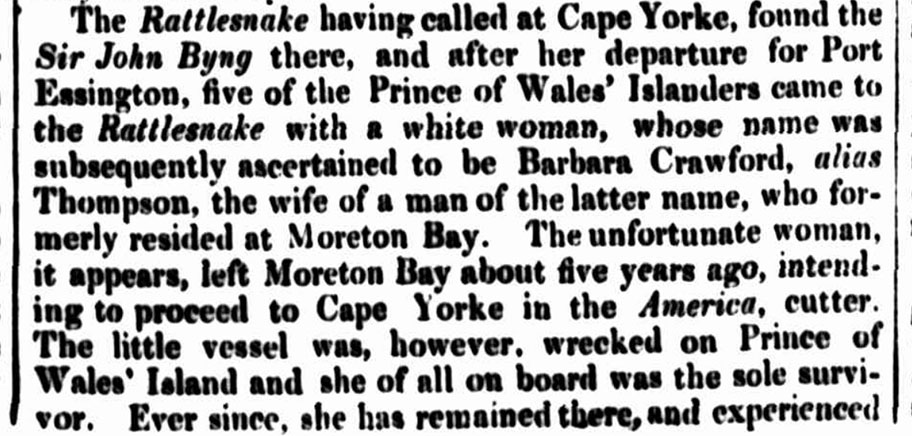
        The pieces of the puzzle would slowly come together over the next weeks and months. After Sabben’s men had scrubbed the headboards clean, they discovered the schooner was called the Peri. The Peri had recently been reported missing in Fijian waters. On 27 December 1871, she had sailed from Viti Levu with approximately 90 “indentured” Pacific Islanders bound for a cotton plantation on Taveuni, 100 km away, but she never arrived.

       About 30 of those 90 men had been kidnapped in the Solomon Islands and taken to Levuka in Fiji. At the time, the South Pacific was in the midst of a cotton boom, and the white plantation owners struggled to find enough field workers or kanakas to tend their crops. Many Islanders fell victim to more unscrupulous “recruiters” who stopped at nothing to fill their quotas.

       At Levuka, kanakas were disembarked and sold to plantation owners to serve three-year contracts. At the completion of their time, it was the plantation owners’ responsibility to pay off their workers and return them to their home islands. The kanakas themselves were supposed to have willingly agreed to the arrangements and be appropriately compensated for their labour; however, that was not always the case.

       In this instance, the kidnapped Solomon Islanders were sent to an Australian plantation owner on Taveuni Island. But while in transit, they seized control of the cutter and escaped. The vessel was later found aground on a small island in the Yasawa group, and most of the men were recaptured a couple of weeks later.

       The other 60 or so Islanders who had been on the Peri had likely also been recently kidnapped. They had fallen into the clutches of a notorious blackbirder named Captain McLever. By December 1871, both groups of kidnapped men had been transferred to the Peri and were about to be sent to work on a plantation on Taveuni Island.   

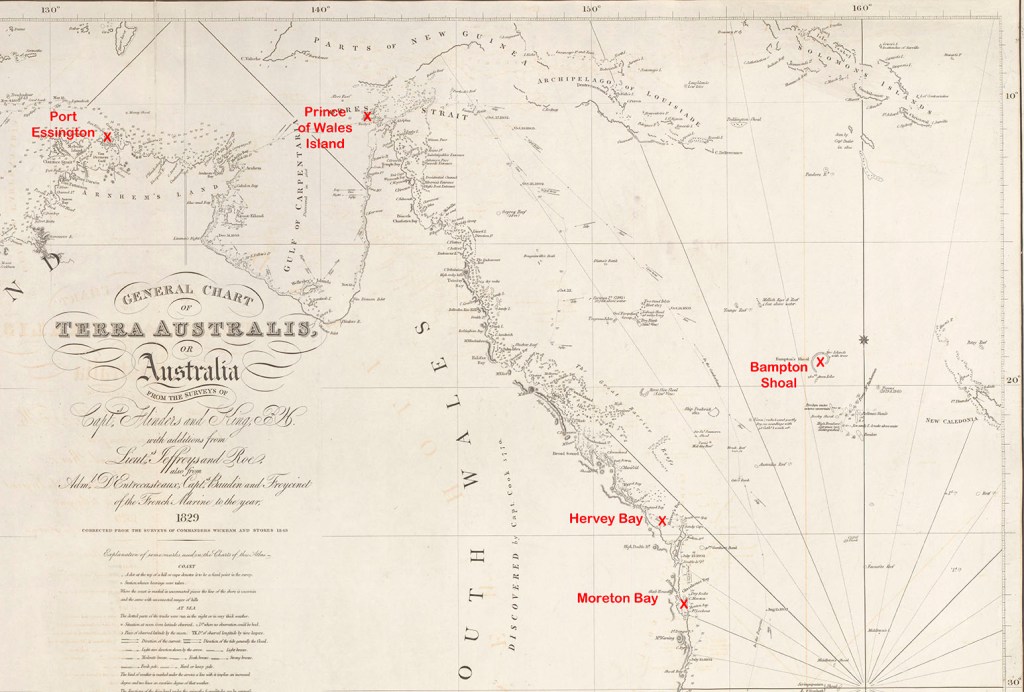
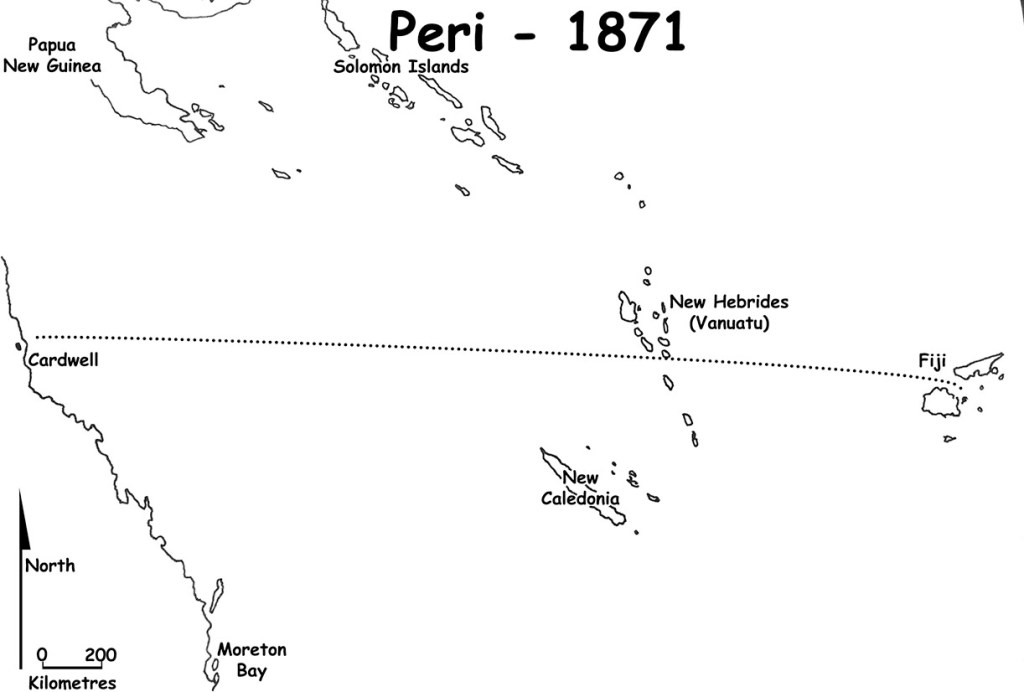
    It is not entirely clear what happened next, but it seems the 90 kanakas rebelled, killed the captain and crew and seized the ship. Over the next six weeks, they sailed or drifted nearly 3500 km west until they were found by the Basilisk off the Australian coast. From the water in the hold and the general state of the ship, Moresby believed they had weathered at least one severe tropical storm during their passage. And judging by their emaciated state, food and water had run out long before they were rescued. The blood stains and axe marks led some to speculate that the survivors may have resorted to cannibalism, but that was never conclusively proved, and none of the bodies found showed signs of having been butchered.

    Approx track of the Peri.

    By the time the Basilisks crew boarded the schooner, there were just 14 men still alive. One more would succumb soon after being put ashore at Cardwell.

       The remaining 13 Solomon Islanders were taken to Sydney by the Basilisk on her return from Torres Strait and eventually sent back to Fiji on HMS Cossack so they might be repatriated. However, eight jumped ship when the Cossack stopped briefly at Matuku Island, perhaps fearing they were being returned to Fiji to be punished. When the last five Peri survivors were finally questioned through an interpreter in Levuka, they told the British Consul that they had been kidnapped. They described how, when they paddled out to Captain McLever’s ship, their canoes were sunk and they had been beaten and locked in the hold.   

    McLever was arrested, and the Solomon Islanders were taken back to Sydney so they could testify at his trial. However, no one had thought to send a translator, and the case was dismissed for lack of evidence. The Islanders were sent back to Fiji, but what happened to them after that is unknown.

    1.Moresby. John RN, Discoveries and Surveys in New Guinea and D’Entrecasteaux Islands, John Murray, London, 1876, p.4.

    © Copyright C.J. Ison / Tales from the Quarterdeck, 2022.

    To be notified of future blogs, please enter your email address below.

  • Bligh’s Epic Open-Boat Voyage

    The Mutineers turning Lieut. Bligh and part of the officers and crew adrift from his Majesty’s Ship the Bounty / painted and engraved by Robert Dodd, 1790 London

    On 28 April 1789, Lt William Bligh was startled awake by his first mate, Fletcher Christian, and several other HMS Bounty sailors threatening his life. He, along with 18 members of his crew who wanted nothing to do with the unfolding mutiny, would soon be unceremoniously herded into a launch and set adrift. So began one of the great open-boat voyages in maritime history.

       To say the launch was overcrowded is an understatement. Measuring 23 feet (7 metres) in length, there was room for just half those on board. But, in addition to Bligh and his men, space had to be made for their provisions.

       The mutineers allowed them 70 kg of sea biscuits, 10 kg of salted pork, seven litres of rum, six bottles of wine, and 130 litres of water. For navigation, they were provided with only a quadrant and a compass. Fletcher Christian would not allow them to take a chronometer or any of the charts. A few clothes were thrown into the launch at the last moment, as well as four cutlasses for personal protection should they be foolish enough to venture onto any of the neighbouring islands. Lastly, the carpenter was allowed to take his toolbox, and the ship’s clerk had collected some of Bligh’s papers and belongings, including the captain’s nautical almanac. With the launch so heavily weighed down, it was in imminent danger of being swamped.


    Portrait of William Bligh By Alexander Huey – National Library of Australia, Public

    As the Bounty sailed away, Bligh and the others found themselves adrift in the South Pacific Ocean, a very long way from the nearest European settlements. With no viable alternatives, Bligh convinced his men that they should make for the Dutch settlement of Kupang on Timor Island, some 3,500nm (7,000 km) away. But before they could set off on the long voyage, Blight felt they needed to add to their stores. At first glance, the provisions might seem bountiful, but shared among so many people, they would last little more than a week without strict rationing.

       Bligh made for the nearest land, Tofua Island, about 50 km away, to stock up on fresh produce. Initially, the Islanders seemed friendly and happy to trade. But after a couple of days, the mood inexplicably changed. Bligh and his men suddenly found themselves fleeing for their lives under a hail of hurled rocks. One man was felled on the beach, but the rest managed to get away in the launch.   

    But the assault continued. Rocks still rained down among them, thrown by islanders who pursued them in a canoe. Reprieve only came when the launch finally outdistanced the attackers. Bligh noted in his journal that almost all of them had been injured to some extent from the barrage of stones. But they had escaped, though at the cost of one life. Bligh then set a course west through the South Pacific Islands towards New Holland (Australia). He decided that they would not risk stopping anywhere else along the way.

    A page from William Bligh’s logbook. Courtesy State Library of NSW.

    Sacrifices had to be made if they were ever to make it to Timor. Spare clothes, ropes and anything else not essential were tossed overboard to lighten the load and make more room. Even so, conditions remained so cramped in the boat that no one had room to stretch out their legs. Those not seated on the thwarts had to find room where they could, often on the floor with their backsides in a few inches of water. The carpenter’s chest was emptied of tools so it could be filled with sea biscuits to keep them out of the water sloshing around in the bottom of the boat.

       Bligh organised the men into two watches as they sailed west-north-west towards the Fijian Islands and beyond. Beginning on 4 May, they were battered by a powerful storm with gale-force winds and high seas. Water poured into the boat, forcing the men to bail continuously to keep afloat. The storm raged until the following evening, when the weather eased off for a short while.

       Over the next several days and weeks, they passed through the Fijian Islands and then the islands of Vanuatu as they steadily made their way west. The nights were brutally cold, but there was little let-up in the weather, and they remained soaked to the skin for days on end. The only reprieve from their misery came in the form of a small daily ration of rum.

       Even though Bligh had no chart, he was able to compare his observations, when he could make them, with known landmarks recorded in his almanac. Though they passed close to several islands, there was no appetite to go ashore for food despite their growing hunger. Their experience on Tofua was still fresh in their minds.

    Route sailed by the Bounty’s launch. Courtesy Google Maps.

    They began bearing more westerly as they crossed the Coral Sea and weathered several more powerful squalls. Mountainous seas and torrential rain again kept them bailing as hard as they could to remain afloat.

       Then, on 24 May, they were bathed in full sunshine for the first time in nearly two weeks. Over the following few days, they caught several seabirds. The precious little meat was shared out evenly and eagerly eaten raw. The birds also offered hope of another sort, for they signalled that they were approaching the Australian mainland.

       On 28 May, they reached the outer edge of the Great Barrier Reef, clearly delineated by a line of breaking white surf. Bligh pointed the bow towards a gap in the reef, and everyone hung on as they raced through the narrow passage. Once through the coral jaws, they found themselves in calm water in the vicinity of Cape Melville. Bligh then bore north, remaining close to the inside of the reef in hopes that they might catch some fish to supplement their diet.

       A couple of days later, they stepped ashore on what Bligh would name Restitution Island. After being confined to the boat for so long, they were all barely able to walk. Nonetheless, a fire was started using Bligh’s magnifying glass to focus the sun’s rays, and a stew of sea biscuit and salted pork was augmented by some berries, oysters and other shellfish foraged from their surroundings.

       After several days recuperating, they reboarded the boat and island-hopped north until they reached Torres Strait. They then headed west again across open seas until Bligh estimated they were off the southern coast of Timor Island. On 14 June 1789, they sailed into Kupang Harbour, 47 days after the Bounty mutineers cast them adrift. Bligh noted that they were “nothing but skin and bones; our limbs were full of sores; [and] we were clothed in rags.” But they had survived a voyage few would have thought possible.

       The Dutch authorities tended to the survivors and arranged passage back to England; however, five would never see home, dying in their weakened state, probably from malaria, a disease not well understood at the time.     Bligh arrived back in the United Kingdom in March 1790, not to a hero’s welcome but to face a court-martial to explain the loss of his ship. The Court exonerated him and the incident had no noticeable impact on his career. Bligh eventually rose to the rank of Vice Admiral before retiring. He also served a tumultuous two years as the Governor of New South Wales until officers of the NSW Corps deposed him, but that’s a story for another occasion.

    © Copyright C.J. Ison / Tales from the Quarterdeck, 2023.

    To be notified of future blogs, please enter your email address below.