Tag: Torres Strait

  • Bato to the Rescue – 1854

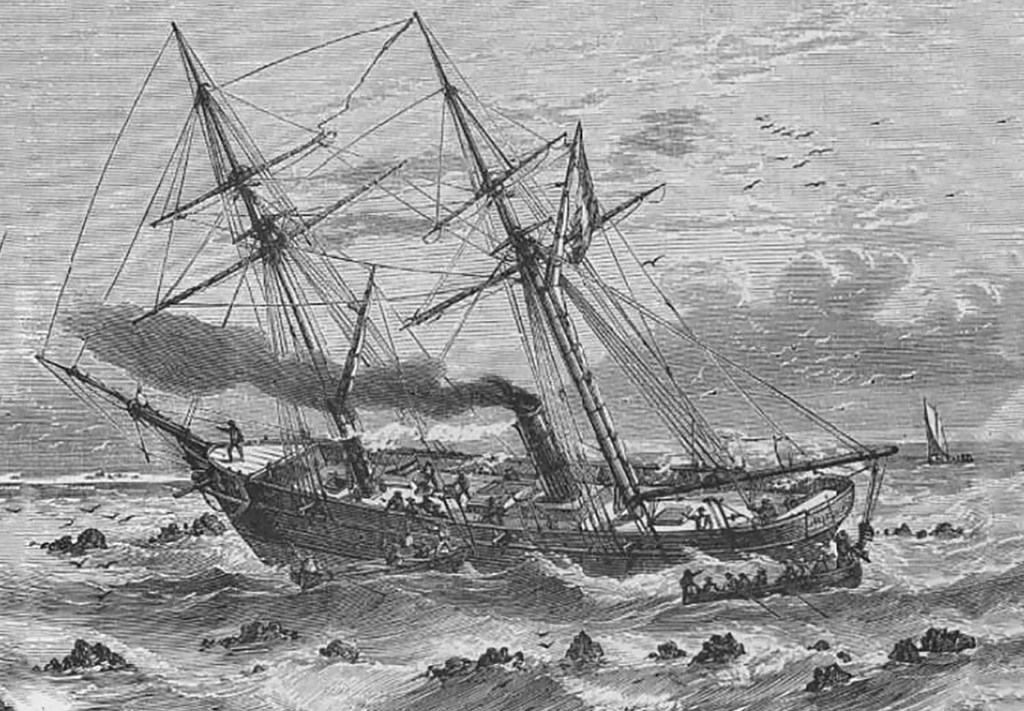
    Shipwreck survivors take to their boat.. Source: Tales of Shipwrecks and Adventures at Sea, 1856.

       In 1854, the fully-rigged Dutch ship Bato rescued not one, not two, but three separate parties of shipwreck survivors whose ships had come to grief in separate mishaps in Australia’s northern waters. In the space of a few weeks, these three ships all ran aground while attempting to navigate the treacherous waters of the Great Barrier Reef and the Torres Strait.

       The first casualty was the 521-ton ship Fatima. On 3 June, the Fatima left Melbourne bound for Singapore via Torres Strait. She made good time sailing up the east coast until, on 26 June, she was within sight of Raine Island. The low-lying island and its distinctive 20-metre-tall tower marked a channel through the Great Barrier Reef and the start of a well-charted passage through Torres Strait.

       Then, just 12nm (20 km) south of Raine Island, her voyage ended abruptly and violently when she crashed into the Great Detached Reef. The Fatima could not be saved, and her captain and crew were forced to take to the boats to save their lives. A refuge of sorts was close at hand, so they struck out for Raine Island off in the distance. There they remained, subsisting on a plentiful supply of seabird eggs while they waited to be rescued.

       A couple of days after the Fatima left Melbourne, the 391-ton barque Elizabeth also set sail from that same port. She was bound for Moulmein, Burma, and also intended to pass through Torres Strait by the Raine Island passage. However, disaster struck on 28 June when the barque ran aground on a small coral outcrop about 28nm (55 km) south of Raine Island. Fortunately, no lives were lost, and after a considerable amount of effort, the crew managed to get the ship off the reef and back into deep water. However, the hull had been breached, and Captain Churchill realised that his ship was taking on more water than the pumps could remove. Churchill made the difficult decision to abandon his ship, and he and his men took to the boats. They made their way through Torres Strait and arrived at Booby Island five days later. The island was marked on charts of the day as a haven for shipwrecked sailors where a supply of food and fresh water could be found.

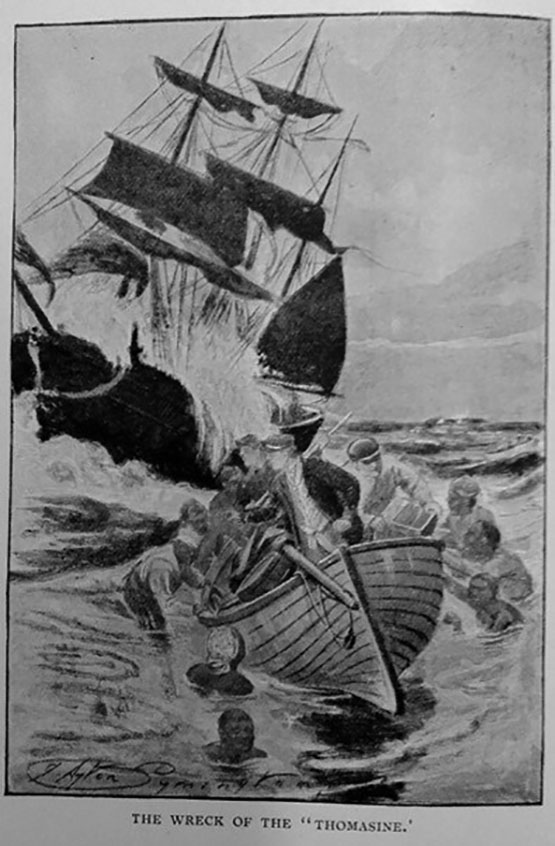
    The Wreck of the Thomasine. Courtesy State Library of Queensland.

       The third ship, the Thomasine, departed Sydney on 8 June bound for Batavia. She also intended to cross through the Torres Strait. But she ended her northerly run up the coast on 19 June when she struck an uncharted reef about 270 km east of present-day Port Douglas.

       Her master, Captain Holmes would later recall that around 8 o’clock on the evening of the 19th, the ship grazed a submerged reef where no such obstruction should have existed. He had been on deck at the time and had immediately gone to his cabin to consult his chart, to confirm what he suspected. While he was standing at his chart table, still consulting his map, the look-out called, “Breakers ahead.” Captain Holmes raced back on deck to the daunting sight of a long line of breaking waves ahead that extended around to his left and right, almost completely encircling the ship.

       Holmes and his crew kept the Thomasine from running aground during the night by tacking back and forth in the open water between the reefs. The next morning he saw how dire their situation was. The ship was trapped by an almost unbroken ring of breaking waves, denoting the presence of submerged coral reefs. Reefs that were absent from the charts but have since been added and bear the name Holmes Reefs.

       The wind began to rise and Holmes realised his only chance of escape was to try to make it through one of the narrow gaps he could see in the otherwise extended line of surf. He selected one, hoping it would allow his ship to reach the safety of deep water beyond. Unfortunately, the channel proved too shallow, and the Thomasine struck heavily, becoming stuck. Unable to get the Tomasine free, the captain made the difficult decision to abandon ship. The crew then readied two boats with as much food and water as they dared carry.

       Captain Holmes was doubly concerned as they tried to escape the ship and the surrounding reef. Not only did he feel responsible for his crew, but he was also accompanied by his wife and three children, the youngest of whom was just four months old. He divided his crew evenly between the two boats for the voyage north to Booby Island and a cache of stores. However, one sailor died during the struggle to get the boats through the roiling seas surging around the ship. Holmes   

    Over the next fortnight or so, the 18 castaways steadily made their way north, surviving on short rations and less than one litre of water per day from a small cask taken from the ship. But by 6 July, they had covered about 800 km and had reached Bird Island in the Torres Strait. Captain Holmes calculated that it would only take them another one or two days to reach Booby Island.  

    Map showing location of the three shipwrecks in Torres Strait. Courtesy Google Maps.

       It was around this time, the Dutch ship Bato was passing through the same waters. She had sailed from Hobart on 10 June and steadily made her way up the east coast of Australia. As Captain Brocksmit approached the Raine Island entrance, he sighted the Fatima castaways camped on the island. Ten men were taken on board while the rest followed in the Bato’s wake in their own boat until they had reached the Middle Bank well inside the Great Barrier Reef.

       The next day, 6 July, the Bato’s captain came across the survivors from the Thomasine off Bird Island and made room for them on his ship as well. Finally, the following day, the castaways from the Elizabeth were spotted on Booby Island, where they had landed four days earlier.

       Now carrying as many as 60 additional people, the Bato put the dangerous waters of Torres Strait behind her. Captain Brocksmit made his way along the Indonesian archipelago, arriving in Batavia on 25 July 1854. The survivors were disembarked, and the captains were faced with the unenviable task of notifying their respective ship owners of their losses.

    © Copyright C.J. Ison / Tales from the Quarterdeck, 2023.

    To be notified of future blogs, please enter your email address below.

  • Bligh’s Epic Open-Boat Voyage

    The Mutineers turning Lieut. Bligh and part of the officers and crew adrift from his Majesty’s Ship the Bounty / painted and engraved by Robert Dodd, 1790 London

    On 28 April 1789, Lt William Bligh was startled awake by his first mate, Fletcher Christian, and several other HMS Bounty sailors threatening his life. He, along with 18 members of his crew who wanted nothing to do with the unfolding mutiny, would soon be unceremoniously herded into a launch and set adrift. So began one of the great open-boat voyages in maritime history.

       To say the launch was overcrowded is an understatement. Measuring 23 feet (7 metres) in length, there was room for just half those on board. But, in addition to Bligh and his men, space had to be made for their provisions.

       The mutineers allowed them 70 kg of sea biscuits, 10 kg of salted pork, seven litres of rum, six bottles of wine, and 130 litres of water. For navigation, they were provided with only a quadrant and a compass. Fletcher Christian would not allow them to take a chronometer or any of the charts. A few clothes were thrown into the launch at the last moment, as well as four cutlasses for personal protection should they be foolish enough to venture onto any of the neighbouring islands. Lastly, the carpenter was allowed to take his toolbox, and the ship’s clerk had collected some of Bligh’s papers and belongings, including the captain’s nautical almanac. With the launch so heavily weighed down, it was in imminent danger of being swamped.


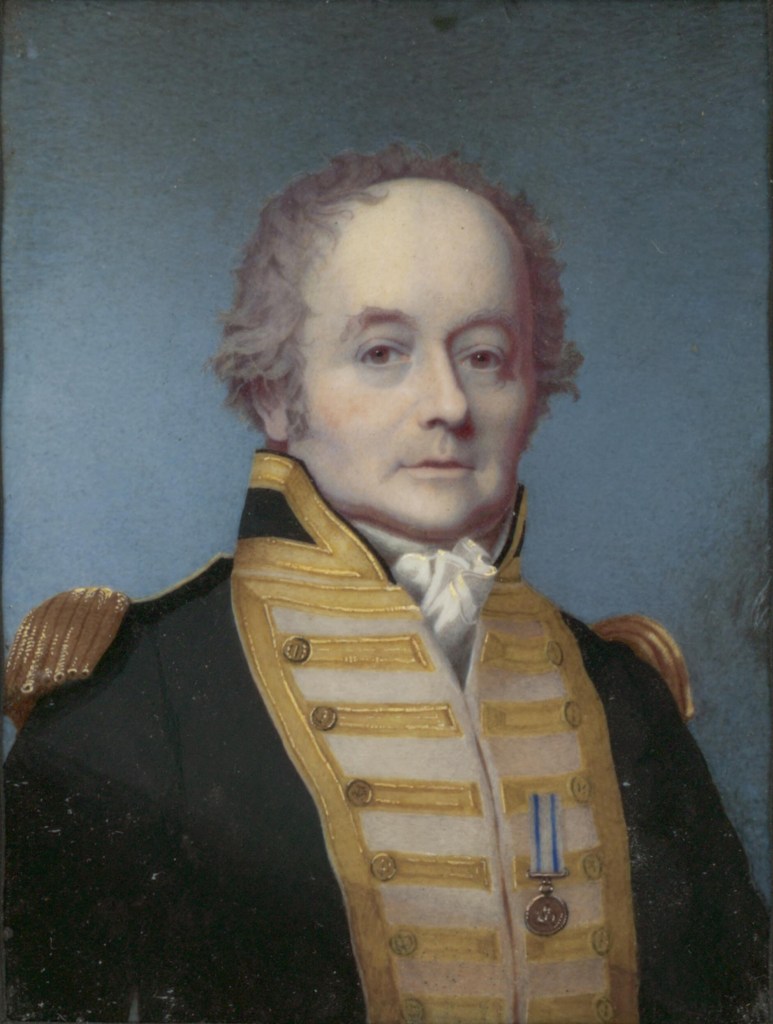
    Portrait of William Bligh By Alexander Huey – National Library of Australia, Public

    As the Bounty sailed away, Bligh and the others found themselves adrift in the South Pacific Ocean, a very long way from the nearest European settlements. With no viable alternatives, Bligh convinced his men that they should make for the Dutch settlement of Kupang on Timor Island, some 3,500nm (7,000 km) away. But before they could set off on the long voyage, Blight felt they needed to add to their stores. At first glance, the provisions might seem bountiful, but shared among so many people, they would last little more than a week without strict rationing.

       Bligh made for the nearest land, Tofua Island, about 50 km away, to stock up on fresh produce. Initially, the Islanders seemed friendly and happy to trade. But after a couple of days, the mood inexplicably changed. Bligh and his men suddenly found themselves fleeing for their lives under a hail of hurled rocks. One man was felled on the beach, but the rest managed to get away in the launch.   

    But the assault continued. Rocks still rained down among them, thrown by islanders who pursued them in a canoe. Reprieve only came when the launch finally outdistanced the attackers. Bligh noted in his journal that almost all of them had been injured to some extent from the barrage of stones. But they had escaped, though at the cost of one life. Bligh then set a course west through the South Pacific Islands towards New Holland (Australia). He decided that they would not risk stopping anywhere else along the way.

    A page from William Bligh’s logbook. Courtesy State Library of NSW.

    Sacrifices had to be made if they were ever to make it to Timor. Spare clothes, ropes and anything else not essential were tossed overboard to lighten the load and make more room. Even so, conditions remained so cramped in the boat that no one had room to stretch out their legs. Those not seated on the thwarts had to find room where they could, often on the floor with their backsides in a few inches of water. The carpenter’s chest was emptied of tools so it could be filled with sea biscuits to keep them out of the water sloshing around in the bottom of the boat.

       Bligh organised the men into two watches as they sailed west-north-west towards the Fijian Islands and beyond. Beginning on 4 May, they were battered by a powerful storm with gale-force winds and high seas. Water poured into the boat, forcing the men to bail continuously to keep afloat. The storm raged until the following evening, when the weather eased off for a short while.

       Over the next several days and weeks, they passed through the Fijian Islands and then the islands of Vanuatu as they steadily made their way west. The nights were brutally cold, but there was little let-up in the weather, and they remained soaked to the skin for days on end. The only reprieve from their misery came in the form of a small daily ration of rum.

       Even though Bligh had no chart, he was able to compare his observations, when he could make them, with known landmarks recorded in his almanac. Though they passed close to several islands, there was no appetite to go ashore for food despite their growing hunger. Their experience on Tofua was still fresh in their minds.

    Route sailed by the Bounty’s launch. Courtesy Google Maps.

    They began bearing more westerly as they crossed the Coral Sea and weathered several more powerful squalls. Mountainous seas and torrential rain again kept them bailing as hard as they could to remain afloat.

       Then, on 24 May, they were bathed in full sunshine for the first time in nearly two weeks. Over the following few days, they caught several seabirds. The precious little meat was shared out evenly and eagerly eaten raw. The birds also offered hope of another sort, for they signalled that they were approaching the Australian mainland.

       On 28 May, they reached the outer edge of the Great Barrier Reef, clearly delineated by a line of breaking white surf. Bligh pointed the bow towards a gap in the reef, and everyone hung on as they raced through the narrow passage. Once through the coral jaws, they found themselves in calm water in the vicinity of Cape Melville. Bligh then bore north, remaining close to the inside of the reef in hopes that they might catch some fish to supplement their diet.

       A couple of days later, they stepped ashore on what Bligh would name Restitution Island. After being confined to the boat for so long, they were all barely able to walk. Nonetheless, a fire was started using Bligh’s magnifying glass to focus the sun’s rays, and a stew of sea biscuit and salted pork was augmented by some berries, oysters and other shellfish foraged from their surroundings.

       After several days recuperating, they reboarded the boat and island-hopped north until they reached Torres Strait. They then headed west again across open seas until Bligh estimated they were off the southern coast of Timor Island. On 14 June 1789, they sailed into Kupang Harbour, 47 days after the Bounty mutineers cast them adrift. Bligh noted that they were “nothing but skin and bones; our limbs were full of sores; [and] we were clothed in rags.” But they had survived a voyage few would have thought possible.

       The Dutch authorities tended to the survivors and arranged passage back to England; however, five would never see home, dying in their weakened state, probably from malaria, a disease not well understood at the time.     Bligh arrived back in the United Kingdom in March 1790, not to a hero’s welcome but to face a court-martial to explain the loss of his ship. The Court exonerated him and the incident had no noticeable impact on his career. Bligh eventually rose to the rank of Vice Admiral before retiring. He also served a tumultuous two years as the Governor of New South Wales until officers of the NSW Corps deposed him, but that’s a story for another occasion.

    © Copyright C.J. Ison / Tales from the Quarterdeck, 2023.

    To be notified of future blogs, please enter your email address below.
  • The Loss of the Enchantress: A first-hand account.

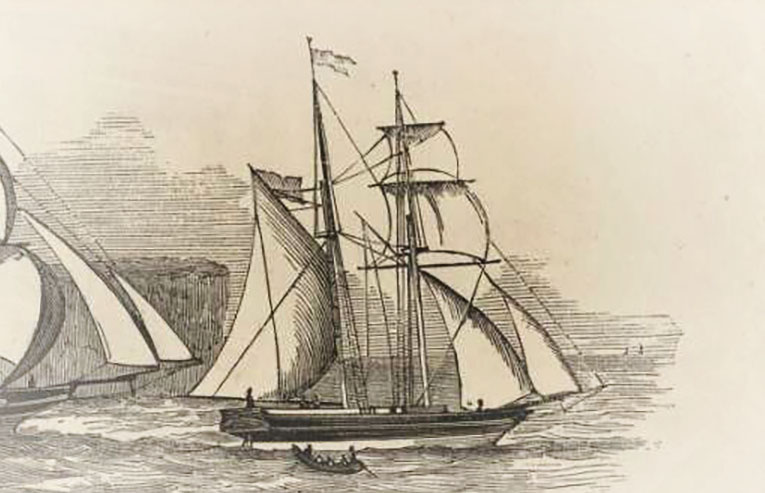
    A Brig leaving Port Jackson in the 1850s.. Image courtesy National Library of Australia.

        The loss of some ships plying Australian waters was only ever noted by a brief paragraph in newspaper shipping columns. Months after leaving port, they would be reported as having never arrived at their destination. The exact circumstances of their loss and what might have happened to the souls on board will never be known. But far more often, people did survive, even if the ship did not. Captains had the grim duty to report the loss of the vessel to its owners, while passengers often wrote to loved ones about their unanticipated adventure. Such records are the sources for many a shipwreck tale.

       On 24 July 1850, the 146-ton brig Enchantress was wrecked near Raine Island while trying to pass through the Great Barrier Reef. Navigating the tricky passages leading to Torres Strait could prove challenging in those early days. Between 1791 and 1887, no less than 37 ships came to grief near Raine Island. Many more were lost on reefs and shoals dotting Queensland’s northern waters.

       Mr B. Buchanan was a passenger on the Enchantress and also an employee of the company that owned the vessel. While en route to Kupang in the Dutch East Indies (present-day Indonesia), after being rescued, he penned a letter to his employers, notifying them of the loss of their ship. This letter, written 175 years ago, provides a firsthand account of the incident.

    A ship off Raine Island, Torres Strait. Illustrated Australian News for Home Readers Thu 30 Jan 1873 Page 9.

       Messrs. Smith, Campbell, and Co., Sydney.

       At Sea, approaching Kupang,

       August 3rd, 1850.

       Dear Sirs, – It is my unpleasant task to inform you of the loss of the brig Enchantress. She struck and grounded on the reef running out from Raine’s Island, on the afternoon of the 24th July.

       From the time of leaving Sydney, the weather was favourable. We joined company with the brig Lady Margaret off Newcastle. On the 24th, about noon, being a little ahead of our companion, we sighted the Barrier below the detached reef, between it and Yule’s Reef. We hauled up to the eastward, and made out the beacon on Raine’s Island between two and three pm.

       Captain L’Anson then stood in for the southern passage, but unfortunately got too near the reef running out from the island. He tried to put her about, but she missed stays; he filled on her again, and again tried it, but a second time she missed. There was no room to wear, the wind being fresh and the current strong, and we tried a third time to stay her, but to no purpose. The strong northerly set and flood tide prevented her [from] coming round, and we were driven on the point of the reef.

       Every sea sent us further on, the surf washing the lower masts’ heads. An attempt was made to take off the sails, but it was becoming dark, we had the reef to cross to get to the island, and the brig was thrown more over by every wave.

       We therefore got out the longboat, saving the chronometer, my papers, and some clothes. The jolly boat was washed away. We crossed the reef without difficulty and took shelter in the beacon.

    Map showing location of wreck at Raine Island. Courtesy Google Maps.

       At three a.m. of Thursday, the 25th, Captain L’Anson, it being low tide, started with the boat, manned by the majority of the crew, with the intention of saving all he could from the wreck. He got the boat alongside, but the sea was breaking so heavily that it was not possible to remain; they brought away some provisions, cooking utensils, and nearly all my things, but could save nothing pertaining to the ship. They were afraid of the boat being swamped.

       At the time of our first attempting to stay the brig, the Lady Margaret was following close, but immediately went about. Captain Grant stood off that night, bore down again in the morning, and worked on and off all day.

       We knew that it would be out of all reason to expect him to bring up after having once entered, before he got to anchorage ground, about twenty-five miles from Raine’s Island; and saw also that he was unwilling to pass without communicating with us (we learnt afterwards that he was afraid we were without provisions or water).

       Meanwhile, the weather had assumed a threatening aspect, we therefore dispatched the boat with five of the people, under Mr Wood, the chief officer, to the Lady Margaret; they succeeded in reaching her after a very long and laborious pull.

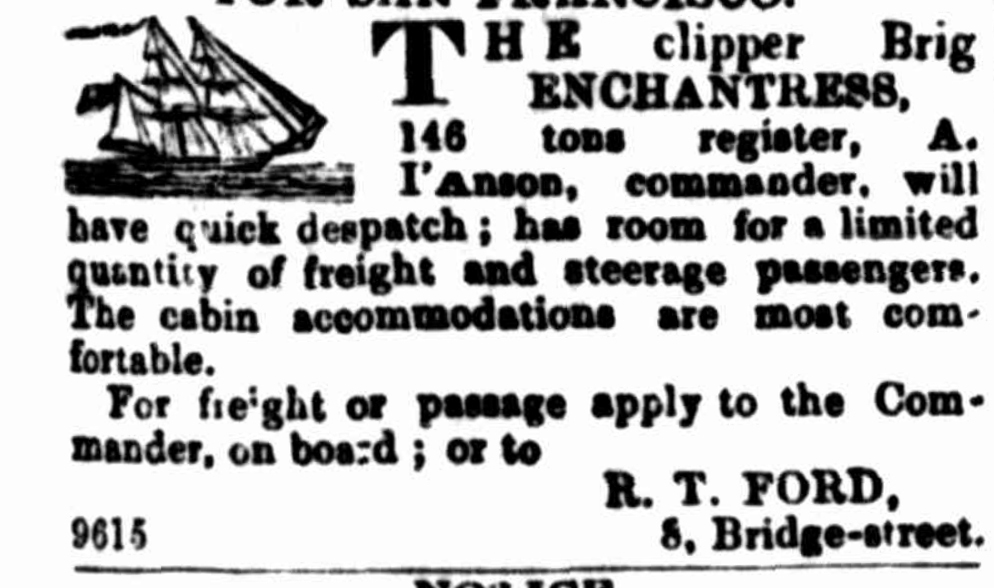
    Advertisement for passage on the Enhantress. SMH 30 May 1850, p. 1.

       I had written to Captain Grant, with suggestions for relieving us, but his position was one of such danger that he could give no attention thereto; his anxiety was to get us on board at once, and be off, and to attain this he despatched his second officer with his jolly boat to the island immediately, our own boat returning at the same time to aid in bringing what clothes we had saved.

       We left the island at four p.m., and were taken on board the Lady Margaret at dusk. She stood out to sea, and in the morning entered by the Southern Passage.

       The poor Enchantress when last seen by us was being between twenty and thirty yards from the point of the reef – bows on the water, masts standing.

    [The letter was published in the Sydney Morning Herald newspaper on 3 December 1850. Here, it is re-published as it first appeared in print, but for a few minor changes to spelling and punctuation.]

    [The letter was first published in the Sydney Morning Herald newspaper on 3 December 1850.   Here, it is reproduced as it appeared in the newspaper, but for a few minor changes to spelling and punctuation.]

    © Copyright C.J. Ison / Tales from the Quarterdeck, 2022.

    To be notified of future blogs, please enter your email address below.

  • Loss of La Astrolabe and La Boussole: a 40 Year Mystery

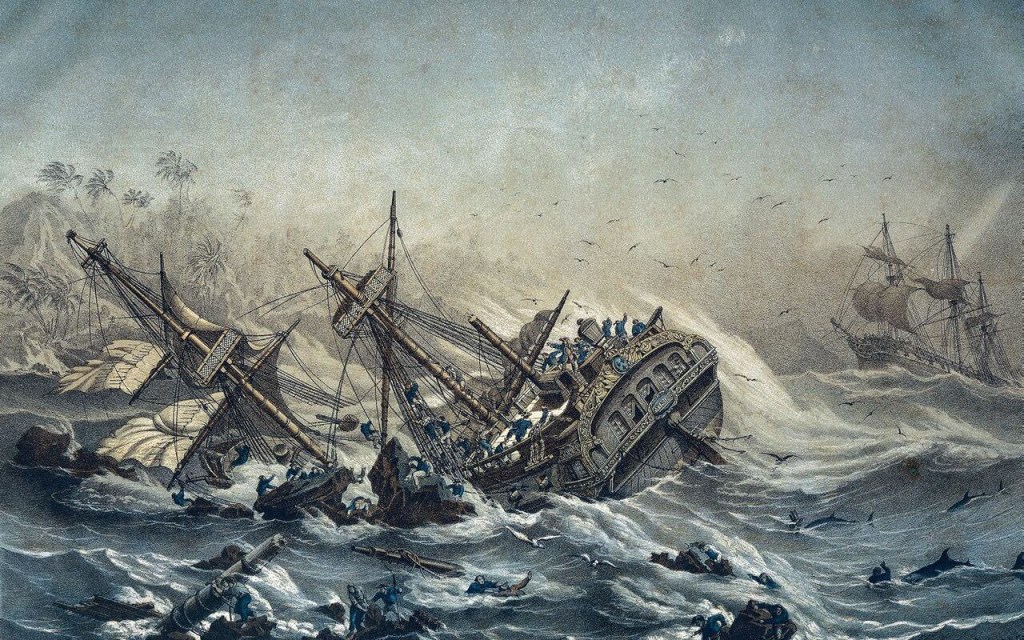
    19th Century lithograph of the sinking of La Astrolabe at Vanikoro by Louis Le Breton. Courtesy Public domain, Wikimedia commons.

    One of the great maritime mysteries of the late 18th and early 19th centuries was the disappearance of the French ships La Astrolabe and La Boussole under the command of La Perouse. They were last sighted leaving Botany Bay in 1788 but it would be another 40 years before the world discovered what became of them.   

    In 1785, Louis XVI appointed Jean-François Comte de La Perouse to lead an expedition of discovery to the far reaches of the world. The objectives were primarily scientific, but La Perouse was also to look out for economic opportunities that might benefit France. He was given two ships, La Astrolabe and La Boussole, with a total complement of some 220 men. The expedition included a botanist, geologist, physicist, astronomer, and several naturalists and illustrators – ten men of science in all. Even the ships’ two chaplains had received scientific training. Rarely had such a body of learned men been assembled for such a voyage.


    Louis XVI giving La Pérouse his instructions on 29 June 1785, by Nicolas-André Monsiau – Chateau de Versailles, Public Domain, https://commons.wikimedia.org

    The La Astrolabe and La Boussole sailed from Brest on 1 August 1785 and bore south into the Atlantic Ocean to round Cape Horn. They stopped briefly in Chile and then proceeded to the Sandwich Islands (now known as Hawaii). From there, they continued north as far as Alaska and then traced the North American coast south to a point that is now Monterey in California. La Perouse then took his two ships across the Pacific Ocean to the Portuguese colony of Macau and then headed north again. They arrived at the Russian outpost of Petropavlovsk on the Kamchatka Peninsula in September 1787 to find fresh orders awaiting them. The French Court was aware that the British had assembled a fleet of ships to sail for New South Wales. La Perouse was instructed to make directly for Botany Bay to investigate the new settlement being established there.   

    La Perouse arrived at Botany Bay on 24 January 1788, only days after the First Fleet under Governor Phillip had arrived from England. The French mariners spent six weeks there, resting and replenishing their food and water supplies. Before sailing, La Perouse left a package of letters, journals and charts with the captain of a returning British convict transport to be forwarded to Paris. In his correspondence, La Perouse wrote that he intended to sail to New Caledonia and the Santa Cruz Islands before turning back for home. They had been gone for two and a half years when they sailed from Botany Bay. He also anticipated that they would be back in France by June the following year. On 10 March 1788, the two French ships set sail and were never seen again, at least not by any Europeans.

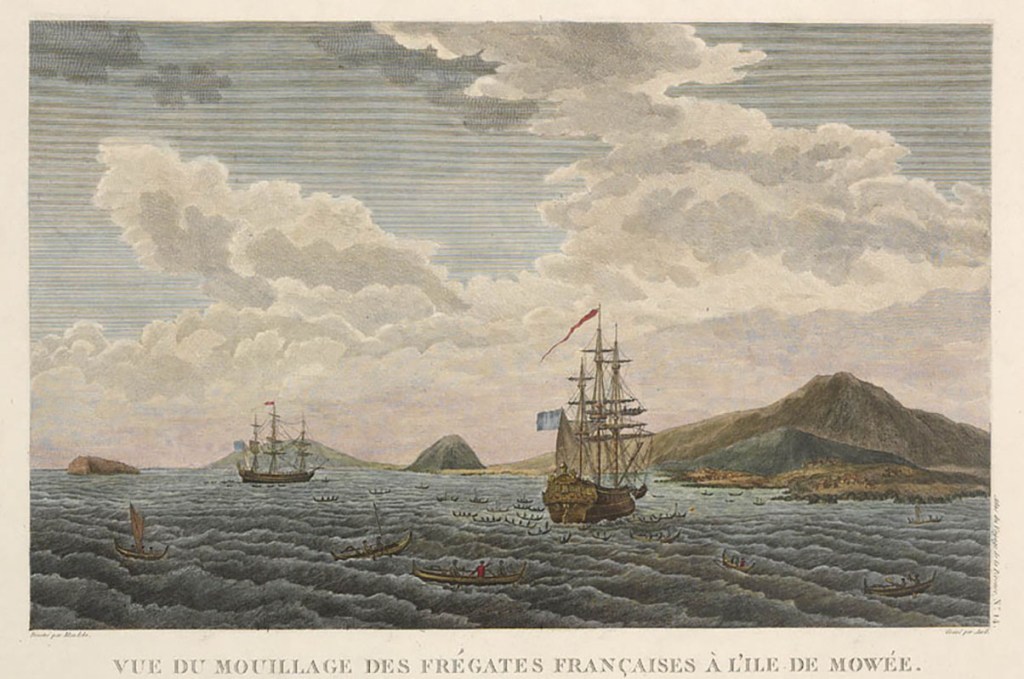
    French frigates La Astrolabe and La Boussole in Hawaii. Image courtesy State Library of NSW.

    Then, in 1826, an Irish mariner, Peter Dillon, made a startling discovery. While at Vanikoro, he came into possession of some artifacts clearly of French origin. He learned that relics from the French ships had been circulating among the inhabitants of Santa Cruz and neighbouring islands for years. On inquiring about the origin of the pieces, he was told that they had come from two large ships that had been wrecked there many years earlier.

       Dillon was sure the artifacts, one of which was a sword guard of French design, had come from La Perouse’s expedition. Upon returning to India, he reported his discoveries to the East India Company, which provided him with a ship to explore the waters around Vanikoro more closely.   

    In 1827, Dillon found the wreck site and retrieved several artefacts, including a bell which had clearly belonged to a French ship. He also learned from the older villagers on Vanikoro that the two French ships had run aground on a coral reef during a violent storm with great loss of life. The survivors had built a new vessel from timbers salvaged from the wrecks and sailed away. They had probably tried making for Kupang in the Dutch East Indies (Indonesia). That would have been the closest port where they might find help and passage back home. It would, however, require them to cross the Great Barrier Reef and pass through Torres Strait. Most of the French seamen left in the new ship, but a few men opted to remain on Vanikoro, where they lived out their days. By the time Dillon visited the island, they had all since passed away.

    Map showing Vanikoro and Murray Island. Courtesy Google Maps.

    There is a final clue as to what may have happened to La Perouse’s men who sailed away from Vanikoro. An Indian seaman had been found living among the inhabitants of Murray Island (Mer) in 1818. His name was Shaik Jumaul, a seaman on the Morning Star, which had been wrecked in Torres Strait four years earlier, while on a voyage from Sydney to Batavia.

       He said that he had come across many items of European manufacture, including muskets, cutlasses, a compass, and even a gold watch, while visiting nearby islands. When he asked where they had come from, he was told that about 30 years earlier, a large ship had been wrecked near Murray Island. Several boatloads of men came ashore, but a fight ensued, and most were killed. Some fled to other islands where they met the same fate. The only survivor was a young boy. He lived among the Islanders for many years and rose to be held in high esteem in his adopted community.

    Jean Francois Comte de La Perouse. Image: public domain, https://commons.wikimedia.org.

    More recently, ANU academic Dr Garrick Hitchcock came across the original newspaper article published in the Madras Courier in 1818. Jumaul’s story was later republished in the Sydney Gazette in July 1819. The Sydney Gazette article even speculated that the ship might have been one of La Perouse’s, but it appears that possibility was never seriously followed up.   

    Hitchcock thinks the vessel might have been the one constructed from salvage on Vanikoro. The timing certainly fits. After some detective work, Hitchcock discovered that a boy named Francois Mordelle had accompanied the expedition, and it was possible that he was the one who had lived among the Torres Strait Islanders for all those years.

    © Copyright C.J. Ison / Tales from the Quarterdeck, 2022.

    To be notified of future blogs, please enter your email address below.

  • The Tragic Loss of RMS Quetta

    In 1890 the Quetta sank bow first in just 3 minutes. Courtesy: State Library of Queensland.

    In 1890 Queensland experienced one of its worst maritime disasters when the passenger steamer Quetta sank in Torres Strait in just three minutes with the loss of 133 lives.

    The R.M.S. Quetta was a 3,300-ton coal-powered, iron-clad steamer measuring 116 metres (380 feet) in length and could travel at a top speed of 13 knots (24 kms per hour).   She was built in 1881 and on this voyage from Brisbane to London she carried nearly 300 people – passengers and crew.

    At 9.14 on the evening of 28 February a sharp jolt and a shudder ran through the Quetta as she was being piloted through the Albany Passage.   Initially, the pilot and captain were more perplexed than alarmed.  The pilot was sure they were miles from any known hazards and it didn’t feel like they had hit anything substantial.  None-the-less Captain Sanders followed protocol and ordered the engines stopped, the lifeboats got ready and the carpenter to sound the wells.

    The Quetta Saloon from The Illustrated London News, 1881.

    Moments later the carpenter cried out “she’s sinking.”   Water was pouring into the ship at an unimaginable rate.    What no one realised at the time was they had struck an uncharted rock pinnacle right in the middle of the main shipping channel through Torres Strait.   A gapping hole had been torn in the Quetta’s hull from bow to midship one to two metres wide.  

    The ship was already starting to settle by the bow as Captain Sanders ran aft encouraging passengers to make their way there.    At the time many of the first-class passengers were in the saloon rehearsing for an upcoming concert and were oblivious to what was taking place outside.   The crew were still frantically trying to get the lifeboats out when water began lapping at their feet only a minute or two later.

    Then the stern reared up out of the water and the ship plummeted below the surface of the sea spilling scores of people into the water.   Many others were trapped in the saloon, their cabins or under the ship’s sun awnings and drowned.  

    RMS Quetta showing the sun awnings covering the decks. Photo courtesy SLQ

    The Quetta sank in just 3 minutes.   Most of those who survived were already on the aft deck when the ship sank or were lucky to swim clear as she slid below the surface.  

    All was confusion in the water as people thrashed around in panic trying to find something to keep themselves afloat.  Eventually a measure of order was restored and one of the lifeboats, now floating free, was used to rescue as many people as it would hold.   A second lifeboat, though damaged, was filled with people and they all made their way to land a few kilometres away.

    About one hundred people made it to safety on Little Adolphus Island where they spent an uncomfortable night but they were alive.   Captain Sanders was among them.   The next morning he set off in the lifeboat manned by some of his men and made for Somerset to report the loss of the ship and get help for those still missing.   Apart from the people he had left on the island without food or water, there were many others who had washed up on other islands or were still clinging to pieces of wreckage out in the Strait.

    When the news reached authorities on Thursday Island a government steamer was dispatched to search for survivors.   Fishing boats from Somerset also combed the waters in the days that followed.    In all, about 160 people were saved, many had stories of lucky escapes.

    The full story of the Quetta’s loss is told in A Treacherous Coast: Ten Tales of Shipwreck and Survival from Queensland Waters, available as a kindle eBook or paperback through Amazon.

    © Copyright C.J. Ison, Tales from the Quarterdeck, 2022.

    To be notified of future blog posts please enter your email address below.