Tag: Shipwreck

  • COSPATRICK: A tale of fire, cannibalism and a desperate fight for survival

    The burning of the Cospatrick at sea. Penny Illustrated Paper, 09 January 1875, p. 1. (Detail)

    On 27 November 1874, a lookout on the British ship Spectre spotted something floating in the water deep in the Indian Ocean.   As they drew near, they realised it was a small boat holding six men.     When they came alongside, they found one man was already dead. The other five were barely clinging to life and two of those would soon die.   They were the only survivors from the emigrant ship Cospatrick, which had caught fire and sank with the loss of nearly 470 people.

    The 1200-ton  Cospatrick had sailed from London bound for Auckland with 433 passengers, most of whom were assisted migrants looking forward to starting life afresh in New Zealand.   But, just after midnight on 17/18 November, when they were about 750 km southwest of the Cape of Good Hope, smoke was seen coming from the forehatch.  

    The alarm was immediately raised, and Captain Elmslie rushed on deck.   The whole crew were turned out to tackle the blaze thought to have started in the Boatswain’s Locker, where many flammables were stored.     Pumps poured water down the forescuttle, hoping to extinguish the fire before it spread.    Meanwhile, the captain was trying to turn the ship before the wind in a vain attempt to keep the fire contained to the fore part of the vessel.

    Cospatrick, source: London Illustrated News, 9 Jan 1875.

    As the crew battled the fire, almost all the passengers rushed on deck, fearing for their lives, and screaming for help.    Then the Cospatrick swung head to the wind, “which drove the flames and a thick body of smoke aft, setting fire to the forward boats,”* 2nd mate Henry McDonald recalled.  He and the sailors fighting the fire with pumps and buckets were forced to retreat aft with the flames licking at their heels.    With half the ships’ lifeboats lost Macdonald asked Captain Elmslie if he should lower the remaining two.   Elmslie told him “no” but instead to continue fighting the fire.

    But, by then, terrified passengers had taken matters into their own hands.   As many as 80 people, many of them women, climbed into the starboard boat meant only to carry 30 while it was still suspended in its davits.   They buckled under the weight, and when the boat dipped into the sea, it capsized, spilling everyone out.   Under the circumstances, no crew could go to their assistance, and they all drowned.

    A guard was placed on the port lifeboat, but it was also swarmed by panicked passengers.   Flames burnt through the ship’s rigging, and the foremast collapsed and fell over the side.   By now, the captain realised his ship was lost.   Standing by the helm with his wife and son beside him, he told the few men assembled around him to do what they could to save their own lives.  

    The Rush to the Boats. The Australasian Sketcher, 20 Mar 1875, p. 9.

    Macdonald and a couple of the seamen tried launching the pinnace which was stored upside down on the deck.   But before they could get it over the side, its bow caught fire, and they abandoned it.   Macdonald then ordered the port-side lifeboat to be lowered, and as it descended, he jumped on board.    Moments later, he was joined by the Chief Mate, who leapt from the Cospatrick as it was fully ablaze.  Captain Elmslie was last seen jumping into the sea with his wife.  The ship’s doctor followed, carrying Elmslie’s young son.  

    The boat, carrying 34 people, remained by the Cospatrick throughout the night as it continued to blaze.   The main and mizzen masts fell, and then an explosion deep in the hold blew out the stern under the poop deck.   This was probably caused by the large quantities of alcoholic spirits, and other volatile liquids stored in the hold.

    The next morning, Macdonald found that some of his shipmates had managed to right the starboard boat, and it, too, was full of survivors.   They found a few other people clinging to wreckage and hauled them onto the two boats.    They remained with the Cospatrick until it finally burned to the waterline and sank on the evening of 19 November.   Then, Macdonald took command of the starboard boat while the Chief Mate remained in the portside boat.  

    They divided the surviving people between the two boats and shared out the available oars.   The Chief Mat’s boat carried around 35 people while Macdonald’s carried 30.   Neither boat had a mast or sail, but Macdonald got a petticoat from a female passenger, which he used as a makeshift sail fastened to an upright plank.    Neither boat had any freshwater or any other provisions.   Nor does it seem they had so much as a compass to steer by.  

    Sail Oh! Rescue of the Survivors. The Australasian Sketcher, 20 Mar 1875, p. 9.

    They set a course for where they thought the southern tip of Africa lay some 750 kilometres away.    The boats remained together for the next two days, but on Sunday night, 22 November, a gale blew up, and they became separated.    The Chief Mate’s boat was never heard of again.

    Henry Macdonald kept a daily log of their voyage as any good office would.   “Sunday 22, … thirst began to tell severely on us all. … three men died, having first become made in consequence of drinking salt water.”*   Four more men died the following day, but before their bodies were dispatched over the side, Macdonald wrote that “we were that hungry and thirsty that we drank the blood and ate the liver of two of them.”*  Over the next several days, they would continue to live off the dead.

    The weather raged around them, and deaths were a daily occurrence.   Early in the morning of Thursday, 26 November, a barque sailed past but failed to spot them among the white caps.    They continued drinking the blood of the dead, but they were getting weaker by the day.  

    On Friday, 27, two more men died, but they had only the strength to throw one of them overboard.   “We are all fearfully bad, and had drunk sea water,” Macdonald entered in his log.*

    There were now just five men still alive, but only barely.   They were all dozing when Macdonald was woken by a passenger, who had gone made with delirium, biting his feet.   When Macdonald looked up, he saw that an end to their suffering was at hand.    The Spectre, returning home to Scotland from Calcutta, was bearing down on them.   The five men were taken aboard, but two of them died soon after being rescued.   The three survivors, including Henry Macdonald, were put ashore at St Helena when the barque stopped there for supplies.

    The Survivors, L-R Cotter, Macdonald, Lewis. The Illustrated London News, 16 January 1875, p. 61.

    An inquiry held in London into the loss was not convinced the fire had started in the boatswain’s locker.   It concluded that the blaze was likely caused by a careless match or candle carried by someone breaking into the hold in search of liquor the ship was known to be carrying in large quantities.    It recommended that a more robust bulkhead be installed in ships but did not consider whether highly flammable cargo should be carried on the same vessel as so many passengers.

    Nor did the inquiry make any firm recommendations regarding the number of lifeboats carried by passenger ships.    Even had the crew been able to launch all the Cospatrick’s boats, fewer than half the people on board could have been saved.   It simply advised that ship owners should consider some increase in lifeboat carrying capacity.   It would take another 40 years and the loss of the Titanic before laws mandated that all ships have enough lifeboats to evacuate everyone in an emergency.

    (*) Henry Macdonald’s log was published in the Sydney Morning Herald on 26 Feb 1875, p. 3.

    © Copyright C.J. Ison / Tales from the Quarterdeck, 2024.

    Please enter your email address below to be notified of future blogs.

  • Capture of the Harrington, 1808

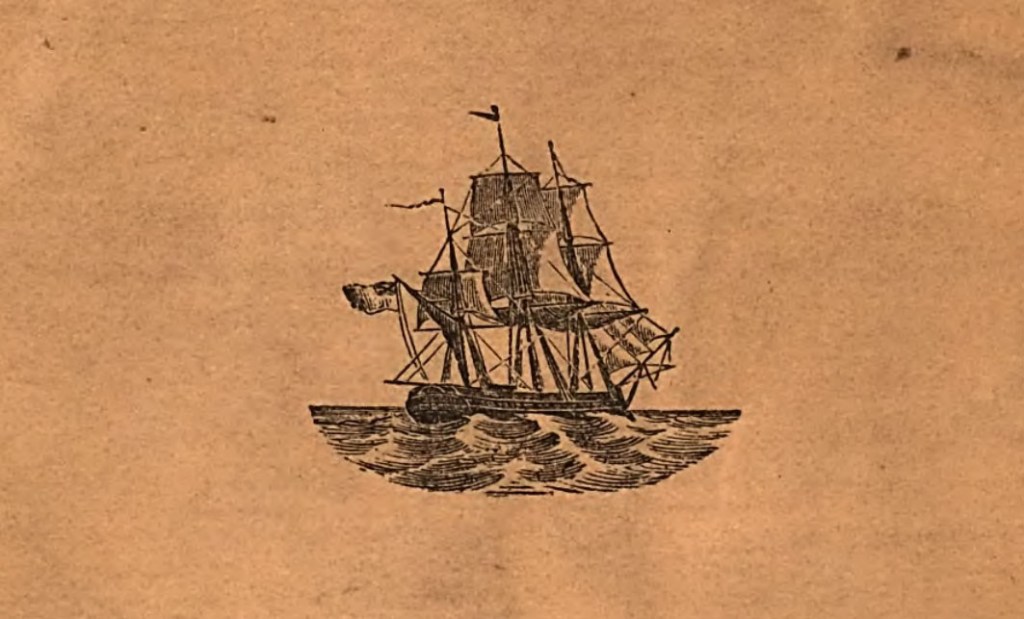
    Brig – similar to the Harrington.

    Robert Stewart was not your typical convict born into England’s poverty-stricken underclass and sentenced to transportation for committing some petty crime. Rather, he came from a comfortable though modest middle-class family. Born in 1771, the first ten years of his life would have likely been idyllic, but then his father died, and a year later, his widowed mother enrolled him into the Royal Mathematical Institution. There, he joined the ranks of boys learning maths and celestial navigation, preparing them for apprenticeships in the merchant marine or Royal Navy. Had he graduated, Stewart would have had a respectable and rewarding career that would one day see him master of his own ship. However, Stewart harboured ambitions of one day enjoying the sort of wealth and privileges that “higher-born” gentlemen took for granted.   

    In June 1785, Robert Stewart’s rebellious nature and frequent absences led to his expulsion from the institute.  He then joined the Royal Navy as an ordinary seaman and over the next 12 years rose to the rank of Petty Officer. But in 1798, aged 27, he deserted, likely embittered that he would never be promoted into the officer ranks.  Three years later, he stood trial on fraud and forgery charges. Stewart had purchased goods while posing as a Lieutenant in the Royal Navy and paid for them with a forged cheque. Caught, charged and found guilty, he was sentenced to transportation for life and sent to Van Diemen’s Land.

    Sydney Cove c1809. Courtesy State Library of NSW.

       Stewart arrived in Hobart on the Calcutta in 1803 and did not attract any undue attention for a year or so. However, twice, he attempted to escape by seizing small colonial vessels and setting sail. Both times ended in dismal failure, and he was returned to Hobart to face punishment. After his second attempt, he was sentenced to death. Stewart was only spared that punishment due to a blanket pardon given to all prisoners under capital sentence by the recently appointed Governor of NSW, William Bligh. However, in 1808, he was sent to Sydney to serve a period of time at hard labour.

       But Stewart never gave up hope of regaining his freedom. This time, he had his eye on the 180-ton brig Harrington anchored in Sydney Cove. She had recently returned to Port Jackson from China with her hold filled with tea after delivering a cargo of Fijian sandalwood. So lucrative was the trade that the Harrington’s captain was set to do it again.   The ship was stocked with enough supplies to last the crew several months and was to sail any day.   

    At 10 o’clock on the night of 15 May 1808, Stewart led as many as 30 fellow convicts out to the waiting ship in two boats they had just stolen. They came alongside as quietly as they could so as not to alert any sentries. But when Stewart climbed over the side, he found he had the deck to himself. The rest of the men swarmed over the gunwales. Some went forward to secure the crew. Others went aft to take care of the officers. The Harrington’s Chief Officer, Arnold Fisk, woke to the sight of Stewart holding a pistol to his head. The brig’s captain and owner could not be found, for he had gone ashore earlier that day. As Stewart and his men took control of the ship, the captain was blissfully asleep in his home overlooking Sydney Harbour.

    Sydney Gazette 22 May 1808, p. 2.

        With the ship’s company under guard, the convicts cut away the anchors and used the two stolen boats to tow the Harrington the length of Sydney Harbour. Once they reached the Heads, the sails were unfurled and the wind took them out to sea. By 7 a.m., they were about 20 nautical miles (40 kilometres) off the coast.

       Stewart ordered the Harrington’s crew into the two boats so they could make their way back to Sydney. They pulled into Sydney Cove later that afternoon to learn the alarm had already been raised. Earlier that morning, Captain Campbell had looked out across the Harbour to find his ship was not there.

       It took authorities three days to organise a ship, the Pegasus, to go in pursuit. By then, Stewart and the Harrington were long gone. The Pegasus cruised the Fijian Islands and then sailed on to Tonga before returning to Sydney via New Caledonia. She was gone nine weeks and arrived back empty-handed. For a time, it looked as if Robert Stewart and his band of bolters had made good their escape. Stewart had sailed the brig nearly 8000 kilometres north and was approaching Manila in the Philippines when their luck ran out. HMS Dedaigneuse spotted the unfamiliar vessel, and her captain sent a boarding party across to investigate. By then, the Harrington was flying American colours, and Stewart presented the officer with papers purporting that the ship was of American origin. The forged documents did not fool the officer in charge of the boarding party who seized the ship. Stewart, now calling himself Robert Bruce Keith Stuart, was taken back to the Dedaigneuse while the rest of the convicts were locked in the Harrington’s hold, now under the command of a British naval officer and a prize crew.

       Shortly thereafter, the Harrington ran aground off the island of Luzon. Most of the convicts were reported to have got ashore where they fled on foot. However, there is some evidence to suggest that their “escape” might have been fabricated, and they were actually press-ganged into Royal Navy service.

       Stewart, on the other hand, had a much easier time of it. He spoke and carried himself in a gentleman-like manner, professed to have enjoyed a liberal education and that he had connections to some of Britain’s most prestigious families. Stewart claimed to have once been a lieutenant in the Royal Navy before he fell victim to the penal system. As a result, he was accorded considerable leniency by the Dedaigneuse’s captain.    Captain Dawson allowed Stewart “every reasonable indulgence and forbade to place him under personal restraint.” That was until Stewart tried to escape and came very close to succeeding. After that, he was placed under close confinement. Stewart was eventually delivered to British officials in India, where he continued masquerading as a gentleman in need of help rather than the escaped convict that he was.

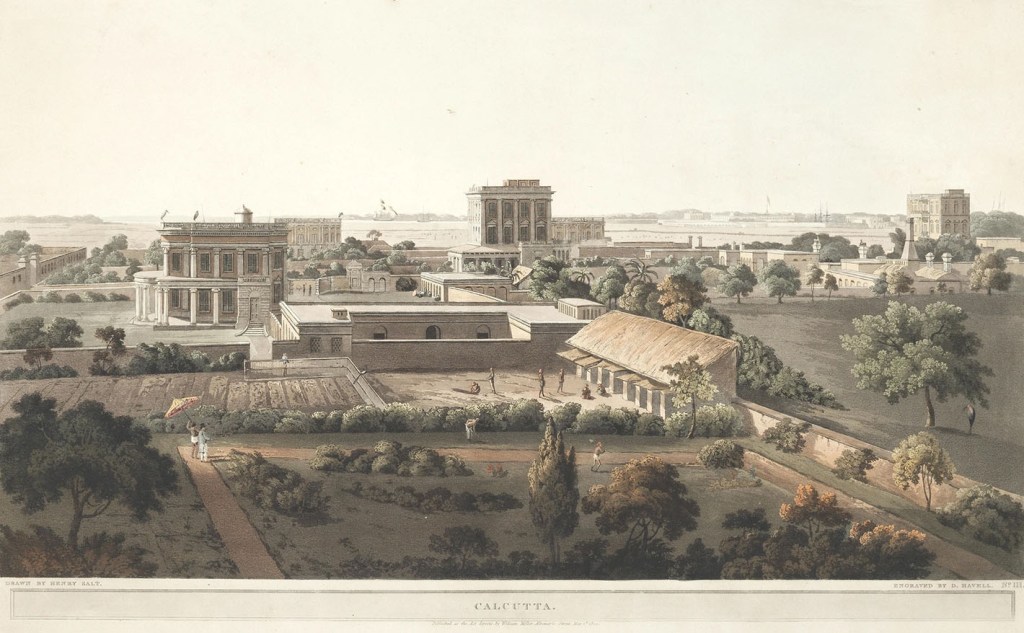
    Calcutta circa 1809.

       He knew he could not hide the fact that he had committed an offence serious enough to warrant transportation to New South Wales. So, instead, he fabricated a preposterous story about his conviction. Stewart claimed he had eloped with a young lady from a very respectable family, though chivalry required him to leave her unnamed. But, after they were secretly wed, a junior Baronet who also had desires for the lady broke into their apartment. Stewart said he had shot and injured the young aristocrat in what he described as an affair of honour. Stewart said he had been unfairly found guilty of attempted murder and sent to New South Wales. That sounded more in keeping with a gentleman than being caught for the more tawdry crime of passing a forged cheque. His tale garnered much sympathy from the colonial administrators in Calcutta. The Chief Magistrate even went as far as to champion Stewart’s cause, penning a letter to his superior suggesting he should be released.

       But then, in August 1809, Stewart’s time ran out. The British officials could not ignore that he was a fugitive from justice, and the Governor General ordered him to be returned to Sydney. He was placed on board a ship bound for Australia, but before it sailed, Stewart went missing. At first, the captain claimed he had jumped overboard and likely drowned, but it later transpired he had been whisked away in a boat by one of his many admirers and taken back to Calcutta.

       So, Robert Stewart may have escaped justice and settled in India under yet another assumed name, or caught the next ship leaving port. No one knows for the trail grows cold then. One thing is certain: he never returned to New South Wales to serve out his sentence. Nor did he face punishment for masterminding the seizure of the brig Harrington.

    © Copyright C.J. Ison / Tales from the Quarterdeck, 2024.

    Please enter your email address below to be notified of future blogs.

  • The Invercauld shipwreck, 1864.

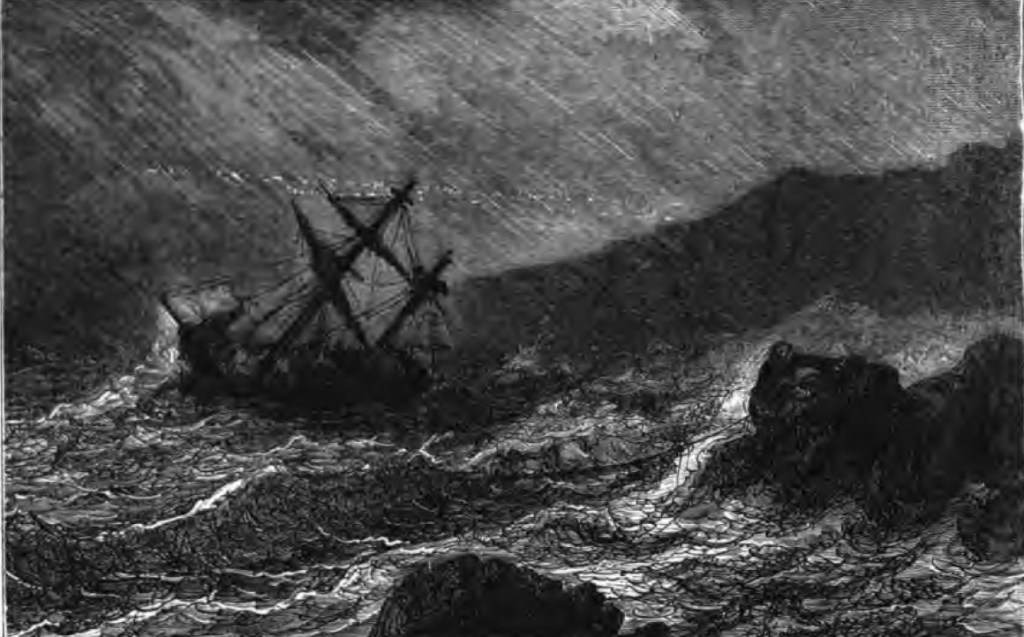
    Illustration of the Invercauld. Source: The Castaways, Andrew Smith, 1866.

       In recent years, the loss of the Invercauld and its tragic aftermath has been held up as an example of what can go horribly wrong when leadership fails. In contrast to the wreck of the Grafton, on the same island at the same time, where all five men survived, only three of the Invercauld’s 25-man crew lived through the ordeal. The considerable loss of life has sometimes been blamed on the captain’s failure of leadership. But that harsh criticism is based largely on a version of events contained in a memoir written by one of the survivors, some 60 years after the event. Robert Holding had little to say in praise of his captain, but his chronicle stands in stark contrast to the only contemporary account left by one of the other survivors. His story is one of grinding struggle against the elements, a hostile landscape, and a scarcity of food.

       The Invercauld was a 888-ton merchant ship under the command of Captain George Dalgarno. She sailed from Melbourne on 3 May 1864, bound for the Peruvian port of Callao to load up with guano.

       Almost from the outset, they were plagued by foul weather. As they bore southeast in a long, sweeping arc that would take them deep into the South Pacific, they battled strong winds, high seas, rain, sleet, and snow. Then, a week after leaving Melbourne, the lookout sighted the dim outline of land ahead through the pouring rain. Dalgarno took the sighting to be the Auckland Islands, south of New Zealand, at 61 degrees south. He had been unable to take any sightings due to the weather, but had calculated that he was likely approaching their southernmost point. He altered course a few degrees south to clear them with a safe margin.    To Dalgarno’s great surprise and alarm, the lookout called land ahead again. Dalgarno’s navigation had been off more than he had anticipated. He realised, too late, that his ship was in mortal danger, for they were being blown towards a lee shore. By now, the sun had set as the storm continued to rage around them. He spied what he thought was a narrow passage separating two islands and decided that this was his best chance to save the ship. He brought the Invercauld around to the north and heaped on as much sail as he dared, hoping to pass unscathed through the channel into calmer waters beyond.  

       High cliffs loomed out of the inky darkness on the starboard side, and then they were caught in breaking surf. Dalgarno lost all control of the ship. She ran aground broadside on a rocky shore. Huge waves crashed over the deck. There was no time to get the lifeboat over the side, for the Invercauld almost immediately broke apart under the pounding. The men ditched their boots and heavy oilskins as the ship came apart under their feet. Twenty-five men were swept into the turbulent sea to be washed ashore in a small cove backed by towering cliffs. Only 19 men survived the sinking, and all were battered and bruised from being bashed against rocks and wreckage.

       The sodden survivors huddled together for warmth during that first freezing night as the sea spray, rain, and sleet beat upon them. In the early hours, they gathered some of the wreckage to build a lean-to, which gave them some shelter from the worst of the elements. When the sun rose, they got their first proper look at where they had been tossed ashore. They were trapped on a narrow crescent of rocky beach hemmed in on three sides by towering cliffs. The only food they had been able to find washed ashore from the wreck was a kilogram of salt pork and a kilogram bag of sea biscuits, not much to sustain 19 cold and hungry men. One item that would aid them in the future, once it had dried out, was a soggy box of matches that the steward had found in his pocket.   

    To remain where they were would spell the end of them all. The only option they had was to scale the cliffs and see what lay at the top. The climb would claim another sailor who slipped and fell to his death. When Dalgarno and the 17 surviving crew reached the top, they found an inhospitable landscape of dense scrub and coarse grass as far as they could see. Dalgarno thought they would have a better chance of surviving on the more sheltered eastern side of the island. So, off they set, barefoot through the thick vegetation. It took them two weeks to cross the island. Two weeks of pushing through dense scrub, of being lashed by freezing wind and rain, of barely subsisting on a diet of roots and leaves, but for one day, when they caught a small pig.

    Newcastle Journal, 1 Aug 1865, p. 3.

       Four men died from fatigue and exposure during the long trek. Six others broke away from the main group led by Dalgarno, wanting to return to the shipwreck site. Holding was one of them, but he rejoined the main group a few days later. The other five were never seen again.

       By the time they reached a bay on the eastern shore, the party had been reduced to just nine men. There, they found an abundance of limpets fixed to the rocky shore and feasted as only starving men could. But even that plentiful supply was eventually exhausted. They decided they would cross a ridge to the south, hoping they would find another bay filled with shellfish.

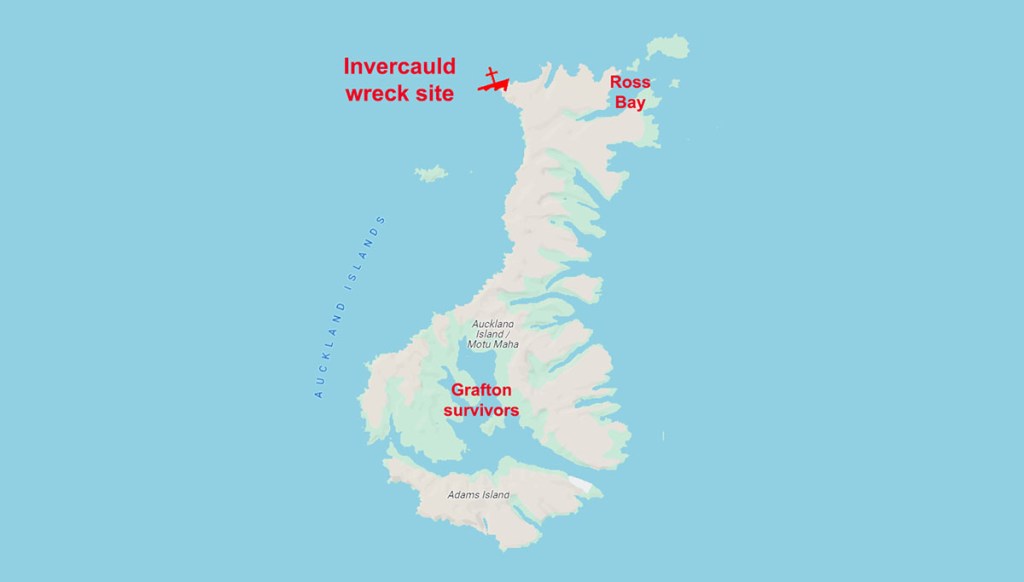
       As they crested the ridge, Dalgarno saw two huts on the edge of a bay. They were the first signs of civilisation they had seen since being tossed ashore. When they reached the huts, they found them to have been abandoned, but they provided welcome shelter from the winter elements and the hope that someone might return during the summer months. In fact, the huts were the remains of Endeby’s short-lived whaling station on Ross Bay, which had lain abandoned for the past decade.

       For a time, their fortunes improved. For men who had nothing, the huts were a treasure trove of rubbish that could be repurposed into useful tools of survival. Empty tin cans became boiling pots for limpets. A sheet of iron served as a hotplate over their cooking fire. The discovery of an old adze and hatchet made cutting firewood so much easier. On their first day, they caught a seal, which they feasted on that night. Unfortunately, that was the only one they found, so their diet primarily consisted of limpets, wild roots and greens.

       When they had exhausted this bay of shellfish, remaining any longer seemed pointless. Dalgarno and three others remained at Ross Bay while Andrew Smith, the chief mate and narrator of the only contemporary account of the wreck and its aftermath, Robert Holding and the other two sailors set off to find a better source of food further along the coast. By the time they found a suitable cove and returned to collect the others, only Captain Dalgarno was still alive. The others had succumbed to the cold and starvation. Two more would die in the coming months, leaving just Dalgarno, Smith and Holding still alive.

       Again, their fortunes seemed to improve, at least for a while. After hunting down a couple of seals, they constructed a canoe by stretching the skins over a sapling frame. Now they were able to venture further afield in their relentless search for food. Surviving on a diet of fish, sea birds and the occasional seal, they made it through to summer, but that brought a new set of miseries. Sandflies savaged them, and any seal meat or fish left uneaten for more than a day or so became fly blown.

    …With rescue looking unlikely, the trio realised their only chance of escape lay in building a boat. It was a move born of desperation, for the nearest port was Invercauld in New Zealand, nearly 500 km away. They returned to the huts and pulled them apart using the timbers to construct a boat. However, no sooner had they finished building it than a storm lashed the island and swept it out to sea. They built a second boat with the remaining timbers and, over the next couple of months, used it to travel around Ross Bay and to nearby islands in search of seals and other food sources. They found that one island was thickly populated with rabbits, which eventually proved to be an easy source of meat and skins.

       As their second winter loomed, they built a sturdy sod-walled hut complete with a fireplace and chimney to see them through the coldest months. Then, on 21 May 1865, one year and ten days after being cast upon the island, a vessel dropped anchor in Ross Bay. It was the Portuguese ship Julian, which had pulled in for repairs while on a voyage from Macao to South America. The Julian’s captain had seen Endeby’s whaling station marked on his chart and had hoped to get some help repairing his badly leaking ship. All he found were the Invercauld’s three castaways. When the Julian set off for South America, Dalgarno, Smith, and Holding went with her.

    Main sources: The Castaways: A Narrative of the Wreck and Sufferings of the Officers and Crew of the Ship “Invercauld” of Aberdeen on the Auckland Islands by Andrew Smith, 1866; Captain Dalgarno’s letter to the ship’s owners published in the Birmingham Daily Post, 31 July 1865, p. 8; and A Narrative of the wreck of the “Invercauld” among the Auckland Islands by Captain Dalgarno in Wrecked on a Reef by Francois Raynal, 1874.

    © Copyright C.J. Ison / Tales from the Quarterdeck, 2024.

    Please enter your email address below to be notified of future blogs.

  • Marooned for twenty months: the loss of the Grafton 1863.

    The last of the Grafton castaways are rescued. Source: Wrecked on a Reef, Raynal, 1874..

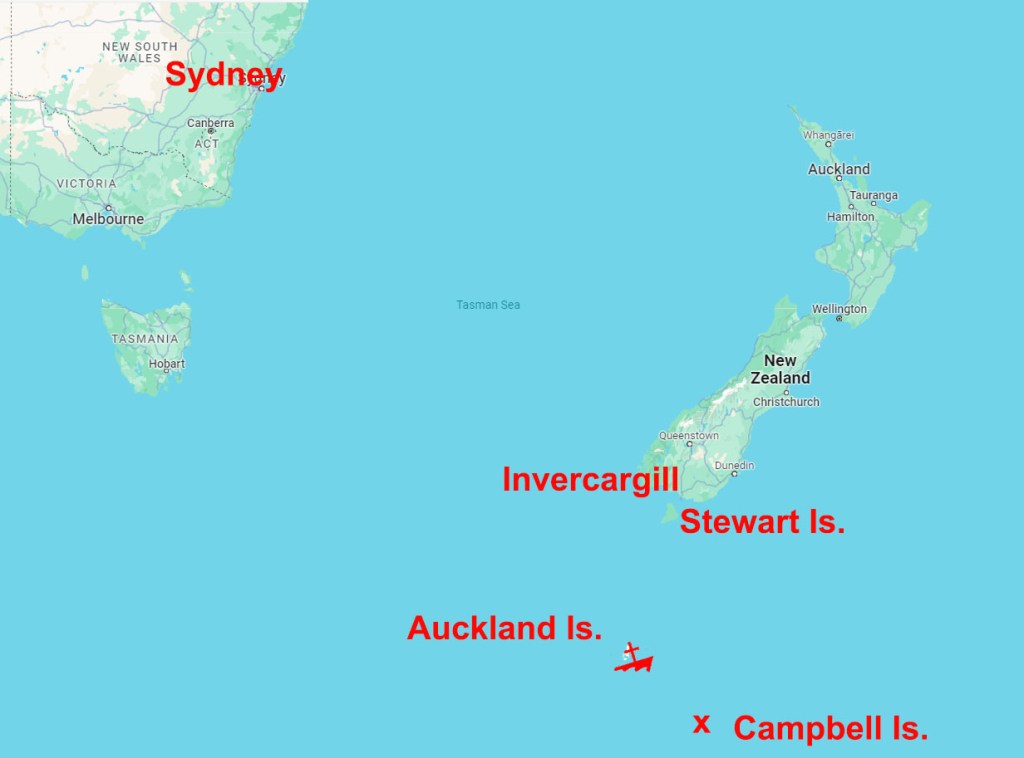
    On 12 November 1863, the 56-ton schooner Grafton sailed from Sydney on a sealing expedition among the islands of the Southern Ocean. Six months, 12 months, then 18 months passed without any sighting of the ship or its crew. Most people had given up hope of seeing them again, presuming they had been lost in that vast expanse of freezing ocean wilderness to Australia’s south. Then, on 27 July 1865, three of the lost mariners stepped ashore at Invercargill, New Zealand. Their leader was the missing ship’s captain, and he reported that his other two shipmates were still stranded on a remote island to the south. This is their remarkable tale of endurance and survival against the odds.

       The Grafton was ostensibly on a sealing expedition funded by a consortium of Sydney businessmen. But it also had a more secretive mission to investigate if tin could be found on Campbell Island. The Grafton was to visit the isolated scrap of land some 650 km south of New Zealand and determine if the rumoured tin was there in mineable quantity. An experienced master mariner named Thomas Musgrave was appointed captain of the Grafton, and one of the business partners, Francois Raynal, served as his first mate. Two seamen and a cook rounded out the five-mancrew.

       The weather was atrocious for most of the voyage south through the roaring forties and then into the furious fifties. During one particularly heavy gale, the Grafton was laid over on her side by the force of the wind. But after three weeks of hard sailing, they finally reached Campbell Island, at latitude 52.6°S.  

    Illustration of the Loss of the Grafton on Auckland Island, 1863. Source: Wrecked on a Reef, Raynal, 1874.

       Prospecting for tin came to nothing, and there were few seals to be had. After a month, they had little to show for their time there. They had been gone for almost two months and had consumed nearly half of the four months’ worth of rations they had left with. Captain Musgrave decided it was time to start heading for home. No one disagreed. They departed Campbell Island on 27 December 1863 with the wind blowing hard from the northwest. As they approached the Auckland Islands, Musgrave found that he could not sail past them without getting dangerously close to land. He decided the safest course of action would be to find shelter in one of the inlets and wait for the wind to shift. They dropped anchor in what they would later learn was Carnley Harbour on 31 December. But soon after arriving, their haven turned out to be anything but when it was lashed by a powerful storm. On the night of January 2, the wind shifted and blew at hurricane strength, as the seas foamed and grew mountainous around them.  

    Site of the Grafton wreck site, Auckland Island. Courtesy, Google Maps.

        For a time, the Grafton rode out the maelstrom. Then one anchor chain snapped, and the second anchor began to drag. At midnight, the schooner was driven up onto a rocky beach. “Within fifteen minutes, she was nearly full of water, with heavy sea breaking over her,” Musgrave later wrote of the ordeal.   

    The crew gathered provisions and warm clothing and piled it all on deck. Then everyone found shelter where they could, and waited for daylight as the storm raged around them. Francois Raynal had fallen ill sometime earlier, but his shipmates looked out for him during that bleak night. In the morning, they climbed into their small dinghy, which was already filled with supplies. Captain Musgrave tied a rope to the Grafton and slowly let it run out as the overloaded dinghy was pushed towards land. When they were close to the beach, one of the seamen, Alexander McLaren, jumped into the surf holding a rope tied off to the boat’s bow. He waded ashore and then wrapped the rope around a tree. As Musgrave let his line out, McLaren pulled his in, and the boat made it through the surf to land safely on the beach. It was that level of simple cooperating that would stand them in good stead during the months that followed.

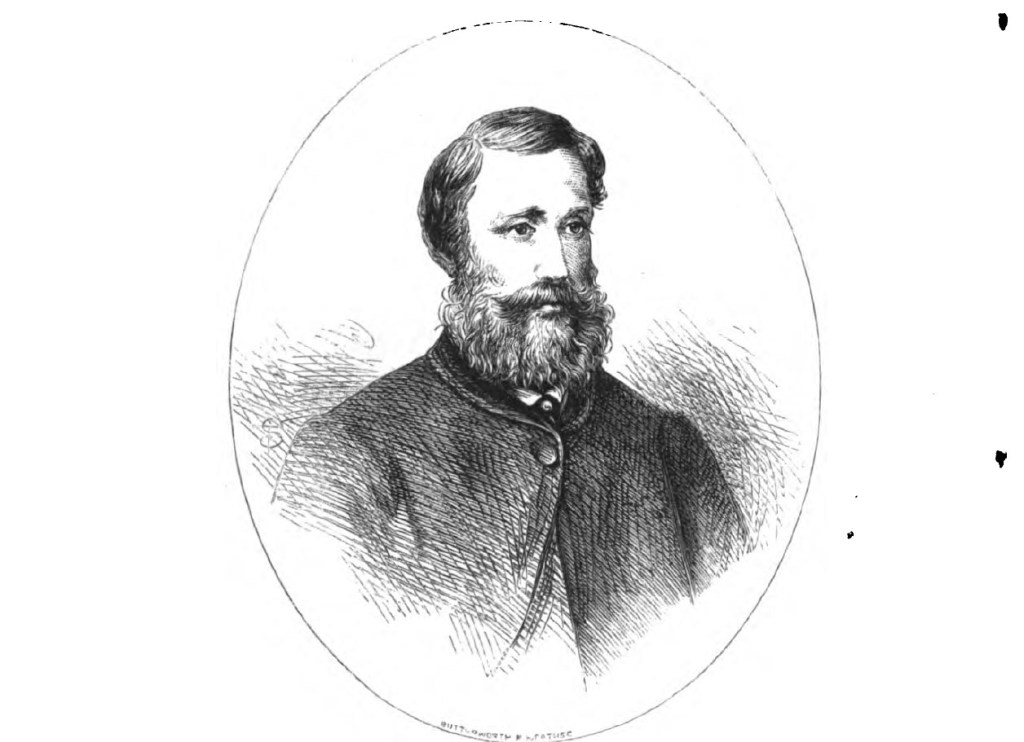
    Captain Thomas Musgrave. Source: Castaway on the Auckland Islands, 1866.

        The castaways spent that night sleeping on the cold, wet ground, but were no doubt grateful that they had made it off the wrecked schooner alive. As for the Grafton, she was pounded to pieces, with no prospect of being repaired and refloated. After the weather had cleared sufficiently, they returned to the wreck. Their priority was to salvage the sails and timber spars, enough to build a small hut so they had shelter from the harsh elements. Despite being marooned on a remote island, Captain Musgrave and the others believed it would only be a matter of time before a ship passed by and they would be rescued.

       But as the months rolled by, their hopes of being found ebbed away and finally vanished completely. The small amount of water-damaged sea biscuit and salted pork they had saved from the schooner had run out long ago. Then, for the next 18 months, they survived on a diet comprised mainly of seal meat. Raynal, who over time recovered his strength, was able to brew a passable ale, which he believed would help keep scurvy at bay.

    Inside the hut on Auckland Island. Source: Wrecked on a Reef, Raynal, 1874.

         The castaways strengthened their hut, built a fireplace and chimney, and furnished it with stretchers, a table, and stools. Lanterns fuelled with seal oil gave the interior a warm, comforting glow. When not out procuring food and water or keeping vigil for any ship that might pass by, Musgrave taught his illiterate sailors how to read. The castaways also passed their time playing chess and dominoes with bone pieces Raynal had carved by hand. They also played cards for a time, but Raynal eventually destroyed the pack when it became evident that Musgrave was a poor loser. As their clothes deteriorated, they were replaced with seal-skin garments. In short, they made their home as comfortable as circumstances would allow.   

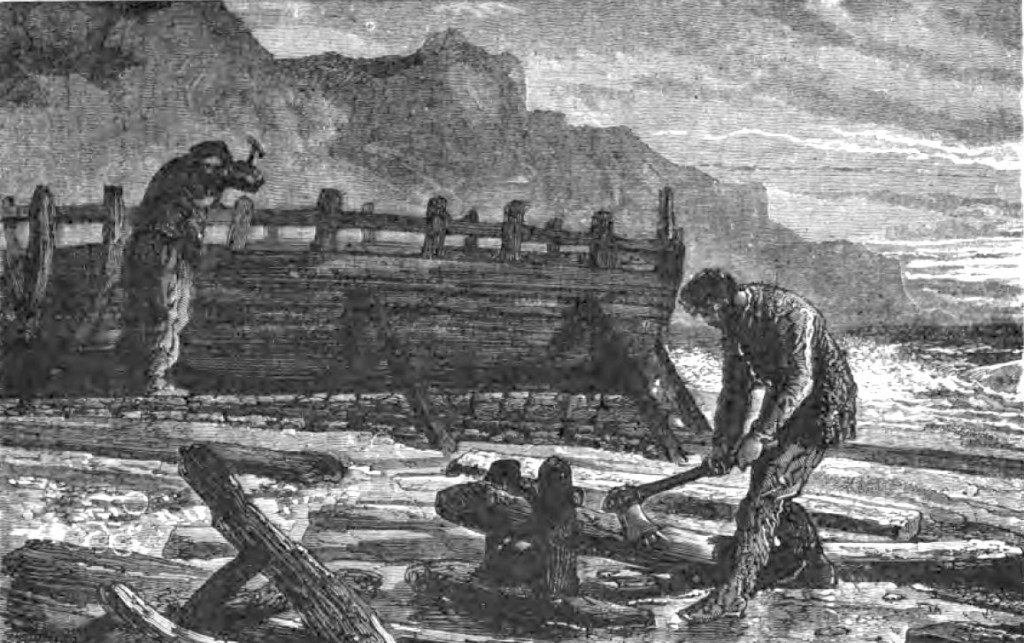
    After spending a second summer on Auckland Island without ever seeing another soul, the castaways decided to wait no longer to be rescued. It was now around March 1865, and another freezing winter was fast approaching. They considered constructing a new vessel from the Grafton’s wreckage, and they even built a forge to assist them. However, the venture was abandoned for want of an auger to drill holes through the timbers. Instead, they turned to making their twelve-foot (3.6 metre) dinghy more seaworthy. They extended its length by 76 cm, built up the sides and furnished it with a deck. When it was finished, Musgrave found it was so unstable that it would have been too dangerous to call all five of them to safety.


    Preparing the dinghy to escape from Auckland Island. Source: Wrecked on a Reef, Raynal, 1874.

       On 19 July 1865, Captain Musgrave set off in the dinghy with only two men, Francois Raynal and Alexander McLaren, promising to return quickly to rescue George Harris and the cook, Henry Brown. After five days of hard sailing through foul weather, they reached Stewart Island, 450 kilometres to their north. They put into Port Adventure and fell in with the Flying Scud. The next morning, Musgrave and his mates were taken the final 50 km across Foveaux Strait to Invercargill on New Zealand’s South Island.   

    After sufficient funds were raised by the good folk of Invercargill, a ship was chartered to take Captain Musgrave back to Auckland Island to retrieve his two shipmates. The Grafton’s story is a testament to what can be accomplished when a group of resourceful individuals, aided by a measure of good fortune, work together for their common good.

    As chance would have it, the survivors of another ship, the Invercauld, had washed up on the northern end of Auckland Island around the same time.   Unfortunately, theirs is a far different story and is the subject of a future blog.

    © Copyright C.J. Ison / Tales from the Quarterdeck, 2024.

    Please enter your email address below to be notified of future blogs.

  • William Dampier: Navigator, naturalist, writer, pirate.

    Life and adventures of William Dampier. Source: Tales of Shipwrecks and Adventures at Sea, 1856.

    William Dampier visited Australian shores twice in the 17th Century. The first time was when he served on the Cygnet in 1688, and the second, 11 years later, when he commanded HMS Roebuck. Dampier was the first Englishman to describe the land, its fauna, flora and people to a European audience. While his contribution to Australia’s history is relatively minor, his story is nonetheless a fascinating look into the golden age of exploration. Navigator, naturalist, writer, and pirate are all words that describe aspects of Dampier’s colourful life.

       Born in Somerset in 1651, William was the son of a tenant farmer. He does not appear to have had any interest in following in his father’s footsteps. Instead, when he turned 17, he went to sea and began his apprenticeship as a mariner. He joined the Royal Navy around 1673 and saw action during the Third Anglo-Dutch War. When hostilities ceased, he left the navy and travelled to the West Indies. Then, when war broke out between England and Spain, he became a privateer, which could best be described as a state-sanctioned pirate. In 1678, now aged 27, he returned to England and married his fiancée. However, he would spend just one year with her before he put to sea again.   

    This time, he would be gone 12 long years. After hunting down Spanish ships off Central America, he joined another privateer and crossed the Pacific Ocean in search of plunder. He visited ports in the Philippines, China and Southeast Asia. Then, in January 1688, he was on the Cygnet when it stopped on Australia’s northwest coast. The ship had pulled in for repairs at King Sound north of present-day Broome and would remain there for a couple of months. Dampier spent his time documenting the unusual fauna and flora. He also wrote at some length about his observations on how the indigenous people lived, but not in particularly flattering terms. To his Eurocentric eye, they existed in appalling conditions, and he thought them to be the most miserable people he had ever encountered.

    A map of the world showing the course of Mr Dampiers voyage round it: From 1679 to 1791. By Herman Moll.

       In 1691, Dampier joined a very exclusive club of men who had circled the globe when he returned to England via the Cape of Good Hope. His various exploits and adventures became the subject of his hugely successful book, “A New Voyage Round the World,” published in 1697. Through his book, Dampier came to the attention of both the Royal Society and the Admiralty. They commissioned him to chart the east coast of New Holland, some 70 years before James Cook would eventually do so. Had Dampier succeeded, he may well have changed the trajectory of modern Australian history. However, as will soon become evident, circumstances would conspire against him.  

    HMS Roebuck sailed from England on 14 January 1699 with a crew of 50 and provisions to last them 20 months. Dampier originally planned to sail around Cape Horn and then cross the Pacific Ocean until he reached Australia’s east coast. However, his ship was long past its glory days, and its refit for this hazardous voyage had taken far longer than anticipated. By the time he reached the southern tip of South America, it was winter, the worst time to try rounding Cape Horn. Instead, he decided to cross the South Atlantic and round the Cape of Good Hope. He would then cross the Indian Ocean to New Holland’s west coast and begin his survey there.

    HMS Roebuck.

    They made landfall near Dirk Hartog Island in early August 1699.   On 7 August, he sailed past Cape Peron and into Shark Bay, where he spent a week exploring.   Dampier named it for the abundance of sharks he found in those shallow, enclosed waters. He made a detailed chart of the bay and described many of the fish, birds and plants he saw there. Though fish, fowl, and turtles were easily procured and made a welcome addition to the men’s diet, they were unable to find a supply of fresh water. On 14 August, Dampier left Shark Bay by the same passage he entered after encountering shoals and dangerously shallow water between Dorre and Bernier Islands and the mainland.

    A Pied Oyster Catcher. Source: A Voyage to New Holland, in the year 1699.

    They continued north along the coast for another 750 kilometres until they arrived at a small group of islands, now known as the Dampier Archipelago. Freshwater remained elusive, so they continued sailing north until they were at latitude 18° 21’ south, about 60 to 70 km south of present-day Broome. Again, they went in search of water. And, again, they returned empty-handed. Only this time, an encounter with the local inhabitants ended in violence. One of Dampier’s men was speared through his cheek while a Karajarri man was wounded by musket fire. In early September, Dampier resigned himself to temporarily abandoning New Holland and made for Timor to resupply.   

    From Timor, Dampier continued sailing northeast and charted the northern coast of New Guinea. By now, the Roebuck was in such poor shape that he abandoned his plan to locate New Holland’s east coast and turned back towards England. He stopped briefly at Batavia, then crossed the Indian Ocean, rounded the southern tip of Africa, and sailed north through the Atlantic. In February 1701, they reached Ascension Island, but HMS Roebuck would go no further. Her planking was riddled with seaworms. And she was taking on a lot of water. Dampier had to run her ashore to stop her from foundering in deep water. He and his crew would remain stranded there for five weeks until a passing East Indiaman rescued them. Dampier and his men returned to England in August 1701.

    1966 Australian postage stamp commemorating William Dampier.

    William Dampier was court-martialled on his return to England on a charge of ill-treating his first mate on the voyage out. Found guilty, he was stripped of the money the Admiralty owed him, and he was ruled unfit to command any of His Majesty’s ships in the future. Undeterred by the setback, he published a book about his most recent exploits and would go on to circumnavigate the world twice more. When Dampier died in London around 1715, he was the only person to have circled the globe three times.

    Sun sets over Flinders and Stanley Islands in Bathurst Bay with a fishing boat in the forground at Cape Melville on Cape York Peninsular, Far North Queensland. Photo Chris Ison / Wildshot Images.

     © Copyright C.J. Ison / Tales from the Quarterdeck, 2024.

    Please enter your email address below to be notified of future blogs.