Tag: #Queensland

  • Thomas Pamphlett and the Remarkable Castaways of Moreton Bay

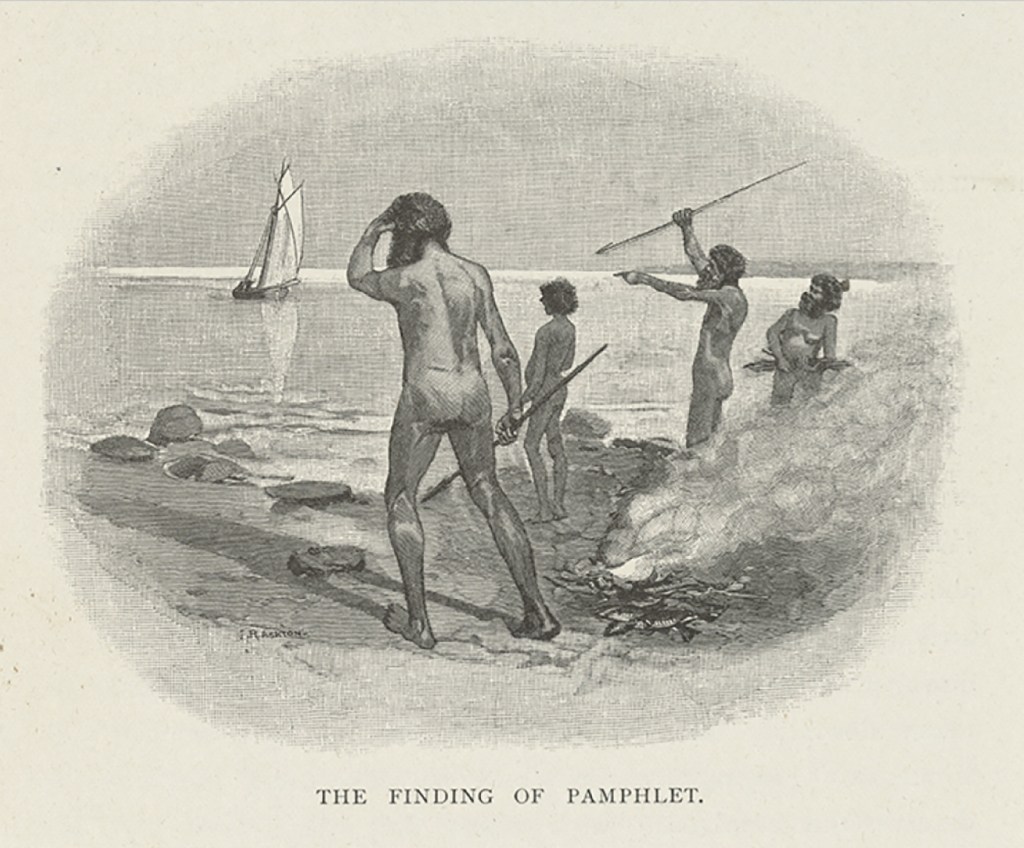
    Source: ‘The Finding of Pamphlet’, Picturesque Atlas of Australasia, vol. II, 1886, nla.cat-vn1654251.

    Most Queensland school children are taught that the first non-Aboriginal people to settle in their state were convicts and their gaolers who arrived in September 1824.   But actually the first white-skinned people to live in what would become Queensland were three castaway ex-convicts who came ashore 18 months earlier.

    In 1823 Governor Brisbane sent the NSW Surveyor General, John Oxley, to determine if Moreton Bay, 800 kilometres north of Sydney, would make a suitable penal settlement to house the colony’s worst and most incorrigible convicts.

    On 29 November the small government cutter Mermaid, carrying Oxley and his party, dropped anchor in Pumicestone Passage separating Bribie Island from the mainland.   To their astonishment, among the Aborigines they could see on shore stood a taller, lighter-skinned man excitedly haling them.    His name was Thomas Pamphlett and he and two mates had been living with the local Aboriginal peoples for the past seven months.

    This is their story.     On 21 March 1823 four ticket-of-leave men, Thomas Pamphlett, John Finnegan, Richard Parsons and John Thompson, sailed from Sydney in a 10-metre-long open boat bound south to the Illawarra to gather cedar logs for sale in Sydney.

    However, they were caught in a ferocious storm which battered the craft mercilessly for five days.   They were driven far from the coast under a bare mast and when the storm finally cleared five days later they had no idea where they were.     They thought they had been blown south towards Van Diemen’s Land but in fact they had been taken north.    So, when they could finally hoist a sail they bore north in search of Sydney.  

    Their water had run out days earlier and they only had rum to quench their thirst.    All four were in a bad way but John Thompson became delirious and died from thirst.   They kept him in the boat for several days until the smell drove them to bury him at sea.  

    They finally sighted land about three weeks after setting off from Sydney.   This turned out to be Moreton Island though that was not known to them at the time.   They could see a freshwater stream flowing across the beach so Pamphlett swam ashore with the water keg in tow.   He drank his fill but was too weak to swim back to the boat.    The others, crazed with thirst, brought the boat closer to shore but it got caught in the surf and was smashed to pieces.

    The three men were alive but stranded.   They salvaged some flour, a bucket, an axe, a pair of scissors, the water keg but little else.    They soon came across an Aboriginal camp in the sand dunes and were befriended by the people.    The three castaways lived with their hosts for a couple of months then they decided to set off north thinking they would eventually reach Sydney.

    First they went south to cross over to Stradbroke Island then onto the mainland where they ventured north around Moreton Bay   All the time they were accompanied by different bands of Yuggera.   Pamphlett and Finnegan decided to stop at Bribie Island on the northern edge of the bay and lived with the Joondoobarrie people until they were found by Oxley and his party.     Parsons, still determined to return to Sydney kept heading north and may have gone as far as Harvey Bay before it was made clear to him his presence among the Butchella people was not welcomed.  
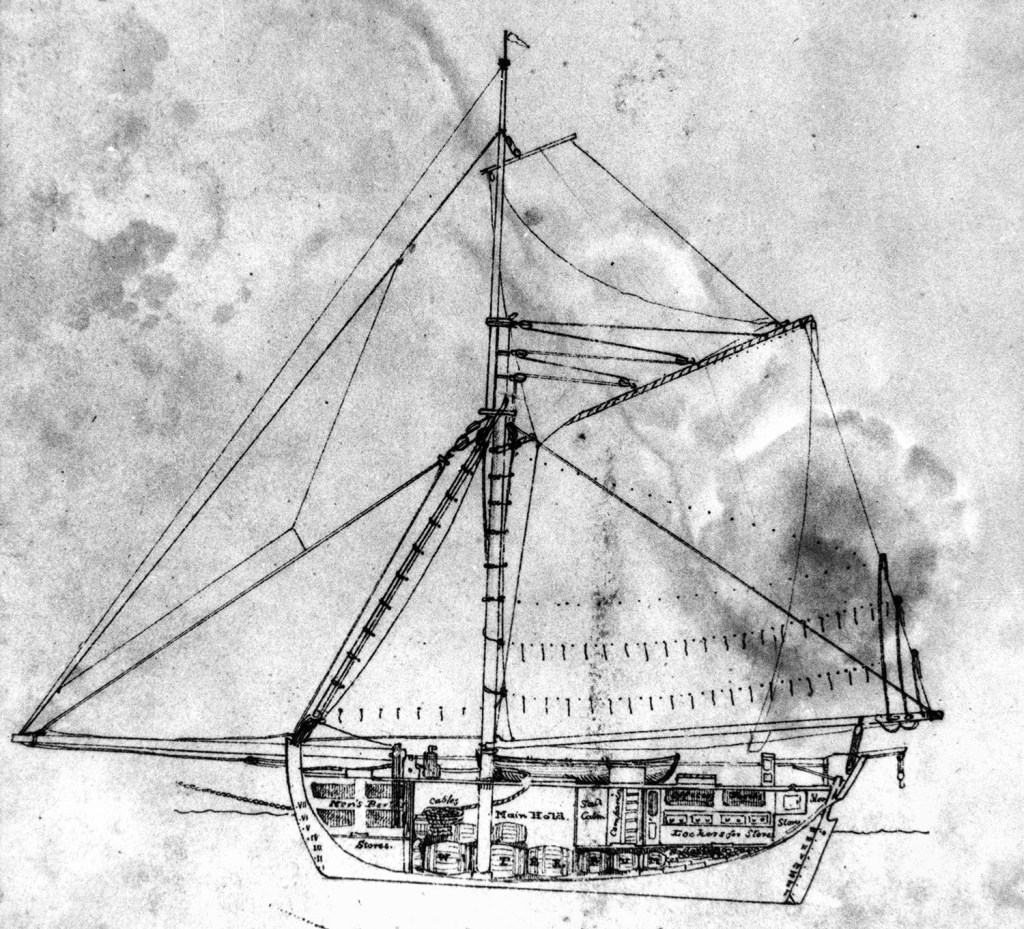
    The cutter Mermaid. Photo State Library of Queensland

    He returned to Bribie Island many months later only to find his comrades had been taken away on the Mermaid.   However, the party of explorers left a message in a bottle for Parson should he ever pass that way again.   Unfortunately, he was illiterate and could not read the message that had been left for him, but he remained in that area in the hope that another ship might pass that way.    He was in luck.   The brig Amity sailed into Moreton Bay in September the following year with 30 convicts and their guards to establish the first settlement at Redcliffe.   When they came ashore Parsons was standing on the beach waiting for them.  

    Richard Parsons was returned to Sydney and found work as a bullock driver. John Finnegan later returned to Moreton Bay and took up a post piloting ships in and out of the bay. Thomas Pamphlett also returned to Moreton Bay, but it was not of his own choosing. He stole two bags of flour in 1826 and was sentenced to spend seven years toiling at Moreton Bay penal settlement.

    For more interesting stories from Australia’s maritime past check out  A Treacherous Coast: Ten Tales of Shipwreck and Survival from Queensland Waters, available now as a Kindle eBook or paperback through Amazon.

    (c) C. J. Ison / Tales from the Quarterdeck, 2021.

    To be notified of future blog posts, please enter your email address below.
  • The Brig Amity’s Amazing Career

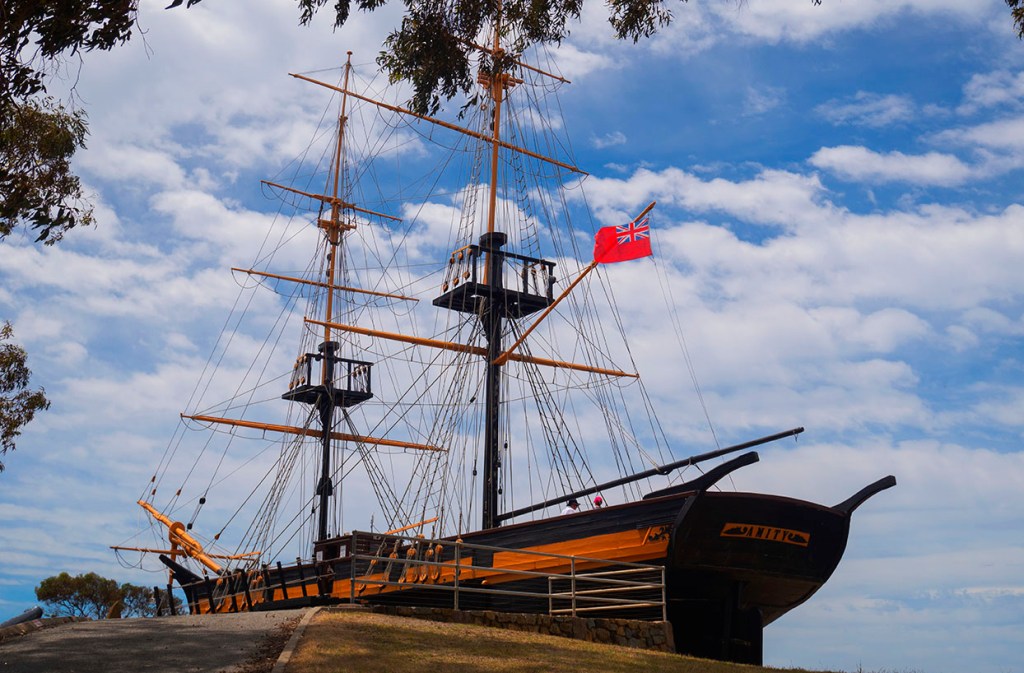
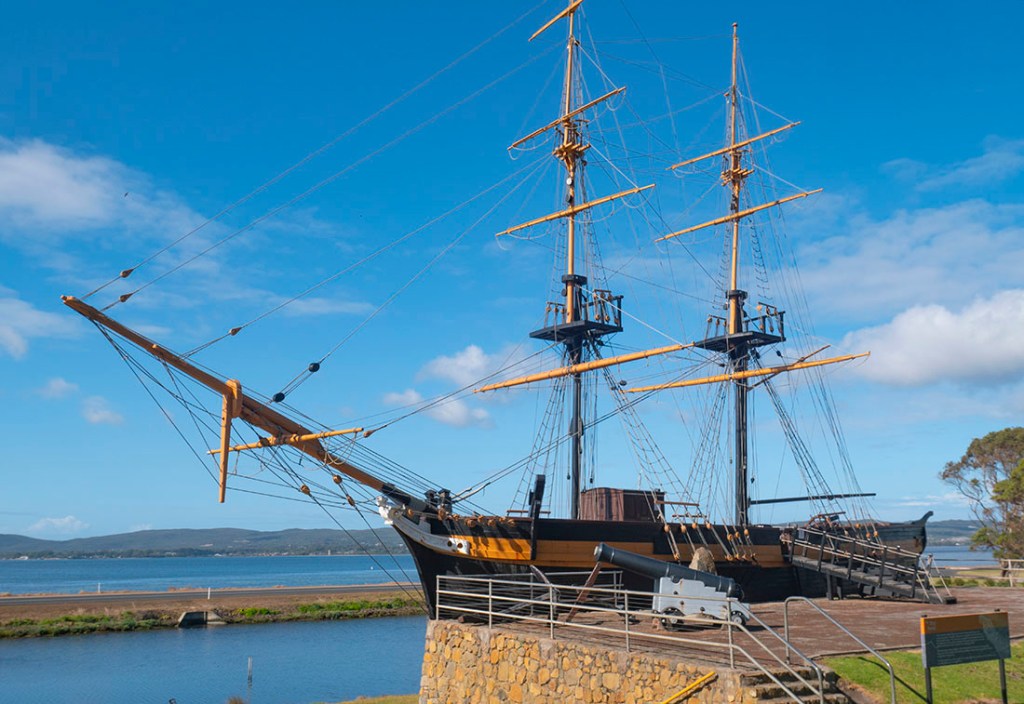
    Brig Amity replica at Albany Western Australia. Photo: C.J. Ison.

       All Australian school children learn of the Endeavour’s role in the history of Australia. Some people may have heard of the First Fleet’s flagship, Sirius, or the Investigator, which Matthew Flinders used to chart much of Australia’s coastline. But, I would wager few have ever heard of the brig Amity or know of her contribution to our colonial past.

       During the brig Amity’s six years as a colonial government vessel, she was employed to establish two new settlements in what would one day become Queensland and Western Australia. She went to the rescue of the Royal Charlotte survivors after that ship ran aground on Frederick Reef in Australia’s dangerous northern waters. She regularly transported convicts, soldiers, and supplies from Sydney to outlying settlements and circumnavigated the continent on two occasions.   

    The Amity was built in New Brunswick, Canada and launched in 1816. She was a modest-sized vessel even by the standards of the day, at 148 tons, measuring a fraction over 23 metres (75 feet) in length. But she was a sound ship and could handle rough weather.

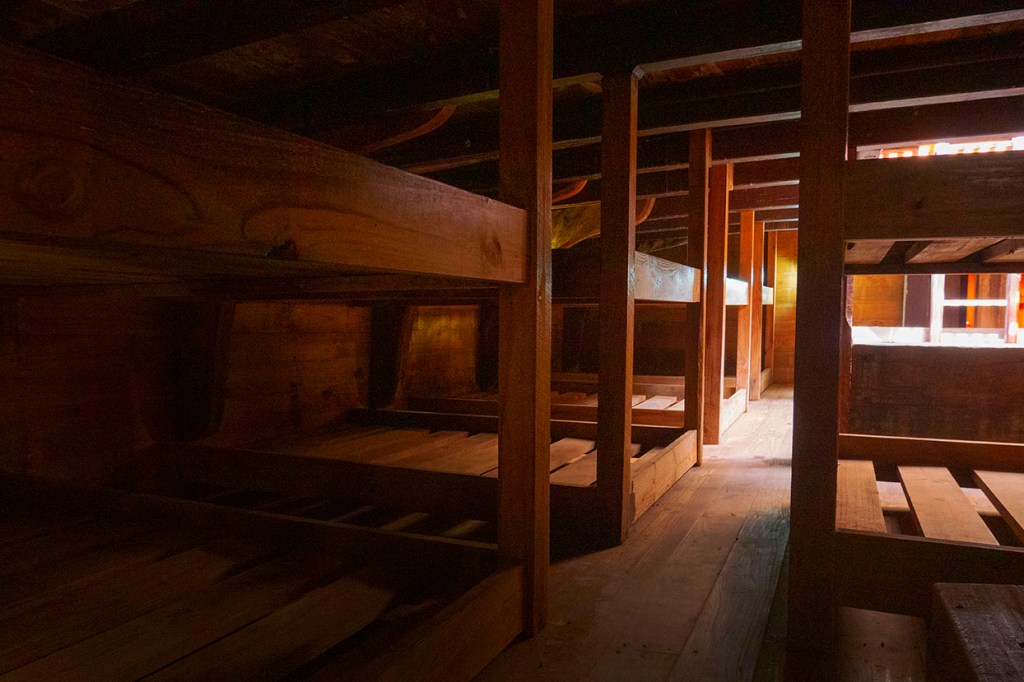
    Officer’s stateroom with tiny individual sleeping cabins leading off the main room. Photo: C.J. Ison.

       The little brig spent the first few years of her life hauling cargo back and forth across the North Atlantic between North America and Britain. In 1823, a Scotsman named Robert Ralston purchased her, having decided to emigrate to Van Diemen’s Land with his large family. He fitted the vessel out for the long voyage and filled its hold with cargo and livestock for his new adopted home.

       After a five-month voyage, the Amity sailed up the Derwent River and dropped anchor in Hobart Town on 15 April 1824. Ralston and his family purchased land and established several businesses in Hobart and Launceston, and a few months after their arrival, he put the vessel up for sale.   

    The New South Wales colonial government purchased the Amity in August 1824. The brig’s first assignment was to establish a new settlement at Moreton Bay. Two years earlier, the Bigge Report had recommended establishing a place of secondary transportation somewhere far north of Sydney for convicts who had committed additional crimes in the colony.

    The Moreton Bay Penal Settlement about 10 years after its founding. Photo Courtesy SLQ.

       On 1 September, the Amity and her crew sailed with a military officer, 20 soldiers, plus wives and children, a handful of civilian administrators, plus 30 convicts. The journey took 11 days and was marked by severe storms. Accommodation between decks measured just 1.5 metres (5 feet) high. Here, the seasick soldiers, wives, and convicts spent a miserable time packed in with the new settlement’s pigs, goats and poultry. Nonetheless, they made it at Moreton Bay and her passengers and stores were disembarked at Redcliffe, where John Oxley decided the new settlement would be established.

       Later in the month, the ship was nearly wrecked. She had been anchored out in Moreton Bay when a storm blew up. The Amity’s anchors started to drag as she was pushed towards shore. A third anchor was dropped, and the ship was held in place, averting disaster. Soon after that, she left the new settlement and returned to Sydney for more stores. On her third trip to Moreton Bay, in mid-1825, she helped relocate the settlement. Redcliffe had proved not as suitable as Oxley had thought it would be. The new location, on the north bank of the Brisbane River, was thought to be a far more suitable one.

       While anchored in Moreton Bay, one of the crew spotted an unfamiliar longboat coming towards them. This turned out to be the first mate and several survivors from the ship Royal Charlotte, which had run aground a month earlier on Frederick Reef, some 720 km (almost 400 nautical miles) north in the Coral Sea.

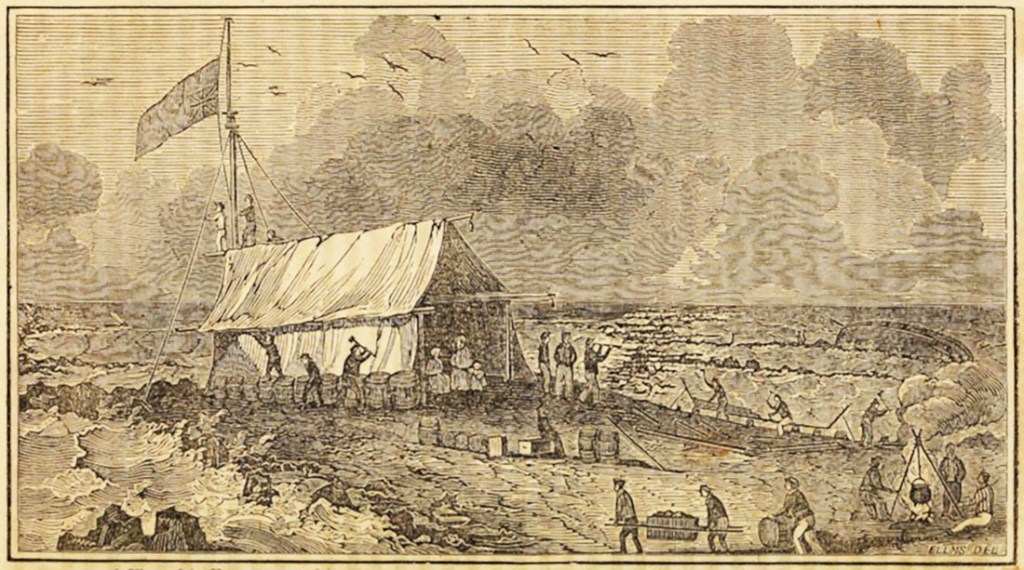
       The first mate reported that there were still nearly one hundred souls, many of them women and children, stranded on a small sand cay which was almost awash at high tide. The Amity was immediately sent to rescue the castaways and arrived off the reef on 28 July. Getting close to the survivors proved a dangerous operation with powerful breakers crashing into the reef, threatening any vessel that got too close. The Amity eventually anchored several miles distant and its whaleboat was sent to evacuate the survivors and salvage as much as they could from the wreck. With an additional hundred people squeezed into the small brig, she sailed directly for Sydney, arriving there ten days later.

    A view of the encampment of the shipwrecked company of the Royal Charlotte on Frederick’s Reef. Illustration by Charles Ellms (circa 1848)

       For the next 18 months or so the Amity was in constant use ferrying convicts and supplies between Sydney and the outlying settlements at Norfolk Island, Moreton Bay and Port Macquarie. But, in late 1826, Governor Darling, who had recently replaced Governor Brisbane, had another important mission for the Amity and her crew.

       She was ordered to take three officers and a small detachment of soldiers, 23 convicts, plus a handful of civilian officials under the overall command of Major Edmund Lockyer to establish a new settlement. This one was to be located in the remote south-west of the continent at King George Sound (Albany).

    Convicts and other passengers were accommodated between decks which measured just five feet in height. Photo: C.J. Ison.

       Until then, Australia’s southern coast from Bass Strait to Cape Leeuwin was little known outside its indigenous peoples and the haunt of sealers who lived largely outside the law. Darling was increasingly concerned that the French, whom he had learned had recently visited the area, might try to establish a permanent presence there. 

       The small brig weighed anchor on 9 November 1826, but she soon ran into a severe storm, which saw her put into George Town on the Tamar River in Van Diemen’s Land for repairs. She finally anchored safely in King George Sound on Christmas Day, and the next morning, she began disembarking her passengers and cargo. A month later, the Amity returned to Sydney and resumed her regular resupply duties.   

    In May 1827, she accompanied HMS Supply and the brig Mary Elizabeth on a voyage via Torres Strait to Fort Dundas on Melville Island, not too far distant from present-day Darwin in the Northern Territory. Fort Dundas had been established three years earlier to facilitate trade with visiting Macassan fishermen, but it was eventually abandoned, due in part to the determined resistance put up by the indigenous Tiwi people.

    Sketch of Fort Dundas – 1824 by JS Roe. Picture courtesy State Library of Western Australia.

       Leaving Fort Dundas and the other two ships, the Amity continued circumnavigating the continent, stopping to drop off supplies at King George Sound before returning to Sydney via Bass Strait.

       In 1828-29, she paid another visit to the remote northern and western settlements when she dropped off stores before returning to her home port of Sydney, thereby completing a second circumnavigation.

       The following year, December 1830, the New South Wales government sold the brig off. She made her way back to Hobart and passed through several hands over the next decade. A couple of owners tried whaling while others employed her as a cargo ship, but they all seemed to struggle to turn a decent profit.

       In 1842, the Amity was now 26 years old and no doubt past her prime. Her new owner, a Hobart butcher named Gilbert, used her to transport livestock across Bass Strait from the mainland to Van Diemen’s Land.

       On 18 June 1845, she was driven onto a shoal off Flinders Island during one of the ferocious storms Bass Strait is rightly known for.   The ship was destroyed, but fortunately, the captain, owner and crew, numbering 11 in all, survived.    In 1976, a full-size replica of the Amity was completed in Albany to celebrate that town’s 150th anniversary. The replica provides a fascinating close-up look at an early 19th-century sailing ship and to stoop around below decks highlights just how small she really was.

    Brig Amity replica at Albany Western Australia. Photo: C.J. Ison.

    For more interesting stories from Australia’s maritime past check out A Treacherous Coast, Bolters and Tales from the Quarterdeck. All are available now as a Kindle eBook or paperback through Amazon.

    © Copyright: Tales from the Quarterdeck / C.J. Ison, 2020.

    To receive notifications of future blog posts please enter your email address below.

  • HMS Boomerang 1891-1904

    HMS Boomerang 1891-1904

    HMS Boomerang anchored in the Fitzroy River at Rockhampton. Photo courtesy the State Library of Queensland.

    HMS Boomerang was a Sharpshooter-class torpedo gunboat which served at the Australia Station between 5 September 1891 and 22 August 1904.

    She was originally named HMS Whiting when construction began but renamed Boomerang shortly before sailing for Australia.   The Boomerang was 74 metres long, 8.2 metres beam, 2.59 metres draft and displaced 735 tons.  

    Crew on the deck of the HMS Boomerang firing a torpedo. Photo Courtesy State Library of Queensland.

    She was armed with five torpedo tubes and carried 15 torpedos, two quick firing 4.7 inch guns and four three-pounders. The Boomerang had a tops speed of 35 km/h (19 knots) and had a crew of 91.

    The Boomerang was part of the Royal Navy’s Australian Auxiliary Squadron which comprised 5 cruisers and two torpedo gunboats.   While there was no immediate or specified threat to Australia there was an underlying fear in this country of invasion from Russia dating back to the Crimean War.

    Sailors during training exercise on HMS Boomerang in 1892. Photo Courtesy State Library of Queensland.

    The Boomerang returned to England in August 1904 and was sold off in Plymouth the following year.

    © Copyright C.J. Ison, Tales from the Quarterdeck, 2022.

    To receive notification of future blog posts enter your email address below.