Tag: #Queensland

  • Matthew Flinders and the loss of HMS Porpoise – 1803

    Loss of the Porpoise & Cato. Courtesy Wikipedia.


         Shortly after Matthew Flinders completed his historic circumnavigation of Australia, he was farewelled from Sydney to return to England as a passenger on board HMS Porpoise. To everyone’s astonishment, he returned to Sydney a month later to report that the Porpoise and another ship had run aground on a reef far out in the Coral Sea.

       HMS Porpoise, under the command of Lt Fowler, along with the merchant ships Cato and Bridgewater, departed Port Jackson on 10 August 1803, intending to remain together as they sailed north through the remote waters of north Australia. Ships regularly travelled in company, so one might come to the other’s aid should they get into difficulty. After all, the next European outpost after leaving Sydney was Kupang on Timor Island, 2,000 km west of Torres Strait and over 5,000 km from Sydney.

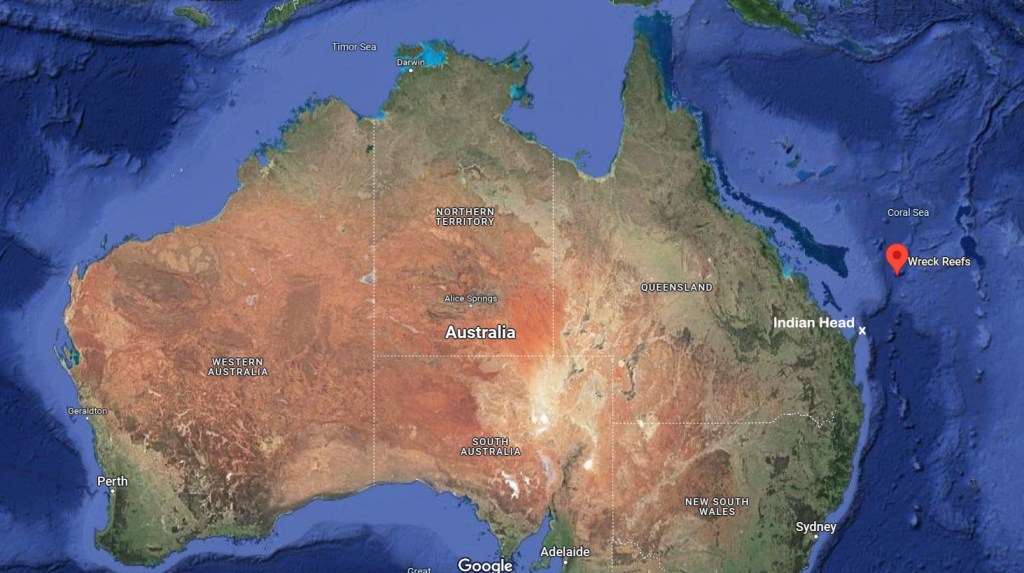
       On the afternoon of 17 August, the three ships passed a small island marked on the chart, which confirmed their position about 160nm (300 km) NE of Sandy Cape at the northern end of Fraser Island (K’gari). The chart showed no other obstacles in their path until they were ready to pass through the Great Barrier Reef, much further to the north.    As night took hold, they continued bearing NNE under reduced sail, pushed along by a southerly breeze. The Porpoise was out in front with the Cato and Bridgewater off her port and starboard quarters, respectively. Then, around 9.30 pm, the Porpoise’s lookout called “breakers ahead.” The Porpoise tried to veer off but without success, and she struck the uncharted reef. Likewise, the Cato attempted to steer away from the line of white water that indicated danger. However, she had insufficient room to manoeuvre and ran aground about 400m from where the Porpoise struck.

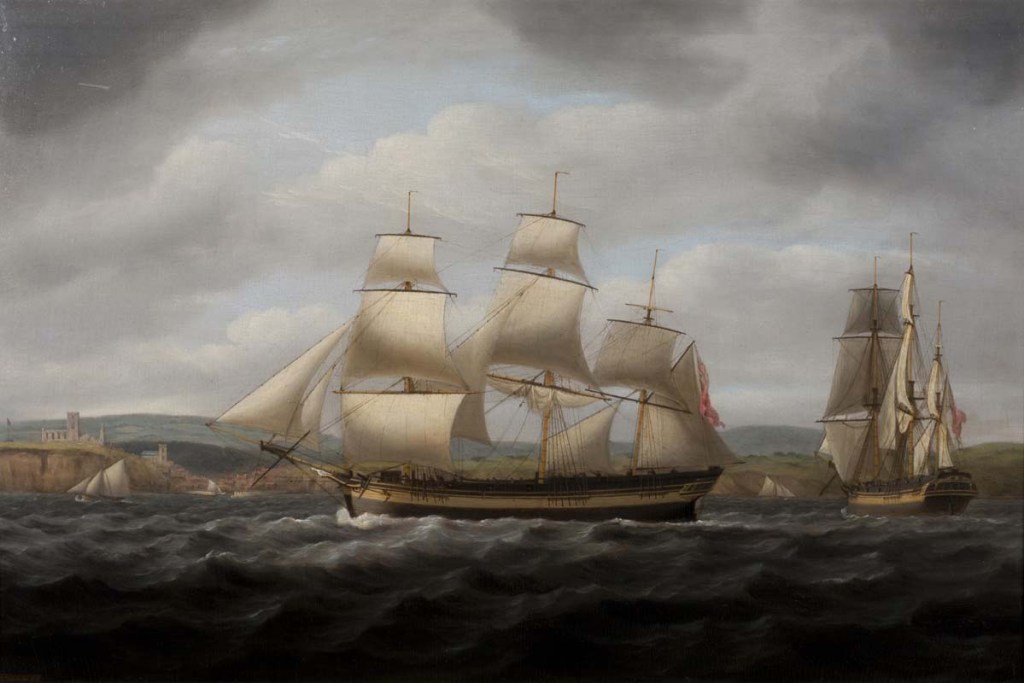
    The 430-ton Cato by Thomas Luny cira 1800.

         Fortunately, the Bridgewater missed the reef that claimed the other two ships. Her captain spent the rest of the night and the following morning trying to return so they might help any survivors. However, contrary winds and large seas hampered him, and he could not get close to the reef without risking his own vessel. He reluctantly continued on his way, leaving the survivors from the Porpoise and Cato to their fate.

       Meanwhile, the men on the stranded ships waited out the night. HMS Porpoise had gone aground broadside to the reef and heeled over so her strong hull took the brunt of the crashing waves. The Cato was not so lucky. She had also run aground broadside to the reef, only her deck lay exposed to the full force of the powerful waves, and she soon started breaking up. Her crew spent an anxious night clinging for dear life to the inner forechains.

       The next morning, the Porpoise’s small gig and a six-oar cutter were used to ferry the crews of both ships to a small sandy islet a short distance away. Over the next several days, they salvaged as much as they could from the two stranded wrecks. Casks of water, flour, salt meat, rice and spirits, along with live sheep and pigs were all brought ashore. They found they had sufficient provisions to feed the 94 castaways for the next three months. Most shipwreck survivors fared far worse.

    Captain Matthew Flinders, RN, by Toussaint Antoine DE CHAZAL DE Chamerel. Courtesy Wikipedia.

       On the morning of the 19th of August, Captain Matthew Flinders took command as the most senior naval officer present. Flinders, in consultation with Lt Fowler and the Cato’s captain, John Park, decided he should take the largest cutter and return to Sydney to get help. The three also agreed on a contingency plan should Flinders and his party fail to reach Sydney and alert the authorities. The ship’s carpenters would begin building two new boats from materials salvaged from the wrecks. If, after two months, the remaining survivors had not been rescued, Lt Fowler and the rest of the men should try to make for Sydney themselves in the new boats.   

    Flinders’ cutter was fitted out with a deck to make it better handle the rough seas on the long voyage ahead. She was christened “Hope” and, on 26 August, nine days after striking the reef, Flinders, Park and twelve sailors set off to three loud cheers from their shipmates lining the shore.    They took sufficient provisions to last them three weeks, and Flinders set a course west so they would strike the Australian coast. On the evening of 28 August, they made land near Indian Head on K’gari Island and headed south, hugging the coast until they reached Sydney ten days later.

    Map showing Wreck Reefs where the Cato and Porpoise were wrecked in 1803. Courtesy Google Maps.

       Meanwhile, the carpenters got to work building the first of the two new boats. They named it Resource and had her afloat in about two weeks.  However, as they were working on the second boat, their supply of coal for the armourer’s forge ran out, halting construction. Lt. Fowler ordered that the Resource be sent with a work party to an island to the south to produce sufficient charcoal to complete the second boat.

    But, before they set off, the welcome sight of three rescue ships sailed into view. Flinders had made it to Sydney and returned with the fully-rigged ship Rolla, and the colonial schooners Cumberland and Francis, to rescue the survivors. Flinders might have got there a little earlier, but he had spent a couple of anxious days trying to find the uncharted reef. Most of the men were put on to the Rolla, which was on its way to China, while Flinders returned to Sydney on the Cumberland. Much of the stores and salvage from the wrecked ships were taken back to Sydney on the Francis and the newly built Resource. Remarkably, only three men were lost during the ordeal. The site of the disaster is now known as Wreck Reefs.

       Captain Flinders’ adventures did not end there. By the time he next left for England, Britain was at war with France. When his ship stopped at Mauritius, he was placed in detention until the end of hostilities. Flinders did not return to England until 1810. His book “A Voyage to Terra Australis”, detailing his voyages, was published in 1814.

    © Copyright C.J. Ison / Tales from the Quarterdeck, 2022.

    To be notified of future blogs, please enter your email address below.

  • S.S. Maheno (1905 – 1935)

    The SS Maheno wrecked on K’Gari in 1935. Photo C.J. Ison..

       As anyone who has ventured across to K’Gari (Fraser Island) knows, the rusting wreck of the old luxury passenger liner SS Maheno makes an imposing presence on the long sandy beach, which serves as the island’s main highway. She had been swept ashore during a cyclone 90 years ago while on her way to be broken up in a Japanese scrapyard. It was an inglorious end for a steamer that was once one of the fastest luxury liners on the trans-Tasman run.

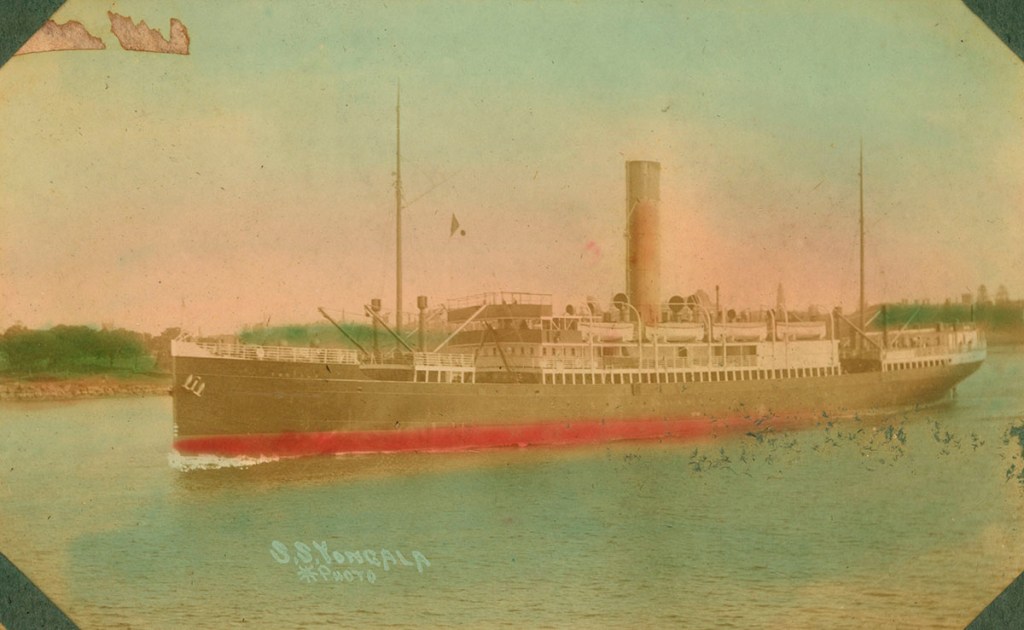
       The SS Maheno was built at William Denny and Brothers shipyards on the Clyde River in 1905 for the New Zealand-owned Union Steam Ship Company. She measured 122m in length and had a gross tonnage of 5,300 tons. The vessel was equipped with powerful steam turbine engines, which were revolutionary for the time. They could push her along at an impressive top speed of nearly 20 knots (36km/h).

    S.S. Maheno postcard. Courtesy State Library of Queensland.

       For much of her career, she carried cargo and passengers between Sydney, Melbourne, and Hobart in Australia, and Wellington, Auckland, and Dunedin in New Zealand. On one occasion, the Maheno made the dash from Sydney to Wellington in just under three days, a record that would remain unbeaten for 25 years. She also occasionally was called upon to carry passengers across the Pacific to San Francisco.

       The Maheno was not only fast, but she was also luxurious. She could accommodate 120 passengers in her sumptuous first-class cabins, 120 in second-class and 60 more passengers in third-class. The saloons, dining rooms and other public areas were beautifully appointed, harking back to a bygone era. She was a magnificent example of early 20th-century shipbuilding at its finest.

    SS Maheno, Saloon was luxuriously fitted out. Phot Courtesy State Library of Queensland.

       During the First World War, she served as a hospital ship for Australian and New Zealand forces. She ferried casualties from Anzac Cove to Malta for medical treatment during the Gallipoli Campaign. After the failure of Gallipoli she transported wounded New Zealanders back home before returning to Europe where the war raged on. Between 1915 and 1918, she made several trips back to New Zealand, returning wounded Kiwi soldiers home to their loved ones. She also carried thousands more sick and wounded men from the Western Front across the English Channel so they could receive attention in England.

       After the war, she returned to her regular duties crossing the waters between New Zealand and Australia. As she aged, newer ships took over her routes. However, she remained on the Melbourne – New Zealand run until the beginning of 1935 when she was finally retired. Throughout her 30 years of service, she was never involved in a serious accident, a testament to the ship and the captains who commanded her. But on her final voyage, that was about to change.   

    In July 1935, the Maheno left Sydney under tow by the steamer Oonah, another aging vessel destined for demolition in Japan. “Like a minnow towing a whale, the little Oonah set out to tow the Maheno, which towered above her like a giant,” is how the Daily Telegraph described the scene as the two tethered ships made their way down Sydney Harbour to begin their long voyage north.

    SS Maheno shortly after she ran aground. Photo Courtesy State Library of Queensland.

       The first few days were relatively uneventful as the Oonah towed the Maheno up the New South Wales coast.  But by the time they reached Queensland waters, the weather had turned nasty. The two ships were caught in a raging storm. Huge swells swept around them, howling gale-force winds ripped at the rigging, and the decks and superstructures were lashed by heavy rain. Despite the thick weather, the ships might have survived, but that was not to be.

       The Oonah reported via wireless that she was having problems with her steering. However, the message was garbled, and the call for help went unanswered. Then the captain of the Oonah sent another message reporting that the tow cable had parted and the Maheno was adrift. He also radioed that the two vessels were about 80 km off K’Gari when the Maheno was lost from sight.

       Efforts to save the two stricken ships swung into gear. The insurance underwriters dispatched a large salvage tug from Brisbane to assist the vessel, and the Oonah would be rescued without further incident. The Maheno, on the other hand, was now at the mercy of the storm without any means of propulsion. There were grave fears for the eight Japanese sailors on board. But they rode out the maelstrom, and eventually, the Maheno gently made landfall.

    The SS Maheno ship wreck on K’Gari. Photo: C.J. Ison.

       A search aircraft sent out from Maryborough spotted the former luxury liner driven broadside onto Fraser Island’s (K’Gari’s) long sandy beach about 30 km south of Indian Head. Her location was then relayed to the Oonah and the salvage tug heading up from Brisbane.

       The Japanese crew got ashore safely and were soon greeted by carloads of tourists, who had driven down from the nearby holiday village of Happy Valley to take a closer look at the beached ship.

       At first, there were some thoughts of refloating the Maheno, but they were swiftly abandoned, for she was firmly stuck in the sand. She remains there to this day, perhaps the most prominent and accessible shipwreck on the Australian coast.

    © Copyright C.J. Ison / Tales from the Quarterdeck, 2022.

    To be notified of future blogs, please enter your email address below.
  • HMCS Protector 1884 – 1924

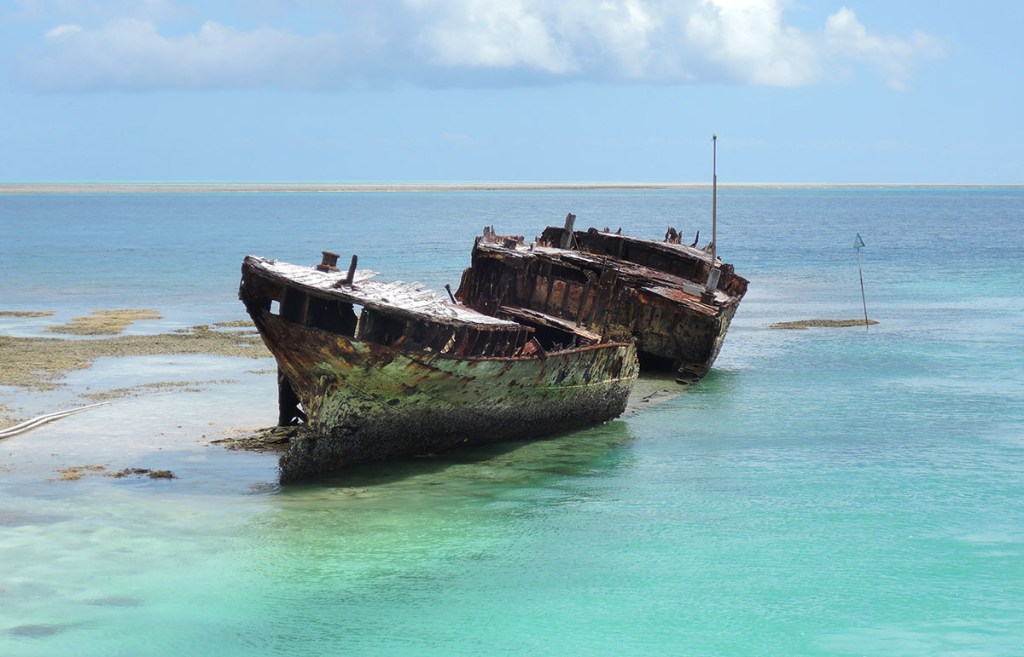
    HMCS Protector at Heron Island during low tide. Photo: C.J. Ison.

    There lie the remains of an old ship on the Southern Great Barrier Reef which holds a fascinating story spanning almost 140 years.    The rusting hull now serves as a breakwater protecting the entrance to the boating channel accessing Heron Island, but its history goes back to 1884.

    Her Majesties Colonial Ship (HMCS) Protector was launched at Newcastle on Tyne in 1884 to see service in South Australian waters.    The colonial government had sought the ship at a time when there were heightened fears of a Russian invasion.    The 55metre long F1 flat-iron gunboat displaced 920 tons and had a top speed of 14 knots (26km/h).   Originally she was crewed by about 90 men.   

    South Australian gunboat Protector circa 1885. Photo Courtesy SLV.

    Her armaments included one 8-in breech-loading gun on the bow, as well as five 6-in guns, four 3-pounder quick-firing (QF) guns and five Gatling machine guns.   From 1914 that was changed to three QF 4in MkIII guns, two QF 12-pounder guns and four QF 3-pounders.  

    HMCS Protector regularly patrolled the South Australian coast for the next fifteen years and not surprisingly made an uneventful time of it.   Then, on the eve of Federation, she was called upon to join the international force assembled to suppress the “Boxer Rebellion” in China.  

    HMCS Protector. Courtesy State Library of South Australia, B18116.

    In August 1900 she farewelled Adelaide and was commissioned as HMS Protector for the duration of her overseas service.   She arrived in Shanghai in late September but was not needed for combat operations.   She spent a few weeks carrying out surveys and running despatches between Shanghai and forces in Pechili Gulf further north.  Then, in November she was released to return home to Australia.   

    In January 1901 HMCS Protector was transferred to the Commonwealth Government and stationed in Sydney where she mainly functioned as a training ship for Naval Militia Forces.    Then, with the formation of the Royal Australian Navy in 1913, she was renamed HMAS Protector and for a period served as a tender to HMAS Cerberus stationed at Williamstown in Port Phillip Bay.

    With the outbreak of the First World War, HMAS Protector was sent to Sydney and served as a depot ship to Australia’s two submarines, AE1 and AE2.   In August 1914 she and her submarines were sent to help capture the German colonies in New Guinea.   HMAS Protector remained based at Rabaul until October when she was ordered to return to Sydney. 

    HMAS Protector after being rearmed in 1914. Photo Courtesy SLV.

    Then, in October 1915 she was dispatched to report on the wreck of the German cruiser Emden which had been destroyed by HMAS Sydney at the Cocos Islands almost a year earlier.   See my blog Australia’s first “ship on ship” naval action.

    On 1 April 1921, the Protector was briefly renamed HMAS Cerberus, before being decommissioned three years later.    Her guns and engines were removed and she was sold off.   In November 1929 she was converted to a lighter and renamed Sidney.    But her military service was not quite over yet. In July 1943 the Protector was brought back into service as a lighter for the U.S. Army in New Guinea.   However, as she was being towed north she collided with a tug off Gladstone, Queensland.  The wreck was abandoned on a beach until a local businessman bought it reputedly for £10.   He floated it off and towed it to Heron Island where it was used as a breakwater.   HMAS Protector’s rusting hull is still there today.

    HMCS Protector at Heron Island. Photo: C.J. Ison.

    © Copyright C.J. Ison / Tales from the Quarterdeck, 2022.

    To be notified of future blogs, please enter your email address below.

  • The Douro and its Piratical Captain

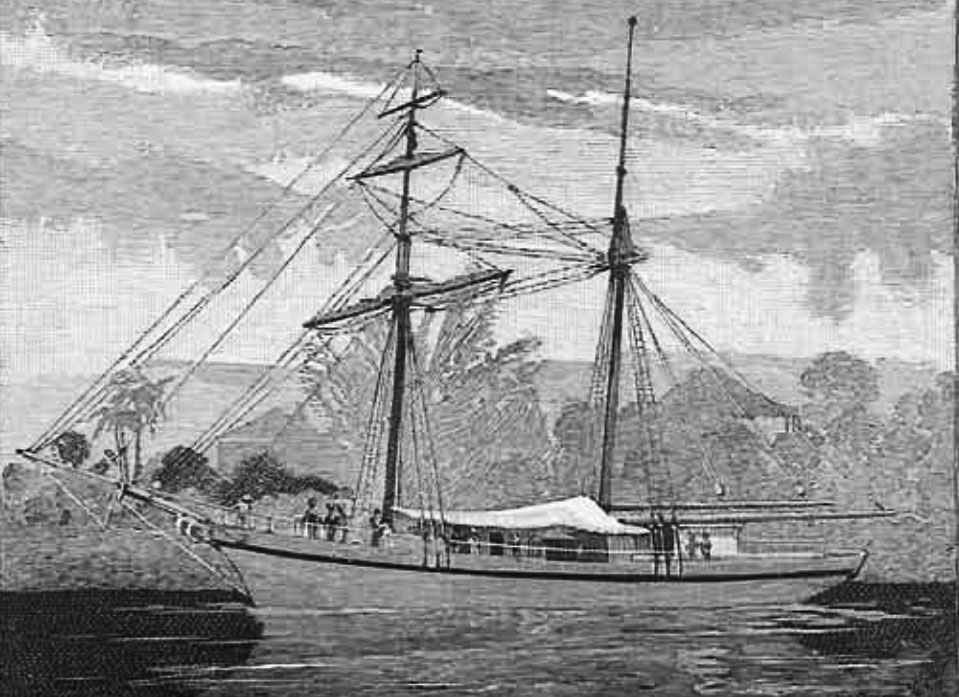
    A typical trading schooner in the South Seas. Source: Picturesque atlas of Australasia, 1886.

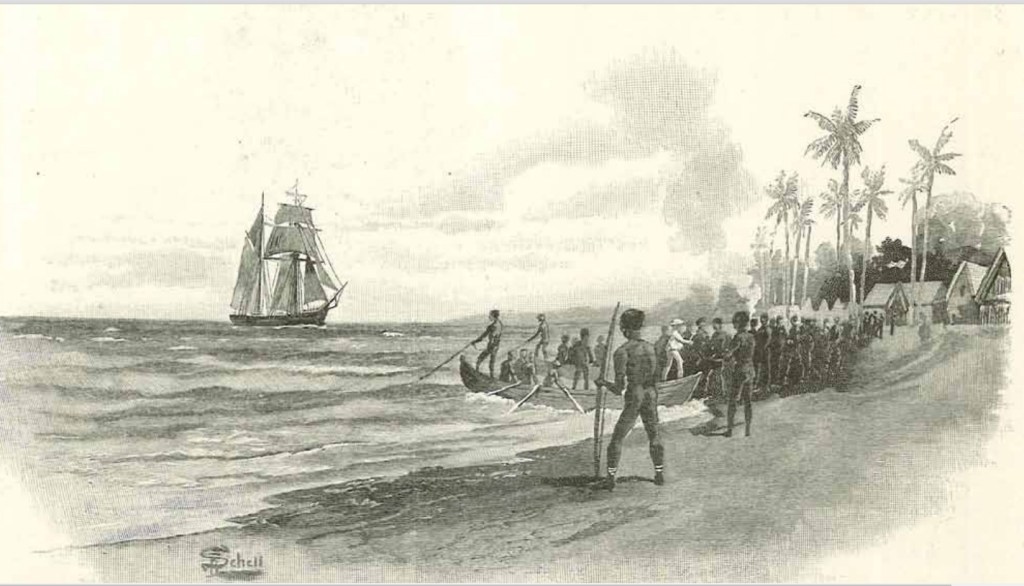
       In the 19th Century, the ship’s captain often considered himself the undisputed master of his vessel, especially when they were at sea. Most, to varying degrees, kept a rein on their power, while others ruled with an iron fist. Then there were those tyrannical few, like Neil Peter Sorensen, who went completely rogue. And, out among the South Pacific islands where the Royal Navy only sporadically patrolled, there were few restraints on those bent on causing trouble.

       In August 1885, a portion of the crew from the schooner Douro put ashore in Cooktown with a harrowing tale of kidnapping and piracy. The culprit, they said, was their own former captain. The Douro’s first mate, Otto Ashe, and two other seamen told authorities that Captain Sorensen was out of control and terrorising communities in the Solomon Islands. They had grown so concerned with Sorensen’s behaviour that they preferred to risk being charged with deserting their ship than to be implicated in their captain’s depredations.

       As he and the others had only joined the Douro in Sydney four months earlier, they had no idea what they were signing on for. Until recently, the Douro had been registered as a British vessel named the Albert, and as such, had been subject to British laws. The ship’s owner registered her as a Portuguese-flagged ship at that country’s Sydney Consulate. They claimed they had done so to save their ship from being seized in the event of war breaking out between Britain and Russia, a genuine concern at the time. In reality, the change in registration and name had more to do with placing the ship and its captain outside the bounds of the British legal system. Sorensen was installed as the Douro’s new captain. He was formerly the Albert’s first mate and was no stranger to the South Pacific or operating outside the law. But this would be his first taste of command.

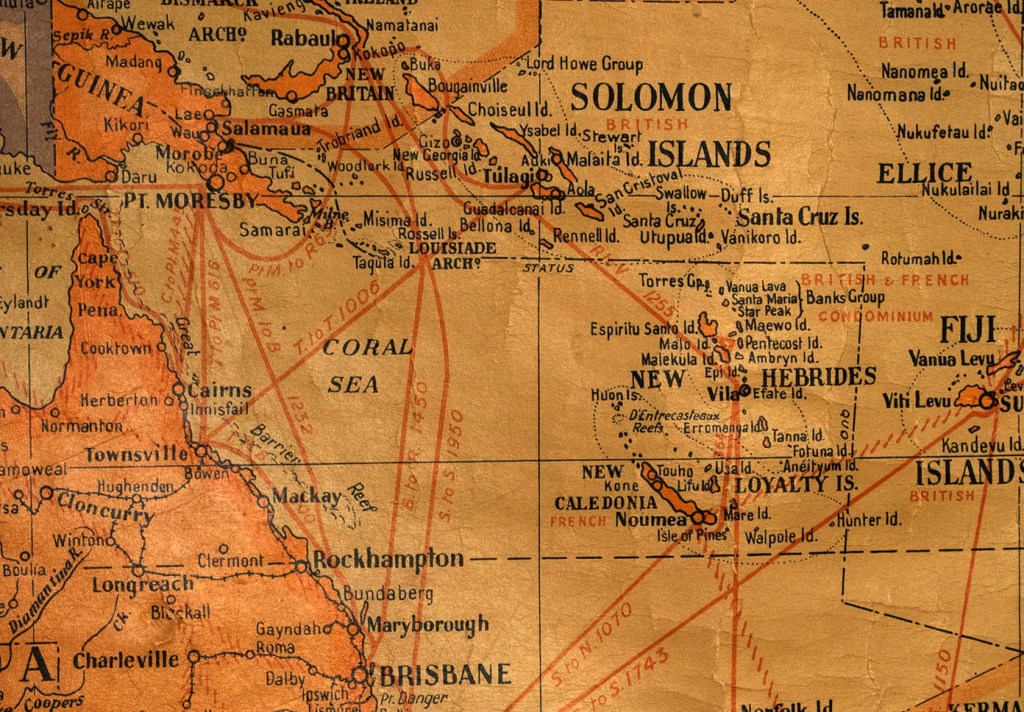
    Map showing Australia and the Solomon Islands.

       The Douro sailed from Sydney in late April, on a fishing venture around the Solomon Islands. Pearl shell and beche-de-mere both commanded high prices in Sydney, but Sorensen needed to hire local divers. Sorensen landed at a village on San Cristobal Island for recruits, but the village chiefs remembered him from a previous visit. Sorensen had promised to return the men at the end of his last fishing trip, but he never did. Now, no one trusted him.

       Sorensen was forced to go further afield to find his much-needed divers and fishermen. The Douro stopped at a couple of other islands and was able to recruit men on the promise that they would be gone from their villages for only four or five months. This was a lie, for Sorensen expected to be away for at least a year and probably longer.   

    As time passed, the situation on the Douro became intolerable for the crew. Otto Ashe claimed that Sorensen relentlessly bullied and threatened his men. While anchored off Guadalcanal, he beat the schooner’s cook senseless over some perceived infraction of his rules. None of the crew was prepared to stand up to him, for Sorensen was always heavily armed. But as bad as the treatment of his white crew was, it was nothing compared to how he treated most of the Solomon Islanders.

    Newspaper coverage at the time.

       At Isobel Island, he had two chiefs forcibly brought out to the schooner and only released them in exchange for six recruits. Off Wagina Island, the Douro came across a chief and several of his men out fishing in their canoes. He welcomed them aboard and then invited the chief to dinner in his cabin. Sorensen clapped the chief in irons and kept him hostage. He then went back on deck armed with a rifle and ordered the rest of the Islanders to leave. Sorensen only released the village chief after his people had handed over 4000 beche-de-mer, 24 sea turtles, a pig and three “boys,” whom he would exploit as unpaid labour.   

    On one of the Carteret Islands, he took his plundering to a new level.   Sorensen kidnapped four girls and brought them back to the schooner for the men’s entertainment. He then went ashore, armed to the teeth, at the head of a band of Solomon Islanders who had no qualms about following his orders. Sorensen forced the local chief to sign over possession of the island to him. Sorensen and his men then went from hut to hut, gathering up all the weapons. The haul included an assortment of traditional spears, clubs, and tomahawks, as well as an old Snider rifle and two shotguns. After everyone had been disarmed, he forced the menfolk to collect pearl shell and beche-de-mer on his behalf.

    A typical South Sea Islands trading schooner circa 1885.

    By now, the first mate had seen enough and wanted no part of it.   Fearing that Sorensen would continue his reign of terror through the islands, he took the first opportunity to escape. On 23 June, he took off in the schooner’s longboat with two other white seamen and seven Solomon Islanders. They landed in New Britain and reported Sorensen’s crimes to the German Consul there. They then set off in the boat for Australia, eventually landing at Cooktown, where they told the Queensland authorities the same story.

       When the Douro finally sailed into Brisbane in March the following year, the police were waiting. The schooner was seized, and Sorensen was charged with assault and robbery and placed under arrest. He was also charged with sodomy, but that was later dropped because the principal witness was “now in a lunatic asylum,” as the Brisbane Courier reported it at the time. Sorensen denied all the allegations, but a jury found him guilty, and he was sent to prison for ten years. While this episode was particularly heinous, it is a sad indictment that the conviction and hefty sentence were unusual for the times.

    © Copyright C.J. Ison / Tales from the Quarterdeck, 2022.

    1    Brisbane Courier, 25 Mar 1886, p.6.

    To be notified of future blog posts, please enter your email address below.
  • The Loss of the Maria: A Cautionary Tale

    Wreck of the Brig Maria with the New Guinea Expedition. Source: Australian Town and Country, 9 Mar 1872, p. 17.

       If ever there was a cautionary tale warning of the perils of going to sea ill-prepared, it is that of the tragic loss of the Maria in 1872.

       A Marine Board inquiry would blame the captain’s poor navigation and equally poor character for the loss of the ship and so many lives. However, the underlying causes of the disaster dated back to the ship’s purchase and a litany of poorly thought-through decisions made by a committee of young and ambitious men. They had become fixated on seeking adventure and fortune in the wilds of New Guinea and were willing to cut whatever corners necessary to see their plan come to fruition.

       In late 1871, the more adventurous sons of some of Sydney’s leading families banded together to travel to New Guinea, where it was said that gold could be found in abundance. Brought up on stories of Australia’s earlier gold rushes, they wanted to leave their mark on the new frontier. They formed a committee and founded the New Guinea Gold Prospecting Association, charging newcomers £10 to go towards the expedition’s costs. Eventually, they signed up 70 men eager to try their luck.

       The committee’s first task was to find a ship that would take them to New Guinea so they could prospect for gold in that largely unexplored part of the world. When no one would lease them a ship for the amount of money they could afford, they purchased an aging brig called Maria.

    Expedition members onboard the Maria before sailing from Sydney. Photo Courtesy SLQ.

         The Maria was over 25 years old, and her glory days were long behind her. She had been seeing out her final days hauling Newcastle coal down the coast to Sydney. Her only redeeming quality was her price. In fact, after a month of searching, she was the only ship they could afford. William Forster, one of the expedition’s survivors, later summed up the state of the vessel thus. “It would, perhaps, have been difficult to find a more unseaworthy old tub anywhere in the southern waters.”

       When they were eventually ready to sail the Maria out of Sydney, the port authorities refused them clearance to sail under the Passenger Act because she was overcrowded, unseaworthy, and the passengers, all paid-up members of the prospecting association, were not adequately provided with safety equipment or provisions. Things might have turned out differently had the young men heeded the warning and remedied the shortcomings. But rather than do that, the committee signed on most of the passengers as members of the crew, so the Passenger Act no longer applied.

       Alarm bells should have rung out loud and clear when, at the last moment, the captain they had hired refused to take the ship to sea. Feigning illness, it seems he had begun to doubt the wisdom of taking the overcrowded, unseaworthy  old tub on a 3700 km passage through the Coral Sea during the North Australian cyclone season.

       Then, rather than waste any more time recruiting another qualified master mariner, the committee accepted the first mate’s offer to captain the ship. It was put to a vote, and he was immediately elected to the post with barely a moment’s thought given to whether he was actually up to the task. Though he was officially the Maria’s captain he was more of a sailing master, unable to make decisions without first getting approval from the committee.   

    The Maria finally sailed out through Sydney Heads on 25 January 1872 with 75 people crammed on board. The first few days passed uneventfully, except for some emerging friction between the prospecting association’s members. They broadly fell into one of two groups: well-heeled, well-educated adventurous young gentlemen from some of the colonies’ leading families, and working-class miners and labourers hoping to make money on the new goldfields. It was probably the first time either group of men had spent time with the other, more or less as equals, and the mix proved volatile at times.

    Wreck of the Maria. Image Courtesy SLQ.

        Then, when they were only a few days away from reaching New Guinea, the Maria was caught in a ferocious storm. She was tossed around for five days and sustained serious damage. Water poured through gaps in the deck down into the accommodation, soaking everyone and everything. Her old sails were torn to shreds, rotted rigging snapped under the strain, and a rogue wave tore away a length of the bulwark. They lost all control of the ship for a time after a second rogue wave unshipped the tiller and destroyed the associated steering gear.  After one-third of the expedition members signed a petition pleading to be put ashore, the majority voted to turn around and head for Moreton Bay to disembark those who had had enough and make repairs.

       But, the badly damaged Maria struggled to make headway against the prevailing southerly trade winds. Captain Stratman decided to make for Cleveland Bay (present-day Townsville) instead. However, he would need to find his way through the Great Barrier Reef guided only by a general coastal chart with a scale of one inch to 50 nautical miles (approx. 1 cm to 40 km). Such a small scale would have provided him with little detail and no doubt less comfort that they would reach Townsville unscathed.   

    With a lookout stationed high on a mast above, watching for submerged hazards, the Maria gingerly made her way west and soon became entangled in the giant maze of coral reefs and shoals. Thinking they were approaching Magnetic Island and the safety of Cleveland Bay, the captain was unknowingly approaching the coast some 90 km further north. Then, in the early hours of 26 February, their luck finally ran out. The Maria ran onto Bramble Reef off Hinchinbrook Island and began taking on water. A few hours later, she sank to the bottom until just her masts showed above the surface of the water.


       Before that happened, Captain Stratman, with a handful of others, had already abandoned the ship in one of their three boats, leaving everyone else to their fate. The class divide separating the expedition members made it almost impossible for anyone to coordinate their efforts. No one would take orders from anyone else. Some eventually made it to Cardwell in the two remaining lifeboats. About a dozen men were last seen clinging to the rigging but they had vanished before rescuers finally found the wreck.

       Others had taken to two makeshift rafts, but many of them drowned, and of those who reached land, half were massacred by local Aborigines. Of the 75 people who sailed out of Sydney on the Maria, almost half, 35, lost their lives.

    The full story is told in A Treacherous Coast: Ten Tales of Shipwreck and Survival from Queensland Waters available through Amazon.

    © Copyright C.J. Ison / Tales from the Quarterdeck, 2022.

    To be notified of future blog posts, please enter your email address below.