Tag: Piracy

  • The Frederick: Stealing the Ship That Never Was

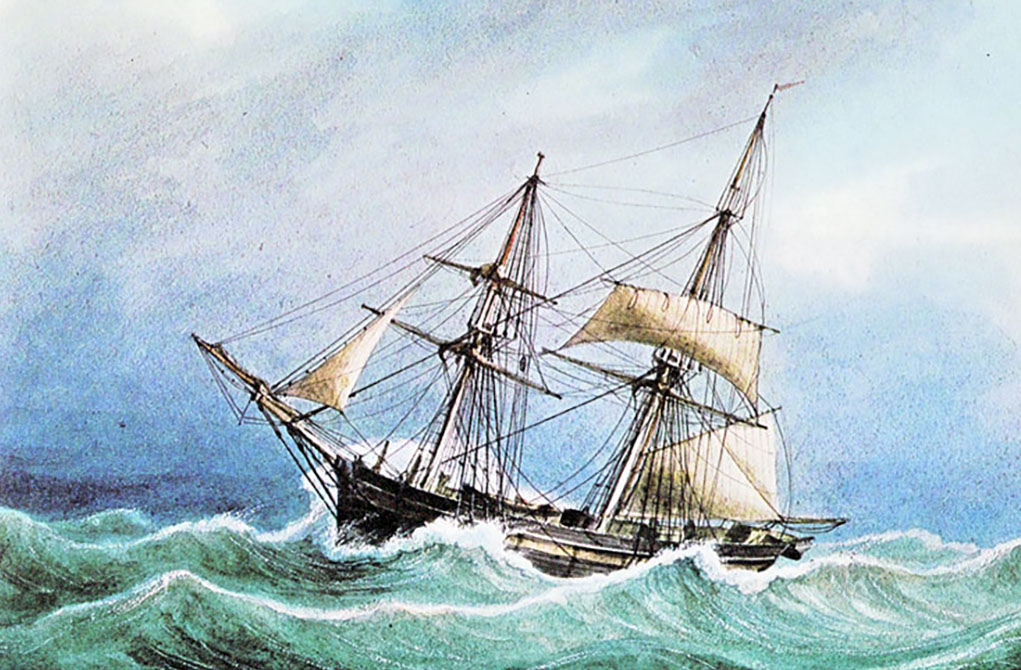
    Example of a merchant Brig of the era. (Water colours by Frederic Roux 1827-1828)

    By December 1833, the penal settlement at Macquarie Harbour in southwest Tasmania was all but deserted.   Only a dozen convicts remained to complete the 120-ton brig Frederick.   She would be the last of nearly 100 vessels to be built there.   Once launched, they were supposed to sail her around to the newly established station at Port Arthur.   However, ten of the convicts had a much more distant destination in mind.

    But, to seize the ship involved overpowering the soldiers and officers left behind to watch over them.   Tackling armed men with just bare hands was daunting, but they had a plan.   One of the convicts, John Barker, happened to be a master blacksmith.   He manufactured two flintlock pistols using discarded scraps of metal and a musket barrel found in the blacksmith shop.   He also forged a pair of tomahawks to add to their small arsenal.  

    The Frederick was finished on 10 January 1834, and at 10 am the next day they set sail.   Captain Taw sailed down the length of Macquarie Harbour but dropped anchor inside the heads.   He judged the weather too foul to safely pass through the narrow passage of Hells Gate and out to sea.    So they waited.   Then, on Monday, 13 January, the wind eased, signalling their imminent departure.    

    For the ten convicts, the time to strike had arrived.    If they did not seize the ship now, they likely never would.    However, they were up against nine men, seven of whom were armed. 

    Then, good fortune smiled upon them, and the odds shifted in their favour.   Two of the soldiers went fishing and took a boat out with a convict at the oars.     He was one of two prisoners not in on the plan.   So, with them gone, nine had been reduced to six.     

    Boat building Yard on Sarah Island, Macquarie Harbour by William Gould, 1833, Courtesy State Library of NSW.

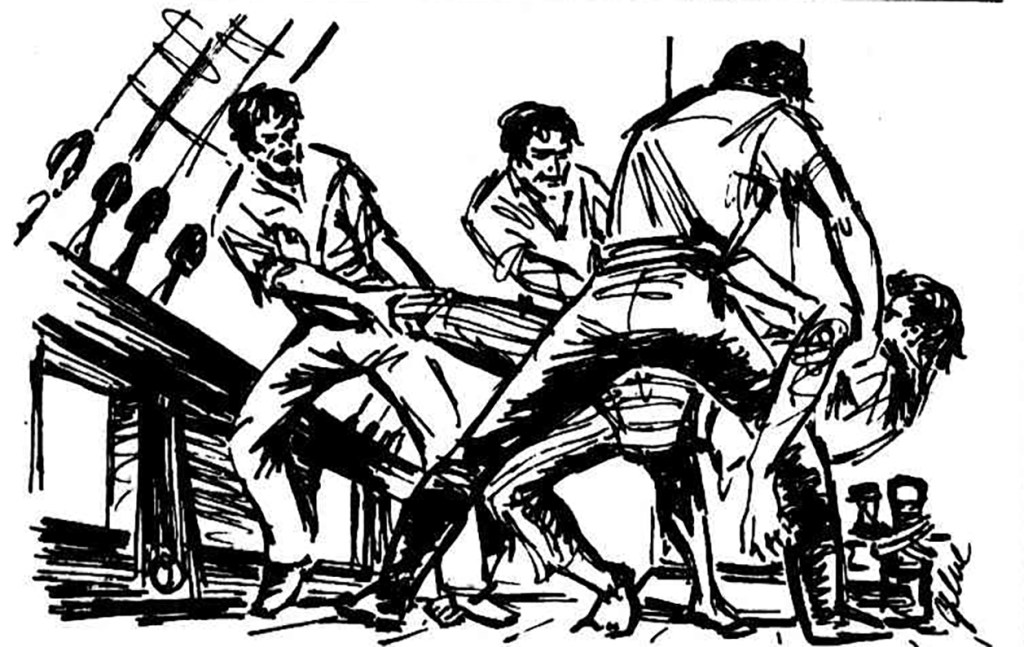
    Around 6 o’clock in the evening, a prisoner beckoned a sentry to join him by the forecastle hatchway.   When the unsuspecting soldier obliged, he was jabbed in the chest with one of Barker’s pistols and ordered down the ladder into the crew’s cabin.   Meanwhile, two other convicts armed with hatchets pounce on the only other two men on deck.  They subdued the remaining soldier and the terrified mate, bundling them too into the forecastle cabin.   A convict stood guard, and a heavy kedge anchor was dragged across the hatchway cover in case they tried to escape.   The convicts now had control of the deck.   Three men were confined in the forecastle, and another three were out fishing, oblivious to what was unfolding on the Frederick.    This just left Captain Taw, David Hoy the shipyard supervisor, and the convict steward William Nicholls.   All were in the captain’s cabin

    The convicts, now armed with the soldiers’ muskets, were ready to confront the last men standing between them and liberty.   Three men stormed down the ladder and attacked Captain Taw and the others, hoping to quickly get the best of them.   However, Taw and Hoy fought back.   Hoy wrestled a pistol from one of the convicts, and the attackers retreated back up the ladder, leaving Taw, Hoy and Nicholls trapped in the cabin, bloodied and bruised from the brief but violent encounter.

    Taw and Hoy were trapped in the cabin.   The convicts would pay dearly if they attacked again, but the captain knew he could not retake the ship.   They were at a stalemate.   But Captain Taw had one small bargaining chip.   He had possession of the Frederick’s navigation instruments, items the convicts would need to escape.  The impasse lasted about ninety minutes, with occasional shots fired through the cabin’s skylight and each side calling for the other to surrender.  

    The Globe (London), 9 Jul 1834, p. 4.

    Around 7.30 in the evening, someone called for the pitch pot to be brought over and threatened to empty its boiling contents into the cabin if the trio did not immediately surrender.    Hoy and Taw agreed there was nothing to be gained by holding out any longer and gave themselves up.  

    Meanwhile, the fishing party had returned to the brig after hearing gunfire, only to find the prisoners already in charge.   The rest of Frederick’s men joined them in the boat, and they were sent ashore with half the ship’s provisions.

    Taw and Hoy assessed their situation.    There was plenty of food, so they would not be going hungry any time soon.    However, how long would it be before a ship was sent to investigate the whereabouts of the Frederick?     Taw had no intention of waiting to find out.   They set off on foot for the nearest settlement, 150 kilometres away.  It would take Taw over two weeks to eventually reach Hobart to report the incident.

    In those two weeks, the mutineers did not waste any time making good their escape. James Porter, one of the convicts, wrote the only record of what happened to the Frederick next.  

    Porter was not a typical convict transported to Australia.    For a start, he was born into a respectable middle-class family.  When he was 12, he dropped out of school and, by his own account, began mixing with the wrong kind of people.   Porter soon got himself in trouble with the law, but his father pulled some strings, and the charges were dropped.   However, to prevent Porter from getting into any more trouble, he was sent to sea to serve an apprenticeship and found himself bound for Rio de Janeiro.   

    So began his career as a seaman.   After changing ships several times, Porter claimed he had spent 12 months on the armed schooner Liberta helping the Chileans win their independence from Spanish rule.   However, by late 1821, he had had enough of life in South America and returned to England. 

    A year later, Porter was caught breaking into a house and was transported to Van Diemen’s Land for life.   He landed in Hobart in January 1824 but was soon caught stealing and sent to Macquarie Harbour.   

    When he was chosen to remain behind to finish work on the Frederick, a plan started to take shape in his mind, and South America once again beckoned.   His companions comprised a mix of experienced seamen like himself, shipwrights and the blacksmith John   Barker who had been schooled in celestial navigation, though he proved to be no seafarer.
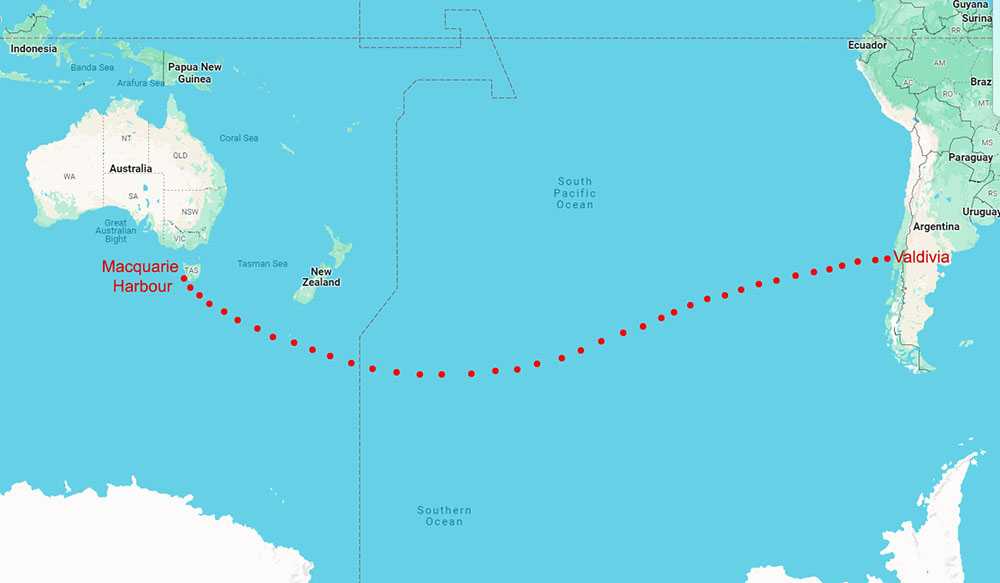
    The Frederick was sailed from Macquarie Harbour to South America where it was left to sink. Courtesy Google Maps.

    The Frederick no sooner made it out to sea when the wind freshened to a heavy gale.      It blew hard with mountainous seas for the next nine days as they bore south, then east under much-reduced canvas.   The burden of sailing fell heavily on the shoulders of the seasoned sailors.   The rest of the men, unused to such sea conditions, rarely left their bunks, suffering severely from sea sickness.    Barker was particularly prone to the malady, only coming on deck periodically to make observations and plot their course.  

    After being at sea for about three weeks with few opportunities to take observations, Barker found they had strayed too far south into the dangerous icy waters of the “Furious Fifties”.   He set a northeasterly course for the helmsmen and then retired to his quarters again.   Shortly after this, their voyage nearly came to an end when the Frederick was heeled over on her side by a powerful wind gust.  

    Fortunately, the ship righted herself once the canvas had been brought in.      Then, about six weeks out, they spotted land for the first time since leaving Tasmania.  They had sailed nearly 5,400 nautical miles (10,000 km) and arrived off the coast of South America.  

    On 27 February, they boarded the longboat and left the Frederick to sink as, by now, she was taking on a lot of water.    The next morning, they made landfall near the mouth of the Rio Bueno in Chile.       A week later, they arrived at the provincial capital of Valdivia, where they were promptly thrown in gaol for entering the country in a “clandestine manner.” 

    It was obvious to the Chilean officials that the men claiming to be shipwrecked sailors were not what they claimed to be.   Now that they were behind bars and facing an uncertain future, Porter and his comrades decided to admit to being runaway convicts and beg the Governor for asylum.  

    Illustration of a brig. Source: Nautical Dictionary by Arthur Young, published in 1863.

    They found a sympathetic ear in Governor Sanchez, and he agreed to petition the President of Chile in Santiago on their behalf.    They were released from gaol after promising not to leave town.   All ten men found work at the local shipbuilding yard, where their skills were much in demand.   As time passed, they settled into their new lives and felt their troubles had been put behind them.  

    But the British Consul in Santiago had learned of their presence in Valdivia unbeknownst to Porter and his colleagues.   He, in turn, had called on the Royal Navy to dispatch a ship to apprehend the runaways.   

    Eight months later, in February 1835, HMS Blonde dropped anchor at the mouth of the Valdivia River to collect the runaway convicts.   However, Governor Sanchez refused to hand them over, and the British warship left empty-handed.   While Porter and the others had avoided arrest this time, it was clear to them that the British knew where they were.  

    Life settled back into its regular routines until a few months later, when Governor Sanchez was replaced by a man far less sympathetic to the runaway convicts.    Within a month, three of the convicts departed on a merchant ship bound for North America.   Then Barker and two others left in the dead of night in a whaleboat they had been building for the new governor.    The governor was furious and gaoled Porter and the other three until they could be handed over to the Royal Navy.

    They were put on board the next British warship that stopped at Valdivia and returned to England.   As they had escaped from Van Diemen’s Land, it was decided to return them there to stand trial for piracy.   They arrived back in Hobart on 29 Mar 1837 after an absence of more than three years.  

    In a novel legal argument, Porter contended that because the Frederick had never been officially registered, it could not be considered a ship.  Instead, it was just a collection of timber, ropes, canvas and such like, which just happened to resemble a brig.    Consequently, he argued, they could not be found guilty of piracy.    The jury was unconvinced, and after 30 minutes of deliberation, they returned a guilty verdict, and the four men were banished to Norfolk Island for life.    

    © Copyright C.J. Ison / Tales from the Quarterdeck, 2025.

    Please enter your email address below to be notified of future blogs.
  • The Douro and its Piratical Captain

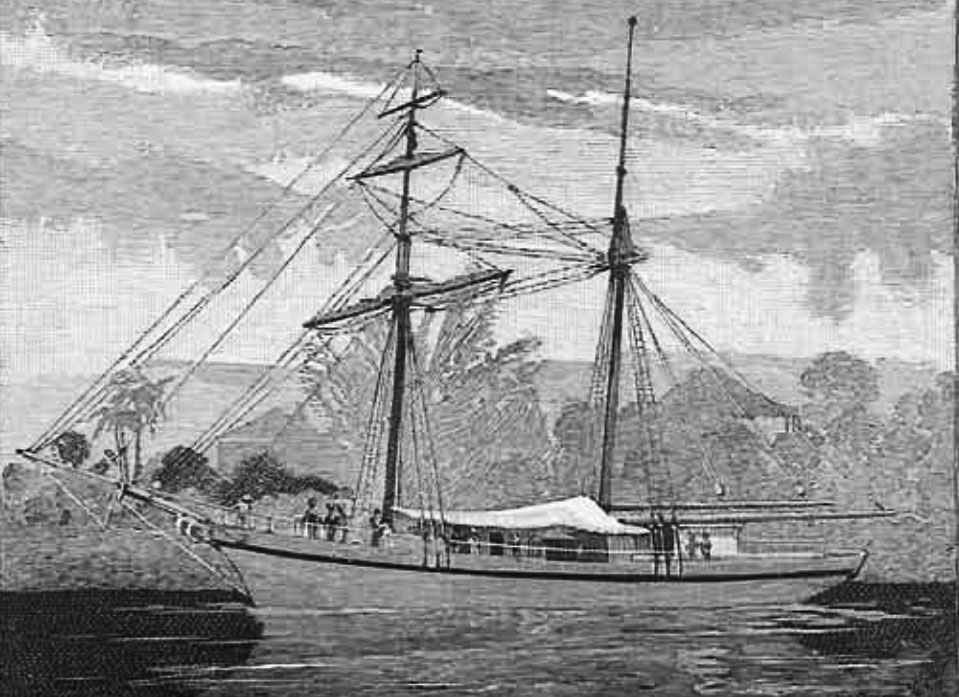
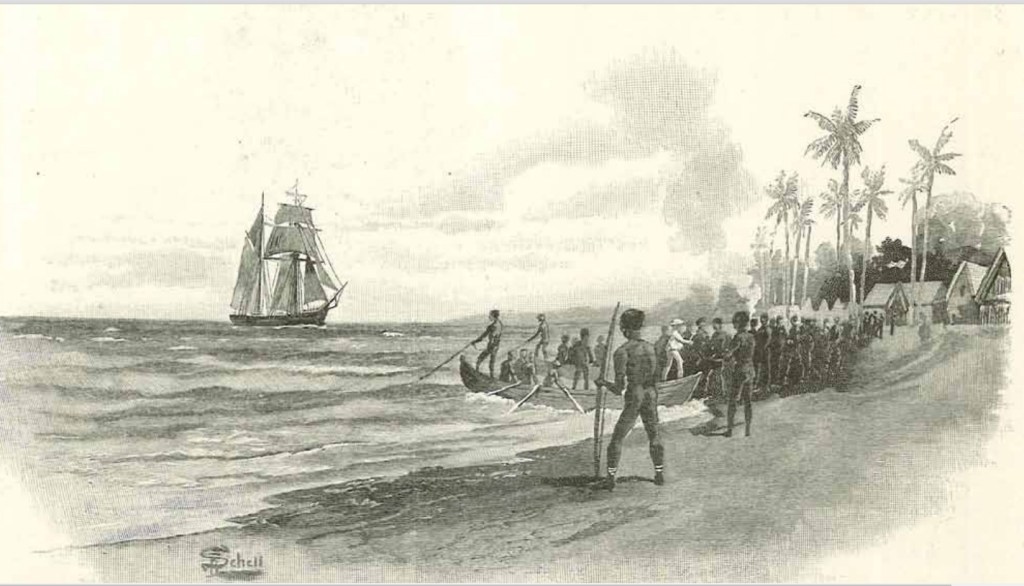
    A typical trading schooner in the South Seas. Source: Picturesque atlas of Australasia, 1886.

       In the 19th Century, the ship’s captain often considered himself the undisputed master of his vessel, especially when they were at sea. Most, to varying degrees, kept a rein on their power, while others ruled with an iron fist. Then there were those tyrannical few, like Neil Peter Sorensen, who went completely rogue. And, out among the South Pacific islands where the Royal Navy only sporadically patrolled, there were few restraints on those bent on causing trouble.

       In August 1885, a portion of the crew from the schooner Douro put ashore in Cooktown with a harrowing tale of kidnapping and piracy. The culprit, they said, was their own former captain. The Douro’s first mate, Otto Ashe, and two other seamen told authorities that Captain Sorensen was out of control and terrorising communities in the Solomon Islands. They had grown so concerned with Sorensen’s behaviour that they preferred to risk being charged with deserting their ship than to be implicated in their captain’s depredations.

       As he and the others had only joined the Douro in Sydney four months earlier, they had no idea what they were signing on for. Until recently, the Douro had been registered as a British vessel named the Albert, and as such, had been subject to British laws. The ship’s owner registered her as a Portuguese-flagged ship at that country’s Sydney Consulate. They claimed they had done so to save their ship from being seized in the event of war breaking out between Britain and Russia, a genuine concern at the time. In reality, the change in registration and name had more to do with placing the ship and its captain outside the bounds of the British legal system. Sorensen was installed as the Douro’s new captain. He was formerly the Albert’s first mate and was no stranger to the South Pacific or operating outside the law. But this would be his first taste of command.

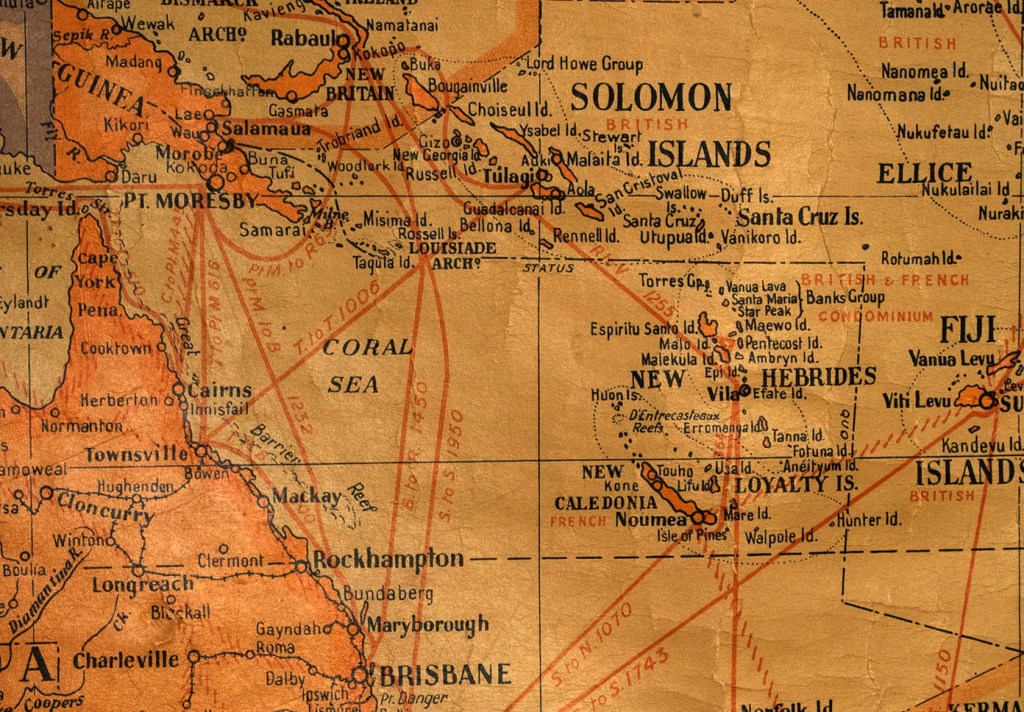
    Map showing Australia and the Solomon Islands.

       The Douro sailed from Sydney in late April, on a fishing venture around the Solomon Islands. Pearl shell and beche-de-mere both commanded high prices in Sydney, but Sorensen needed to hire local divers. Sorensen landed at a village on San Cristobal Island for recruits, but the village chiefs remembered him from a previous visit. Sorensen had promised to return the men at the end of his last fishing trip, but he never did. Now, no one trusted him.

       Sorensen was forced to go further afield to find his much-needed divers and fishermen. The Douro stopped at a couple of other islands and was able to recruit men on the promise that they would be gone from their villages for only four or five months. This was a lie, for Sorensen expected to be away for at least a year and probably longer.   

    As time passed, the situation on the Douro became intolerable for the crew. Otto Ashe claimed that Sorensen relentlessly bullied and threatened his men. While anchored off Guadalcanal, he beat the schooner’s cook senseless over some perceived infraction of his rules. None of the crew was prepared to stand up to him, for Sorensen was always heavily armed. But as bad as the treatment of his white crew was, it was nothing compared to how he treated most of the Solomon Islanders.

    Newspaper coverage at the time.

       At Isobel Island, he had two chiefs forcibly brought out to the schooner and only released them in exchange for six recruits. Off Wagina Island, the Douro came across a chief and several of his men out fishing in their canoes. He welcomed them aboard and then invited the chief to dinner in his cabin. Sorensen clapped the chief in irons and kept him hostage. He then went back on deck armed with a rifle and ordered the rest of the Islanders to leave. Sorensen only released the village chief after his people had handed over 4000 beche-de-mer, 24 sea turtles, a pig and three “boys,” whom he would exploit as unpaid labour.   

    On one of the Carteret Islands, he took his plundering to a new level.   Sorensen kidnapped four girls and brought them back to the schooner for the men’s entertainment. He then went ashore, armed to the teeth, at the head of a band of Solomon Islanders who had no qualms about following his orders. Sorensen forced the local chief to sign over possession of the island to him. Sorensen and his men then went from hut to hut, gathering up all the weapons. The haul included an assortment of traditional spears, clubs, and tomahawks, as well as an old Snider rifle and two shotguns. After everyone had been disarmed, he forced the menfolk to collect pearl shell and beche-de-mer on his behalf.

    A typical South Sea Islands trading schooner circa 1885.

    By now, the first mate had seen enough and wanted no part of it.   Fearing that Sorensen would continue his reign of terror through the islands, he took the first opportunity to escape. On 23 June, he took off in the schooner’s longboat with two other white seamen and seven Solomon Islanders. They landed in New Britain and reported Sorensen’s crimes to the German Consul there. They then set off in the boat for Australia, eventually landing at Cooktown, where they told the Queensland authorities the same story.

       When the Douro finally sailed into Brisbane in March the following year, the police were waiting. The schooner was seized, and Sorensen was charged with assault and robbery and placed under arrest. He was also charged with sodomy, but that was later dropped because the principal witness was “now in a lunatic asylum,” as the Brisbane Courier reported it at the time. Sorensen denied all the allegations, but a jury found him guilty, and he was sent to prison for ten years. While this episode was particularly heinous, it is a sad indictment that the conviction and hefty sentence were unusual for the times.

    © Copyright C.J. Ison / Tales from the Quarterdeck, 2022.

    1    Brisbane Courier, 25 Mar 1886, p.6.

    To be notified of future blog posts, please enter your email address below.

  • Mutiny on the Ariel

    Hong Kong circa 1840s

    In 1845 the trading schooner Ariel was seized off the coast of China while carrying a valuable cargo worth millions of dollars in today’s money.   This act of piracy was unusual because it was not carried out by a band of desperate cutthroats but by two of the ship’s own officers.

    The schooner Ariel was owned by the powerful trading company Jardine Matheson and was a fast-sailing coastal merchant vessel, probably around the 100-ton class.   She was also well-armed with cannons to ward off marauders in those dangerous waters.   The Ariel was crewed by British officers comprising the captain, first mate, and gunner.   The only other Englishman on board being a young apprentice.   The sailing crew were all Filipino, or “Manila men” as they were called at the time.  A young Chinese woman was also on board who was likely the captain’s mistress although she was variously described as his cook or cabin steward.

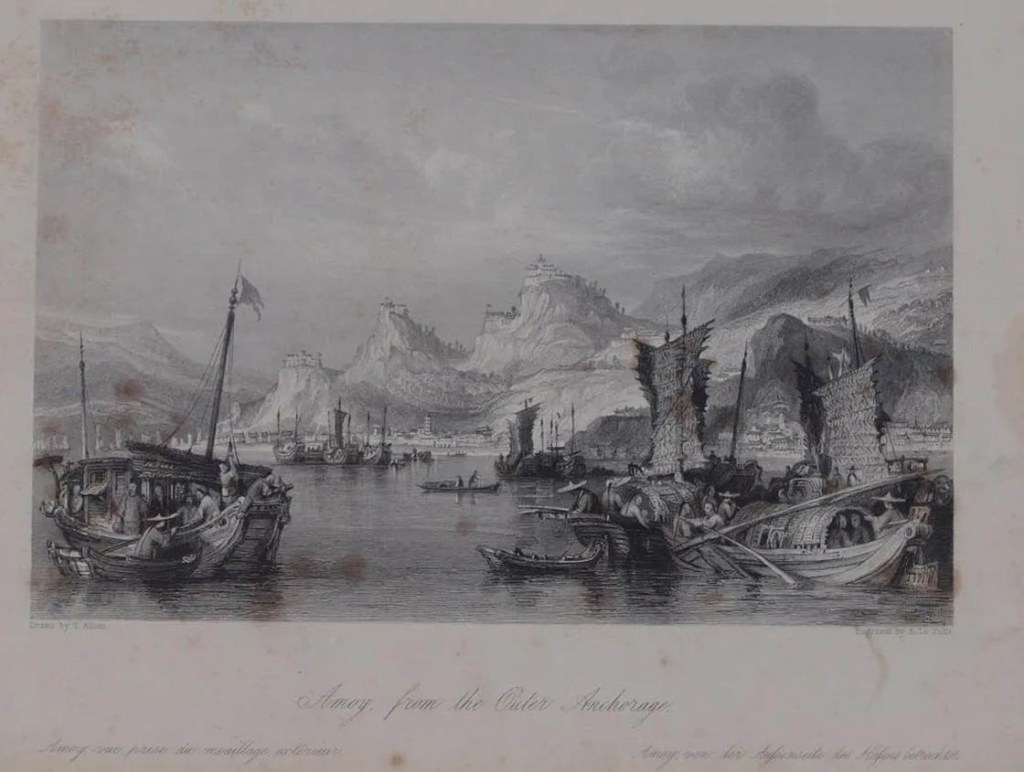
    Amoy from the outer anchorage, circa 1845.

    The Ariel regularly cruised between Chinese ports carrying all manner of goods.   This time she was sailing from Xiamen (then called Amoy) bound for Hong Kong with a very valuable cargo.   One account had the ship carrying $100,000 in Spanish silver Reales, the currency of trade at the time.     Another had her carrying a shipment of opium plus a quantity of gold and silver coin.  Either way, the value of the cargo was substantial, probably equivalent to many millions of dollars today, and it proved a temptation too irresistible to the mate and gunner.

    The evening they sailed from Xiamen, Wilkinson, the first mate, called Captain Macfarlane to come up from his cabin.   They were now off Nan’ao Island 160kms south of Xiamen and about one-third of the way through their passage to Hong Kong.   When Macfarlane came on deck he was confronted by Wilkinson and the gunner both armed with cutlass and pistols.   Wilkinson told Macfarlane they had seized the ship and they would be making for Singapore.    The pair offered to make Macfarlane an equal partner in their crime, for there were more than enough riches to go around.   But the captain refused to have any part in it and tried to persuade the men to give up their brazen heist.   

    Map of China showing coast between Amoy and Hong Kong, circa 1850s.

    Meanwhile, the crew was gathered on the forecastle and though they appeared not to be participating in the mutiny, Wilkinson said they were on his side.   The threat was obvious.   Captain Macfarlane was on his own.   Macfarlane was locked in his cabin with the assurance he would be released unharmed as long as he did nothing to disrupt their plans.   

    The next morning the captain asked to be let go in the longboat but the mate refused, telling him they were too close to Hong Kong and he would not risk capture should the captain raise the alarm before they were well out to sea.   A little later the Chinese girl went forward and spoke with the Filipino crew and learned they wanted nothing to do with the mutiny.   They armed themselves with knives and the cannon’s ramrods on the captain’s command and attacked the mate and gunner.   Meanwhile, several men smashed open the cabin skylight to rescue the captain.

    Hong Kong circa 1840s

    By the time Macfarlane was hauled out through the skylight, the mate was lying bashed, stabbed, and bleeding to death on the deck while the gunner had taken refuge in the cabin just vacated by the captain.

    Captain Macfarlane, now back in command of his ship, found a fowling piece (shotgun) belonging to the gunner and ordered him to surrender.   When the gunner opened the hatch leading to the ship’s gunpowder magazine and threatened to blow everything up, Macfarlane shot him in the leg.   He was then quickly overpowered and taken to Hong Kong to stand trial.   Wilkinson died from his wounds before they reached port.   The gunner, whose name is not recorded, was found guilty of piracy and sentenced to transportation for life.

    © Copyright C.J. Ison / Tales from the Quarterdeck, 2022.

    To be notified of future blog posts, please enter your email address below.

  • The Caledonia’s perilous last voyage

    A schooner of the early 1800s. Courtesy State Library of Queensland.

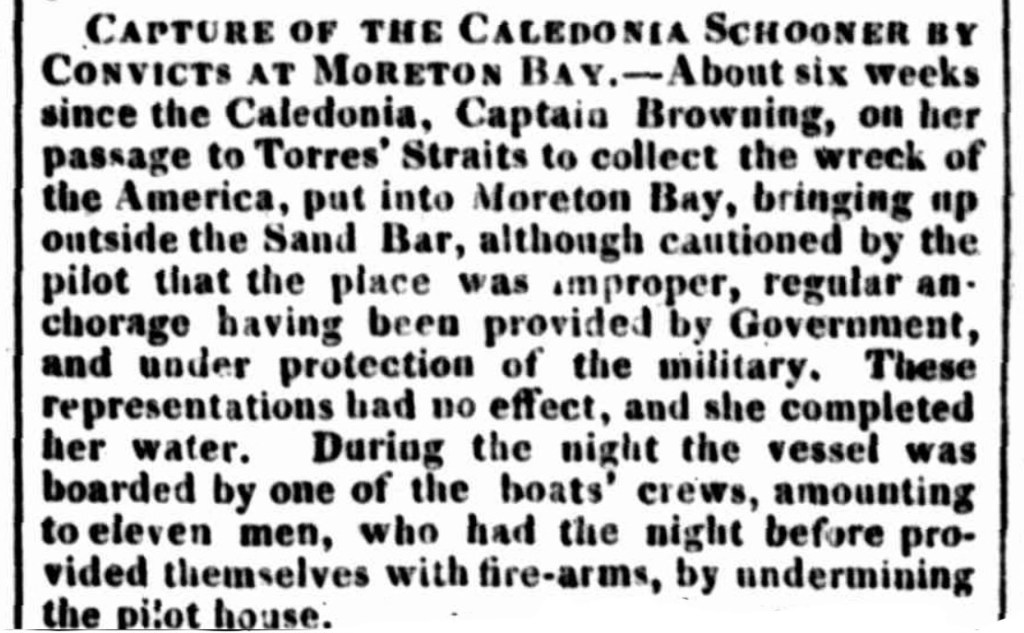
    On a hot December night in 1831, a storm rolled across Moreton Bay as they often do at that time of year. Outside the Amity Point pilot house, nearly a dozen convicts huddled under a sheet of canvas as they bided their time. There was a small schooner anchored a short distance offshore, and the storm would provide the soaking prisoners with a rare opportunity to escape.

       But what the hapless runaways did not know as they seized the Caledonia and sailed her out of Moreton Bay, their self-appointed leader was a dangerous psychopath, and they would be swapping one reign of terror for another far worse. Three of them would soon be murdered. A fourth would be abandoned on an inhospitable island, and the rest would flee for their lives at the earliest opportunity.

       The Caledonia had pulled into Moreton Bay the previous day to collect a whaleboat, which belonged to the sailing ship America. The crew had used it to reach Moreton Bay after their ship was wrecked further north. Two Sydney businessmen had purchased the salvage rights to the wrecked ship and sent Captain George Browning north to retrieve the boat and strip the America of everything of value. Browning had reported to the Amity Point pilot station and explained their unexpected visit. He was now waiting for the boat to be brought down the Brisbane River before he continued on his way to the wreck site.

    Sydney Herald, 20 Feb 1832, p. 3.

    That night, as lightning streaked across the sky and deafening claps of thunder boomed around them, the convicts got to work. The guard had taken shelter and the raging storm muffled any noise they made. They easily dug down through the sand and tunnelled under the pilothouse wall. A couple of them crawled inside, stole the keys to the boat shed and armed themselves with muskets and pistols while the pilot and a guard slept. Then they jumped into the pilot boat and rowed out to the Caledonia. No guard had been posted on deck, and the crew were easily overwhelmed before they had fully awoken. The Caledonia’s crew were ordered into the pilot boat to make their way back to Amity Point using only one oar. However, the convicts held on to Captain Browning. He was needed to navigate the schooner to the tiny island of Rotuma, 3000 km away. By dawn, the Caledonia was heading out to sea, as the crew drifted back to shore to raise the alarm.

       The leader of the runaways was a former sailor named William Evans. He was unusual, for he had come to New South Wales as part of the crew of a merchant ship. One night while moored in Sydney Harbour, Evans had broken into the captain’s cabin and stolen a purse full of money. He was spotted leaving the ship in a small dinghy and was soon caught. Evans was found guilty and sentenced to seven years’ hard labour at Moreton Bay. Now, in the closing days of 1831, Evans still had three more years of back-breaking toil, poor rations and loathsome living conditions to endure. When he realised there was a chance he could make his escape on the schooner, he pounced, convincing the rest of the prisoners to join him.

    Newspaper illustration of Evans and others throwing convict over the side of the Caledonia. The Argus, circa 1950s

       After they had been at sea for a week, tensions came to a head among the convicts. The common purpose that had seen them work together to seize the ship and escape had been replaced by bitterness and division. After hearing a rumour that a mutiny was looming, Evans struck first. He stood outside the entrance to the crew’s cabin, backed up by two mates, and ordered one of the mutineers to come on deck. As he emerged, Evans shot him point-blank in the head. Evans then ordered two others to come out, and they were killed on the spot. That ended any thought of challenging his leadership.

       About a week later, the schoonerstopped at New Caledonia for water. Evans’ right-hand man, Hugh Hastings, and a couple of others took a boat out to fill the water barrels. But, while they were gone, a party of Islanders came out to the schooner, indicating that they wanted to trade. As the Islanders outnumbered those on the schooner, they were barred from boarding. Only a volley of shots fired over their heads saw them leave. Fearing they might return under the cover of darkness, Evans had the Caledonia taken out to sea. But, when Hastings returned to find the schooner missing, he thought the worst and swore he would kill Evans for his treachery.

       Hastings and the others spent an uncomfortable night in the boat, but in the morning the Caledonia returned to pick them up. When Evans heard that Hastings had threatened him, he gave his mate two choices. Either stay on the island and take his chances with the hostile natives, or be shot. Hastings remained on the island when the Caledonia sailed away.

    Likely route taken by the Caledonia from Moreton Bay to Savai’i Island

       The Caledonia continued back out to sea and headed for the tiny island of Rotuma, still 1000 km away. Evans had heard rumours that whaling ships regularly stopped there for water and fresh supplies. He planned to join the next American whaler to visit Rotuma and work his way to the United States.

       The Caledonia dropped anchor off Rotuma a week or so later, however, their stay was cut short. One of the convicts bragged that they had just escaped from Moreton Bay. When Evans found out, he was furious and vowed to kill the man, but he fled into the bush before the threat could be carried out. Evans felt it was no longer safe to stay on Rotuma, so he ordered Captain Browning to set sail.

       The Caledonia eventually pulled up off Savai’i Island in Samoa. As soon as they dropped anchor, three more of the convicts jumped ship and fled inland, taking with them three women Evans had kidnapped off Rotuma. Of the ten convicts who escaped with Evans, only three were left.

       Evans went ashore and learned that whaling ships regularly called in there for supplies, so he scuttled the Caledonia and awaited the next ship. Browning, whose life had hung in the balance since leaving Moreton Bay, was finally able to escape Evans’s clutches. A local chief had taken a liking to Browning and gave him protection as Evans and his mates kept their distance. When, a fortnight later, the whaler Oldham dropped anchor, Browning raced out to meet the captain. Browning told him that Evans was an escaped convict and had murdered three men since fleeing Moreton Bay. The Oldham’s captain and crew went ashore and brought Evans back to their ship in chains. Evans’ mates, by then, had taken off into the bush. However, Evans would never front court for his crimes. On the way back to Sydney, he jumped over the side of the ship, preferring to drown rather than face the hangman.

       Several months after the Caledonia sailed out of Moreton Bay, Captain Browning arrived back in Sydney, long after he had been given up for dead.

    The full story is told in A Treacherous Coast: Ten Tales of Shipwreck and Survival from Queensland Waters available through Amazon.

    © Copyright C.J. Ison / Tales from the Quarterdeck, 2022.

    To be notified of future blog posts, please enter your email address below.