Tag: New South Wales

  • The Loss of the SS Cawarra: Bad luck or an avoidable tragedy?

    “Foundering of the S.S. Cawarra off Newcastle.’ Source: Australian News for Home Readers, 27 Aug 1866, p. 4.

       When, in 1866, the Board of Inquiry into the Loss of the Steam Ship Cawarra handed down its report, it was met with much incredulity. After poring over the evidence for six weeks, the commissioners could only conclude that the catastrophe was simply the result of bad luck. That was despite evidence presented to them that the steamer had been grossly overloaded when she had left port.

       The SS Cawarra was a 439-ton side paddle steamer owned and operated by the Australian Steam Navigation Company, and regularly made the passage between Sydney and Brisbane. On what would be her last voyage, she had a crew of 36 and 25 passengers. In all, there were 61 souls on board. Around 6 p.m. on Wednesday, 11 July 1866, she passed through Sydney Heads on her way to Rockhampton via Brisbane. The northern settlement of Rockhampton had not been visited for some time, and basic provisions had run low. So, when the Cawarra’s hold was packed to capacity and no more would fit below, the remaining cargo was stowed on deck.

       As soon as the steamer was heading north through open seas, she was assisted on her way by a strong south-easterly breeze. But during that first night, the weather steadily worsened. By morning, the winds were shrieking at gale force, the seas were mountainous, and the ship was being lashed by torrential rain. In the face of such foul weather, Captain Henry Chatfield decided to take shelter at Newcastle until it was safe to resume his journey.

       Chatfield sighted the distinctive outline of Nobby Head at 2 o’clock in the afternoon, and shortly after that, the steamer rounded the headland to enter the port. However, as the Cawarra was approaching the mouth of the Hunter River, she was struck by a series of large waves that swept over her deck and pushed her around so she was now facing back out towards Nobby Head.

    “Position of Cawarra previous to foundering …” Source: Illustrated Sydney News, 16 Aug 1866, p. 5.

       It is thought that when Captain Chatfield realised his ship was in grave peril, he ordered the foresail to be set and tried to steam back out to sea. However, before he could do so, the Cawarra was hit by several more huge waves. They would spell her end. Water poured through the hatchways snuffing out the steamers’ fires. Now she was dead in the water at the mercy of the large seas. The ship then began to sink by the bow. Chatfield ordered the lifeboats to be made ready, but the treacherous seas swirling around the steamer made abandoning the ship impossible.

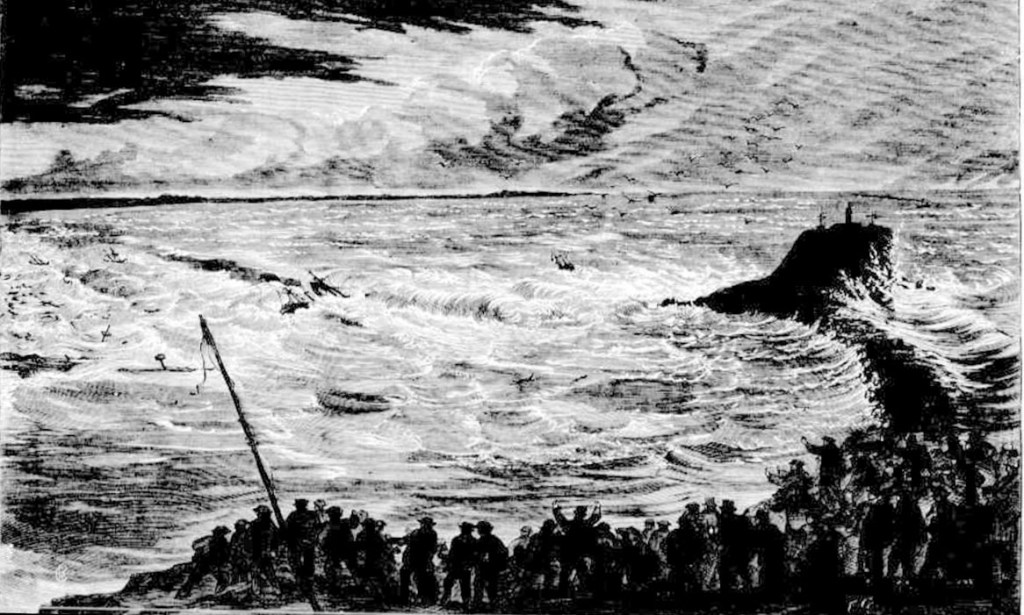
       Around 3 o’clock, the Cawarra was driven onto Oyster Bank. The foredeck soon disappeared below the waves, and everyone had gathered on the poop deck or had climbed into the rigging to escape the rising water. Fifteen minutes later, the mainmast and funnel toppled into the sea, taking with them all those sheltering on the poop. The foremast went a few minutes later, tossing the remaining three or four men into the water, and the Cawarra quickly sank from sight. It was as if she had never been there to observers watching the horror unfold from Nobby Head. Only a few pieces of wreckage and cargo washed ashore to testify that a ship had been lost.

       Sixty people died, while one man somehow managed to survive. Frederick Valliant Hedges had only joined the Cawarra eight months earlier. As the steamer began sinking by the bow, he had climbed high into the mainmast rigging only to be flung into the sea when the mast came crashing down. Hedges was later found clinging to a red buoy by a boat sent out from the lighthouse. Ironically, one of the rescuers was a man named John Johnson, who had himself been the sole survivor of the Dunbar when it sank off Sydney nine years earlier.

    The Rescue of F.V. Hedges, the only survivor from the Cawarra. Source: Illustrated Sydney News, 16 Aug 1866, p. 4.

        The violent storm wreaked havoc on shipping up and down the coast between Sydney and Port Stephens. Four more vessels foundered or were driven ashore at Newcastle, and another was wrecked near Port Stephens, further north. Several more were lost around Sydney. In all, 15 vessels were wrecked or driven ashore, adding another 17 fatalities to the grim final tally.

       It is perhaps easy to blame the weather for the Cawarra’s loss. In fact, the commission established to investigate the circumstances found just that. Its report concluded: “We are of the opinion that the catastrophe was one of those lamentable occurrences which befall at times the best ships and the most experienced commanders, and which human efforts are powerless to avert.”

       However, that explanation did not sit well with many folk. It had the whiff of a cover-up. Accusations that the Cawarra had been overladen when she left Sydney flew around maritime circles. She was reportedly carrying 450 tons of coal and cargo, which was 50 tons more than recommended by the ship’s builders. An engineer and surveyor from the Steam Navigation Board testified at the inquiry that when he had seen the Cawarra shortly before her departure, he thought she was sitting lower in the water than usual and believed she had been overloaded. But when he had raised his concerns with his superior and the ship’s owners, they both dismissed his concerns, telling him the Cawarra was a strong ship.    The possibility that overloading could have contributed to the loss was even raised in the New South Wales parliament. The outspoken former clergyman and politician, Dr J.D. Lang, called for the Commission’s findings to be rejected, pointing out the contradictory evidence presented at the inquest. But it was all to no avail. The findings stood, and the loss was attributed to bad luck.
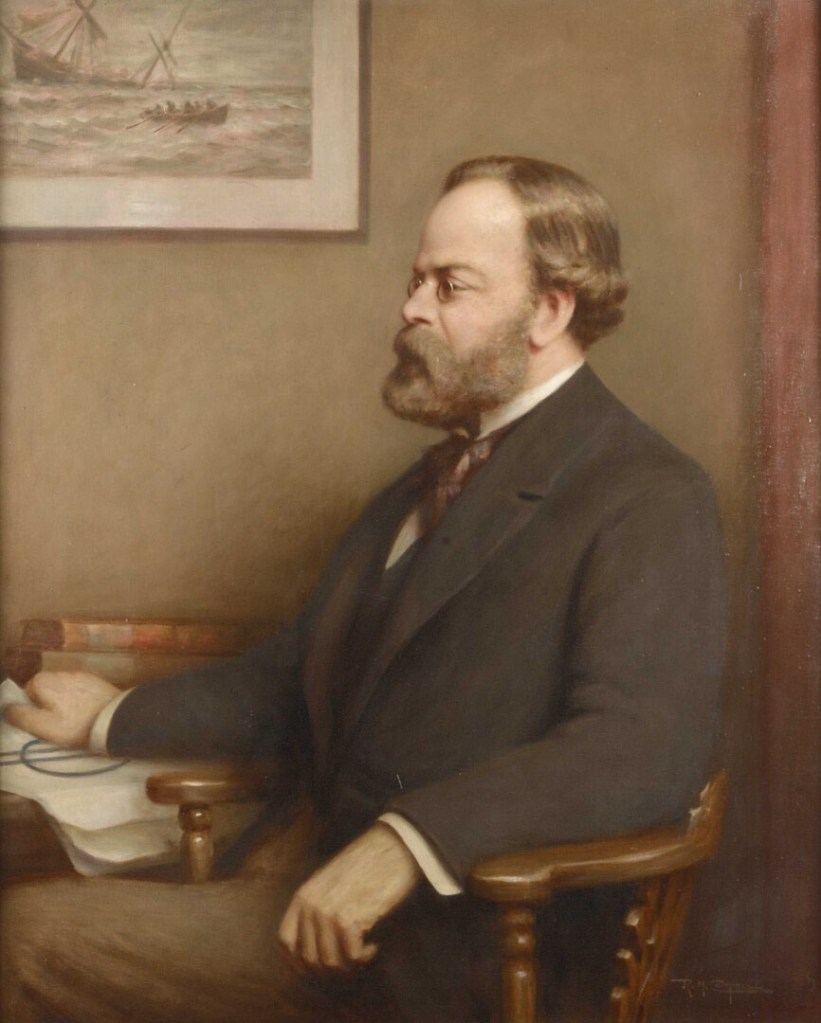
    Samuel Plimsoll. Wikimedia/creative commons.

       However, there were calls for a line to be marked on the hull of cargo ships to show when they were fully loaded. It would take another ten years before British parliamentarian Samuel Plimsoll was able to persuade his colleagues to take action. He was appalled by the number of ships and lives lost due to overloading. In 1876, the British Parliament passed legislation requiring markings on the sides of cargo ships, which would be submerged below the surface if the vessel was overloaded. This became known as the Plimsoll Line and is still in use today.

    © Copyright C.J. Ison / Tales from the Quarterdeck, 2023.

    To be notified of future blogs, please enter your email address below.

  • Narcisse Pelletier: An Extraordinary Tale of Survival.

    Narcisse Pelletier and the Saint Paul.

       In April 1875, the pearling schooner John Bull’s crew encountered a man of clearly European descent living with a group of Aborigines on Cape York Peninsula. Mistakenly thinking that the man was being held against his will, they took him on board their vessel and delivered him to the nearest Government outpost at Somerset. His name was Narcisse Pelletier.

       Pelletier spent about two weeks at Somerset before being sent to Sydney on the steamer Brisbane. During his time at Somerset, Pelletier had spoken little, but on the voyage south, he was befriended by Lieutenant J.W. Ottley, a British Indian Army officer on leave in Australia. Using his rusty schoolboy French, Ottley coaxed Pelletier to tell him his remarkable story.

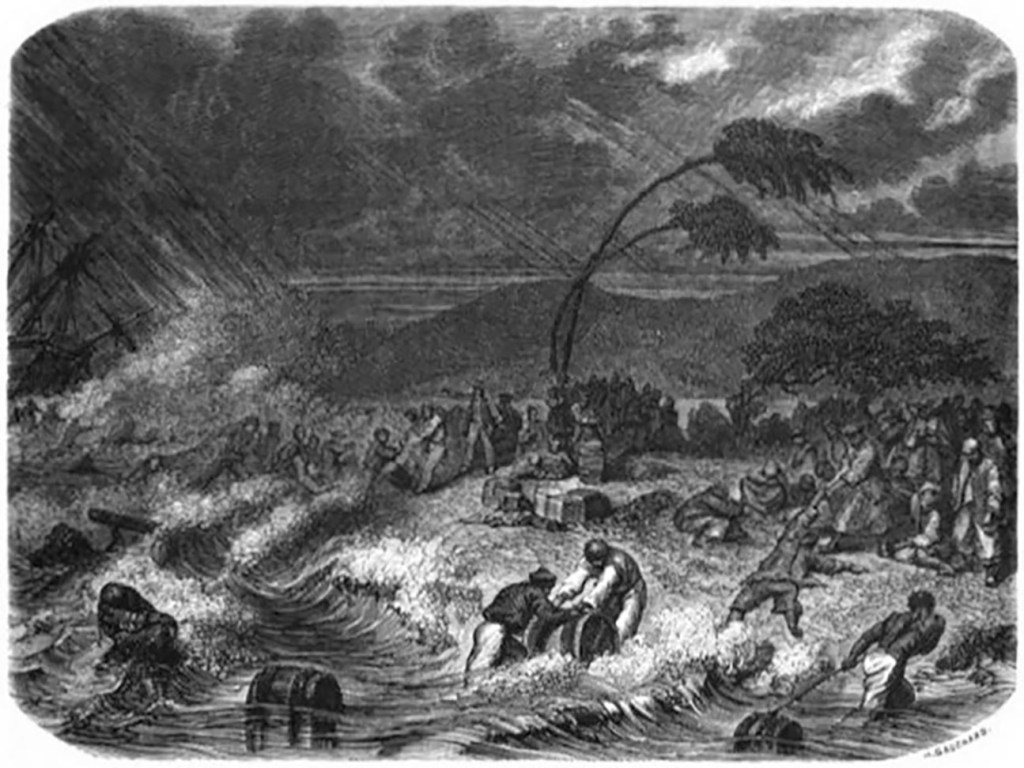
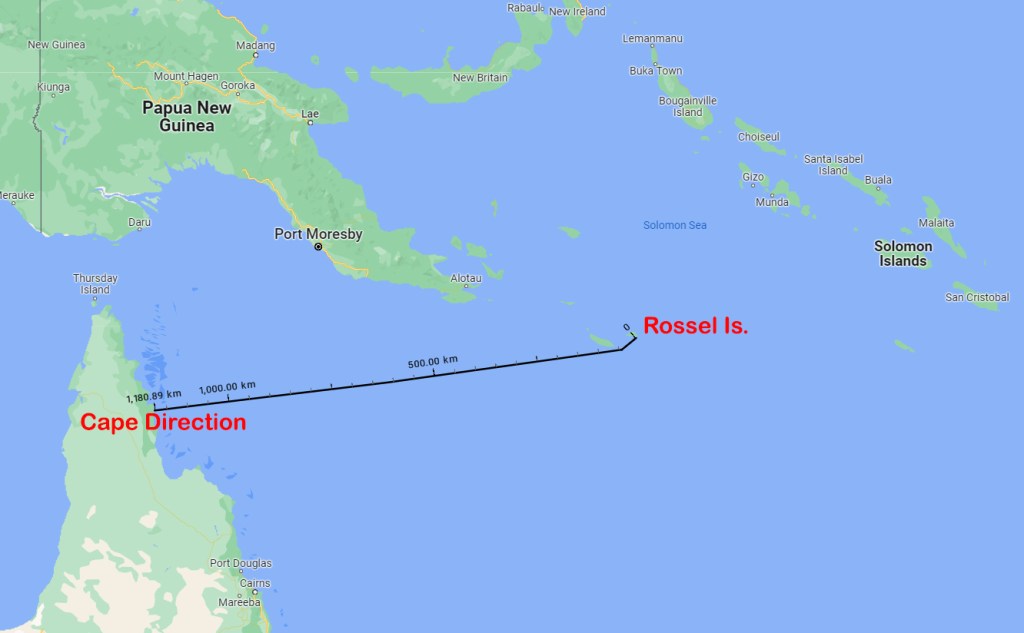
       Narcisse Pierre Pelletier was the son of a Saint Gilles shoemaker. At the age of 14, he went to sea as a cabin boy on the Saint Paul under the command of Captain Emmanuel Pinard. The ship sailed from Marseille in August 1857, bound for the Far East. The following year, the Saint Paul left Hong Kong for Sydney with 350 Chinese passengers drawn to New South Wales by the lure of gold. However, the ship was wrecked in the dangerous Louisiade Archipelago off the east coast of New Guinea.

    Stranding on the Saint Paul, on Rossel Island. Auguste Hadamard, Le Tour du Monde, volume 4, 1861.

       When some of the crew, including Pelletier, went in search of water on Rossel Island, they were attacked by the local inhabitants, and the mate and several sailors were killed. Pelletier himself was struck on the head and barely escaped with his life. He claimed that the captain had then decided their best chance of surviving was for the remaining crew to make for New Caledonia, leaving the Chinese passengers to their fate. This was at odds with Captain Pinard’s own account, in which he claimed to have gone in search of help at the behest of the passengers and that he had left them with most of the provisions and firearms. The story of the shipwreck and the gruesome aftermath is told in the preceding chapter.

       Pelletier recalled they suffered greatly in the longboat, surviving on a diet of flour and the raw flesh of a few seabirds that they were able to knock out of the sky when they flew too close to the boat. The sailors’ misery was amplified several days before reaching land when they ran out of drinking water. Pelletier was unsure how long they had been at sea, but they came ashore on the Australian mainland near Cape Direction, the land of the Uutaalnganu people.

       Nine of the Saint Paul’s crew reached land, including Captain Pinard and Pelletier. The first water hole they found was so small, according to Pelletier, that by the time everyone else had drunk their fill, there was none left for him. By now, he was half dead from hunger and thirst. He was suffering from exposure to the elements, and his feet had been lacerated from walking barefoot on coral.

       He told Ottley that Pinard and the rest of the men had reboarded the boat, intent on reaching the French settlement on New Caledonia, but they set out to sea without him. There he was, abandoned on an alien and possibly hostile stretch of coast far from anything familiar.

       Again, Pelletier’s version differs from Pinard’s. The captain claimed that he and all the others had stayed with the Uutaalnganu people for several weeks before they set off and were later picked up by the schooner Prince of Denmark, which eventually took them to New Caledonia. Regardless of the precise circumstances, when his shipmates left, Pelletier remained and was adopted by the Uutaalnganu people.   

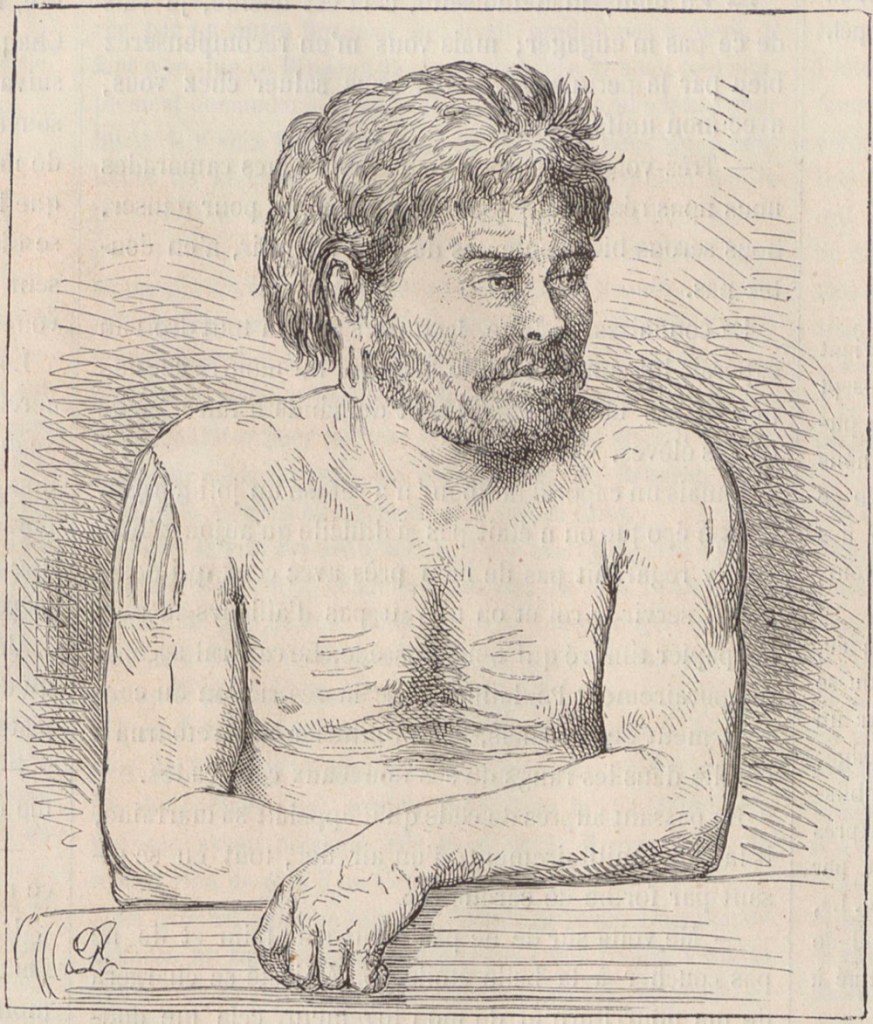
    They tended to his injuries and restored him back to good health. Pelletier said that for the first several years, he missed his parents and younger brothers and longed to return home to France. But as time wore on, those feelings faded and were replaced by a strong bond to his Uutaalnganu adopted family. From the ceremonial scars scored on his chest and arms, and the piercing of his earlobe, for which he felt great pride, it is clear he had been initiated into the society. According to a later French biography, Pelletier married an Aboriginal woman and they had several children. He would remain with the Uulaalnganu for 17 years.

    Narcisse Pelletier in 1875. Source: Wikicommons.

       Then, in 1875, his world was turned upside down for a second time. One day, the pearling lugger John Bull happened to anchor near Cape Direction. Several sailors came ashore for water and to trade with the Uutaalnganu. They noticed the white man among the local inhabitants and coaxed him to visit their ship. Pelletier told Ottley that he had only gone with them for fear of what the heavily armed sailors might do if he didn’t, rather than any desire to return to “civilisation.” What’s more, he had not expected to be taken away, never to see his family and friends again. Pelletier also confessed to Ottley that he would have preferred being returned to Cape Direction and “his people,” instead of being taken down to Sydney.

       Narcisse Pelletier never did return to his Uutaalnganu family. He was delivered to the French Consulate in Sydney, where officials organised passage for him back to France. When, in January 1876, he arrived at his parents’ home, the whole town turned out to greet him. He was given a job as a lighthouse keeper near Saint Nazaire and married for a second time a few years later. Narcisse Pelletier passed away on September 28, 1894, at the age of 50.

    © Copyright C.J. Ison / Tales from the Quarterdeck, 2023.

    To be notified of future blogs, please enter your email address below.