Tag: Matthew Flinders

  • The Loss of the Sydney Cove – 1797

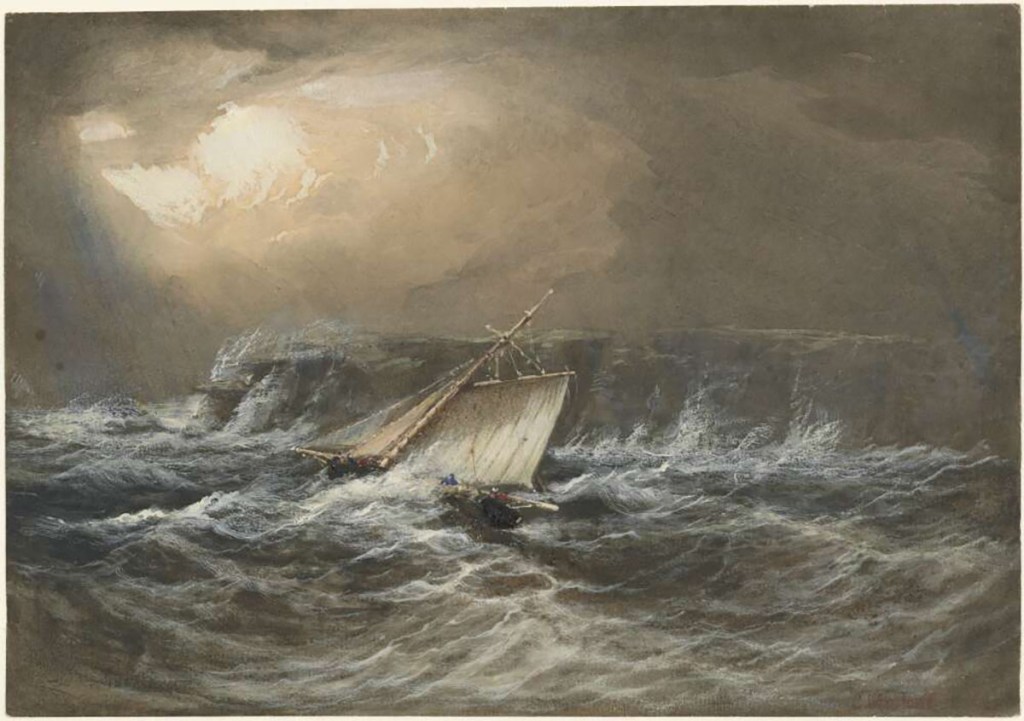
    A barque caught in heavy weather. Source: Tales of Shipwrecks and Adventures at Sea, 1856.

       In May 1797, a fishing party returned to Sydney with more than their daily catch. They had found three shipwreck survivors south of Botany Bay who told them that the merchant ship Sydney Cove had been wrecked somewhere far to the south. The survivors had trekked over 600 km along New South Wales’s rugged southern coast seeking help for their captain and shipmates who were still stranded with the ship.

       On 10 November 1796, the 250-ton Sydney Cove had sailed from Calcutta with her hold full of Indian goods and produce the owners hoped to sell in Sydney. The crew, numbering close to fifty men, was a mix of Indian and European seamen under the command of Captain Guy Hamilton. About a month out, as she cleaved her way south through the Indian Ocean, the Sydney Cove was caught in a terrible storm and began taking on water. Initially, the leak was easily managed with the pumps, so Hamilton continued on his course to round Van Diemen’s Land (Tasmania) before heading north again and on up the New South Wales coast to Sydney.

       By January, as they sailed into the latitudes south of Tasmania, the ship was caught in the grip of another powerful storm. The leak began to worsen, and soon the pumps had to operate continuously to prevent the ship from sinking.

       As they headed up Tasmania’s east coast, they encountered yet more wild weather and heavy seas. By now, water was pouring into the hold faster than the men at the pumps could clear it. The barque was slowly filling with water. Captain Hamilton ordered all non-essential gear to be jettisoned to lighten the load, but that only put off the inevitable.   

    By 9 February, the water in the hold was lapping at the lower-deck hatches. Captain Hamilton realised he had no choice but to beach his ship to save her from foundering in deep water. If that were to happen, he would not only lose his ship and its precious cargo but also much of his crew, for they would not all fit on the Sydney Cove’s two boats. He found a sandy beach on what is today called Preservation Island in the Furneaux group and ran her ashore. Although Hamilton had saved the ship from sinking, his troubles were far from over.
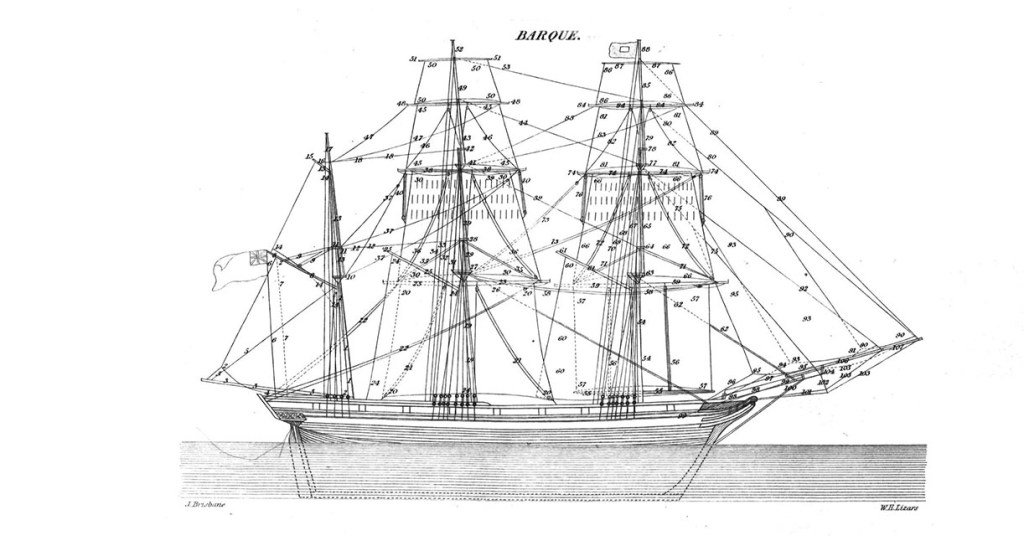
    No illustration of the Sydney Cove exists but it likely looked similar to this example. Source: Nautical Dictionary by Arthur Young, published in 1863.

       Exhausted from constant bailing and battling through rough seas, Hamilton got the crew unloading much of the ship’s stores and cargo onto Preservation Island. But then the weary men discovered the casks of rum stacked among the cargo. Hamilton had to have the liquor taken to a neighbouring island to prevent his men from pillaging it. Captain Hamilton then organised his crew for a prolonged stay, for they had come ashore at a very remote part of the world. The crew erected shelters using sails and spars to give them refuge from the elements. Hamilton rationed everyone to one cup of rice per day, and though they sank a well and found water, it proved so brackish it was barely drinkable. However, their immediate needs were met. Then he turned his mind to their rescue.

       If they were ever to leave Preservation Island, they would have to send for help. It was agreed that the First Mate, Hugh Thomson, with 17 men, would sail north, keeping close to the New South Wales coast until they reached Sydney. Captain Hamilton and the remaining crew, numbering about 30, would remain with the ship.

       Several days after setting off, the longboat was driven ashore on Ninety-Mile Beach and smashed to pieces. Thomson and his men escaped with their lives, but they had little else. With no way to return to the Sydney Cove, their only chance of survival lay in continuing to Sydney, 600 km away, on foot.

       Thomson hugged the coast, knowing that as long as they kept the sea on their right, they would eventually arrive at the young settlement. However, that meant crossing many wide river mouths and scrambling over numerous rocky promontories along the way. The journey was gruelling and took a heavy toll on the men. Encounters with the indigenous peoples varied in nature. Some provided the castaways with food and water, while others were less sympathetic but allowed them to pass unhindered. Yet others set upon the interlopers on their land. Their numbers dwindled as some drowned crossing rivers or otherwise fell victim to the harsh and unforgiving terrain.

    The Sydney Cove party as depicted by Smiths’ Weekly in 1939. Smith’s Weekly 30 Sep 1939 p. 8.

       By late April, there were only three men left. However, they had managed to reach within 20 km of Botany Bay when fishermen finally discovered them. The fishermen took the survivors the rest of the way to Sydney in their boat. On learning of the loss of the Sydney Cove, Governor Hunter ordered vessels to be sent to rescue the remaining sailors and salvage the ship’s cargo.

       After being marooned for some four months, Captain Hamilton and the rest of the crew were in dire straits. Winter was fast approaching. Successive storms had mercilessly battered their shelters, and now they had gaping tears, offering the men little protection from the bitter weather. While they had been able to supplement their rice ration with seabirds nesting on the island, their diet still barely sustained life. To add to their sense of abandonment, they had seen several ships pass in the distance but had been unable to alert any of them to their presence.

       Then, on 10 June 1798, salvation arrived when the sloop Eliza sailed into view and dropped anchor a short distance off the beach. It was later joined by the schooner Francis, under the command of Lt Matthew Flinders. Both ships had left Sydney 10 days earlier under Governor Hunter’s orders. The crews loaded as much of the salvaged cargo as they dared, leaving five volunteers behind to watch over the remaining goods until it could be collected at a later date. Captain Hamilton and his men boarded the Francis and Eliza, and they headed for Sydney.   

    The weather was no less kind as the two small ships battled their way home. It took 15 days of hard sailing through storms and high seas for the Francis to reach Port Jackson. The Eliza never made it back to Sydney and was presumed to have sunk in the terrible weather with the loss of her own crew, plus eight shipwreck survivors. In total, about half of the crew of the Sydney Cove lost their lives.

       The shipwreck is historically significant for the trek undertaken by Thomson and the others. They were the first Europeans to note an outcrop of coal in the Illawarra, which has defined the region to this day. Also, Captain Hamilton recorded strong south-westerly currents during his time on Preservation Island, suggesting there was a large body of water separating Van Diemen’s Land and the Australian mainland. The existence of the strait would later be confirmed by Matthew Flinders and George Bass and named after the latter.

    © Copyright C.J. Ison / Tales from the Quarterdeck, 2023.

    To be notified of future blogs, please enter your email address below.
  • The Life and Loss of HMSC MERMAID

    HMSC Mermaid off Cape Banks, Dec. 4, 1820, by Conrad Martens. Image Courtesy National Library of Australia.

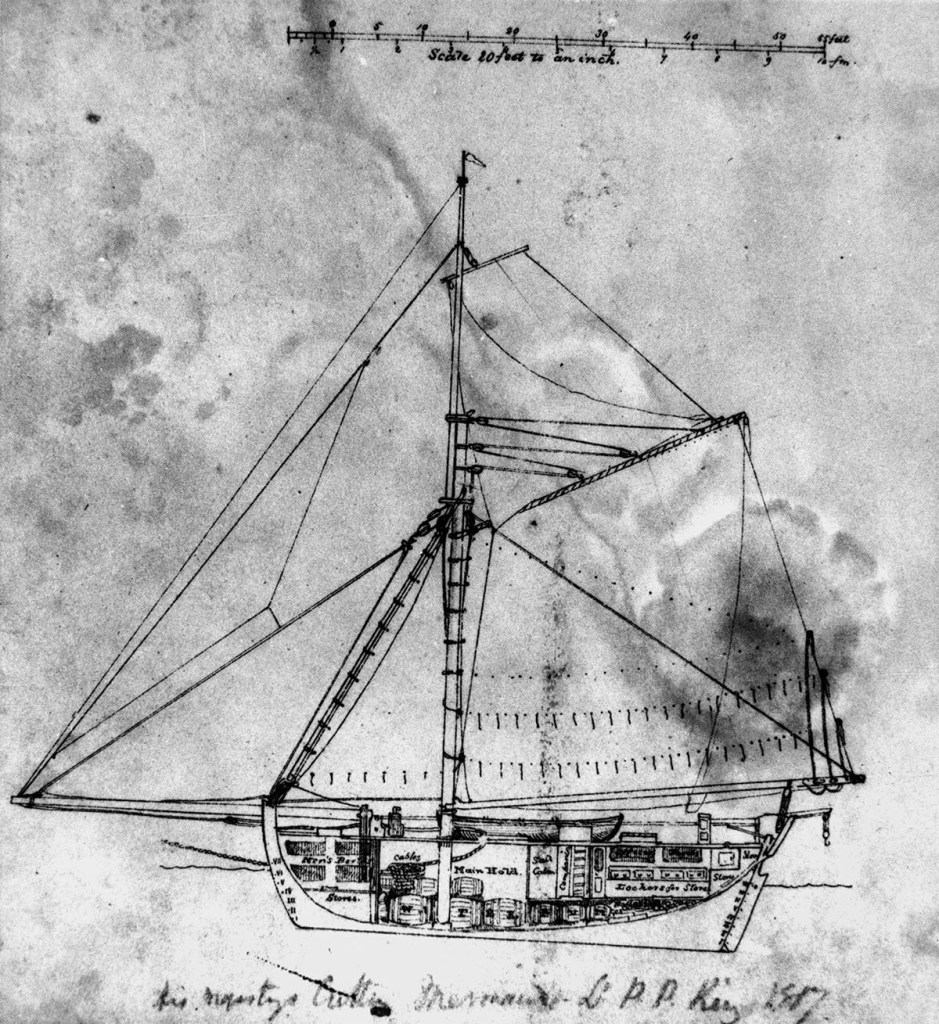
       Between 1818 and 1820, the small survey cutter HMSC Mermaid played an important role in charting Australia’s vast coastline. So, it is perhaps ironic that her last voyage should have been cut short on an uncharted reef off the north Queensland coast.

       The Mermaid was an 84-ton cutter launched in Calcutta in 1816. She arrived in New South Wales the following year and was soon purchased by the Government to undertake survey work requested by the British Admiralty.

       Lieutenant Phillip Parker King was dispatched to Australia to carry out a detailed survey of the Australian coastline, particularly those areas bypassed by Matthew Flinders. The son of former NSW Governor Phillip Gidley King, he had been born on Norfolk Island in 1791. On the family’s return to England and completion of his schooling, the young King joined the Royal Navy. He was given command of the Mermaid and got to work.

    Lt Phillip Parker King. Unknown artist. Courtesy State Library of NSW,

       HMSC Mermaid made three extensive voyages under King. They sailed from Sydney on 22 Dec 1817, bound for Australia’s northern and northwest coasts via Bass Strait and Cape Leeuwin. The crew included two sailing masters, 12 seamen and two boys. On board were also the botanist Allan Cunningham and Bungaree, a Kuring-gai man from Broken Bay who had also circumnavigated the continent with Matthew Flinders on the Investigator.

       At Northwest Cape, King surveyed and named Exmouth Gulf before continuing north along the coast until they reached Van Diemen’s Gulf and Cobourg Peninsula. From there, they sailed to Kupang on Timor Island to resupply, where they remained for two weeks. King then set sail for Sydney, returning down the West Australian coast. The return trip was marred by rough weather and a shortage of manpower. Several of the crew had become seriously ill shortly after leaving Timor, and one of them subsequently died. Despite the hardships, the Mermaid arrived back in Sydney on 29 July 1818 after an absence of seven months and seven days.

       Between December 1818 and January 1819, King sailed to Van Diemen’s Land and undertook a survey of Macquarie Harbour, which would soon become the site of one of the convict era’s most brutal places of punishment. Their work done there, the Mermaid was back in Sydney in late February, and in May she was off again.

    Lt King’s survey cutter ‘Mermaid’ Photo courtesy State Library of Queensland.

       The third voyage, and King’s last in the Mermaid, saw them sail up the east coast of Australia on a circumnavigation of the continent. On 20 July, while sheltering in a bay he named Port Bowen at latitude 22.5 S (not to be confused with the present-day township of Bowen), the Mermaid ran aground and became stuck. It was only after considerable effort that the crew were able to warp the vessel into deep water, but she sustained serious hull damage in the process. The full extent of the injury would only become apparent months later.

       The Mermaid continued north, passed through Torres Strait and King again started making a detailed survey of the north-west coast. However, the cutter had been taking on water ever since its beaching at Port Bowen. By September, she was leaking so badly that King was compelled to careen the vessel and attend to the leaking hull. With repairs completed as best they could, he then cut short his survey and ran down the west coast, across the Great Australian Bight, returning to Sydney in December. However, the Mermaid was very nearly wrecked within sight of her home port.

       As they passed Jervis Bay, the wind was blowing strongly from the east-south-east and visibility was much reduced by heavy rain. Lt King steered a course that he thought would find them off Sydney Heads the following morning. But at 2 o’clock in the morning, King, thinking they were still 30 km from land, was surprised when a bolt of lightning revealed they were sailing directly towards Botany Bay’s south head. The Mermaid only just cleared that hazard but lodged on a rock off the north head before being lifted off by a large wave. She ploughed through breakers within metres of the rocky promontory with the sea surging and foaming around them. It was a very close call, but they were soon safely inside Sydney Harbour without further incident.

       Lt King made his fourth and final survey in the Bathurst while the Mermaid underwent much-needed repairs.   But that was not the end of the little cutter’s adventures.   She was decommissioned from the Royal Navy and taken over by the NSW colonial government, where she continued to serve with distinction.

    Mermaid being repaired during King’s voyage. Engraving by John Murray 1825. Image courtesy National Library of Australia.

       In 1828, the Mermaid received a major overhaul, including re-planking, new copper sheathing, and, most importantly, being re-rigged as a two-masted schooner. Then, in early 1829, she was tasked with helping dismantle the failed settlement at Raffles Bay on the Cobourg Peninsula. Once done there, they were to make for the remote settlement of King George Sound (present-day Albany) to deliver stores and dispatches. Under the command of Captain Nolbrow, the Mermaid departed Sydney on 16 May and headed north, keeping to the inner passage inside the Great Barrier Reef.

       Tragedy struck at 6 o’clock in the morning on 13 June when, about 35 km south of present-day Cairns, the Mermaid ran grounded on a reef not recorded on King’s recently published naval chart. At 8 p.m., Captain Nolbrow and his crew, 13 men in all, took to the lifeboat with the hold bilged and water already over the cabin deck.

       Twelve days later, as they continued north towards Torres Strait, the castaways were picked up by the Admiral Gifford. The Admiral Gifford was a 34-ton schooner on a speculative voyage through Australia’s northern waters and was ill-equipped to carry so many additional passengers. On 3 July, Nolbrow and his crew were transferred to the much larger Swiftsure, possibly in the vicinity of Pipon Island. Unfortunately, the Swiftsure was wrecked two days later near Cape Sidmouth and her crew, along with the Mermaid’s, were rescued by the Brig Resource.

       Captain Nolbrow and his men eventually made it back to Sydney via the Swan River settlement (present-day Perth) in November 1829. The remains of the Mermaid were discovered on Flora Reef in 2009.

     © Copyright C.J. Ison / Tales from the Quarterdeck, 2023.

    To be notified of future blogs, please enter your email address below.

  • Matthew Flinders and the loss of HMS Porpoise – 1803

    Loss of the Porpoise & Cato. Courtesy Wikipedia.


         Shortly after Matthew Flinders completed his historic circumnavigation of Australia, he was farewelled from Sydney to return to England as a passenger on board HMS Porpoise. To everyone’s astonishment, he returned to Sydney a month later to report that the Porpoise and another ship had run aground on a reef far out in the Coral Sea.

       HMS Porpoise, under the command of Lt Fowler, along with the merchant ships Cato and Bridgewater, departed Port Jackson on 10 August 1803, intending to remain together as they sailed north through the remote waters of north Australia. Ships regularly travelled in company, so one might come to the other’s aid should they get into difficulty. After all, the next European outpost after leaving Sydney was Kupang on Timor Island, 2,000 km west of Torres Strait and over 5,000 km from Sydney.

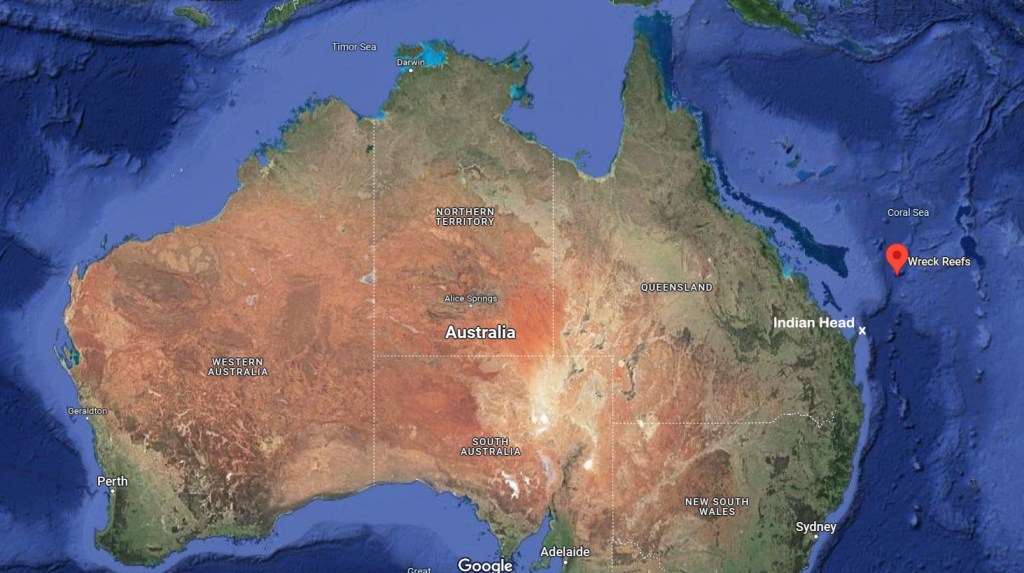
       On the afternoon of 17 August, the three ships passed a small island marked on the chart, which confirmed their position about 160nm (300 km) NE of Sandy Cape at the northern end of Fraser Island (K’gari). The chart showed no other obstacles in their path until they were ready to pass through the Great Barrier Reef, much further to the north.    As night took hold, they continued bearing NNE under reduced sail, pushed along by a southerly breeze. The Porpoise was out in front with the Cato and Bridgewater off her port and starboard quarters, respectively. Then, around 9.30 pm, the Porpoise’s lookout called “breakers ahead.” The Porpoise tried to veer off but without success, and she struck the uncharted reef. Likewise, the Cato attempted to steer away from the line of white water that indicated danger. However, she had insufficient room to manoeuvre and ran aground about 400m from where the Porpoise struck.

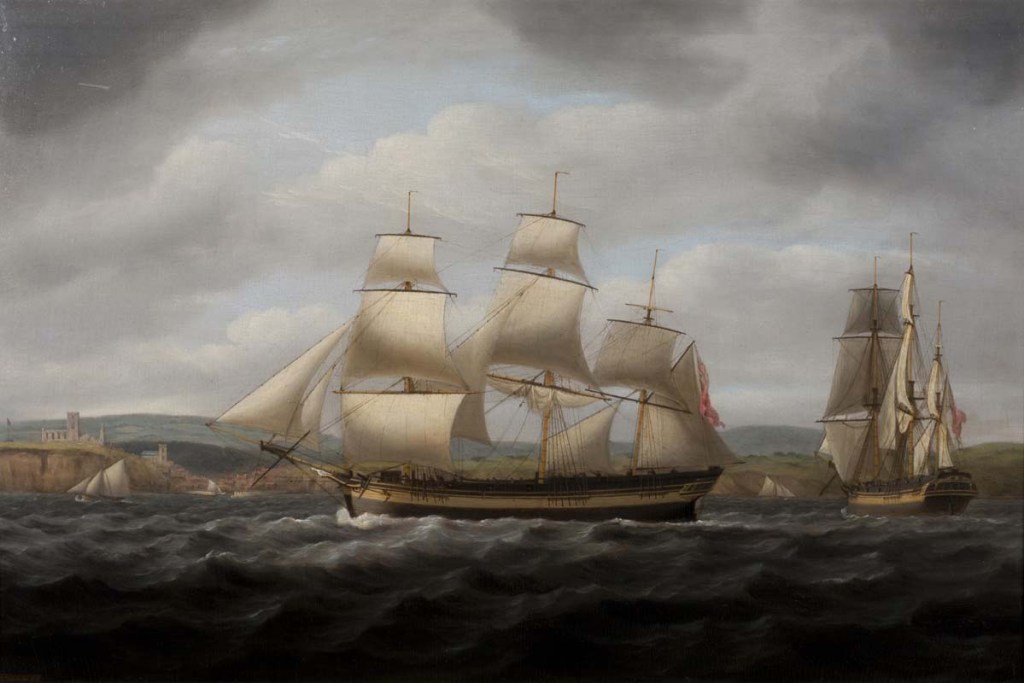
    The 430-ton Cato by Thomas Luny cira 1800.

         Fortunately, the Bridgewater missed the reef that claimed the other two ships. Her captain spent the rest of the night and the following morning trying to return so they might help any survivors. However, contrary winds and large seas hampered him, and he could not get close to the reef without risking his own vessel. He reluctantly continued on his way, leaving the survivors from the Porpoise and Cato to their fate.

       Meanwhile, the men on the stranded ships waited out the night. HMS Porpoise had gone aground broadside to the reef and heeled over so her strong hull took the brunt of the crashing waves. The Cato was not so lucky. She had also run aground broadside to the reef, only her deck lay exposed to the full force of the powerful waves, and she soon started breaking up. Her crew spent an anxious night clinging for dear life to the inner forechains.

       The next morning, the Porpoise’s small gig and a six-oar cutter were used to ferry the crews of both ships to a small sandy islet a short distance away. Over the next several days, they salvaged as much as they could from the two stranded wrecks. Casks of water, flour, salt meat, rice and spirits, along with live sheep and pigs were all brought ashore. They found they had sufficient provisions to feed the 94 castaways for the next three months. Most shipwreck survivors fared far worse.

    Captain Matthew Flinders, RN, by Toussaint Antoine DE CHAZAL DE Chamerel. Courtesy Wikipedia.

       On the morning of the 19th of August, Captain Matthew Flinders took command as the most senior naval officer present. Flinders, in consultation with Lt Fowler and the Cato’s captain, John Park, decided he should take the largest cutter and return to Sydney to get help. The three also agreed on a contingency plan should Flinders and his party fail to reach Sydney and alert the authorities. The ship’s carpenters would begin building two new boats from materials salvaged from the wrecks. If, after two months, the remaining survivors had not been rescued, Lt Fowler and the rest of the men should try to make for Sydney themselves in the new boats.   

    Flinders’ cutter was fitted out with a deck to make it better handle the rough seas on the long voyage ahead. She was christened “Hope” and, on 26 August, nine days after striking the reef, Flinders, Park and twelve sailors set off to three loud cheers from their shipmates lining the shore.    They took sufficient provisions to last them three weeks, and Flinders set a course west so they would strike the Australian coast. On the evening of 28 August, they made land near Indian Head on K’gari Island and headed south, hugging the coast until they reached Sydney ten days later.

    Map showing Wreck Reefs where the Cato and Porpoise were wrecked in 1803. Courtesy Google Maps.

       Meanwhile, the carpenters got to work building the first of the two new boats. They named it Resource and had her afloat in about two weeks.  However, as they were working on the second boat, their supply of coal for the armourer’s forge ran out, halting construction. Lt. Fowler ordered that the Resource be sent with a work party to an island to the south to produce sufficient charcoal to complete the second boat.

    But, before they set off, the welcome sight of three rescue ships sailed into view. Flinders had made it to Sydney and returned with the fully-rigged ship Rolla, and the colonial schooners Cumberland and Francis, to rescue the survivors. Flinders might have got there a little earlier, but he had spent a couple of anxious days trying to find the uncharted reef. Most of the men were put on to the Rolla, which was on its way to China, while Flinders returned to Sydney on the Cumberland. Much of the stores and salvage from the wrecked ships were taken back to Sydney on the Francis and the newly built Resource. Remarkably, only three men were lost during the ordeal. The site of the disaster is now known as Wreck Reefs.

       Captain Flinders’ adventures did not end there. By the time he next left for England, Britain was at war with France. When his ship stopped at Mauritius, he was placed in detention until the end of hostilities. Flinders did not return to England until 1810. His book “A Voyage to Terra Australis”, detailing his voyages, was published in 1814.

    © Copyright C.J. Ison / Tales from the Quarterdeck, 2022.

    To be notified of future blogs, please enter your email address below.