Tag: #Maritime History

  • The Windjammer Grace Harwar 1889 – 1935

    Grace Harwar. View aft from the main crosstrees, 1929. Courtesy: National Maritime Museum Greenwich.

       The 1750-ton steel-hulled fully-rigged ship Grace Harwar was launched in Glasgow in 1889, and for the next 46 years, she crossed the world’s oceans carrying all manner of bulk cargoes. She became well-known to Australian mariners and dockworkers alike, regularly taking on coal, grain, and other goods bound for distant ports.

       Despite her fast lines and majestic presence, she gained a name for herself as a cursed ship among the more superstitious of sailors. On her 1889 maiden voyage, the bosun was lost when an upper yard was carried away during a gale while rounding Cape Horn. That might have been ignored, for Cape Horn was a notoriously dangerous stretch of water. But that was only the first of a string of deaths associated with the Grace Harwar.

       In December 1901, while on a passage from Cape Town to New Zealand, she was slammed by a powerful storm as she neared her destination. Heavy seas broke across her deck, sweeping away the lifeboats. The ballast shifted, and the Grace Harwar took on a dangerous list, which saw the lee rail submerged three feet underwater. The captain was washed overboard, but fortunately, another wave swept him back on deck, where he scrambled to safety. However, one of the seamen was not so lucky and drowned. The Grace Harwar survived the maelstrom to limp into Gisborne Harbour for repairs, but her reputation as a Jonah ship was growing.
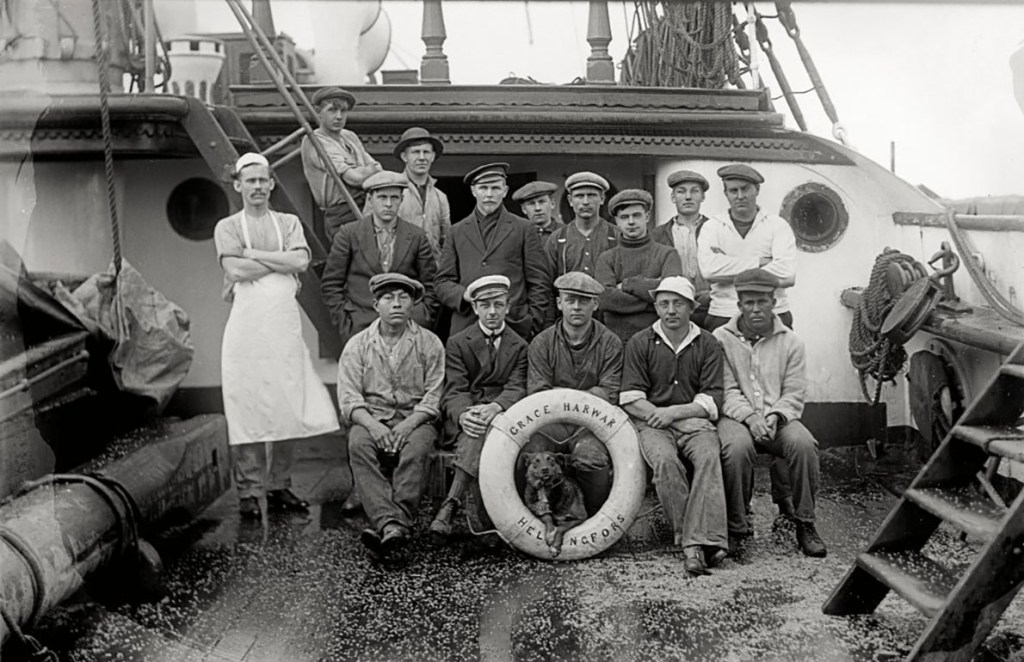
    GRACE HARWAR CREW circa 1920s by A.C. Green, Courtesy State Library of Victoria.

       In 1907, while she was sailing from Australia to the Chilean port of Tocopilla, the captain’s young wife died from tuberculosis. Captain Hudson returned his wife’s body to Sydney in the hold and then shipped off the Grace Harwar, vowing he would never go to sea in her again. Three years later, in July 1910, a seaman was killed when the royal yard came crashing down on deck just as the men were congratulating themselves on making it around Cape Horn unscathed.   

    The following year, 1911, she was anchored at Coquimbo, Chile, when a freak storm blew out of nowhere, causing havoc among the ships anchored in the bay. The Grace Harwar lost her figurehead and bowsprit when she collided with another vessel as they both swung uncontrollably on the end of their anchor chains. Then her anchors began to drag, and she ran up against a German barque, causing yet more damage. During the same year, one of the mates was injured and later died during an operation to recover a lost anchor at the Chilean port of Iquique. But the bad luck did not end there.

    The Grace Harwar under sail. Photo by Allan C. Green , Courtesy: State Library of Victoria

       While she was anchored off Mobile, Alabama, in the Gulf of Mexico during a ferocious hurricane, one of her sailors was knocked overboard by a loose spar. He drowned before anyone could go to his aid. That was in 1916.

       By the late 1920s, the number of fully-rigged sailing ships plying the world’s oceans was in rapid decline. They were increasingly replaced by steam and even newer marine diesel-powered vessels that were no longer dependent on the wind.    Two young Australian journalists set out to record the passing of the sailing era. In 1929, they joined the Grace Harwar’s crew in South Australia and filmed the old windjammer’s voyage across the South Pacific, around Cape Horn and up through the Atlantic to deliver her cargo of wheat to England. She lived up to her deadly reputation, claiming the life of one of the reporters, Ronald Walker. He was struck by a falling yard while aloft during foul weather and died. However, the extraordinary footage he and his partner, Allan Villiers, captured using the large boxy cameras of the day was edited together to make the 1930 feature-length film “Windjammer.” Clips from the movie can still be viewed on YouTube.

    Photo of Allan Villiers on the Grace Harwar taken by Ronald Gregory Walker. Courtesy: National Library of Australia.

       During the first half of the 1930s, the Grace Harwar was a regular at the annual “Great Grain Race,” carrying wheat from ports in the Spencer Gulf, South Australia, to England. Strictly speaking, it was not an official race, but the captains of the windjammers that carried the annual harvest were known to wager bets on who would deliver their cargo in the fastest time. And of course, there were bragging rights at stake.

       In 1935 the Grace Harwar’s 46-year sailing career finally came to an end. She made one last 40 km voyage from Falmouth around to Charlestown, where she was broken up for scrap.

    Seas sweep over the Grace Harwar’s deck. Source: The Daily Telegraph, 4 Nov 1929, p. 13.

    © Copyright C.J. Ison / Tales from the Quarterdeck, 2022.

    To be notified of future blogs, please enter your email address below.

  • S.S. Maheno (1905 – 1935)

    The SS Maheno wrecked on K’Gari in 1935. Photo C.J. Ison..

       As anyone who has ventured across to K’Gari (Fraser Island) knows, the rusting wreck of the old luxury passenger liner SS Maheno makes an imposing presence on the long sandy beach, which serves as the island’s main highway. She had been swept ashore during a cyclone 90 years ago while on her way to be broken up in a Japanese scrapyard. It was an inglorious end for a steamer that was once one of the fastest luxury liners on the trans-Tasman run.

       The SS Maheno was built at William Denny and Brothers shipyards on the Clyde River in 1905 for the New Zealand-owned Union Steam Ship Company. She measured 122m in length and had a gross tonnage of 5,300 tons. The vessel was equipped with powerful steam turbine engines, which were revolutionary for the time. They could push her along at an impressive top speed of nearly 20 knots (36km/h).

    S.S. Maheno postcard. Courtesy State Library of Queensland.

       For much of her career, she carried cargo and passengers between Sydney, Melbourne, and Hobart in Australia, and Wellington, Auckland, and Dunedin in New Zealand. On one occasion, the Maheno made the dash from Sydney to Wellington in just under three days, a record that would remain unbeaten for 25 years. She also occasionally was called upon to carry passengers across the Pacific to San Francisco.

       The Maheno was not only fast, but she was also luxurious. She could accommodate 120 passengers in her sumptuous first-class cabins, 120 in second-class and 60 more passengers in third-class. The saloons, dining rooms and other public areas were beautifully appointed, harking back to a bygone era. She was a magnificent example of early 20th-century shipbuilding at its finest.

    SS Maheno, Saloon was luxuriously fitted out. Phot Courtesy State Library of Queensland.

       During the First World War, she served as a hospital ship for Australian and New Zealand forces. She ferried casualties from Anzac Cove to Malta for medical treatment during the Gallipoli Campaign. After the failure of Gallipoli she transported wounded New Zealanders back home before returning to Europe where the war raged on. Between 1915 and 1918, she made several trips back to New Zealand, returning wounded Kiwi soldiers home to their loved ones. She also carried thousands more sick and wounded men from the Western Front across the English Channel so they could receive attention in England.

       After the war, she returned to her regular duties crossing the waters between New Zealand and Australia. As she aged, newer ships took over her routes. However, she remained on the Melbourne – New Zealand run until the beginning of 1935 when she was finally retired. Throughout her 30 years of service, she was never involved in a serious accident, a testament to the ship and the captains who commanded her. But on her final voyage, that was about to change.   

    In July 1935, the Maheno left Sydney under tow by the steamer Oonah, another aging vessel destined for demolition in Japan. “Like a minnow towing a whale, the little Oonah set out to tow the Maheno, which towered above her like a giant,” is how the Daily Telegraph described the scene as the two tethered ships made their way down Sydney Harbour to begin their long voyage north.

    SS Maheno shortly after she ran aground. Photo Courtesy State Library of Queensland.

       The first few days were relatively uneventful as the Oonah towed the Maheno up the New South Wales coast.  But by the time they reached Queensland waters, the weather had turned nasty. The two ships were caught in a raging storm. Huge swells swept around them, howling gale-force winds ripped at the rigging, and the decks and superstructures were lashed by heavy rain. Despite the thick weather, the ships might have survived, but that was not to be.

       The Oonah reported via wireless that she was having problems with her steering. However, the message was garbled, and the call for help went unanswered. Then the captain of the Oonah sent another message reporting that the tow cable had parted and the Maheno was adrift. He also radioed that the two vessels were about 80 km off K’Gari when the Maheno was lost from sight.

       Efforts to save the two stricken ships swung into gear. The insurance underwriters dispatched a large salvage tug from Brisbane to assist the vessel, and the Oonah would be rescued without further incident. The Maheno, on the other hand, was now at the mercy of the storm without any means of propulsion. There were grave fears for the eight Japanese sailors on board. But they rode out the maelstrom, and eventually, the Maheno gently made landfall.

    The SS Maheno ship wreck on K’Gari. Photo: C.J. Ison.

       A search aircraft sent out from Maryborough spotted the former luxury liner driven broadside onto Fraser Island’s (K’Gari’s) long sandy beach about 30 km south of Indian Head. Her location was then relayed to the Oonah and the salvage tug heading up from Brisbane.

       The Japanese crew got ashore safely and were soon greeted by carloads of tourists, who had driven down from the nearby holiday village of Happy Valley to take a closer look at the beached ship.

       At first, there were some thoughts of refloating the Maheno, but they were swiftly abandoned, for she was firmly stuck in the sand. She remains there to this day, perhaps the most prominent and accessible shipwreck on the Australian coast.

    © Copyright C.J. Ison / Tales from the Quarterdeck, 2022.

    To be notified of future blogs, please enter your email address below.

  • The Dunbar Tragedy – 1857

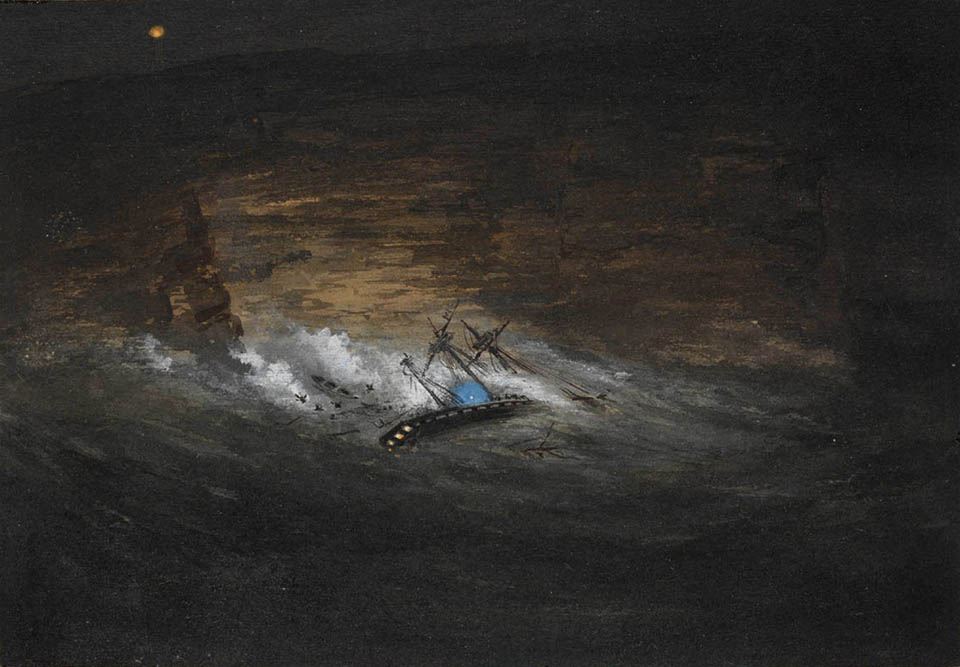
    The Dunbar shipwreck, by Samuel Thomas Gill, courtesy the State Library of New South Wales.

    The loss of the Dunbar in August 1857 was one of the more tragic and distressing shipwrecks to occur in Australian waters.   On the morning of Friday 21 August people living in Sydney’s East awoke to find wreckage and mutilated bodies dotted along the rugged coast and inside the harbour mouth.   A large ship had come to grief, but its identity would remain a mystery for much of that day.

    The weather on the night of 20 August was thick with heavy rain, strong winds and a powerful swell creating mountainous waves.    The Dunbar had sailed from London 81 days earlier and was making its way up the New South Wales coast nearing the end of its voyage.  

    She passed Botany Bay around 8.30 in the evening.  Then Captain James Green headed out to sea on a starboard tack under closely reefed sails.    They then changed course again heading towards the entrance to Sydney Harbour.   The captain sent the Second Mate to the forecastle and asked him to keep a good lookout for the North Head.  

    By Day and Son; Thomas Goldsworth Dutton; William Foster – http://collections.rmg.co.uk/collections/objects/140576, Public Domain, https://commons.wikimedia.org/w/index.php?curid=63202217

    Suddenly the Mate called out “breakers ahead,” as churning white water at the base of the cliffs materialised out of the inky gloom.   It was now a little after midnight.  Captain Green ordered the ship round but the surging seas drove her broadside onto the rocks before she could respond.  

    Passengers were jolted awake by the violent impact and streamed on deck in panic, most still dressed in their night attire.    But before any thought could be given to getting them into the lifeboats another wave smashed the Dunbar into the cliffs and she immediately started breaking up. 

    Passengers and crew alike were swept into the surging sea and dashed against the rocks.  Others were crushed between heavy timbers and splintering wood.  

    There were 122 people on the Dunbar as she neared Sydney Harbour.   She had a crew of 59 and was carrying 63 passengers.   Most of the passengers, including families with young children, were residents of Sydney returning home after spending time in England.  

    Incredibly, one of the crew managed to survive.    As the ship broke apart John Johnson grabbed hold of a plank with three other men to keep themselves afloat as they were tossed around in the turbulent white water.   Two of their number soon lost their hold but Johnson and the ship’s Boatswain were dumped high on the rocks by a large wave.    Johnson scrambled higher but before the other man could do likewise, he was caught by another wave and sucked back out to sea.    Johnson continued climbing until he reached a narrow ledge and could go no further.   

    The Sailor Rescued. Courtesy the National Library of Australia 211620415-22

    The next day he heard people on the clifftop above him and saw several ships pass by but failed to attract anyone’s attention.   He remained a second night on the ledge before a young lad spotted him from near Jacob’s Ladder.  The boy, Antonio Wollier, volunteered to be lowered down to the ledge by a rope to rescue the survivor.  

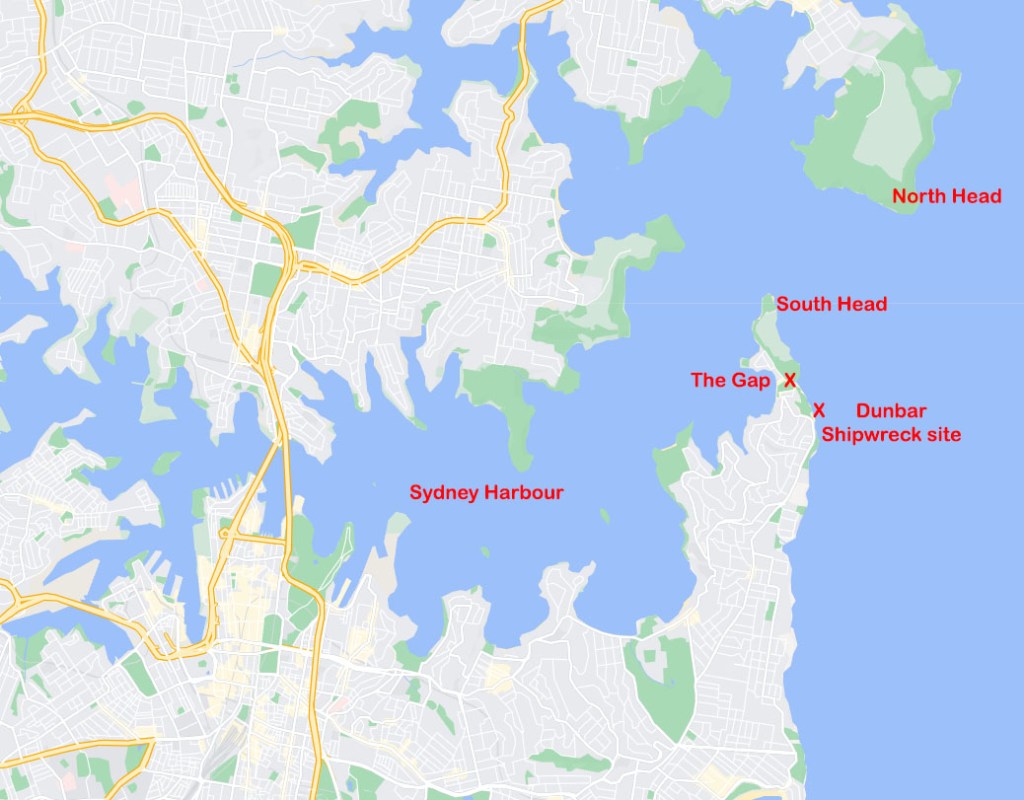
    Meanwhile, the grim work of recovering bodies began.    Some brave souls were lowered over the cliff at the Gap where as many as 20 bodies had collected among the rocks.   They had been so badly battered that none were ever identified.    Other bodies were found inside Sydney Harbour where they had been swept by the current.   Most were buried in a mass grave in the Newtown Cemetery.

    Sydney Harbour. Courtesy Google Maps.

    An inquiry concluded that Captain Green, hampered by the foul weather, had either thought he was approaching the North Head or mistook the Gap for the entrance to Sydney Harbour.   As a result of this catastrophe and another similar shipwreck nine weeks later a lighthouse marking South Head was built.       

    John Johnson was later employed as a lighthouse keeper in Newcastle and in 1866 he rescued the only survivor of the steamer Cawarra when it sank trying to enter that harbour.

    © Copyright C.J. Ison / Tales from the Quarterdeck, 2022.

    To be notified of future blogs, please enter your email address below.

  • The Mystery of the Zuydorp

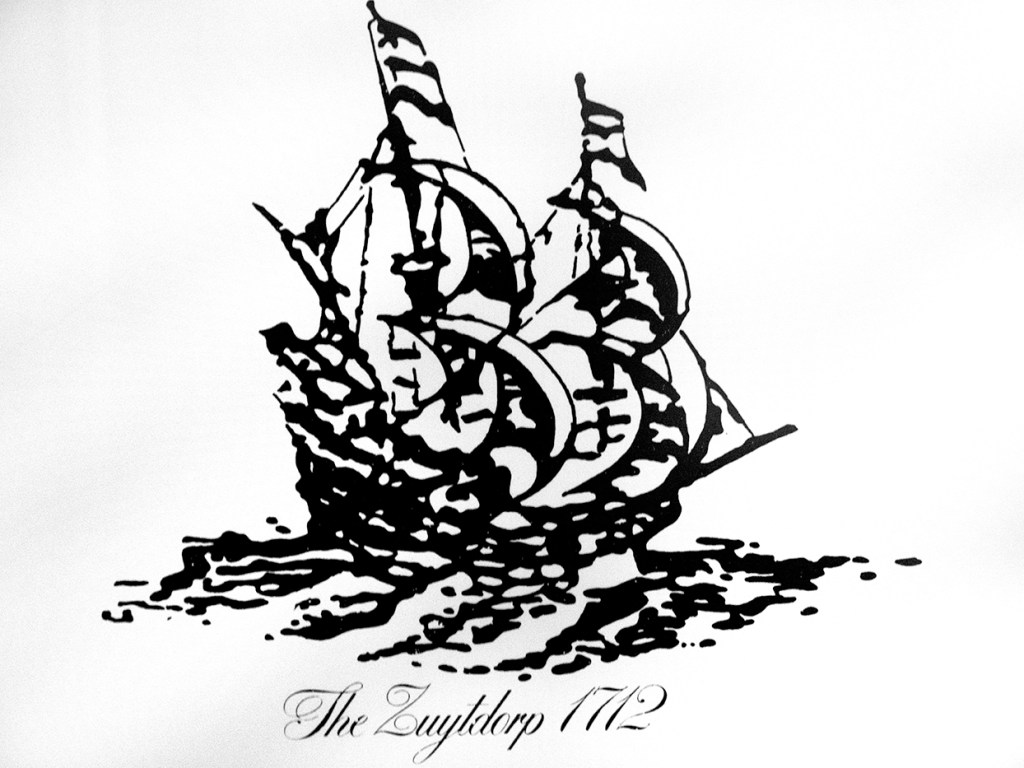
    Illustration of the Dutch ship Zuytdorp, 1712. Western Australian Shipwreck Museum.

    In August 1711 the Zuydorp sailed from the Netherlands bound for Batavia (Jakarta) in the Dutch East Indies (Indonesia).   However, after rounding the Cape of Good Hope, the ship vanished without a trace.    For more than 200 years the fate of the ship and all those on board her remained a mystery. 

    The Zuydorp was a large merchant ship around 30 to 50 metres long carrying 200 or more people and cargo including a large quantity of freshly minted silver coins.   Unlike other ships to come to grief on New Holland’s dangerous coast, no survivors made it to Batavia to tell what happened.

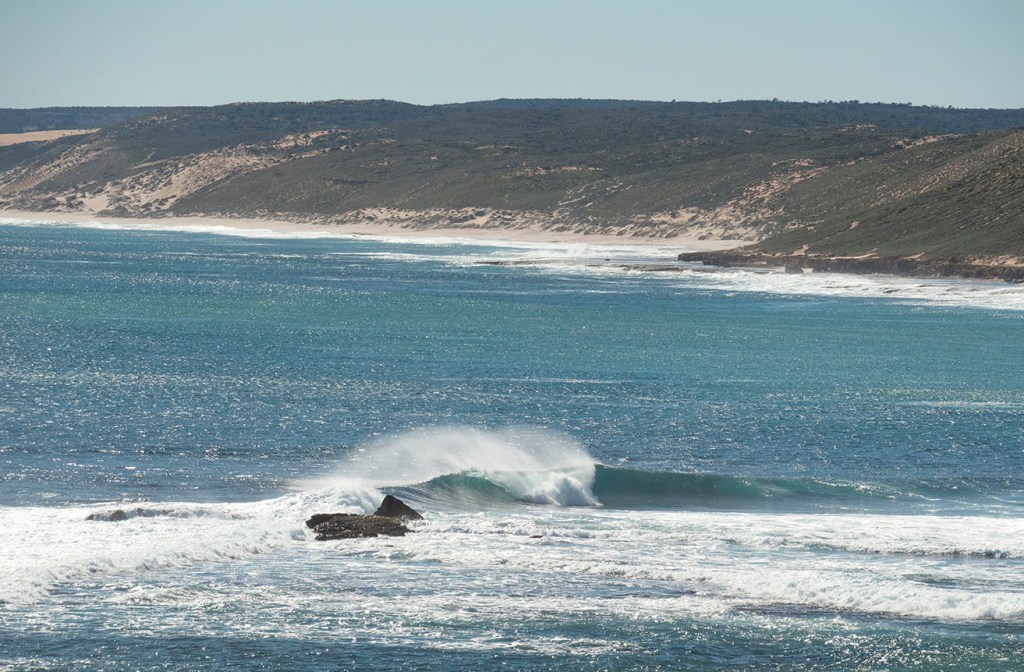
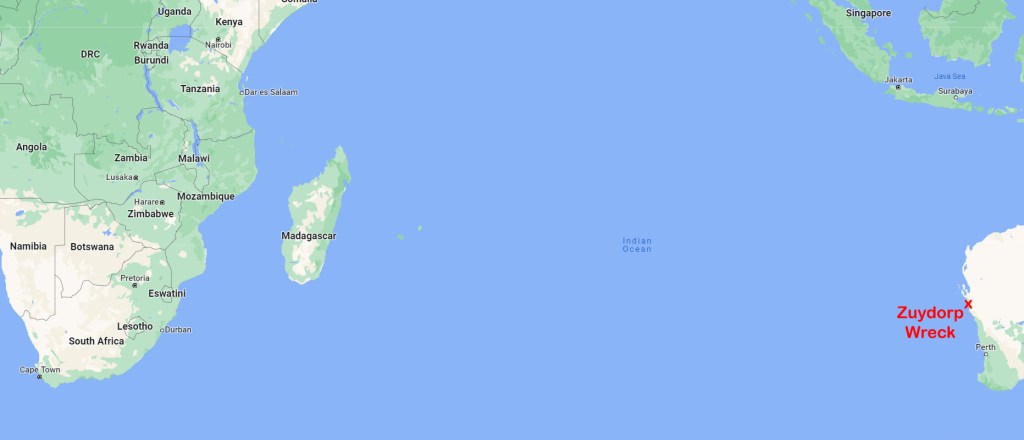
    It was not until 1927 when the head stockman at Tamala Station, Tom Pepper and his family discovered relics from the long-lost ship about 60kms north of Kalbarri on the Murchison River.   Some of the artefacts were silver coins minted in 1711 which helped identify the wreck.   By 1954 the site where the survivors had landed was examined in more detail, and a decade later divers finally found the wreck site and its trove of silver coins.

    Looking north from the mouth of the Murchison River towards the rugged coast where the Zuydorp was wrecked. Photo CJ Ison.

    At the time the Zuydorp was on her way to Batavia, ships were using the “Roaring Forties” to push them across the southern Indian Ocean before bearing north following the coast of New Holland to reach the East Indies.    It seems the captain misjudged his position and the Zuydorp struck the reef at the base of cliffs that now bear the ship’s name.

    The accident probably happened at night, the captain unaware of how close he was to land.   The archaeological evidence suggests that an unknown number of people survived the wreck and managed to get ashore.   The remains of what may have been signaling fires have been found on top of the cliffs but apart from a scattering of other artefact nothing remains to hint at what befell the survivors.    The place is devoid of fresh water for much of the year and no one could have lived long without the help of the local Nhanta people who inhabit that stretch of coast.    

    Interestingly in 1834, an Aboriginal man told settlers in Perth that there had been a ship wrecked far to the north of Perth.   From his description, it was thought to be somewhere in the vicinity of Shark Bay, a bit further north than where the Zuydorp was ultimately discovered, but they also thought the wreck he was referring to was recent.   A search party was dispatched to investigate but no wreck or survivors were found.   It is quite likely he was drawing on oral history passed down the generations which had recorded the loss of the Dutch ship.

    Courtesy Google Maps.

    © Copyright C.J. Ison / Tales from the Quarterdeck, 2022.

    To be notified of future blogs, please enter your email address below.

  • The CSS Shenandoah: Victoria’s link to the American Civil War.

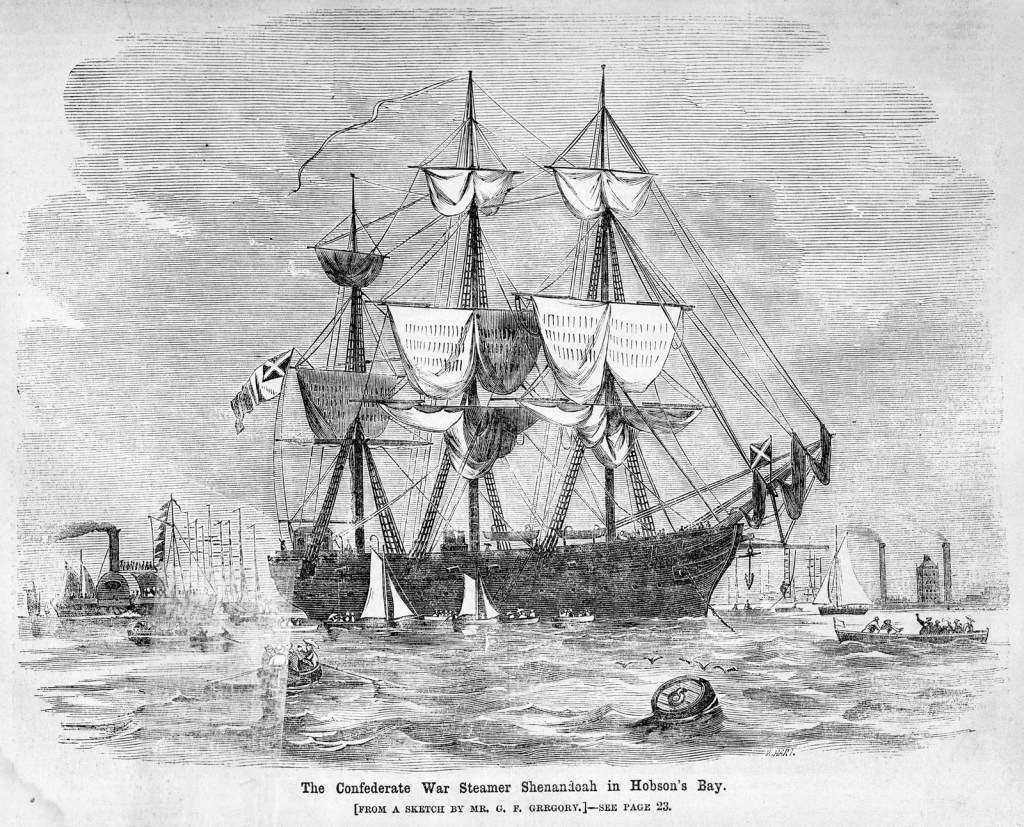
    CSS Shenandoah in Hobson’s Bay, Courtesy State Library of Victoria.

       On 25 January 1865, a large foreign warship unexpectedly sailed into Port Phillip Bay and dropped anchor off Melbourne. The arrival caused considerable consternation in Victoria’s Legislature, which long feared the colony was inadequately defended. The ship proved to be the 1160-ton, eight-gun auxiliary steamer CSS Shenandoah of the Confederate States of America. Her captain, James Wadell, reported to the port authorities that he had been forced to pull in to make urgent repairs.

       Five years earlier, America’s Southern states had seceded from the Union over the question of slavery, and the country had been embroiled in a brutal civil war ever since. The Shenandoah had been particularly busy in the three months before arriving in Australian waters. She had captured or sunk no less than 11 merchant ships belonging to the United States and was holding some of the sailors prisoner.

       Britain and, by extension, the colonies in Australia had declared neutrality in the hostilities between the North and the South. The arrival of an armed warship posed a delicate diplomatic problem for Victoria’s Governor, Sir Charles Darling.

    Some of the 12,000 visitors on the Shenandoah. Courtesy State Library of Victoria.

         Captain Waddell sent an officer ashore seeking permission to remain in port until they could make repairs to the Shenandoah’s propeller, which had been damaged during a recent storm. He also hoped to replenish his depleted bunkers with coal, purchase fresh supplies, and land his prisoners.

       One thing he neglected to ask permission for was recruiting replacement sailors, although he intended to do so anyway.

       Governor Darling allowed Waddell to repair the Shenandoah’s propeller and take on supplies, thinking the ship would be on its way again in a couple of days’ time. However, after engineers examined the propeller and shaft more carefully, they discovered the damage was far worse than they had first thought. The ship would have to be slipped so the repairs could be carried out, and that would take time.

       Conscious of their obligations of neutrality, the colonial government decided to allow the ship to be dry-docked, but “no other work should be performed on the vessel than absolutely and necessarily required,” to enable the Shenandoah to safely return to sea.   

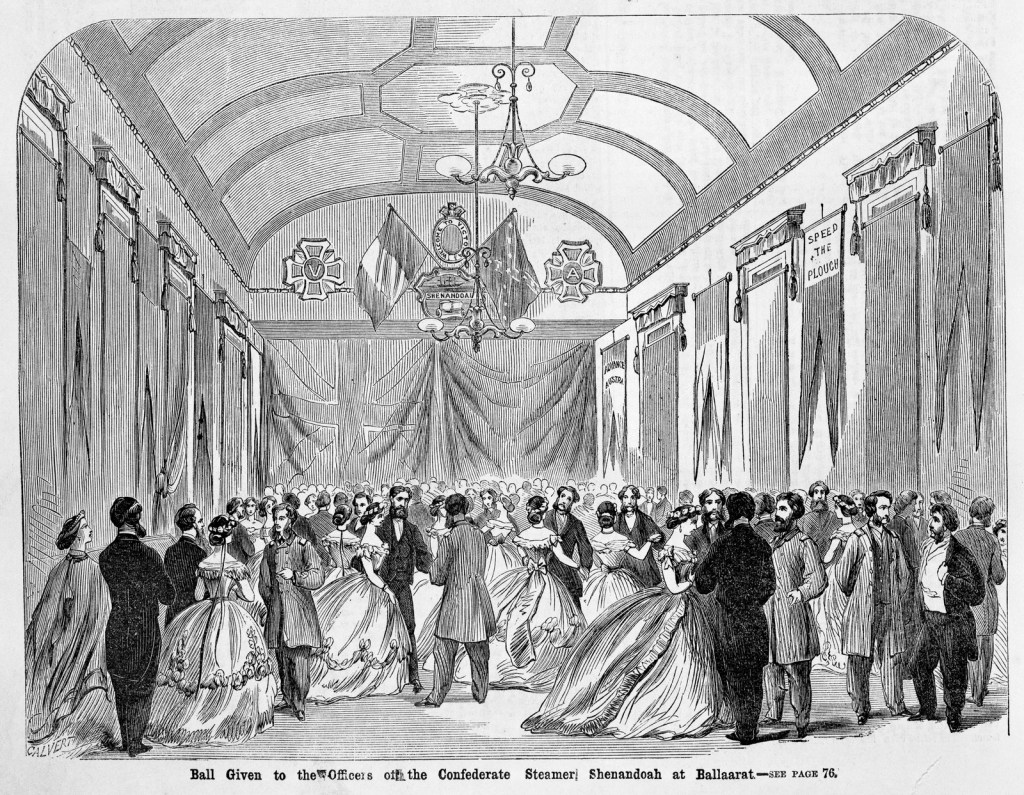
    While the government was careful to abide by the requirements of Britain’s proclaimed neutrality, the wider public was far less concerned. The arrival of the Confederate warship caused a sensation. During the first weekend the Shenandoah was in port, more than 12000 people went to take a close look at her. That amounted to 10 per cent of Melbourne’s total population. The visiting Americans were made as welcome as anyone possibly could be. A gala ball was held in their honour in the nearby goldfield town of Ballarat. And, Captain Waddell and his officers were also wined and dined by many of Melbourne’s leading citizens.

    Ballarat Ball for the officers of the Shenandoah. Courtesy State Library of Victoria.

       Meanwhile, as the bunkers were being filled with coal, supplies were loaded onboard, and repairs progressing, Waddell’s officers began surreptitiously recruiting seamen from Melbourne’s docks. It was rumoured that the captain was offering anyone willing to join his ship an £8 sign-on bonus, plus a share of any prize money, on top of a £6 per month salary.

       When the authorities learned what was going on, they were compelled to put a stop to it. A warrant was issued to search the ship, and the police had orders to remove any British subjects they found illegally on board. By now, the repairs had been completed, but the Shenandoah was still high and dry on the slip.

       A standoff ensued with Captain Waddell refusing to allow the police to board his ship, and port authorities prevented the Shenandoah from being launched. Waddell wrote to the Governor denying that any British subjects had joined his ship. However, four men were later arrested by the police after they were seen leaving the vessel. Waddell feigned ignorance of their presence, claiming they must have been stowaways.

       The Shenandoah was allowed to leave on 19 February, and a diplomatic crisis was averted. Or so Governor Darling thought. Then, in a parting shot, Waddell wrote that he felt that he and the Confederate States of America had been ill-treated at the hands of Victorian officials and that he would be informing his government at his earliest opportunity. However, that was likely just bluster, for it seems that when the Shenandoah sailed out of Port Phillip Bay, there were 40 newly recruited sailors, despite Captain Waddell’s assurances to the contrary.

    Captain Waddell. Courtesy State Library of Victoria.

       In the final months of the American Civil War, the Shenandoah ravaged the United States’ North Pacific whaling fleet. The predation only ceased after the surrender of the South.

       After the war, the United States Government proved that Britain had given assistance to Southern warships despite proclaiming neutrality. Britain would later pay millions of dollars (billions in today’s money) in compensation for losses to Union shipping caused by three Southern raiders, one of them being the Shenandoah.

    © Copyright C.J. Ison / Tales from the Quarterdeck, 2022.

    To be notified of future blogs, please enter your email address below.