Tag: Loch Ard

  • Tales from the Quarterdeck

    Sixty bite-sized stories from Australia’s maritime past

    The melancholy loss of H.M.S Sirius off Norfolk Island by George. Raper. Source National Library of Australia 136507434-1

    I have just launched a new book titled Tales from the Quarterdeck: Sixty bite-sized stories from Australia’s maritime past. Sixty of the most popular posts have been reedited. In some cases, I’ve rewritten a couple and updated a few where new information has come to light since first writing them.

    For those who would value ready access to the stories in their bookcase, Tales from the Quarterdeck is available in Kindle ebook and paperback formats through Amazon.

    The stories are organised in chronological order, starting with the Tryall shipwreck off the Western Australian coast in 1622, and finishing with the Second World War exploits of the Krait. See below for a full list of the stories covered in the book.
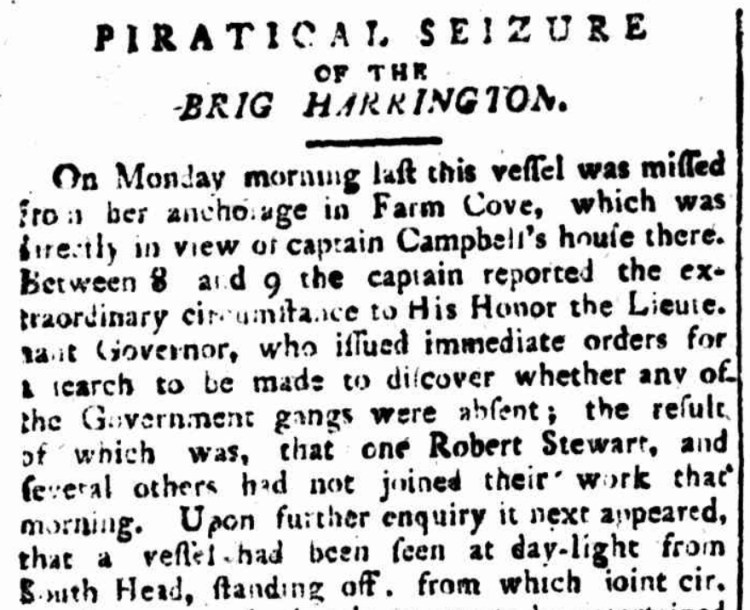
    Sydney Gazette 22 May 1808, p. 2.

    1622 – The Tryall: Australia’s earliest shipwreck

    1629 – The Batavia Tragedy

    1688 – William Dampier: Navigator, naturalist, writer, pirate

    1770  – The Endeavour’s Crappy Repair

    1788 – Loss of La Astrolabe and La Boussole, a 40-Year Mystery                        

    1789 – Bligh’s Epic Voyage to Timor

    1789 – HMS Guardian: All Hands to the Pumps

    1790 – The Loss of HMS Sirius

    1790 – Sydney’s First Desperate Escape

    1791 – HMS Pandora: Queensland’s earliest recorded Shipwreck

    1791 – William Bryant’s Great Escape

    1797 – The Loss of the Sydney Cove

    1803 – Loss of HMS Porpoise

    1808 – Robert Stewart and the Seizure of the Harrington

    1814 – Wreck of the Morning Star

    1816 – The Life and Loss of HMSC Mermaid

    1824 – The Brig Amity’s Amazing Career

    1829 – The Cyprus mutiny 

    1831 – The Caledonia’s perilous last voyage

    1833 – The Badger’s Textbook Escape

    1835 – The Loss of the Convict Ship Neva

    1835 – The Post Office in the middle of nowhere

    1835 – The Tragic Loss of George III

    1845 – The Cataraqui: Australia’s worst shipwreck

    1846 – The Peruvian’s Lone Survivor

    1847 – The Foundering of the Sovereign

    1850 – The Loss of the Enchantress: A first-hand account

    1851 – The Countess of Minto’s brush with Disaster

    1852 – The Bourneuf’s Tragic Last Voyage

    1852 – The Nelson Gold Heist

    Woodbury, Walter B. (Walter Bentley), 1834-1885. Hamlet’s Ghost, Sourabaya [Surabaya], Java [Boat with Passengers and Crew], ca. 1865. Walter B. Woodbury Photograph Collection (PH 003). Special Collections and University Archives, University of Massachusetts Amherst Libraries

    1854 – Bato to the Rescue 

    1854 – HMS Torch and the rescue of the Ningpo

    1856 – The Loss of the Duroc and the Rise of La Deliverance

    1858 – The Loss of the Saint Paul and its Horrific Aftermath

    1858 – Narcisse Pelletier, An Extraordinary Tale of Survival

    1859 – The Indian Queen’s Icy Encounter

    1859 – The Sapphire and Marina

    1863 – The loss of the Grafton: Marooned for twenty months

    1864 – The Invercauld shipwreck

    1865 – The CSS Shenandoah: Victoria’s link to the American Civil War

    1866 – The Loss of the SS Cawarra: Bad luck or an avoidable tragedy?

    1868 – The Bogus Count and Hamlet’s Ghost

    1871 – The Mystery of the Peri

    1872 – The Loss of the Maria, A Cautionary Tale

    1875 – The Tragedy behind the Gothenburg Medals

    1876 – The Catalpa rescue

    1876 – The Banshee’s Terrible Loss

    1878 – The Loch Ard Tragedy

    1884 – The Macabre case of the Mignonette

    1885 – The Douro and its Piratical Captain

    1889 – The Windjammer Grace Harwar

    1891 – The Spanish Silver of Torres Strait

    1893 – The Foundering of the SS Alert

    1895 – The Norna and the Conman Commodore

    1899 – Cyclone Mahina

    1911 – The Loss of the Mandalay

    1918 – The Orete’s Robinson Crusoe-like Castaway

    1935 – The Life and Loss of  the SS Maheno

    1943 – Surviving the Centaur Sinking

    1943 – The Amazing Krait

  • The 1878 Loch Ard Tragedy

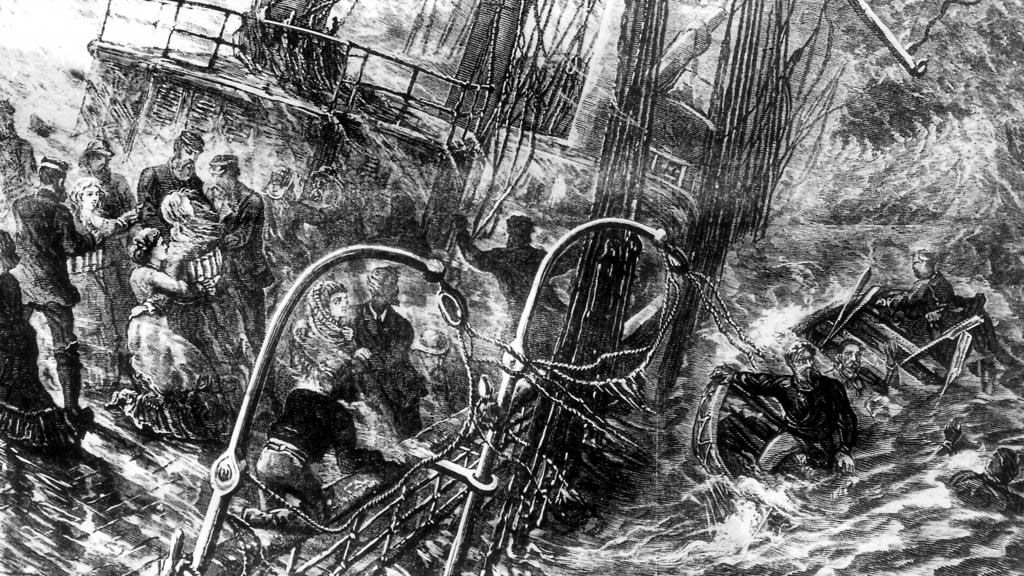
    “The Wreck of the Loch Ard near Sherbrook River.” Source: Illustrated Australian News, 8 July 1878, p. 20.

       In early June 1878, the Scottish merchant ship Loch Ard was expected to arrive in Port Phillip Bay at any time. But that was not to be. News soon reached Melbourne that the ship had been wrecked near the Sherbrook River, some 50 kilometres west of Cape Otway, with a fearsome loss of life.

       The Loch Ard was a 1623-ton fully rigged sailing ship belonging to the Glasgow General Shipping Company. But she proved to be an unlucky vessel. On her maiden voyage, she was twice dismasted. The first time it happened was shortly after she departed Glasgow on a voyage to Melbourne in December 1873. She was struck by a powerful storm and had to return to port to undergo a refit. She then set sail again in January the following year. This time, as she was crossing the Southern Ocean, she lost all three masts and nearly foundered during a ferocious storm. The resourceful captain was able to set jury-rigged masts from spare spars and limp the rest of the way to Melbourne.

       On this most recent voyage, the Loch Ard sailed from London on 27 February 1878 under the command of Captain George Gibbs with around 25 to 30 crew, 17 passengers and over 3,000 tons of cargo. But as she neared the end of her voyage, the weather closed in on that most dangerous stretch of Victoria’s coastline.

    The Loch Ard. By Allan C. Green – State Library of Victoria.

       The weather became squally, and the sky remained overcast for several days, preventing Captain Gibbs from making any observations as his ship ran before the wind under close-reefed topsails. Sailing instructions warned mariners to remain far out to sea until they had passed Cape Otway before making the final approach to the entrance to Port Phillip Bay. Unfortunately, Captain Gibbs was sailing blind and was unaware of how much danger he and his ship were in until it was too late.

       Around 4 a.m. on 1 June, the lookout spotted white-capped waves breaking over a reef half a nautical mile (one kilometre) ahead. Gibbs ordered the ship to be put about, but the wind continued to push them towards danger. He then ordered both anchors to be let go, but they did not hold, and the ship continued towards the jagged fangs of the reef and the towering cliffs beyond.

       When they were just 150 metres from the rocks, Captain Gibbs ordered the anchors to be slipped, and he tried to put on more sail, hoping he might veer the ship back out to sea. But it was far too late. The crew had only managed to set the mainsail when the Loch Ard crashed into the rocks on her starboard quarter. The topmast went over the side, taking two seamen with it. Meanwhile, Gibbs ordered the lifeboats to be readied for the evacuation of the women. But by now, successive waves were crashing onto the deck and sweeping it clean.

    “The rescue of Miss Carmichael” Source: Illustrated Adelaide News, 1 Aug 1878, p. 13.

       Midshipman Thomas Pearce and several other seamen had tried getting one of the lifeboats over the side to begin taking on passengers when it was washed into the swirling seas. Meanwhile, the captain and several sailors were struggling to free another boat from a tangle of fallen rigging. Then, a massive wave lifted the Loch Ard off the reef, and she sank in deep water, spilling everyone into the turbulent seas.

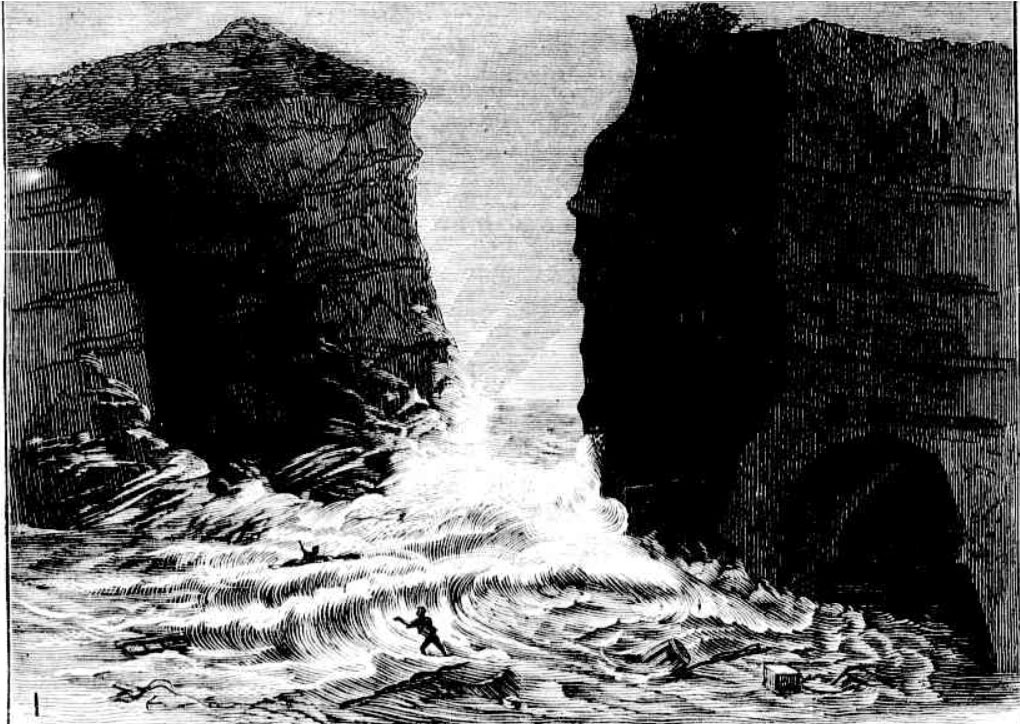
       Pearce managed to cling to his upturned boat, but he never saw any of his shipmates again. By now, it was daylight, and he saw he was drifting towards a small bay. Once in the bay, he left the boat and began swimming towards shore. Then he found an upturned table and climbed onto it. He washed up onto a small sandy beach with all manner of crates, driftwood, and other debris from the wreck. After taking some time to recover his strength, Pearce searched the small bay to see if anyone else had survived. Just then, he heard a cry for help coming from the water. He then spotted a woman clinging to a spar bout 50 metres out in the bay.    He swam out, dragged her ashore, and the pair took shelter in a shallow cave. The young lady was 19-year-old Eva, the eldest daughter of the ship’s surgeon, Dr Carmichael. His wife and three children had accompanied him on the voyage, for they had intended to settle in Victoria.

    Miss Carmichael and Thomas Pearce. Source: The Illustrated Adelaide News, 1 Aug 1878, p. 13.

       After rescuing Eva, Pearce collapsed beside her from sheer exhaustion and slept. He felt somewhat recovered when he woke and turned his mind to scaling the high cliffs surrounding the bay so he could go and find help. He eventually found a route up and then a well-trodden path and began following it. After walking several kilometres, he came upon a shepherd tending to a flock of sheep. Pearce asked him to send for help while he returned to the bay to let Eva know assistance was on the way.

       However, when he returned to the cave, he found Eva was gone. Pearce searched the area but was unable to see her. When help arrived, the search continued. And then, just as night was falling, a faint cry was heard coming from behind a bush. There, they found Eva, barely conscious. She was hauled up the cliff face with the aid of a rope, where a carriage was waiting to whisk her away.

    The cave and wreckage strewn on the beach. Source: Australasian Sketcher, 6 July 1878, p. 11.

       Eva Carmichael and Thomas Pearce were the only survivors from the Loch Ard. The young midshipman had the unenviable task of identifying the remains of several bruised and battered bodies that washed up in the next few days.   

    Among the tons of debris washed ashore was one particularly well-constructed crate that contained a large porcelain peacock. It had been manufactured by Minton and had been sent out on the ship to be displayed at the upcoming 1880 Melbourne International Exhibition. It had survived the wreck without so much as a chip of damage. It and other relics from the Loch Ard are now on display at Warrnambool’s Flagstaff Hill Maritime Museum. The small bay where Thomas Pearce and Eva Carmichael made it ashore is now named Loch Ard Gorge.

    © Copyright C.J. Ison / Tales from the Quarterdeck, 2023.

    Please enter your email address below to be notified of future blogs.