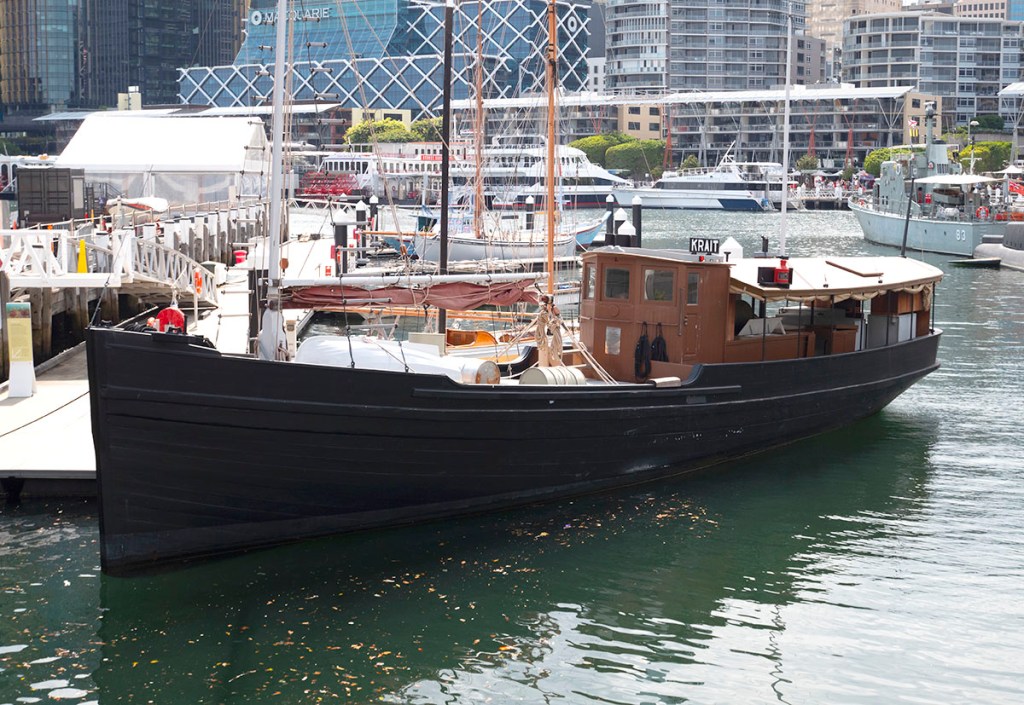
Tag: Krait

  • Tales from the Quarterdeck

    Sixty bite-sized stories from Australia’s maritime past

    The melancholy loss of H.M.S Sirius off Norfolk Island by George. Raper. Source National Library of Australia 136507434-1

    I have just launched a new book titled Tales from the Quarterdeck: Sixty bite-sized stories from Australia’s maritime past. Sixty of the most popular posts have been reedited. In some cases, I’ve rewritten a couple and updated a few where new information has come to light since first writing them.

    For those who would value ready access to the stories in their bookcase, Tales from the Quarterdeck is available in Kindle ebook and paperback formats through Amazon.

    The stories are organised in chronological order, starting with the Tryall shipwreck off the Western Australian coast in 1622, and finishing with the Second World War exploits of the Krait. See below for a full list of the stories covered in the book.
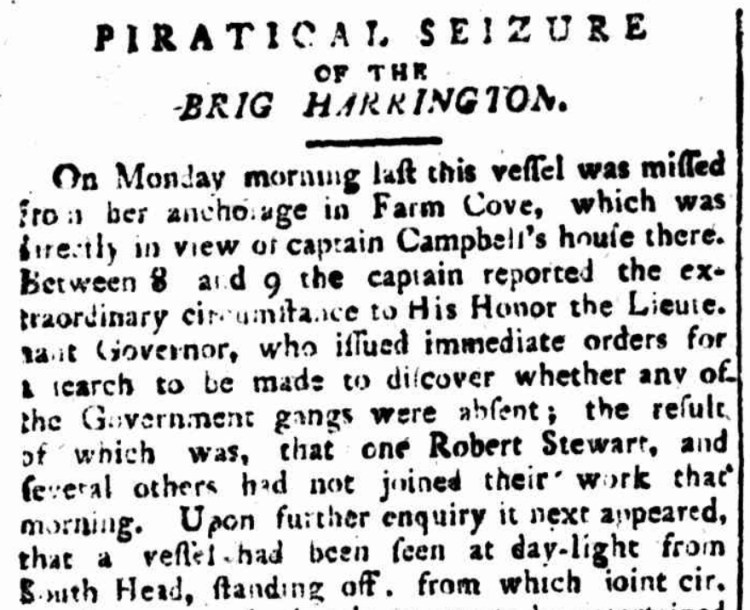
    Sydney Gazette 22 May 1808, p. 2.

    1622 – The Tryall: Australia’s earliest shipwreck

    1629 – The Batavia Tragedy

    1688 – William Dampier: Navigator, naturalist, writer, pirate

    1770  – The Endeavour’s Crappy Repair

    1788 – Loss of La Astrolabe and La Boussole, a 40-Year Mystery                        

    1789 – Bligh’s Epic Voyage to Timor

    1789 – HMS Guardian: All Hands to the Pumps

    1790 – The Loss of HMS Sirius

    1790 – Sydney’s First Desperate Escape

    1791 – HMS Pandora: Queensland’s earliest recorded Shipwreck

    1791 – William Bryant’s Great Escape

    1797 – The Loss of the Sydney Cove

    1803 – Loss of HMS Porpoise

    1808 – Robert Stewart and the Seizure of the Harrington

    1814 – Wreck of the Morning Star

    1816 – The Life and Loss of HMSC Mermaid

    1824 – The Brig Amity’s Amazing Career

    1829 – The Cyprus mutiny 

    1831 – The Caledonia’s perilous last voyage

    1833 – The Badger’s Textbook Escape

    1835 – The Loss of the Convict Ship Neva

    1835 – The Post Office in the middle of nowhere

    1835 – The Tragic Loss of George III

    1845 – The Cataraqui: Australia’s worst shipwreck

    1846 – The Peruvian’s Lone Survivor

    1847 – The Foundering of the Sovereign

    1850 – The Loss of the Enchantress: A first-hand account

    1851 – The Countess of Minto’s brush with Disaster

    1852 – The Bourneuf’s Tragic Last Voyage

    1852 – The Nelson Gold Heist

    Woodbury, Walter B. (Walter Bentley), 1834-1885. Hamlet’s Ghost, Sourabaya [Surabaya], Java [Boat with Passengers and Crew], ca. 1865. Walter B. Woodbury Photograph Collection (PH 003). Special Collections and University Archives, University of Massachusetts Amherst Libraries

    1854 – Bato to the Rescue 

    1854 – HMS Torch and the rescue of the Ningpo

    1856 – The Loss of the Duroc and the Rise of La Deliverance

    1858 – The Loss of the Saint Paul and its Horrific Aftermath

    1858 – Narcisse Pelletier, An Extraordinary Tale of Survival

    1859 – The Indian Queen’s Icy Encounter

    1859 – The Sapphire and Marina

    1863 – The loss of the Grafton: Marooned for twenty months

    1864 – The Invercauld shipwreck

    1865 – The CSS Shenandoah: Victoria’s link to the American Civil War

    1866 – The Loss of the SS Cawarra: Bad luck or an avoidable tragedy?

    1868 – The Bogus Count and Hamlet’s Ghost

    1871 – The Mystery of the Peri

    1872 – The Loss of the Maria, A Cautionary Tale

    1875 – The Tragedy behind the Gothenburg Medals

    1876 – The Catalpa rescue

    1876 – The Banshee’s Terrible Loss

    1878 – The Loch Ard Tragedy

    1884 – The Macabre case of the Mignonette

    1885 – The Douro and its Piratical Captain

    1889 – The Windjammer Grace Harwar

    1891 – The Spanish Silver of Torres Strait

    1893 – The Foundering of the SS Alert

    1895 – The Norna and the Conman Commodore

    1899 – Cyclone Mahina

    1911 – The Loss of the Mandalay

    1918 – The Orete’s Robinson Crusoe-like Castaway

    1935 – The Life and Loss of  the SS Maheno

    1943 – Surviving the Centaur Sinking

    1943 – The Amazing Krait

  • The Krait’s Remarkable Career

    MV Krait anchored at Darwin. Courtesy AWM.

       The small fishing vessel MV Krait holds a special place in Australian maritime and military history. Named after a small, deadly snake, it played an important part in Operation Jaywick, which saw commandoes sink several Japanese ships anchored in Singapore Harbour in September 1943.

       The MV Krait started life as a Japanese fishing vessel named the Kofuku Maru, which was launched in 1934. She was a motorised gaff-rigged ketch measuring 20 metres in length, with a two-metre draft and a displacement of 23 tonnes. At the outbreak of the Second World War, the Kofuku Maru was owned by a Japanese fishing company based in Singapore. They used the vessel to ferry water, food, and other supplies to fishermen working in the Riau Archipelago and to bring their catch back to the city’s seafood markets.   

    When Japan entered the war, the British authorities seized the Kofuku Maru. As Japanese troops advanced down the Malay Peninsula, an Australian merchant mariner, Bill Reynolds, used the fishing boat to evacuate over 1000 civilians to Sumatra in the Dutch East Indies (present-day Indonesia).

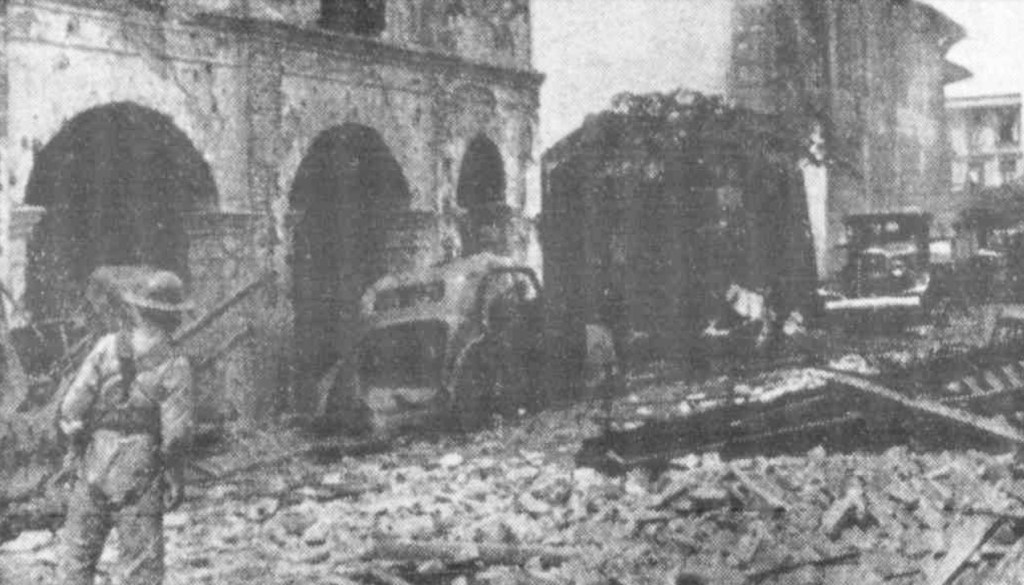
    Singapore shortly before the Japanese landed on the island. Photo Central Queensland Herald, 26 Mar 1942, p. 20.

        Then, in January 1942, when it was clear that Singapore was about to fall, Reynolds sailed the Kofuku Maru to Colombo in Ceylon (present-day Sri Lanka). There, some officers from the Allied Intelligence Bureau saw the potential of having a Japanese fishing vessel at their disposal. With any luck, they thought, the Kofuku Maru might be able to traverse enemy waters without raising suspicion. Reynolds had likely told them that Japanese aircraft had ignored the vessel while he had been operating around Singapore. The Kofuku Maru was then sent to Australia, where she was made ready to begin her clandestine career.

       The Krait, though still going by its Japanese name, Kofuku Maru, was chosen to take part in Operation Jaywick, an audacious mission to destroy enemy shipping moored in Singapore Harbour. It was a high-risk, high-reward mission, but with any luck, the Japanese would not suspect the Krait of being anything other than one of the numerous small Japanese fishing vessels plying the waters around Malaya and Indonesia.   

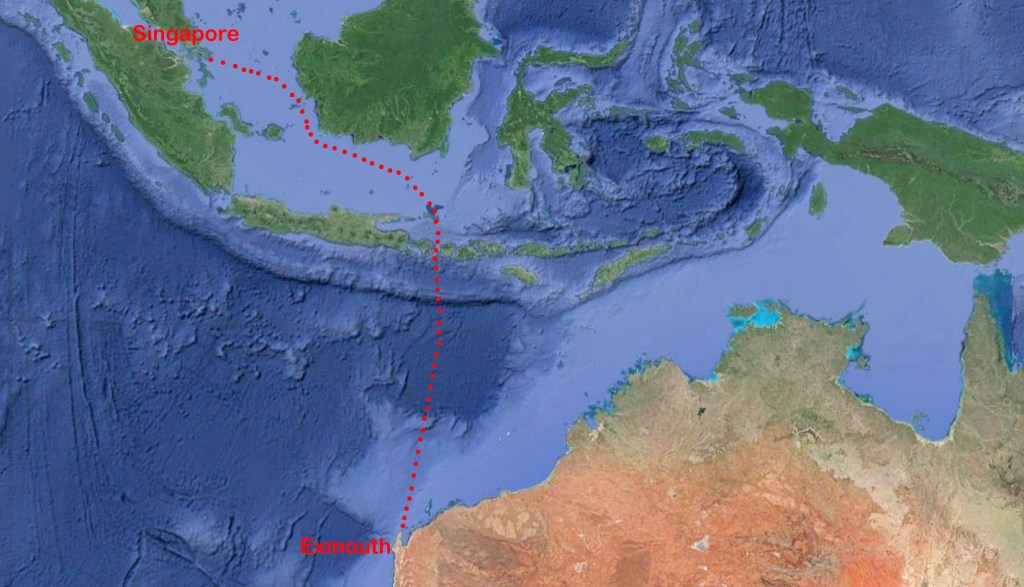
    A 14-man team was selected for the operation under the command of Major Ivan Lyons, a British Army officer attached to the Z Special Unit, better known simply as Z Force. The men chosen were a mix of British and Australian Army and Navy personnel. After completing specialised training and rehearsals at Refuge Bay north of Sydney, the Krait then made the long voyage up the east coast, through Torres Strait, past Darwin and down the Western Australia coast to Exmouth Gulf.

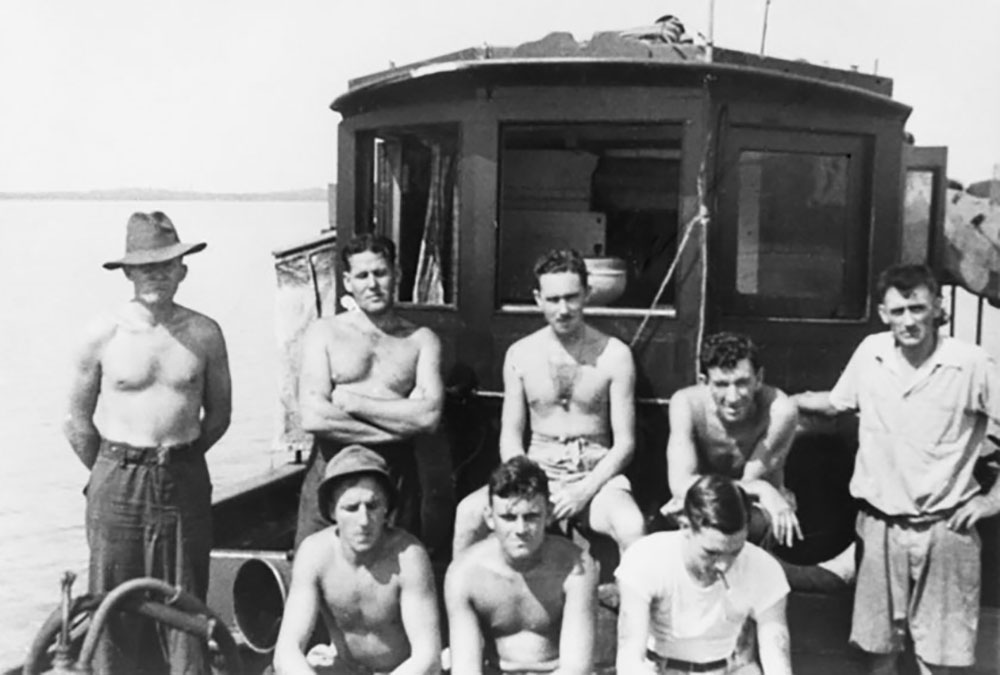
    A group on board MV Krait enroute to Singapore during Operation Jaywick. Courtesy AWM.

       The 7500 km long passage was not without problems. The engine quit while they were off Fraser Island, and the Krait had to be towed to Townsville, where she remained until a replacement could be found and installed. More repairs had to be made before they finally reached Exmouth Gulf, further delaying the operation.

       But on 2 September 1943, the Krait left Exmouth Gulf with the Z Special Unit men on board. The plan called for the eight-man naval contingent to sail the vessel to within striking distance of Singapore Harbour. Then six Army commandos would take to three folding kayaks, paddle into the harbour, and sink as much Japanese shipping as they could by attaching magnetic “limpet” mines to their hulls below the waterline.

       Four days after leaving Exmouth, the Krait motored through the narrow Lombok Strait with a Japanese ensign flying from her mast. Once clear of the strait, they bore west through the Java Sea towards their intended target. The men had stained their skin so they resembled local fishermen and were meticulous about what rubbish they threw overboard.   

    Towards the end of September, the Krait had made it to the small island of Pulau Panjang, just 30 km away from Singapore Harbour. The six commandos then set off in their two-man kayaks and island-hopped north to a small island where they could observe the entrance to the harbour. Meanwhile, the Krait made for safer waters near Borneo but not before agreeing on a rendezvous point with the commandos for the night of 2 October.

    MV Krait’s route from Exmouth Gulf to Singapore. Courtesy Google Maps.

       On 26 September, the six men paddled into the harbour and planted their mines on seven Japanese ships. Singapore’s early morning quiet was shattered by a series of loud explosions as the mines went off. One failed to detonate, but six ships were sunk or badly damaged. But by then, the commandos were long gone and were holed up on a small island to await the return of the Krait.

       The Japanese did not realise that the attack had come from the sea, thinking instead that it was the work of local saboteurs. Several local Chinese and Malays, along with some prisoners of war and European civilian internees, were suspected of the bombings. They were rounded up by the Japanese Military Police and interrogated. Most were tortured, and some were executed in the aftermath, an unfortunate and unforeseen consequence of the raid.

       Meanwhile, the commandos rendezvoused with the Krait as planned without incident. The Krait then set off for home. Two and a half weeks later, they were safely back in Exmouth Gulf. Major Lyons would lead a second similar raid on Singapore Harbour the following year, but Operation Rimau would end in disaster.

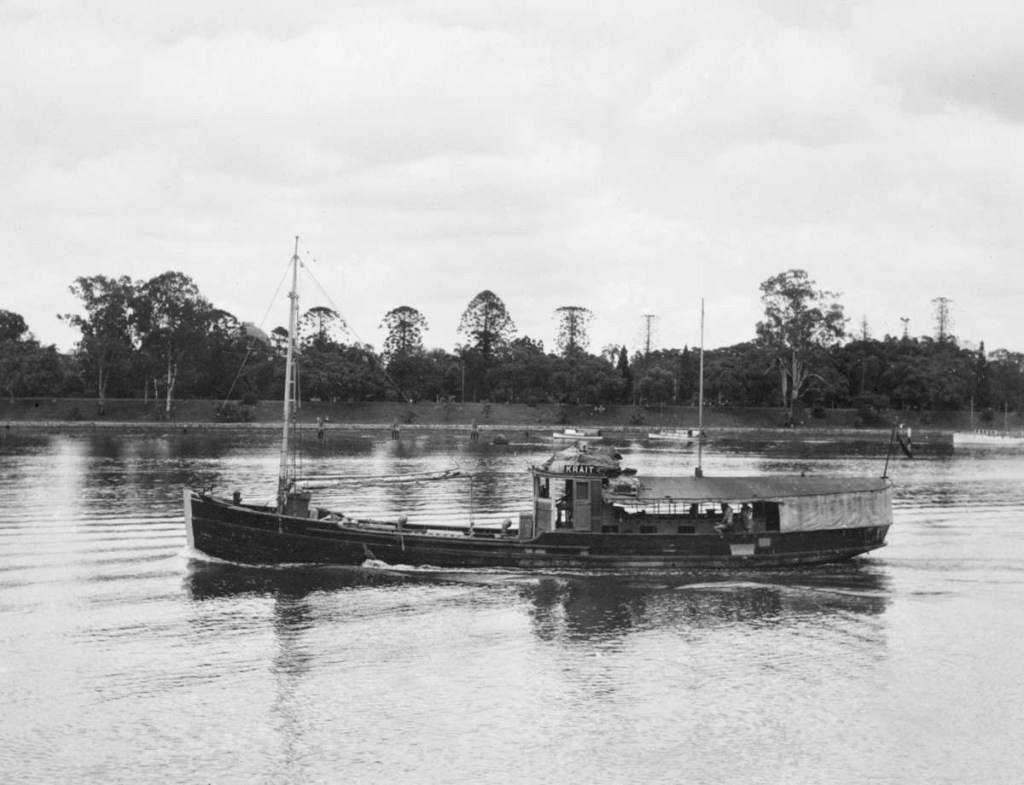
    MV Krait in Brisbane 1943. Courtesy AWM.

       Following the success of Operation Jaywick, the Krait was based in Darwin and used to support coast watchers and other intelligence operations, which reported on Japanese activities to Australia’s north. Commissioned into the Royal Australian Navy (RAN) in 1944, she was officially renamed HMAS Krait and, in September 1945, was present for the local Japanese surrender at Ambon.

       After the war, the Krait was employed by the British administration in Borneo until it was sold to a British-owned timber sawmill and renamed Pedang, meaning sword in Malay. In the late 1950s, a pair of Australian businessmen recognised the vessel’s historical significance and began fundraising to purchase her and have her returned to Australia.

       In 1964, the Krait came back to Australia, where it was operated and maintained by the Royal Volunteer Coastal Patrol. Then, in 1984, the Krait was handed over to the Australian War Memorial and berthed at the Sydney Maritime Museum. It is now on display at the Australian National Maritime Museum in Sydney.

    MV Krait at the Australian National Maritime Museum, Sydney. Photo CJ Ison.

    Sources: 

    Australian National Maritime Museum: Articles on the Krait and Operation Jaywick.

    Royal Australian Navy: Article on the Krait and Operation Jaywick.

    Australian War Memorial: Article on Operation Jaywick.

    © Copyright C.J. Ison / Tales from the Quarterdeck, 2023.

    To be notified of future blogs, please enter your email address below.