Tag: Convicts

  • BOLTERS: An Unruly Bunch of Malcontents

    Convict crewed boats crossing the bar to unload ships at Norfolk Island. Courtesy National Library of Australia.

    More than 160,000 of Britain’s most unwanted souls were banished to Australia between 1788 and 1868.   These convicts ranged from petty thieves to hardened criminals.   Fraudsters, burglars and pickpockets rubbed shoulders with highway robbers, rapists and murderers in the fetid prison cells of transport ships bound for Australia.    Political prisoners, social reformers and ordinary men and women struggling to feed their families also found themselves trapped in a brutal judicial system determined to rid Britain of its undesirables.  

    The vast majority of these men and women made the best of the hand fate had dealt them.   They earned their freedom and took up land and farmed it, started businesses, married, raised children, and helped found the country we know today.   But this book is not about them.   Library shelves are lined with volumes praising the accomplishments of those worthy and not-so-worthy folk.   Rather, Bolters tells the stories of those unruly malcontents who stepped ashore and thought, “This place is not for me,” and began plotting their escape.  

    Those who tried to abscond and failed, or flout any of the many other rules and regulations governing their lives were often sent to places of “secondary transportation.”   These isolated penal settlements established at Newcastle, Port Macquarie, Moreton Bay and Macquarie Harbour were intentionally harsh.   They were places where floggings were frequent, work was backbreaking, living conditions were wretched and life expectancy was short.     Norfolk Island would later surpass them all for its brutality.  
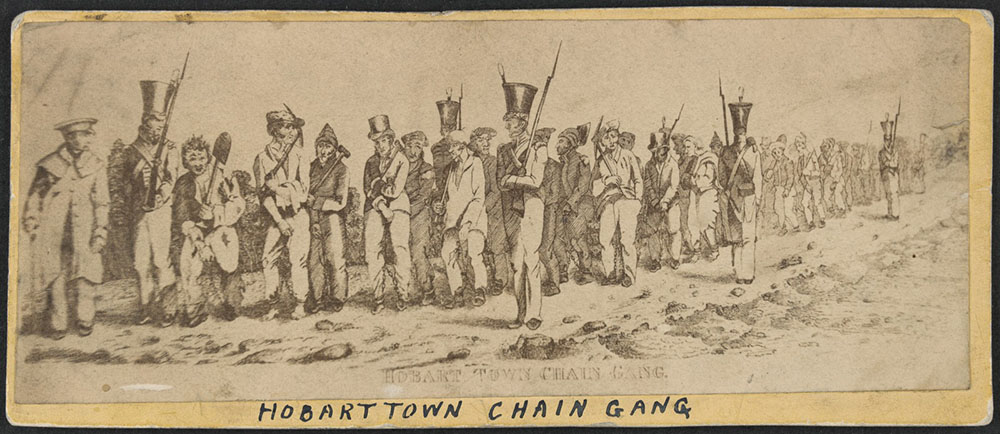
    Hobart Town convict chain gang. Photo courtesy State Library of Victoria.

    Australia’s penal settlements were gaols without bars.   There was often very little to prevent anyone from taking their leave and hiding out in the bush.    But what could they do then?   The countryside was wildly unfamiliar, and the already dispossessed Aboriginal peoples were often hostile towards anyone encroaching further onto their land.   Despite this, there were several bolters who lived for many years in Aboriginal communities.   Alternatively, runaways could hole up on the outskirts of settlements, preying on whoever presented themselves as easy targets.   These “bushrangers” were the scourge of early administrators in New South Wales and Van Diemen’s Land.   The authorities went to great lengths to hunt them down and bring them to justice, often at the end of a rope.   Eking out an existence on society’s fringes was not a viable long-term proposition.   Those truly serious about escaping had to look not towards the country’s interior, but out to sea.    Where townsfolk, farmhands, labourers and the like viewed the expansive ocean with justifiable trepidation, it was seen in a very different light by the many seamen and mariners in the convict ranks.

    A flogging as Illustrated in The Fell Tyrant published in 1836. Courtesy Mitchell Library, State Library of NSW

    Ships had brought them out to the colonies.   They could whisk them away.    Stowing away was the most frequent method of absconding, especially for those without seafaring skills.   A cat-and-mouse game soon developed, with stowaways finding ever more inventive places to hide while the authorities devised new ways of flushing them out.   Rarely did a ship leave Australia during the convict era without someone trying to stow away.

    For men of a more ruthless and violent temperament, seizing control of a ship and sailing to some far-flung port proved an irresistible temptation.    Ships transporting prisoners between settlements were always on alert for trouble, but that did not stop some desperate characters from trying their luck.  Captains of vessels, complacent of port regulations, risked their ships being taken by convicts ever vigilant for lapses in security.   A few enterprising convicts even built their own craft to make their escape.   Few of these endeavours ended well, for the distances to be traversed were vast and the ocean unforgiving to frail and unseaworthy watercraft.  

    Detail from an 1828 watercolour of Hobart by Augustus Earle showing the brig Cyprus (centre), which was seized by convicts en route to Macquarie Harbour. Courtesy State Library of NSW.

    Bolters tells the stories of many of those convicts who chanced their luck to regain their liberty.   The narratives draw heavily on the personal accounts left behind by those determined to escape and official reports written by the men whose job it was to stop them.    In 1791 William and Mary Bryant and a band of runaways made off with Governor Phillip’s cutter and sailed it to Timor in the Dutch East Indies (Indonesia).   To this day it is still recognised as an outstanding feat of seamanship and survival.    It was unfortunate for them that their luck ran out shortly after.   However, Mary and a handful of others reached England and were later pardoned. They proved escape was possible, inspiring many others to follow their lead.    In 1803, William Buckley fled from a short-lived settlement on the shores of Port Phillip Bay.   He was taken in by the local Aboriginal people and remained with them for the next 32 years.   Macquarie Harbour saw many inmates try to escape that god-forsaken place.   No story is more chilling than that of the infamous cannibal Alexander Pearce and the men who fled into the wilderness with him.  
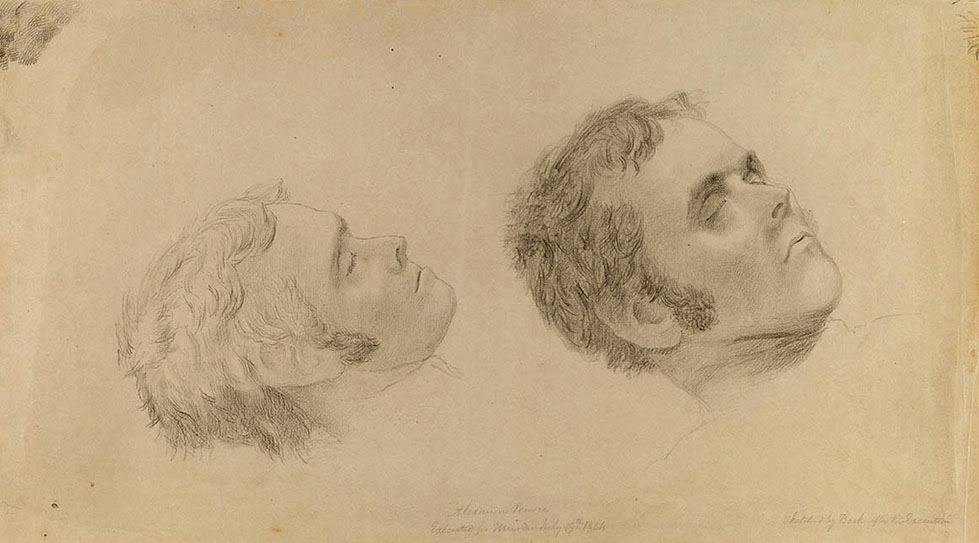
    Sketches of Alexander Pearce made shortly after he was hanged. Artist: Thomas Bock. Courtesy State Library of NSW.

    When a group of determined prisoners captured the Cyprus in 1829, few could have imagined that they would sail the vessel to Japan before scuttling it off the coast of China.  Several men made it back to England before being arrested. Then, five years later, the prisoners entrusted with completing the Frederick at Macquarie Harbour took off for South America rather than deliver her to Port Arthur as supposed.    The book ends with the liberation of six Irish rebels from Fremantle Prison by the American whaler Catalpa in 1876.   This was arguably the most carefully planned and executed escape during the convict era.   Along the way, the book delves into many lesser-known but no less desperate and dramatic attempts to flee Australian shores.

    © Copyright C.J. Ison / Tales from the Quarterdeck, 2024.

    Please enter your email address below to be notified of future blogs.
  • The search for the Sydney Cove – 1797

    On the night of 2 October 1797, fourteen convicts stole a boat and made their way down the Paramatta River across Sydney harbour and out through the Heads.  When the men were discovered missing, the authorities sent boats in pursuit, but they returned a few days later, having never caught sight of the runaways.    As a storm had swept the area shortly after they had escaped, it was thought the bolters had died at sea.   However, that was no more than wishful thinking.    Their story is one of desperation, betrayal, and ultimately defeat.

    The runaways’ leaders were John Boroughbridge and Michael Gibson.   They had been labouring away in the back blocks of Paramatta when they convinced 12 other desperate men to join them in an audacious escape.    Their plan was to find the remains of the 250-ton Sydney Cove, a ship that had recently been wrecked somewhere far to the south of Sydney.   Boroughbridge and Gibson were sure they could build a new vessel from the timbers and fittings and make for some distant port far from the clutches of British law.   That the Sydney Cove had been carrying a massive cargo of rum and other alcoholic spirits added to its allure.

    Painting of Sydney, Port Jackson. circa 1804.

    Boroughbridge was serving 14 years for some unspecified crime and had landed in New South Wales only four months earlier and was keen to leave at the first opportunity.  Gibson had already spent five long years there, but with nine more to serve, he was no less eager to put the place behind him.     It seems they had little difficulty finding 12 others willing to join them.

    With nothing more than a small pocket compass and the knowledge that the wreck lay somewhere far to the south, they headed out through Sydney Heads and turned right.    A day or so later, the weather turned nasty, but Boroughbridge and his mates ploughed on.   Twice, their boat was driven ashore, and both times, they were lucky to avoid serious damage.  

    In time, the weather eased, and they continued following the coast and unknowingly strayed into Bass Strait.   In 1797, no one knew that a body of water separated Van Diemen’s Land from the rest of Australia.    All Boroughbridge and the others would have known was that the Sydney Cove was aground on an island somewhere off the coast.   They likely had no accurate idea how far they had come or how much further they had to go.   They certainly could not have known that they needed to cross 200 km of open water to reach the beached ship.   By now, the compass would have shown that they were heading in a south-westerly rather than southerly direction as they doggedly follow the contours of the coast.

    Finally, they ran out of food and fresh water.   In desperation, they put ashore on one of the small islands in the vicinity of Wilson’s Promontory.   There, they found a ready supply of fresh water, while seabirds and seals made easy prey for the starving men.    But, the trying conditions took their toll.   By now, many of the runaways would have gladly returned to Sydney to face any punishment short of death if it meant an end to their suffering.  

    Any sense of common purpose they may have once possessed had since evaporated.   They could not agree on what they should do next.   Should they stick to their original plan and continue searching for the elusive Sydney Cove?   Or should they abandon the search and head back north?   Then, one night, in a callous act of betrayal, Boroughbridge, Gibson and five others quietly set off in the boat, abandoning the rest of the men as they slept. 

    After leaving their comrades to their fate and giving up the search for the Sydney Cove, they returned north again.   Bypassing the entrance to Sydney Harbour, they continued on to the mouth of the Hawkesbury River, where it emptied into Broken Bay.   It cannot have been lost on the weary men that after three or four months on the run, they were now barely a day’s sailing from where they had started.   

    After months at sea, their boat was in such a derelict state that they did not trust it to carry them any further.    The men agreed they would continue sailing north, but to do so, they would have to find another boat.     They did not have long to wait.

    Boroughbridge and his men seized a passing vessel and set a course north. Their plan now was to make for Timor in the Dutch East Indies as William Bryant, his wife Mary and others had done some six years earlier.   News that Mary and some of the other runaways had reached England and been pardoned had only recently reached Sydney offering hope for anyone contemplating following in their wake.   

    Nothing more was heard of them for another couple of months.  Then, in late March 1798, they returned to Broken Bay and hailed down a passing boat.  Boroughbridge handed a letter to the boatswain asking him to deliver it to the NSW Governor.   The letter, signed by Boroughbridge, Gibson and three remaining runaways, claimed they wished to give themselves up and begged for clemency.   They wrote that they had sailed about 400 nautical miles (750 km) north, which would have put them on either Stradbroke or Moreton Island.   Then, they claimed, disaster struck.    When they tried to run ashore, their boat was caught in the surf and driven hard onto the beach, where it broke apart with the pounding of successive waves.   They were stranded on an inhospitable stretch of coast.   But all was not lost.   They were able to salvage enough timber from the wreckage to build a smaller craft and put back out to sea.   However, by now, they had all had enough of life on the run.  They decided that rather than continue sailing north, they would return to Sydney and beg for mercy. 

    Their plea for mercy fell on deaf ears, for the Governor had learned that Boroughbridge and the rest of the men seeking clemency had callously abandoned half their mates to die on the island in Bass Strait.   In an unlikely turn of events, they had been found by George Bass while he was endeavouring to prove the existence of the body of water which now bears his name.   Unable to carry all seven back to Sydney on his small boat, he ferried five across to the mainland, gave them a compass, a musket and as much food as he could spare and told them to follow the coast north to Sydney.   They were never heard of again.   Two men, too weak to walk, remained with Bass.   He returned to Sydney on 25 February and handed the pair to the authorities and they reported what had befallen them.     

    In April, Boroughbridge and the four remaining runaways were returned to Sydney, where they were tried for piracy and found guilty.   Jonathon Boroughbridge and Michael Gibson were hanged, while their three companions were only given clemency at the last minute as they stood before the gallows contemplating their final moments of life.

    © Copyright C.J. Ison / Tales from the Quarterdeck, 2024.

    Please enter your email address below to be notified of future blogs.

  • The Loss of the Convict Ship Neva – 1835

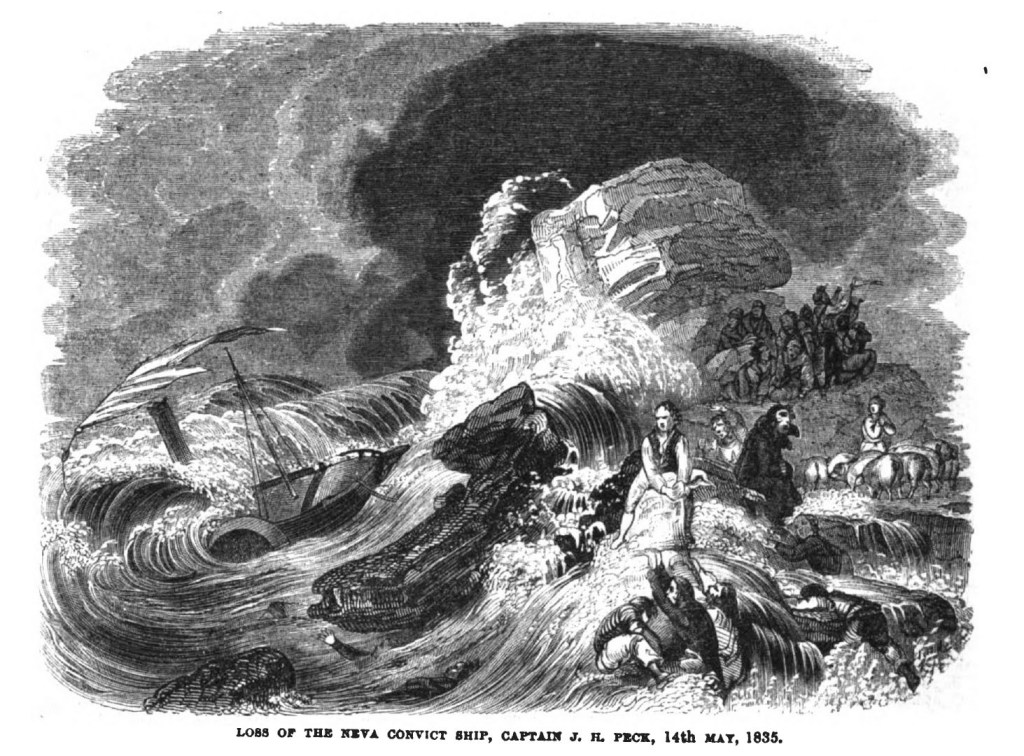
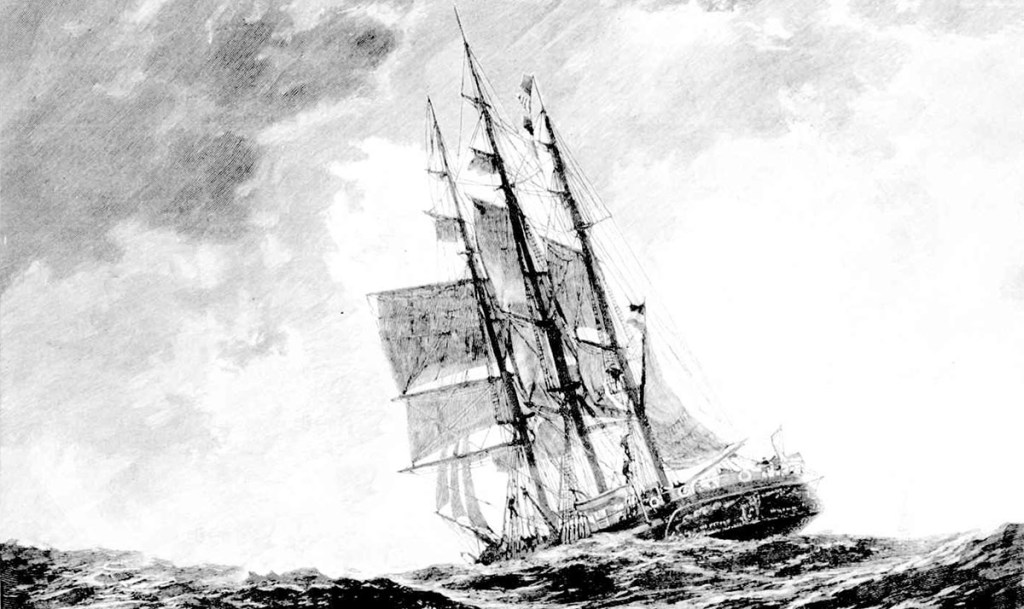
    Loss of the Neva. Source: Tales of Shipwrecks and Adventures at Sea, 1846.

       Between 1788 and 1868, more than 162,000 convicts were loaded onto transport ships and banished to the colonies to serve out their sentences. Such were the living conditions onboard some of these vessels, coupled with the hazards of sailing such vast distances in isolated waters, perhaps as many as one in one hundred perished before ever setting foot on Australian soil. When the Neva struck a reef in Bass Strait, of her 226 casualties, nearly 150 of them were convicts.

       The 337-ton barque Neva set sail from the Irish port of Cork on 8 January 1835, bound for Sydney, New South Wales. On board were 153 female prisoners of the crown, 55 children and nine free female emigrants. The crew, under the command of Captain Benjamin H. Peck, numbered 26. During the passage, three people died and one baby was born, so by the time they were nearing their destination, the ship’s complement numbered 241, passengers and crew.

       By 12 May, the Neva had rounded the Cape of Good Hope, stopped briefly at the island of St Paul for fresh supplies and was about to enter Bass Strait. At noon, Captain Peck calculated they were about 90nm (170 km) west of King Island. As daylight faded into night, he posted a lookout to warn of any dangers lying in their path. He would remain on deck through the night, but for a two-hour break, as his ship negotiated that dangerous stretch of water.   

    A stiff breeze was blowing, and the ship was being pushed along under double-reefed topsails. Around 2 o’clock in the morning, the lookout sighted the dark silhouette of land against the lighter night sky in the distance. Peck ordered the course altered a little to the north to ensure he safely cleared King Island. Then, about two or three hours later, the frantic call came from the lookout, “breakers ahead,” as a line of white water emerged from the pre-dawn gloom. 

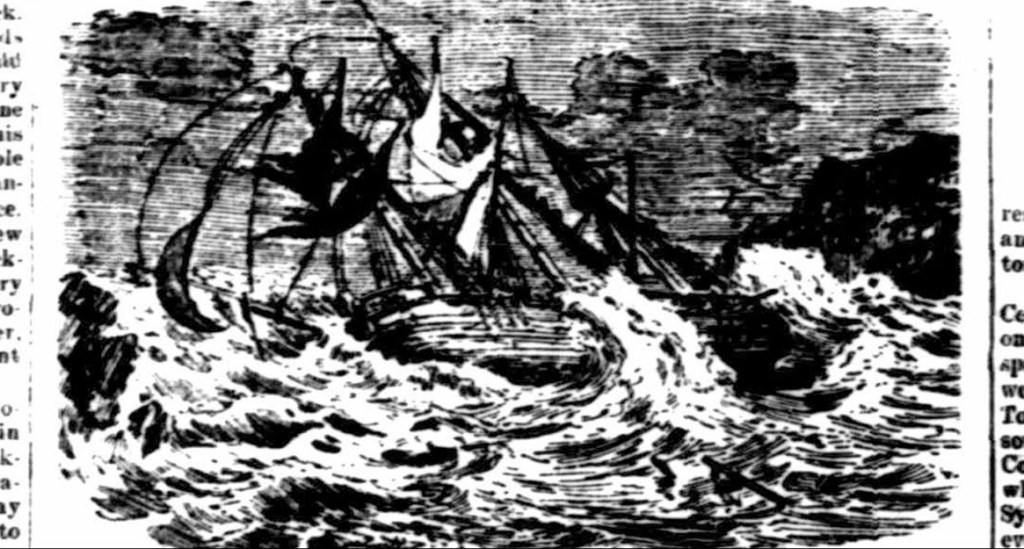
    Neva Shipwreck. illustration from The Capricornian, 26 May 1927.

       Captain Peck immediately gave the order to tack, but it came too late. As the Neva was turning into the wind, she struck a rock and lost her rudder. With the wheel spinning freely, the stricken ship was now at the mercy of the wind and current. They had likely struck Navarine Reef about three kilometres northeast of Cape Wickham, the northernmost point of King Island.

       Suddenly, the Neva struck hard a second time. She hit on her port bow and swung broadside against the reef and immediately started taking on water. Below decks, the prison cages collapsed under the violent force of the collision, and the terrified female convicts rushed on deck.

       The gig, one of the four available lifeboats, was lost as it was being lowered into the water. Captain Peck then ordered the pinnace over the side, and he, the ship’s surgeon, several sailors and some of the female passengers climbed in. But before they could put away, it was overwhelmed by a deluge of terrified women, frantically trying to escape the ship. The boat sank under their weight, and everyone was spilled into the churning water. Only Peck and the two seamen made it back to the ship alive.

       The captain then set about launching the longboat. However, this time, as he boarded, he made sure his panicking passengers were kept at bay. But this time, as soon as the boat was lowered, it was swamped by the surging seas crashing around the ship. Everyone was tossed into the water. Only Captain Peck and his first mate made it back to the ship this time.

       After the loss of three boats, the cutter was their only remaining lifeboat. It is not clear from reading survivor accounts why it was never launched. Considering the sea conditions it would likely have met with the same fate as the longboat. The most likely reason the cutter was never launched is that the Neva began to break up before it could be lowered.

    Account of the Neva shipwreck. Courtesy, State Library of NSW, FL3316306

       Part of the deck sprang away from the superstructure and then split in half, effectively forming two rafts. Captain Peck, some of the crew and several women made it onto one of them while the first mate and several other people were lucky enough to find themselves on the second. The two rafts drifted clear of the wreckage, leaving the remaining convict women clinging to those parts of the ship still jutting out of the surging seas.

       The rafts and several other pieces of wreckage with people clinging to them drifted with the currents for several hours before they came to ground in a sandy bay at the northern end of King Island. The mate’s raft rode the surf in and washed up high on the beach, and most of the people who had clung to it survived.

       The captain’s raft was not so lucky. The timber platform had come away with a large section of the foremast protruding below the surface. As they entered the shallows, the mast caught on the bottom some distance from the beach. Waves swept everyone from the raft, drowning anyone who could not swim. Only the captain, a seaman and one woman made it through the pounding surf to reach shore alive.

       Twenty-two people made it onto King Island, but seven of them died within 24 hours either from exposure or from injuries sustained during their escape from the wreck. The remaining 15 survivors used sails and spars washed ashore to build makeshift shelters, and then they began collecting what provisions had been washed ashore. Over 100 bodies were found scattered among the debris, and they were buried in several mass graves in the coming days.

       Having resigned to waiting it out until they could be rescued by the next passing ship, Peck and the others began foraging for food to supplement the provisions that had washed ashore from the Neva. But unbeknown to them, there was another party of castaways on King Island. They had been shipwrecked earlier on the south-eastern end of King Island and had come to investigate when they saw wreckage drifting down the coast. They eventually came upon the Neva survivors. A short time later all the survivors were discovered by a sealer and his Aboriginal wife who lived permanently on the island. They cared for the castaways until help finally arrived.

       After being marooned for a month, the castaways were found by Charles Friend, the master of the schooner Sarah Ann. He had touched at King Island on his way back to Launceston after delivering provisions to a whaling station elsewhere in Bass Strait. He took off all the survivors except two of the Neva’s sailors and a convict woman, who had been out foraging for food at the time. Unable to find a safe place to anchor, he was not prepared to risk losing his ship waiting for them to return.

       The Sarah Ann reached Launceston on 27 June, and a cutter was immediately dispatched to King Island to collect the remaining three castaways. In all, just fifteen of the 241 passengers and crew survived, making it one of Australia’s worst maritime disasters.

    © Copyright C.J. Ison / Tales from the Quarterdeck, 2023.

    To be notified of future blogs, please enter your email address below.

  • The Loss of HMS Sirius – 1790

    “The melancholy loss of H.M.S Sirius off Norfolk Island” by George. Raper. Courtesy: National Library of Australia 136507434-1

    When HMS Sirius was wrecked off Norfolk Island in 1790, the loss was keenly felt back in Sydney. She was one of only two ships available to Governor Phillip, and he desperately needed both of them. Sydney had so far been unable to grow sufficient food to feed itself and was now facing starvation. The loss of the Sirius only compounded the colony’s problems. 

       HMS Sirius had sailed from Portsmouth on 13 March 1787 as part of the First Fleet, a social experiment to rid England of its most troublesome and unwanted folk. They arrived in New South Wales in January 1788. A month later HMS Supply sailed for Norfolk Island with a small number of convicts and a detachment of guards to establish a penal settlement there. By October of the same year, Governor Phillip realised that Sydney would soon be facing starvation unless something was urgently done. He ordered Captain John Hunter to sail HMS Sirius to the Cape of Good Hope and purchase livestock, grain and other provisions for the fledgling colony.   

    Some months after her return, the Sirius, in company with HMS Supply, was ordered to sail for Norfolk Island with desperately needed provisions along with additional convicts and guards.

    First Fleet entering Sydney Heads January 1788. By E. Le Bihan, Courtesy State Library of NSW.

       They reached Norfolk Island on 13 March 1790, and over the next few days, they disembarked their passengers; however, the sea conditions were such that neither ship was able to land its stores. On 15 March, the unrelenting gale-force southerly forced them to leave the island. By the 19th, the wind had moderated and shifted around to the southeast, so Captain Hunter made landfall again, hoping to begin unloading.

       As Sirius neared the island, Captain Hunter saw the Supply already anchored in Sydney Bay, and there were signals flying on shore that longboats could land without danger from the surf. Hunter took his ship in as close as he dared, loaded the boats and sent them away, but then the wind freshened.

    “Part of the Reef in Sydney Bay, Norfolk Island, on which the Sirius was wreck’d. 19 March 1790.’ by William Bradley.

         Hunter ordered his men to haul up the anchor and make for open water, but before he could do so, the Sirius was driven onto the rocks. Powerful surf crashed around the stricken ship. Soon after they struck, the carpenter reported that water was pouring into the hold. The masts were cut away in the hope that the lightened vessel might be driven higher onto the reef, where the crew would have a better chance of saving their lives.

       By now, it was about 11 a.m. The provisions were brought up from the hold and stacked on deck so they might be floated ashore if the opportunity arose. However, the sea conditions continued to deteriorate. Towards evening, Hunter received word from shore urging him to abandon ship as it would be too dangerous to remain overnight. A rope was tied to an empty barrel and floated through the surf to waiting hands ashore. Then a seven-inch-thick hawser was sent across the narrow stretch of reef and surging seas and tied to a tree. Now the crew could be hauled ashore three or four at a time. Most sported cuts or bruises by the time the reached land from being bashed against the rocks on the perilous passage. The operation stopped only when it became too dark to continue safely, and the remaining men were taken off the following day.

       A couple of days later, two convicts volunteered to go aboard the Sirius to get the livestock ashore. They got a number of pigs and some poultry over the side and the current did the rest. However, as evening turned to night, the two convicts refused to leave the ship. They had found a cask of rum sometime during the day, and by evening, they were drunk as lords. Probably in an effort to keep themselves warm, they lit two fires, but they soon got out of hand and did significant damage to the ship. The following day, guards were sent out to the ship to forcibly return them to shore, where they were clapped in irons for their troubles.

       When the weather finally eased, Hunter sent some of his men across to begin ferrying the remaining provisions ashore using the hawser. Other stores, sealed in timber casks, were thrown into the water with the hope that they would wash ashore through the surf. Some made it. Some sank to the bottom.

       While the Supply had managed to unload its provisions on the sheltered side of the island, with so many additional mouths to feed, rations for everyone on Norfolk were cut in half.

    The Settlement on Norfolk Island, May 16th 1790 / George Raper. Courtesy State Library of NSW, FL541331.

    Captain Hunter and his crew would be stranded on Norfolk Island for several months before they could return to Sydney. Meanwhile, Governor Phillip was stunned to learn of the Sirius’ loss. He had been relying on her to go on another resupply mission to keep the struggling colony fed.

       His problems just kept mounting. The second fleet had recently arrived, delivering 800 extra mouths to feed, many were already in a terrible physical state when they came ashore. They were too ill to help cultivate crops or contribute in any other meaningful way. One of the fleet’s two supply ships, HMS Guardian, had been wrecked in the Southern Ocean, placing a greater strain on the settlement’s already meagre provisions. Food was tightly rationed and no distinction was made between the lowest convict and the Governor himself. Everyone received the same ration, one and a half pounds (700 g) of flour, two pounds (900 g) of salt pork, one pound (450 g) of rice and one pint (500ml) of peas per week.   

    The few privately owned boats in Sydney were requisitioned and sent out to catch fish. Hunting parties roamed the outskirts in search of game, and guards had to be stationed around the public vegetable gardens to prevent theft. HMS Supply was sent to Batavia for supplies, leaving Sydney without a single ship at its disposal. One hundred forty-three people died of sickness or malnutrition in Sydney that year. There was probably no other time when the existence of the settlement looked so tenuous. 

    © Copyright C.J. Ison / Tales from the Quarterdeck, 2023.

    To be notified of future blogs, please enter your email address below.

  • William Bryant’s Great Escape – 1791

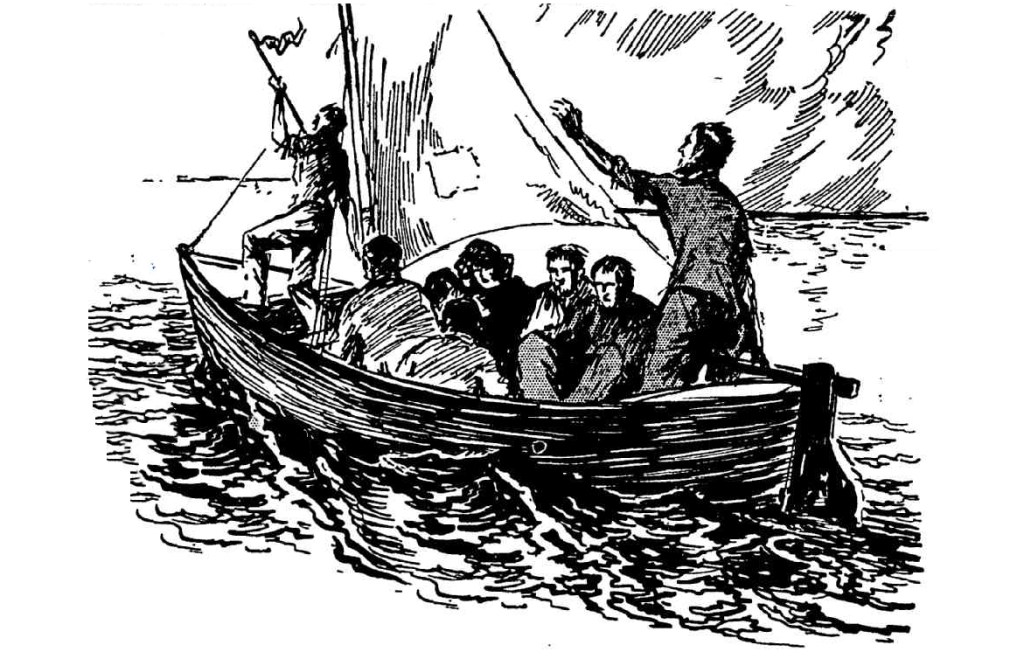
    1930s era illustration of the 1791 convict escape led by William Bryant. Source: The World’s News 9 Sep 1931 Page 9.

       It is an odd piece of Australian history that some of the first people to repeat Captain Cook’s voyage up Australia’s east coast were not other intrepid navigators or explorers, but a motley band of prisoners bent on escape.

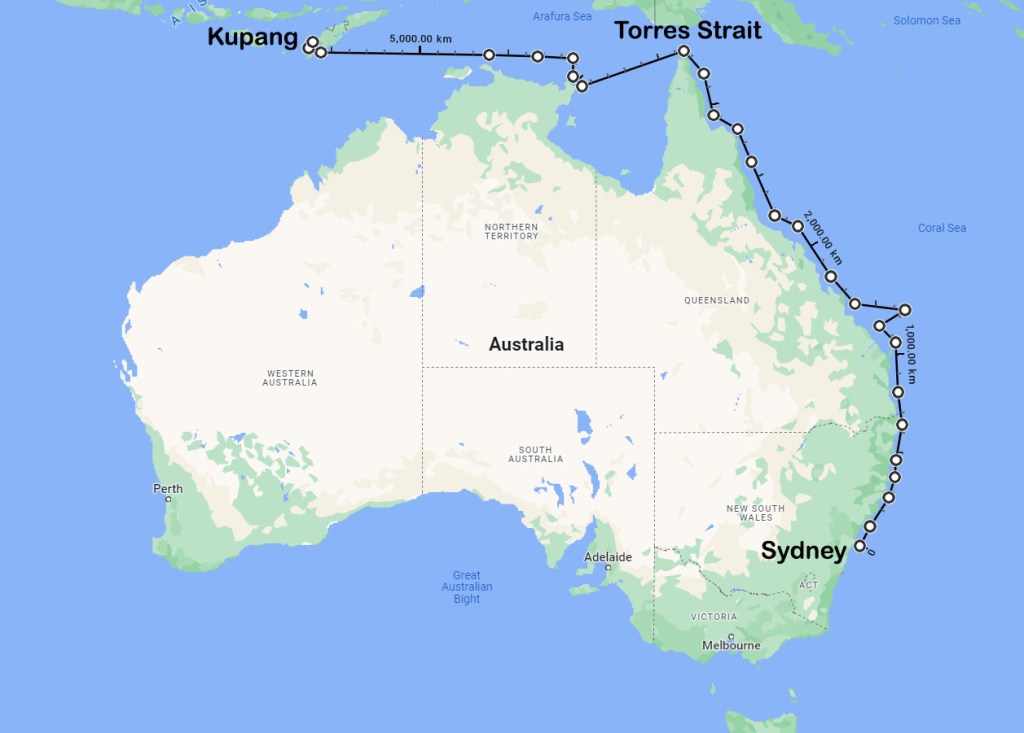
       In March 1791, nine convicts stole Governor Phillips’ six-oared whaleboat and made their way out through Sydney Heads. That was the start of a 5000 km voyage that would take them up Australia’s east coast, around the tip of Cape York and across the Arafura Sea. On 5 June, after 69 days at sea, they sailed into the Dutch settlement of Kupang on Timor Island. It was a remarkable achievement then, and remains so to this day.   

    Their leader was a 34-year-old fisherman from Cornwall called William Bryant. He had been sent to New South Wales for impersonating Royal Navy sailors so as to collect their wages. That was back in December 1783. Bryant had been sentenced to transportation for seven years, and by the end of 1790, he had technically completed his sentence and should have been released. However, no one had thought to send the appropriate documentation out with the convicts on the First Fleet, so he had no way to prove his claim. What’s more, the colony was still struggling to feed itself, and Bryant was a valuable man to Governor Phillip and his administration. Bryant kept the colony supplied with fish, even when other sources of sustenance failed.

    Map showing their approximate route from Sydney to Timor. Source: Google Maps.

       It seems likely that Bryant had started planning his escape shortly after the seven-year anniversary of his sentence. Even had he been allowed to leave, he probably could not have done so. His wife, Mary, still had a couple of years to serve, and there were two young children to consider. He shared his plans with seven trusted mates, and they began preparations to escape. Those seven were all members of the colony’s fishing fleet, and all had years of maritime experience to draw on.

       In the weeks and months leading to their departure, they began stashing away provisions for the long journey. That must have been no easy task, for flour, rice, salted pork, and other staples were all in limited supply. Sydney was starving, and all food was closely monitored and carefully rationed out. However, Bryant was known to have skimmed fish from the catch before handing it over to the Government store. Perhaps he used some of that to trade for the supplies he needed. He also purchased a couple of muskets, a compass, a quadrant and a chart from the captain of a Dutch ship which had recently delivered supplies to Sydney. He likely also paid for these by selling or trading fish on the black market.

    William Bryant and the convicts in the six oar Governor’s cutter which they sailed from Sydney to Kupang. Source: Smith’s Weekly 23 Oct 1937 Page 18

    On the night of 28 March, they were ready to leave. The Bryants, their two children and the rest of the runaways gathered together everything they had amassed for the voyage and carried it down to Sydney Cove. There, they loaded it into Governor Phillips’ cutter, which happened to be the largest and the sturdiest of the boats in the colony’s small fishing fleet. They then headed across Sydney Harbour and out to sea.

       It is hard to imagine what was passing through their minds as they put Sydney behind them. They must have known that the voyage they were embarking on would be fraught with danger. None of them would have been naïve enough to think it would be smooth sailing. They could only rely on their own resourcefulness and a bit of luck to make it to Kupang. On the one hand, remaining in Sydney was hardly a safe alternative. Conditions had grown dire in the struggling colony. Starvation and disease were constant companions. In the previous year alone, 143 people had perished; all but a handful had been convicts.

       The first place they pulled in to replenish water and look for fresh supplies was the Hunter River. There, they were visited by the local inhabitants, the Awabakal people, and after being given a few gifts, the convicts were left unmolested. However, that would be the only time they received a friendly reception. The next time they pulled in to make repairs to the cutter, they were run off by the local Aborigines. A little while later, they were blown far out to sea, and by the time they had returned to the coast, they found few opportunities to put ashore due to the dangerous surf conditions.

       One month after leaving Sydney, they had travelled about 540 nm (1000 km) or only one-fifth of the way to Kupang. This would have placed them somewhere between the Sunshine Coast and Fraser Island (K’gari), where they were forced to land to make urgent repairs to the cutter. It had been taking on water and needed to be recaulked before they continued on their journey north. They were soon heading into Australia’s tropical waters, where they were caught in an unseasonal storm that lashed them for several days without mercy.  They were kept bailing continuously to keep afloat, but they survived. They were blown far out into the Coral Sea, and it would take them more than one full day’s sailing west until they found a small deserted island. This was likely Lady Elliot or one of the islands in the Bunker Group a little further north.   After weeks of struggle and misfortune, they seized the opportunity to recuperate and escape the cramped conditions on the boat.

       The sailing conditions finally improved, and they made steady progress up the Queensland coast, pushed along by the prevailing southerlies. Shortly after rounding Cape York, they replenished their water and then headed out across the Gulf of Carpentaria. It would take them four and a half days to reach East Arnhem Land. Bryant then followed the coastline for several days, looking for a place to refill their water casks. The search proved fruitless, so he decided to head out to sea and make a direct course for Timor. Thirty-six hours later, they made it to Timor Island. It was now 5 June. They had completed their 5000 km voyage in 69 days with no loss of life. That was no mean feat of seamanship and tenacity. Unfortunately, things would soon turn against the runaways.

       Bryant and the others passed themselves off as shipwrecked sailors to the Dutch authorities, and for a while, they were treated as such. But then it seems someone blabbed about who they really were, and the Governor locked them in gaol. Shortly after Captain Edwards and his crew arrived in the settlement, genuine survivors of HMS Pandora wrecked on the Great Barrier Reef. When Edwards left for England, Bryant and the rest of the bolters went with him.

       William Bryant and his son would die in a Batavia gaol. Three other convicts, plus the Bryants’ daughter, perished on the voyage back to England. Mary Bryant and the four remaining prisoners were put on trial, charged with returning from transportation. They could have been sentenced to death or returned to New South Wales for the rest of their lives. Instead, news of the atrocious conditions in Sydney and their ordeal trying to escape them touched a nerve. They were allowed to serve out their original sentences in England, and by November 1793, Mary Bryant and the four other convicts had all been pardoned and allowed to walk free.    A detailed account of the voyage from Sydney to Kupang can be found in “Memorandums” written by James Martin, one of the convicts who made it back to England. 

    The long and perilous voyage remains one of the great feats of seamanship in an open boat. It is told in more detail in Bolters: An Unruly Bunch of Malcontents.

    © Copyright C.J. Ison / Tales from the Quarterdeck, 2022.

    To be notified of future blogs, please enter your email address below.