Tag: Castaway

  • The Invercauld shipwreck, 1864.

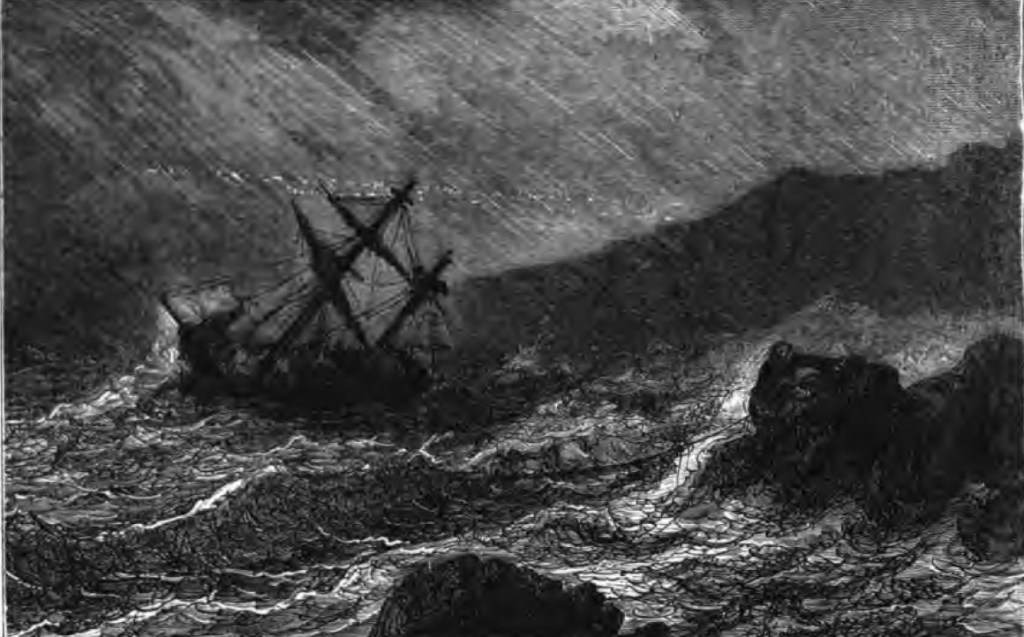
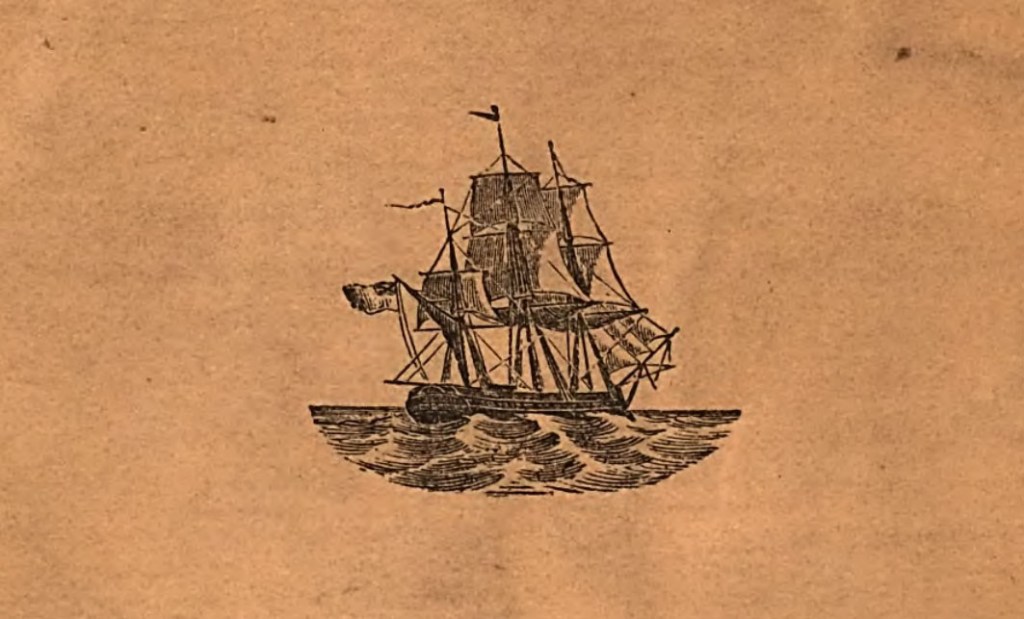
    Illustration of the Invercauld. Source: The Castaways, Andrew Smith, 1866.

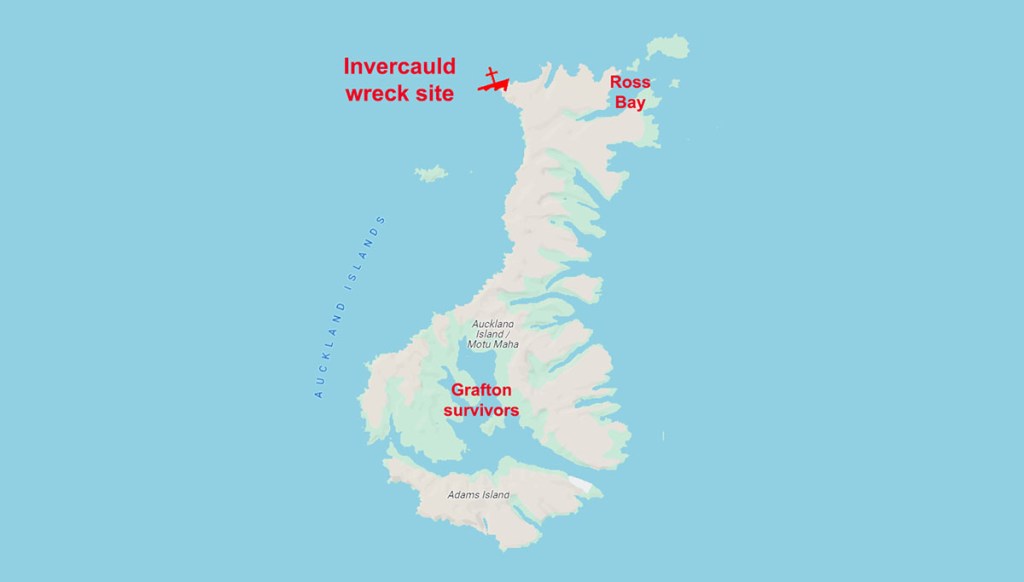
       In recent years, the loss of the Invercauld and its tragic aftermath has been held up as an example of what can go horribly wrong when leadership fails. In contrast to the wreck of the Grafton, on the same island at the same time, where all five men survived, only three of the Invercauld’s 25-man crew lived through the ordeal. The considerable loss of life has sometimes been blamed on the captain’s failure of leadership. But that harsh criticism is based largely on a version of events contained in a memoir written by one of the survivors, some 60 years after the event. Robert Holding had little to say in praise of his captain, but his chronicle stands in stark contrast to the only contemporary account left by one of the other survivors. His story is one of grinding struggle against the elements, a hostile landscape, and a scarcity of food.

       The Invercauld was a 888-ton merchant ship under the command of Captain George Dalgarno. She sailed from Melbourne on 3 May 1864, bound for the Peruvian port of Callao to load up with guano.

       Almost from the outset, they were plagued by foul weather. As they bore southeast in a long, sweeping arc that would take them deep into the South Pacific, they battled strong winds, high seas, rain, sleet, and snow. Then, a week after leaving Melbourne, the lookout sighted the dim outline of land ahead through the pouring rain. Dalgarno took the sighting to be the Auckland Islands, south of New Zealand, at 61 degrees south. He had been unable to take any sightings due to the weather, but had calculated that he was likely approaching their southernmost point. He altered course a few degrees south to clear them with a safe margin.    To Dalgarno’s great surprise and alarm, the lookout called land ahead again. Dalgarno’s navigation had been off more than he had anticipated. He realised, too late, that his ship was in mortal danger, for they were being blown towards a lee shore. By now, the sun had set as the storm continued to rage around them. He spied what he thought was a narrow passage separating two islands and decided that this was his best chance to save the ship. He brought the Invercauld around to the north and heaped on as much sail as he dared, hoping to pass unscathed through the channel into calmer waters beyond.  

       High cliffs loomed out of the inky darkness on the starboard side, and then they were caught in breaking surf. Dalgarno lost all control of the ship. She ran aground broadside on a rocky shore. Huge waves crashed over the deck. There was no time to get the lifeboat over the side, for the Invercauld almost immediately broke apart under the pounding. The men ditched their boots and heavy oilskins as the ship came apart under their feet. Twenty-five men were swept into the turbulent sea to be washed ashore in a small cove backed by towering cliffs. Only 19 men survived the sinking, and all were battered and bruised from being bashed against rocks and wreckage.

       The sodden survivors huddled together for warmth during that first freezing night as the sea spray, rain, and sleet beat upon them. In the early hours, they gathered some of the wreckage to build a lean-to, which gave them some shelter from the worst of the elements. When the sun rose, they got their first proper look at where they had been tossed ashore. They were trapped on a narrow crescent of rocky beach hemmed in on three sides by towering cliffs. The only food they had been able to find washed ashore from the wreck was a kilogram of salt pork and a kilogram bag of sea biscuits, not much to sustain 19 cold and hungry men. One item that would aid them in the future, once it had dried out, was a soggy box of matches that the steward had found in his pocket.   

    To remain where they were would spell the end of them all. The only option they had was to scale the cliffs and see what lay at the top. The climb would claim another sailor who slipped and fell to his death. When Dalgarno and the 17 surviving crew reached the top, they found an inhospitable landscape of dense scrub and coarse grass as far as they could see. Dalgarno thought they would have a better chance of surviving on the more sheltered eastern side of the island. So, off they set, barefoot through the thick vegetation. It took them two weeks to cross the island. Two weeks of pushing through dense scrub, of being lashed by freezing wind and rain, of barely subsisting on a diet of roots and leaves, but for one day, when they caught a small pig.

    Newcastle Journal, 1 Aug 1865, p. 3.

       Four men died from fatigue and exposure during the long trek. Six others broke away from the main group led by Dalgarno, wanting to return to the shipwreck site. Holding was one of them, but he rejoined the main group a few days later. The other five were never seen again.

       By the time they reached a bay on the eastern shore, the party had been reduced to just nine men. There, they found an abundance of limpets fixed to the rocky shore and feasted as only starving men could. But even that plentiful supply was eventually exhausted. They decided they would cross a ridge to the south, hoping they would find another bay filled with shellfish.

       As they crested the ridge, Dalgarno saw two huts on the edge of a bay. They were the first signs of civilisation they had seen since being tossed ashore. When they reached the huts, they found them to have been abandoned, but they provided welcome shelter from the winter elements and the hope that someone might return during the summer months. In fact, the huts were the remains of Endeby’s short-lived whaling station on Ross Bay, which had lain abandoned for the past decade.

       For a time, their fortunes improved. For men who had nothing, the huts were a treasure trove of rubbish that could be repurposed into useful tools of survival. Empty tin cans became boiling pots for limpets. A sheet of iron served as a hotplate over their cooking fire. The discovery of an old adze and hatchet made cutting firewood so much easier. On their first day, they caught a seal, which they feasted on that night. Unfortunately, that was the only one they found, so their diet primarily consisted of limpets, wild roots and greens.

       When they had exhausted this bay of shellfish, remaining any longer seemed pointless. Dalgarno and three others remained at Ross Bay while Andrew Smith, the chief mate and narrator of the only contemporary account of the wreck and its aftermath, Robert Holding and the other two sailors set off to find a better source of food further along the coast. By the time they found a suitable cove and returned to collect the others, only Captain Dalgarno was still alive. The others had succumbed to the cold and starvation. Two more would die in the coming months, leaving just Dalgarno, Smith and Holding still alive.

       Again, their fortunes seemed to improve, at least for a while. After hunting down a couple of seals, they constructed a canoe by stretching the skins over a sapling frame. Now they were able to venture further afield in their relentless search for food. Surviving on a diet of fish, sea birds and the occasional seal, they made it through to summer, but that brought a new set of miseries. Sandflies savaged them, and any seal meat or fish left uneaten for more than a day or so became fly blown.

    …With rescue looking unlikely, the trio realised their only chance of escape lay in building a boat. It was a move born of desperation, for the nearest port was Invercauld in New Zealand, nearly 500 km away. They returned to the huts and pulled them apart using the timbers to construct a boat. However, no sooner had they finished building it than a storm lashed the island and swept it out to sea. They built a second boat with the remaining timbers and, over the next couple of months, used it to travel around Ross Bay and to nearby islands in search of seals and other food sources. They found that one island was thickly populated with rabbits, which eventually proved to be an easy source of meat and skins.

       As their second winter loomed, they built a sturdy sod-walled hut complete with a fireplace and chimney to see them through the coldest months. Then, on 21 May 1865, one year and ten days after being cast upon the island, a vessel dropped anchor in Ross Bay. It was the Portuguese ship Julian, which had pulled in for repairs while on a voyage from Macao to South America. The Julian’s captain had seen Endeby’s whaling station marked on his chart and had hoped to get some help repairing his badly leaking ship. All he found were the Invercauld’s three castaways. When the Julian set off for South America, Dalgarno, Smith, and Holding went with her.

    Main sources: The Castaways: A Narrative of the Wreck and Sufferings of the Officers and Crew of the Ship “Invercauld” of Aberdeen on the Auckland Islands by Andrew Smith, 1866; Captain Dalgarno’s letter to the ship’s owners published in the Birmingham Daily Post, 31 July 1865, p. 8; and A Narrative of the wreck of the “Invercauld” among the Auckland Islands by Captain Dalgarno in Wrecked on a Reef by Francois Raynal, 1874.

    © Copyright C.J. Ison / Tales from the Quarterdeck, 2024.

    Please enter your email address below to be notified of future blogs.

  • Marooned for twenty months: the loss of the Grafton 1863.

    The last of the Grafton castaways are rescued. Source: Wrecked on a Reef, Raynal, 1874..

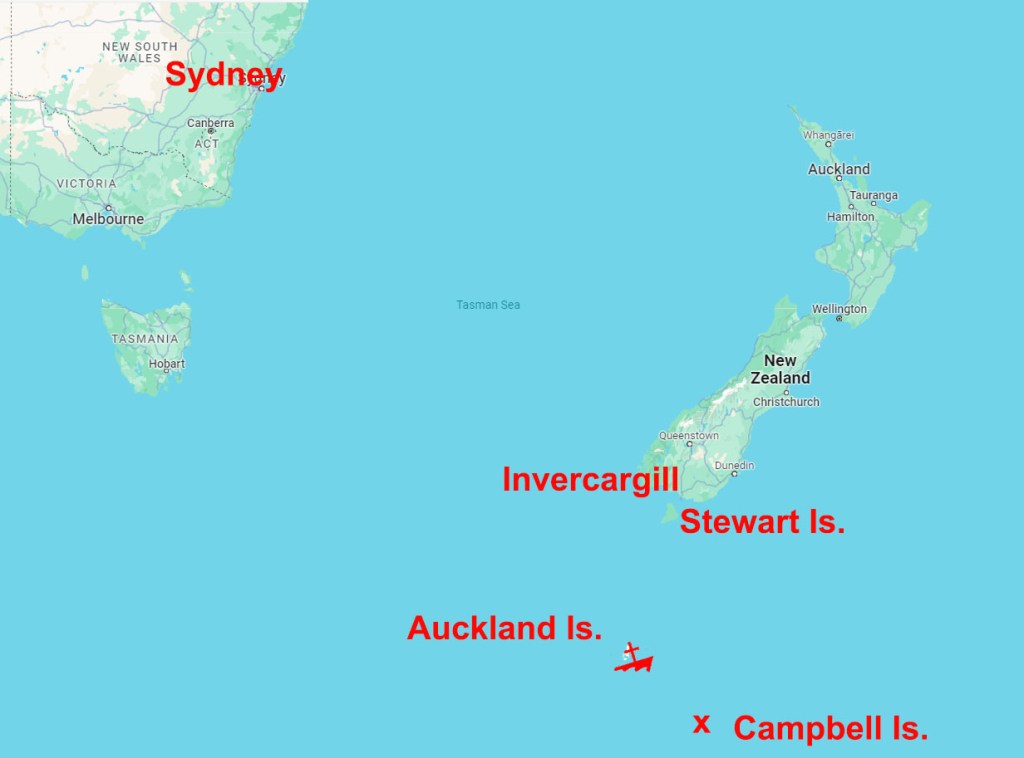
    On 12 November 1863, the 56-ton schooner Grafton sailed from Sydney on a sealing expedition among the islands of the Southern Ocean. Six months, 12 months, then 18 months passed without any sighting of the ship or its crew. Most people had given up hope of seeing them again, presuming they had been lost in that vast expanse of freezing ocean wilderness to Australia’s south. Then, on 27 July 1865, three of the lost mariners stepped ashore at Invercargill, New Zealand. Their leader was the missing ship’s captain, and he reported that his other two shipmates were still stranded on a remote island to the south. This is their remarkable tale of endurance and survival against the odds.

       The Grafton was ostensibly on a sealing expedition funded by a consortium of Sydney businessmen. But it also had a more secretive mission to investigate if tin could be found on Campbell Island. The Grafton was to visit the isolated scrap of land some 650 km south of New Zealand and determine if the rumoured tin was there in mineable quantity. An experienced master mariner named Thomas Musgrave was appointed captain of the Grafton, and one of the business partners, Francois Raynal, served as his first mate. Two seamen and a cook rounded out the five-mancrew.

       The weather was atrocious for most of the voyage south through the roaring forties and then into the furious fifties. During one particularly heavy gale, the Grafton was laid over on her side by the force of the wind. But after three weeks of hard sailing, they finally reached Campbell Island, at latitude 52.6°S.  

    Illustration of the Loss of the Grafton on Auckland Island, 1863. Source: Wrecked on a Reef, Raynal, 1874.

       Prospecting for tin came to nothing, and there were few seals to be had. After a month, they had little to show for their time there. They had been gone for almost two months and had consumed nearly half of the four months’ worth of rations they had left with. Captain Musgrave decided it was time to start heading for home. No one disagreed. They departed Campbell Island on 27 December 1863 with the wind blowing hard from the northwest. As they approached the Auckland Islands, Musgrave found that he could not sail past them without getting dangerously close to land. He decided the safest course of action would be to find shelter in one of the inlets and wait for the wind to shift. They dropped anchor in what they would later learn was Carnley Harbour on 31 December. But soon after arriving, their haven turned out to be anything but when it was lashed by a powerful storm. On the night of January 2, the wind shifted and blew at hurricane strength, as the seas foamed and grew mountainous around them.  

    Site of the Grafton wreck site, Auckland Island. Courtesy, Google Maps.

        For a time, the Grafton rode out the maelstrom. Then one anchor chain snapped, and the second anchor began to drag. At midnight, the schooner was driven up onto a rocky beach. “Within fifteen minutes, she was nearly full of water, with heavy sea breaking over her,” Musgrave later wrote of the ordeal.   

    The crew gathered provisions and warm clothing and piled it all on deck. Then everyone found shelter where they could, and waited for daylight as the storm raged around them. Francois Raynal had fallen ill sometime earlier, but his shipmates looked out for him during that bleak night. In the morning, they climbed into their small dinghy, which was already filled with supplies. Captain Musgrave tied a rope to the Grafton and slowly let it run out as the overloaded dinghy was pushed towards land. When they were close to the beach, one of the seamen, Alexander McLaren, jumped into the surf holding a rope tied off to the boat’s bow. He waded ashore and then wrapped the rope around a tree. As Musgrave let his line out, McLaren pulled his in, and the boat made it through the surf to land safely on the beach. It was that level of simple cooperating that would stand them in good stead during the months that followed.

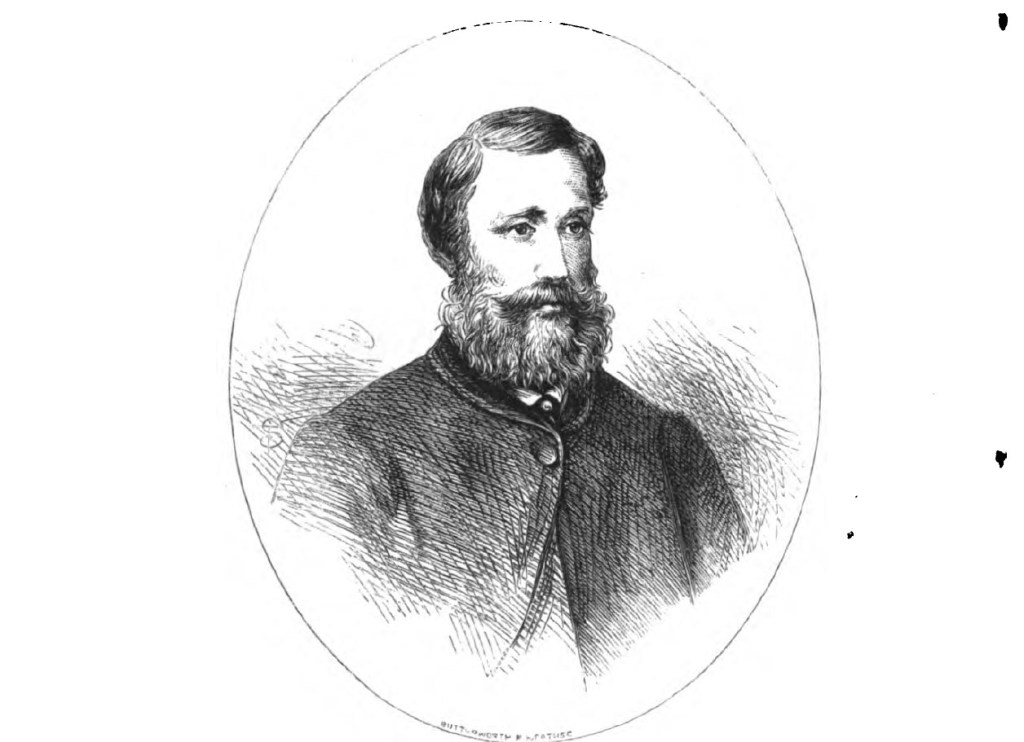
    Captain Thomas Musgrave. Source: Castaway on the Auckland Islands, 1866.

        The castaways spent that night sleeping on the cold, wet ground, but were no doubt grateful that they had made it off the wrecked schooner alive. As for the Grafton, she was pounded to pieces, with no prospect of being repaired and refloated. After the weather had cleared sufficiently, they returned to the wreck. Their priority was to salvage the sails and timber spars, enough to build a small hut so they had shelter from the harsh elements. Despite being marooned on a remote island, Captain Musgrave and the others believed it would only be a matter of time before a ship passed by and they would be rescued.

       But as the months rolled by, their hopes of being found ebbed away and finally vanished completely. The small amount of water-damaged sea biscuit and salted pork they had saved from the schooner had run out long ago. Then, for the next 18 months, they survived on a diet comprised mainly of seal meat. Raynal, who over time recovered his strength, was able to brew a passable ale, which he believed would help keep scurvy at bay.

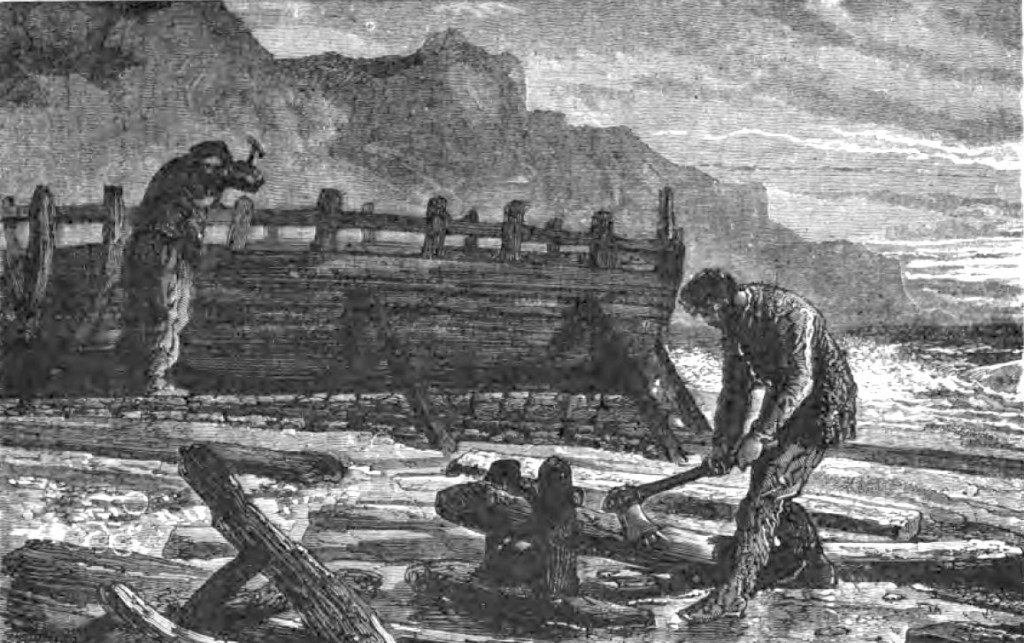
    Inside the hut on Auckland Island. Source: Wrecked on a Reef, Raynal, 1874.

         The castaways strengthened their hut, built a fireplace and chimney, and furnished it with stretchers, a table, and stools. Lanterns fuelled with seal oil gave the interior a warm, comforting glow. When not out procuring food and water or keeping vigil for any ship that might pass by, Musgrave taught his illiterate sailors how to read. The castaways also passed their time playing chess and dominoes with bone pieces Raynal had carved by hand. They also played cards for a time, but Raynal eventually destroyed the pack when it became evident that Musgrave was a poor loser. As their clothes deteriorated, they were replaced with seal-skin garments. In short, they made their home as comfortable as circumstances would allow.   

    After spending a second summer on Auckland Island without ever seeing another soul, the castaways decided to wait no longer to be rescued. It was now around March 1865, and another freezing winter was fast approaching. They considered constructing a new vessel from the Grafton’s wreckage, and they even built a forge to assist them. However, the venture was abandoned for want of an auger to drill holes through the timbers. Instead, they turned to making their twelve-foot (3.6 metre) dinghy more seaworthy. They extended its length by 76 cm, built up the sides and furnished it with a deck. When it was finished, Musgrave found it was so unstable that it would have been too dangerous to call all five of them to safety.


    Preparing the dinghy to escape from Auckland Island. Source: Wrecked on a Reef, Raynal, 1874.

       On 19 July 1865, Captain Musgrave set off in the dinghy with only two men, Francois Raynal and Alexander McLaren, promising to return quickly to rescue George Harris and the cook, Henry Brown. After five days of hard sailing through foul weather, they reached Stewart Island, 450 kilometres to their north. They put into Port Adventure and fell in with the Flying Scud. The next morning, Musgrave and his mates were taken the final 50 km across Foveaux Strait to Invercargill on New Zealand’s South Island.   

    After sufficient funds were raised by the good folk of Invercargill, a ship was chartered to take Captain Musgrave back to Auckland Island to retrieve his two shipmates. The Grafton’s story is a testament to what can be accomplished when a group of resourceful individuals, aided by a measure of good fortune, work together for their common good.

    As chance would have it, the survivors of another ship, the Invercauld, had washed up on the northern end of Auckland Island around the same time.   Unfortunately, theirs is a far different story and is the subject of a future blog.

    © Copyright C.J. Ison / Tales from the Quarterdeck, 2024.

    Please enter your email address below to be notified of future blogs.

  • The Loss of the Convict Ship Neva – 1835

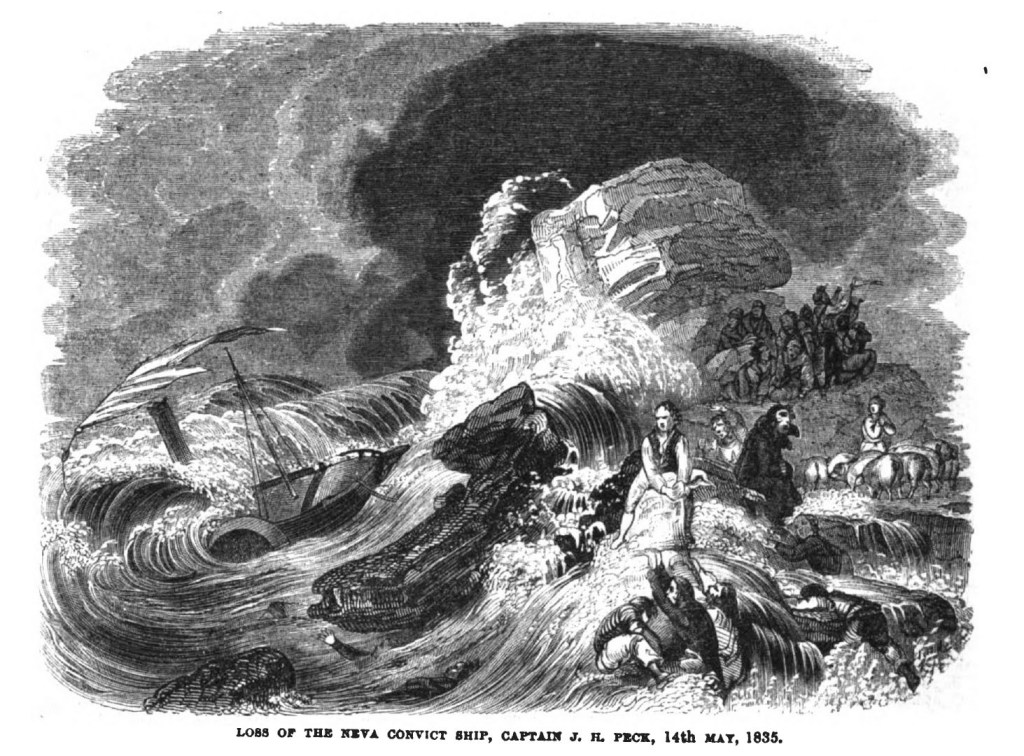
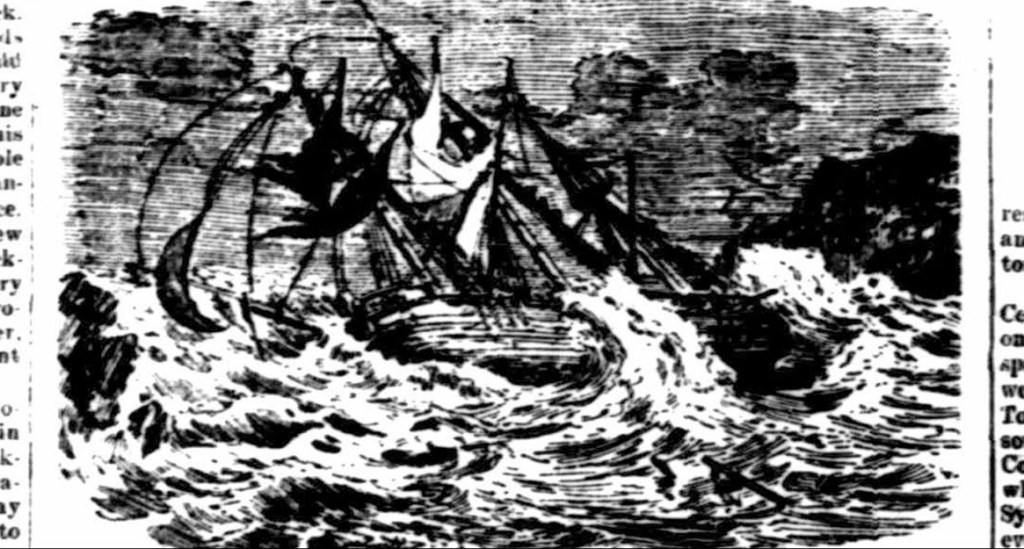
    Loss of the Neva. Source: Tales of Shipwrecks and Adventures at Sea, 1846.

       Between 1788 and 1868, more than 162,000 convicts were loaded onto transport ships and banished to the colonies to serve out their sentences. Such were the living conditions onboard some of these vessels, coupled with the hazards of sailing such vast distances in isolated waters, perhaps as many as one in one hundred perished before ever setting foot on Australian soil. When the Neva struck a reef in Bass Strait, of her 226 casualties, nearly 150 of them were convicts.

       The 337-ton barque Neva set sail from the Irish port of Cork on 8 January 1835, bound for Sydney, New South Wales. On board were 153 female prisoners of the crown, 55 children and nine free female emigrants. The crew, under the command of Captain Benjamin H. Peck, numbered 26. During the passage, three people died and one baby was born, so by the time they were nearing their destination, the ship’s complement numbered 241, passengers and crew.

       By 12 May, the Neva had rounded the Cape of Good Hope, stopped briefly at the island of St Paul for fresh supplies and was about to enter Bass Strait. At noon, Captain Peck calculated they were about 90nm (170 km) west of King Island. As daylight faded into night, he posted a lookout to warn of any dangers lying in their path. He would remain on deck through the night, but for a two-hour break, as his ship negotiated that dangerous stretch of water.   

    A stiff breeze was blowing, and the ship was being pushed along under double-reefed topsails. Around 2 o’clock in the morning, the lookout sighted the dark silhouette of land against the lighter night sky in the distance. Peck ordered the course altered a little to the north to ensure he safely cleared King Island. Then, about two or three hours later, the frantic call came from the lookout, “breakers ahead,” as a line of white water emerged from the pre-dawn gloom. 

    Neva Shipwreck. illustration from The Capricornian, 26 May 1927.

       Captain Peck immediately gave the order to tack, but it came too late. As the Neva was turning into the wind, she struck a rock and lost her rudder. With the wheel spinning freely, the stricken ship was now at the mercy of the wind and current. They had likely struck Navarine Reef about three kilometres northeast of Cape Wickham, the northernmost point of King Island.

       Suddenly, the Neva struck hard a second time. She hit on her port bow and swung broadside against the reef and immediately started taking on water. Below decks, the prison cages collapsed under the violent force of the collision, and the terrified female convicts rushed on deck.

       The gig, one of the four available lifeboats, was lost as it was being lowered into the water. Captain Peck then ordered the pinnace over the side, and he, the ship’s surgeon, several sailors and some of the female passengers climbed in. But before they could put away, it was overwhelmed by a deluge of terrified women, frantically trying to escape the ship. The boat sank under their weight, and everyone was spilled into the churning water. Only Peck and the two seamen made it back to the ship alive.

       The captain then set about launching the longboat. However, this time, as he boarded, he made sure his panicking passengers were kept at bay. But this time, as soon as the boat was lowered, it was swamped by the surging seas crashing around the ship. Everyone was tossed into the water. Only Captain Peck and his first mate made it back to the ship this time.

       After the loss of three boats, the cutter was their only remaining lifeboat. It is not clear from reading survivor accounts why it was never launched. Considering the sea conditions it would likely have met with the same fate as the longboat. The most likely reason the cutter was never launched is that the Neva began to break up before it could be lowered.

    Account of the Neva shipwreck. Courtesy, State Library of NSW, FL3316306

       Part of the deck sprang away from the superstructure and then split in half, effectively forming two rafts. Captain Peck, some of the crew and several women made it onto one of them while the first mate and several other people were lucky enough to find themselves on the second. The two rafts drifted clear of the wreckage, leaving the remaining convict women clinging to those parts of the ship still jutting out of the surging seas.

       The rafts and several other pieces of wreckage with people clinging to them drifted with the currents for several hours before they came to ground in a sandy bay at the northern end of King Island. The mate’s raft rode the surf in and washed up high on the beach, and most of the people who had clung to it survived.

       The captain’s raft was not so lucky. The timber platform had come away with a large section of the foremast protruding below the surface. As they entered the shallows, the mast caught on the bottom some distance from the beach. Waves swept everyone from the raft, drowning anyone who could not swim. Only the captain, a seaman and one woman made it through the pounding surf to reach shore alive.

       Twenty-two people made it onto King Island, but seven of them died within 24 hours either from exposure or from injuries sustained during their escape from the wreck. The remaining 15 survivors used sails and spars washed ashore to build makeshift shelters, and then they began collecting what provisions had been washed ashore. Over 100 bodies were found scattered among the debris, and they were buried in several mass graves in the coming days.

       Having resigned to waiting it out until they could be rescued by the next passing ship, Peck and the others began foraging for food to supplement the provisions that had washed ashore from the Neva. But unbeknown to them, there was another party of castaways on King Island. They had been shipwrecked earlier on the south-eastern end of King Island and had come to investigate when they saw wreckage drifting down the coast. They eventually came upon the Neva survivors. A short time later all the survivors were discovered by a sealer and his Aboriginal wife who lived permanently on the island. They cared for the castaways until help finally arrived.

       After being marooned for a month, the castaways were found by Charles Friend, the master of the schooner Sarah Ann. He had touched at King Island on his way back to Launceston after delivering provisions to a whaling station elsewhere in Bass Strait. He took off all the survivors except two of the Neva’s sailors and a convict woman, who had been out foraging for food at the time. Unable to find a safe place to anchor, he was not prepared to risk losing his ship waiting for them to return.

       The Sarah Ann reached Launceston on 27 June, and a cutter was immediately dispatched to King Island to collect the remaining three castaways. In all, just fifteen of the 241 passengers and crew survived, making it one of Australia’s worst maritime disasters.

    © Copyright C.J. Ison / Tales from the Quarterdeck, 2023.

    To be notified of future blogs, please enter your email address below.
  • HMS Torch and the rescue of the Ningpo castaways

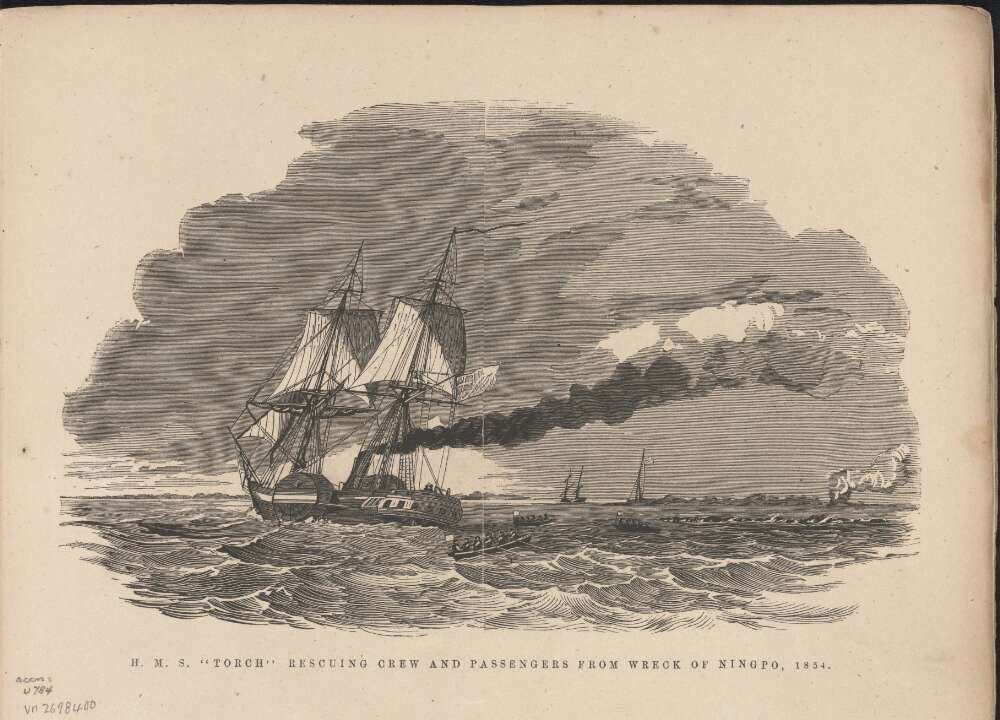
    HMS Torch rescuing crew and passengers from the wreck of the Ningpo, 1854. Illustration courtesy NLA.

       As Lieutenant William Chimmo was making HMS Torch ready for a return to sea, he was unexpectedly tasked with an urgent mission. Word had just reached Sydney that nearly 20 people had been marooned for two months on a remote island far out in the Coral Sea. By chance, his paddle steamer had just completed repairs and was eminently suited to the task at hand.

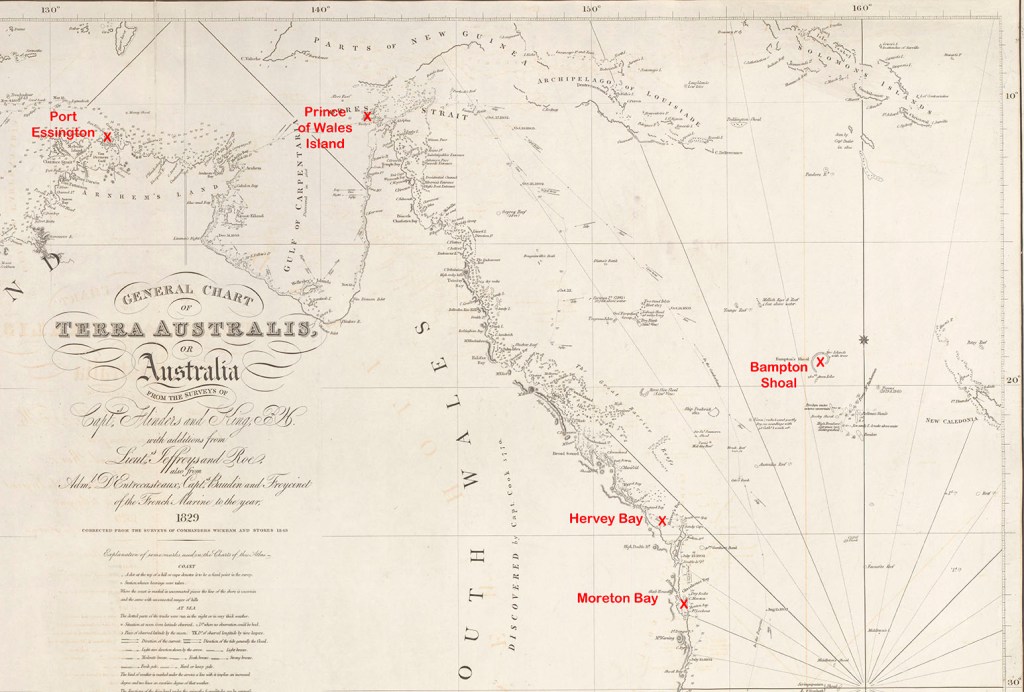
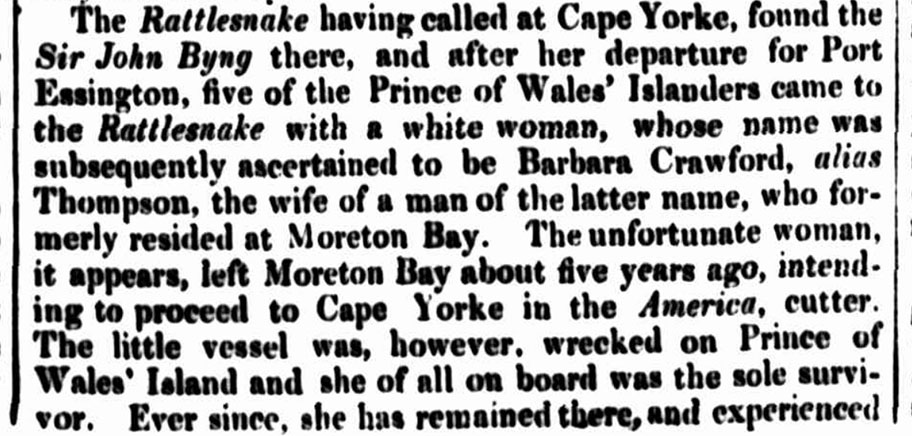
       Second Mate William Tough of the 150-ton junk-rigged schooner Ningpo had arrived in Sydney on 2 October 1854. He had staggered in to Moreton Bay with a tale of personal heroism and a plea for help to save his stranded shipmates, but there was no vessel there that could go to the Ningpo’s rescue. Tough was patched up and sent to Sydney on the next ship heading south.

       The Ningpo had departed Hong Kong on 15 April 1854, bound for Melbourne to take up new duties as a lighter in Hobson’s Bay. The voyage south had been a difficult one, plagued by storms, rough seas and a nagging leak which just kept getting worse. To add to Captain Billings’ woes, his chronometer stopped working. Unable to determine his longitude, accurate navigation had been reduced to nothing more than an aspirational stab in the dark. Billings decided they should pull into the French settlement at the Isle of Pines for repairs the Ningpo’s hull. But while still north of New Caledonia, he inexplicably changed his mind, opting to head for Moreton Bay instead.

       This meant sailing dangerously close to the D’Entrecasteaux Reef, a two-thousand-square-kilometre maze of submerged coral reefs, small islets, and sandbars. Its discoverer, French Admiral Antoine Bruni D’Entrecasteaux, called it “the most dangerous reef he ever saw.”

    Map of D’Entrecasteaux Reef

       By 8 p.m. on 28 July, Billings estimated that he was clear of those dangerous waters, but he was wrong. Minutes later, the Ningpo ran onto a submerged coral outcrop and began filling with water.

       Unable to get the Ningpo off, Captain Billings made the decision to abandon ship. He, his crew and two passengers made for a small sand island a few kilometres away. They set up camp using timber spars and canvas sails. They fabricated a still to distil fresh water from the sea. Food proved plentiful, as the waters surrounding the island teemed with fish, and the island itself was a nesting ground for turtles and was also home to thousands of seabirds.

       With their immediate necessities well catered for, thoughts turned to how they might escape. Their only means of leaving the island was a four-metre (13 ft) dinghy, the only lifeboat the Ningpo carried. Billings wanted to try to make the Isle of Pines about 600 km away, but his crew refused, fearing they would be killed by the inhabitants of New Caledonia long before they reached their destination. They wanted to send a small party to Moreton Bay, despite it being twice as far away. The captain and his crew were at an impasse.

       Even after they had been stranded for more than a month, they sill could not agree where they should go to seek help. Frustrated with the inaction, Tough and two others set off in the dinghy to make the perilous voyage to Moreton Bay without first seeking the captain’s permission. Billings was furious when he discovered that his boat, compass, and nautical chart were all missing. He was convinced that they would fail, and in so doing, Tough’s recklessness had condemned the rest of them to an endless stay on the island. However, most of the crew held on to the belief that they would soon be found by a passing ship. Billings was not so optimistic, for he knew he had taken his ship far from regular shipping routes and that no sailing ship would intentionally venture into these treacherous waters.

       But, despite Billings’ doubts, Tough and his companions reached Wide Bay on the Australian mainland 14 days later. As they beached their dinghy, a party of Aborigines attacked them, stole the boat and left them for dead. Ten days after that, however, the seriously injured Tough staggered into Brisbane, assisted by a couple of more hospitable Aborigines. Unfortunately, his companions were not so lucky, having died along the way. With no vessel available in Moreton Bay that could go to the rescue, Tough was sent to Sydney with a letter addressed to the Colonial Secretary, seeking assistance. After being stranded for more than 10 weeks, there was no guarantee that the Ningpo castaways would be found alive, but the authorities believed they were duty-bound to try.

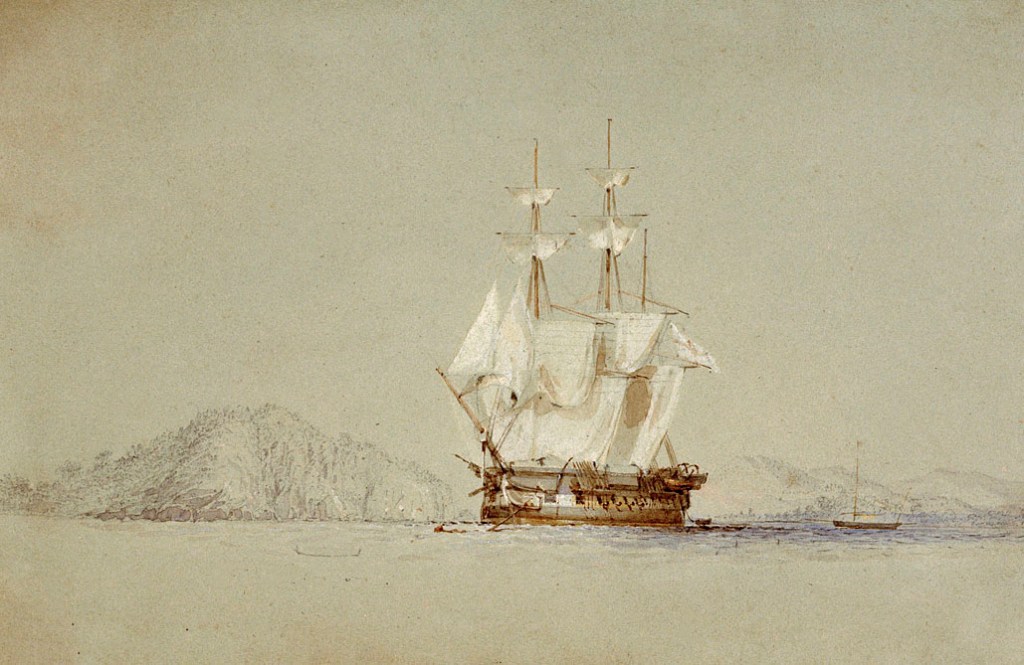
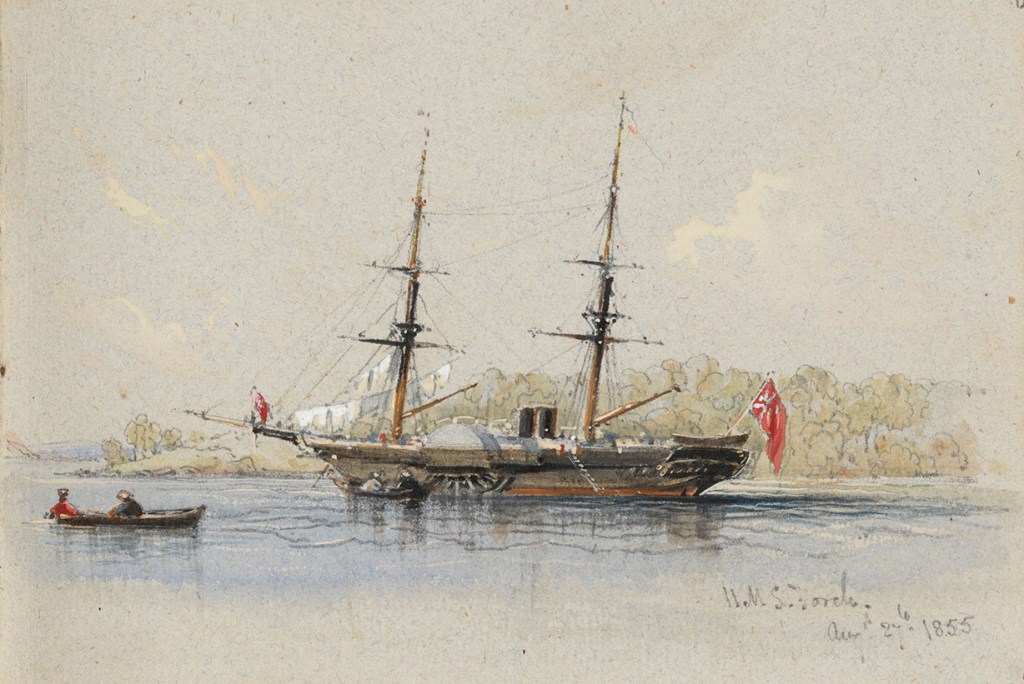
    HMS Torch at anchor, (probably in Sydney Harbour), by Conrad Martens. Courtesy State Library of NSW.

       Lt. Chimmo was ordered to steam out of port as soon as possible. Fortunately, his preparations to return to Fijian waters to continue his survey work were well advanced, so he was able to clear Sydney Heads the following night. He stopped in Newcastle only long enough to fill his coal bunkers before continuing north.

       Chimmo only knew that the Ningpo had run aground near a small island in the vicinity of latitude 18° 36’ South, the coordinate supplied by Tough and presumably recorded by Billings. The only charts available in Sydney that covered that stretch of ocean showed that the Ningpo was probably stranded somewhere near the Huon Islands. But the scale of the map offered little detail. HMS Torch would have to carefully pick its way through the reefs and shoals to find the castaways.

       The Torch battled unseasonal north-westerly winds for the first 11 days. Then the south-easterly trades finally resumed, and they made much faster progress. By mid-October, they had arrived at the search area, but then another delay beset them. Storm clouds began gathering, and Chimmo had no choice but to make for deeper waters until the weather cleared or risk the destruction of his ship.

       Meanwhile, Billings had finally convinced his men that they should wait no longer for help to arrive. After three months, it was clear that if they were ever to get off the island, it would be by their own means. He proposed building a boat from the remains of the Ningpo, and had already manufactured some rudimentary shipwright’s tools from cutlasses, knives and other metal objects they had salvaged from the schooner. Finally, his men realised they had a chance of success and embraced the idea. Unfortunately, the same storm that chased the Torch away also lashed their island, and Billings was forced to put their plans on hold for the time being.   

    When the storm finally cleared, Chimmo began his search of the Huon Islands. He sent search parties out in small boats to inspect each sandbar and islet they came across, but none showed any sign of recent habitation. Frequent rain squalls and strong winds hampered the search, and on one occasion, a boat capsized in the choppy seas, but no lives were lost. Then on the morning of 26 October, he spotted two islands in the distance.  

    The Ningpo wreck site. Map courtesy NLA.

       After the storm had passed, Billings and his men began preparing to go out to the Ningpo in a dugout canoe found in the bushy interior of the island. How it got there was a mystery, but it had been a godsend to the stranded sailors. But before they headed off to the wreck, a lookout spotted a ship in the distance, the first such sighting since they had landed. Signal fires were lit, and everyone lined the beach in anticipation of being rescued.

       As Lt Chimmo drew near to one of the islands, he saw two columns of smoke. Then, he spotted the stranded ship further off in the distance. Finally, he could make out people clustered on the beach. He fired a cannon to let them know they had been seen and gingerly made his way through the reef-strewn lagoon.

       Fearing the weather could deteriorate at any moment, boats were sent across the last couple of kilometres to collect the castaways. One of the first to step ashore was the Ningpo’s second mate, William Tough, who had volunteered to accompany the rescue. He had brought help, as promised, to the utter amazement of Captain Billings.   

    The whole boarding operation was completed that day. The Torch then sailed for Sydney, arriving on 10 December 1854, having completed a round trip of more than 4000 km.

    © Copyright C.J. Ison / Tales from the Quarterdeck, 2022.

    To be notified of future blogs, please enter your email address below.
  • The Orete’s Robinson Crusoe-like Castaway

    Schooner Orete (left), Donald Mackenzie (right)

       In January 1918, Donald Mackenzie found himself marooned on a tiny uninhabited island after his vessel sank during one of the most powerful cyclones to cross the Central Queensland coast.

       The tough 56-year-old Scott was a seaman on the coastal auxiliary schooner Orete, which had sailed from Maryborough bound for Mackay with a cargo of sawn timber. She was heavily laden. Once the hold had been filled, more timber had been stacked on deck, pushing her deeper in the water. The captain thought the tough little vessel could handle it and set off down the Mary River, where its mouth opened into Hervey Bay. Even as they crossed the usually calm waters protected by Fraser Island (K’Gari), they could see that the weather was deteriorating. As they bore north, the sea conditions got progressively worse. These were the days before ships carried radios, and little did they know a massive cyclone was forming ahead of them. By the time they reached the Percy Islands, and were only 200 km from their destination, the barometer plummeted. Huge seas pummelled the overloaded vessel. Rather than continue to sail into the encroaching storm, the captain decided to anchor in the lee of Pine Islet to ride it out.   

    However, as the cyclone approached the coast, the wind shifted, and the anchors began to drag. The Orete was blown from her anchorage under bare poles. They tried cutting away the deck cargo to lighten the load, but in the process, the captain broke his leg when the timbers moved. Then the mate tried to launch their lifeboat, but it was washed away before they could board it. In the end, the captain, the mate and two crewmen huddled below deck to see out the storm. Unfortunately, the schooner soon foundered, trapping all four men in the cabin to go down with the ship. Mackenzie and another sailor were only spared because they had been on deck when the schooner capsized. Both men were plunged into the heaving sea, but Mackenzie wore a life belt tied around his waist. He swam to a floating cabin door and held on as the storm raged around him. His mate was not so lucky and was never seen again. After four or five hours, Mackenzie washed up on a beach surrounded by flotsam from the wrecked ship.

    Orete survivor, Donald Mackenzie (right) holding his life preserver. Source: The Queenslander Pictorial Supplement, 9 March 1918.

       When the weather subsided, Mackenzie took stock of his situation. He had no idea where he had landed; he would later learn it was Tynemouth Island. The foreshore was littered with timber and other debris, but among the mess of litter, he found a few onions and pumpkins. They would be his sole source of food for the coming days. Perhaps key to his ultimate survival, he also found a crate of kerosene cans.

       A quick search of the small uninhabited island had revealed no permanent supply of water. So he emptied the kerosene cans of their contents and filled them with fresh water before the puddles dried up. Looking out from the east coast, Mackenzie could see another island, and he thought he could see several buildings. That would later prove to be Iron Islet.

       Without the means to make a fire or attract attention, Mackenzie resolved to build a raft to cross the expanse of water. He broke apart the kerosene crate and salvaged the nails. He then used them to fix long planks together to form a raft. After ten days, Mackenzie was ready to make the crossing to Iron Islet.   

    That time had not come soon enough. Hunger and the blazing hot conditions were taking their toll on him. Several days had passed since he had eaten the last of the raw vegetables, and he had been subsisting on shellfish smashed from the rocks ever since. During the day, there was no respite from the searing tropical sun. And, at night, he was tormented ceaselessly by mosquitoes and ants, making sleep all but impossible.

    Donald Mackenzie’s raft. Source: The Queenslander Pictorial Supplement, 9 March 1918.

       Mackenzie dragged his raft into the water and started towards Iron Islet using a broad timber plank for a paddle. But he was soon caught in a strong current ripping through the passage separating the two islands. He was swept along by the current, which threatened to take him out into the vastness of the Coral Sea. Mackenzie made the difficult decision to abandon his raft and swim back to Tynemouth Island while he still had a chance of reaching land.

       Disheartened as Mackenzie was, he knew he was growing weaker by the day. If he was ever going to survive, he had to build another raft. This one took him eight days to complete. Then, on Sunday, 10 February, he dragged his cumbersome craft into the water, straddled it, and started paddling away from shore.

       He was caught in the strong current for a second time. He used every ounce of strength his fatigued muscles could give him and inched the raft across the passage. After an almost super-human effort, Mackenzie reached the southern end of Hunter Island, north of Iron islet. There, he rested before setting off again to cross the one-kilometre channel that now separated him from his destination.    Again, he was caught in a powerful current. This one was even stronger than the last. He paddled furiously, but it was hopeless. He had no control over the craft, and as he looked back he could see the buildings of Iron Islet disappearing from sight.

    Mackenzie’s approximate course,

       At one time or another, most people experience that sinking feeling when success—so close at hand—slips away and all seems lost. This was Mackenzie’s darkest moment. He had survived the wreck that had claimed the lives of his shipmates. He had been cast away, Robinson Crusoe-like, on a deserted island for 19 days, suffering from hunger and exposure. He had built two rafts with his bare hands and escaped. But it had all been for nothing. Mackenzie was rocketing out into the vast Pacific Ocean, and there was nothing he could do to stop it. He was mentally exhausted, and the most recent frenzied paddling had left him physically spent. But as the channel widened, the current slackened and the raft’s headlong progress slowed.   

    Mackenzie looked towards an island to his right and could not believe his eyes.  There he saw sheep grazing in a field. With renewed spirit, he drew on his last reserves of energy and paddled towards shore. As he got closer, he saw the distinctive outline of a cottage roof partly obscured by trees. He kept paddling until the prow of the raft ran up onto a sandy beach, where he waded ashore on unsteady legs. He would soon learn he had landed on Marble Island. Most importantly, he had survived; his ordeal was over.

    The full story is told in A Treacherous Coast: Ten Tales of Shipwreck and Survival from Queensland Waters available through Amazon.

    © Copyright C.J. Ison / Tales from the Quarterdeck, 2022.

    To be notified of future blog posts, please enter your email address below.