Tag: barque

  • The 1909 Loss of the Norwegian barque Errol

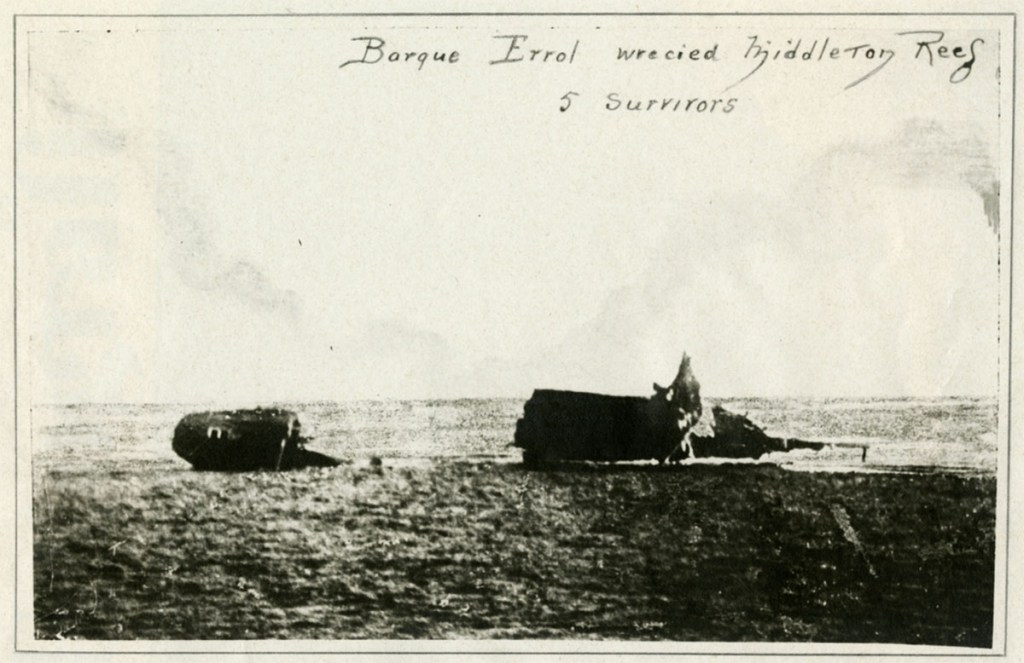
    The remains of the Errol on Middleton Reef. Courtesy: Norsk Maritim Museum.

    On 12 July 1909, the mail steamer Tofua was passing Middleton Reef in the Coral Sea bound for Sydney.    Captain George Holford gave the order to steam close by as was his want every time he passed.   This time, he noticed a new ship’s carcass had been added to the dangerous reef since he had seen it last.     Since the Britannia Godspeed ran aground on Middleton Reef in 1806, it and neighbouring Elizabeth Reef have claimed over 30 ships and countless lives over the years.

    Captain Holford steamed as close as he dared, then had a boat lowered to go across and investigate.   As the steamer neared the reef, he also noticed that some rags were flying from the mast of another ship, the Annasona, which had been wrecked two years earlier.  

    The boat soon returned with five survivors from the Norwegian barque Errol, which had run aground a month earlier with 22 souls onboard.  They had a tragic tale to tell.
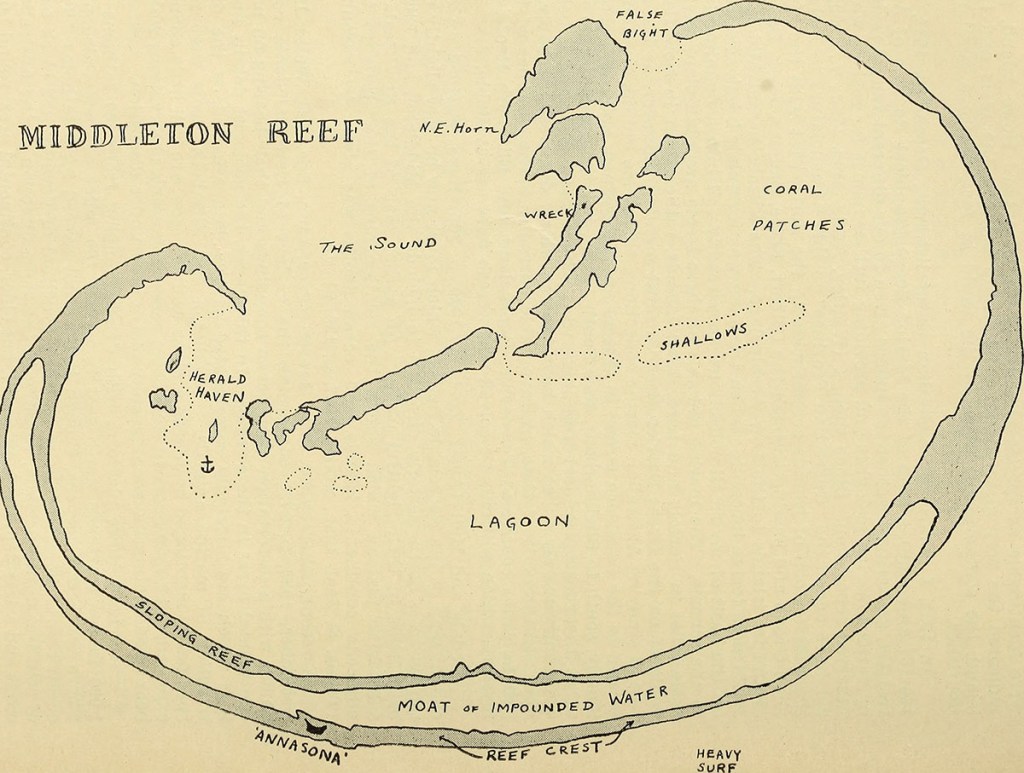
    Middleton Reef. Source: The Australian zoologist, 1934.

    The Errol had left the port of Chimote in Peru on 15 April, with a crew of 17 men and five passengers, comprising the Captain’s wife and four children.   The barque was headed to Newcastle to take on a cargo of coal.   However, disaster struck around midnight on 18 June when, without warning, the barque slammed into Middleton Reef.  

    The ship was swung broadside to the reef before there was even a chance to try and save her. The hull was torn out, and she rapidly settled with a heavy list to starboard.   Powerful waves swept over her, ripping apart the houses and washing away much of their stores along with the ship’s lifeboats.  She quickly succumbed to the pummelling and broke into four separate parts.    

    The First Mate was swept away and drowned as he and one of the crew tried vainly to clear one of the lifeboats.   Two more seamen also died that first night or on the second, the survivors could not recall.   Captain Andreason and the Second Mate were lost a couple of days later.   They had been on the reef, not far from the ship, building a raft comprised of spars and other timbers when they were caught by the rising tide.   Though they tried to swim back to the Errol, the current was too strong and they were washed away.  The Captain’s wife and children could only look on in horror. 

    The survivors were in dire straits.   The only food they had been able to salvage was a dozen loaves of bread, a few pounds of butter and a couple of tins of milk. What’s more, they had precious little fresh water.  A shelter of sorts was constructed on the exposed hull for the Captain’s wife and her children while the sailors made do with a canvas sail for protection from the elements. 

    Location of Middleton Reef. Courtesy Google Maps.

    Meanwhile, they continued to work on the raft.  After a few days, it was completed, and five of the crew set off for the Annasona, about 8 miles, 15 kilometres away, hoping they might find food and water.

    The raft barely held together long enough to reach the long-abandoned ship.  Fortunately, they found some fresh water, but the only sustenance available was shellfish clinging to the side of the wreck and the reef it stood on.  They spent 12 days on the Annasona building a more substantial craft to get them back to the Errol and their shipmates.  But before leaving, they hoisted a couple of shirts up the mast.   They had seen one ship pass by during their time there, but it had failed to see them or their signal of distress.   One of their number perished on the expedition across to the Annasona; however, a far greater tragedy had played out among those waiting on the Errol.

    When they climbed back aboard the Errol, they found only one man alive, Able Seaman Jack Lawrence, and he was barely clinging to life.   They had survived on a small amount of rain collected in the sails, but it proved almost as salt-laden as seawater.   Lawrence described how the others, including the Captain’s wife and children, had passed away one by one from thirst, starvation and exposure.  As each person died, their body was pushed over the side to splash in the sea. At least some of those corpses had been savaged by sharks, leaving the grisly spectacle of bones or body parts deposited on the reef at low tide.

    Photo of the Errol survivors. Daily Telegraph, 15 Jul 1909.

    All five men would likely have died on Middleton Reef had Captain Holford not made his customary search for castaways.   They were returned to his ship and cared for until they arrived in Sydney.   At a time before any sort of public safety net, the Tofua’s passengers generously donated over £100 to assist the shipwreck survivors get back on their feet.

    An inquiry into the tragedy heard that the Errol had experienced several days of overcast weather, where no astrological sightings could be made.   They were essentially sailing blind when they struck the reef.   One of the survivors also claimed that Captain Andreason had not taken the precaution of sending a lookout aloft to warn of any hazards in their path.

    For his act of humanity in rescuing the Errol survivors, Captain George Holford of the Tofua was later presented with an engraved silver coffee service by a grateful Norwegian Government.

    © Copyright C.J. Ison / Tales from the Quarterdeck, 2025.
    Sun sets over Flinders and Stanley Islands in Bathurst Bay with a fishing boat in the forground at Cape Melville on Cape York Peninsular, Far North Queensland. Photo Chris Ison / Wildshot Images.
  • The Countess of Minto’s brush with Disaster

    .

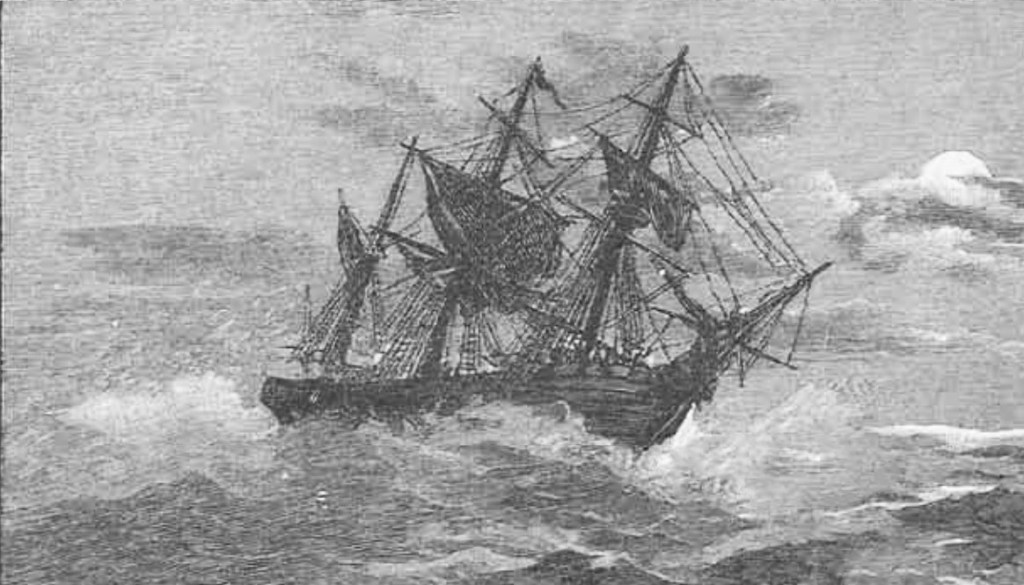
       In 1851, two men accomplished a sailing feat that few thought was possible. They had been the only hands on board the barque Countess of Minto when she was driven from her anchorage during a violent storm. The captain and the rest of the crew were left stranded on a remote desert island. Everyone thought the ship had foundered in the storm, but four weeks later, she sailed into Sydney Harbour. To everyone’s astonishment, the two men had survived and sailed their ship over 1000 kilometres to safety.

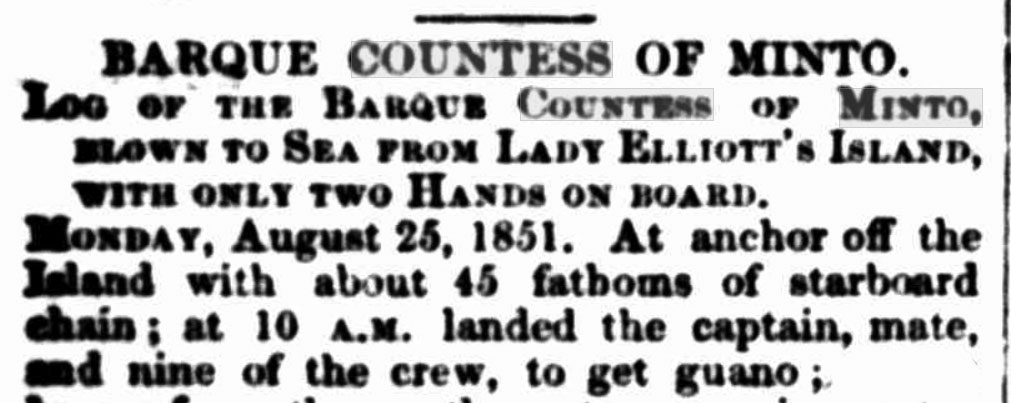
       On 25 August 1851, the 300-ton Countess of Minto was anchored off Lady Elliot Island on the Great Barrier Reef to collect guano, a valuable commodity at the time. John Johnson and Joseph Pass had just returned to the ship after taking the captain and the rest of the men ashore to dig for guano. Soon after the pair returned to the ship, the weather began to deteriorate.

       By midday, the wind was howling through the rigging, the seas boiled around the ship, and the deck was being lashed by torrential rain. It was now far too dangerous to take the jolly boat ashore to join their shipmates on the island. Johnson and Pass had no choice but to ride out the storm where they were.

       The two seamen let out the anchors as far as they would go, hoping they would remain firmly dug into the seabed. The ship surged and the chains strained with each powerful swell, and for a time they held.

       Then, around 11.30 that night, a very thick squall struck. The force of the wind and the seas was too great, and the anchors started dragging along the sea floor. The barque was swept out into the deep water of the Coral Sea, somehow missing the island and the nearby reefs. Johnson and Pass had no control over the ship as it bucked and tossed in the tumultuous seas. They could only pray that the vessel would not founder and they might survive the night.

       Johnson was the ship’s carpenter, and Pass was the steward. Neither was part of the regular sailing crew, but it is evident that one or perhaps both men possessed a wealth of sailing experience. And, at least one of them knew how to navigate using a sextant and a chronometer.

       The pair survived the wild night, and by the next morning, the wind had eased and the men could take stock of their situation. Lady Elliot Island was nowhere to be seen. In fact, no land at all interrupted the horizon in all 360 degrees. They checked for damage to the sailing gear and hull and were relieved to find the Countess of Minto had survived the storm with only superficial injury. The hull, masts, and sails were intact, but they were now drifting aimlessly under bare poles at the mercy of the wind and current.

       Both anchors were still dangling at the ends of 45 fathoms (90 metres) of chain. The deck was littered with ropes and other gear that had broken loose but had not been washed overboard. The longboat had been swept off the forward hatch and was now full of water and being dragged along behind the ship. The jolly boat, likewise, was trailing behind.

       They released the anchors after being unable to haul them up on their own. They set up a boom with a block and tackle and retrieved the two boats. Then they tidied up the deck. At midnight, they pumped eight inches of water out of the bilge and continued working through til dawn.

       They finally hoisted some canvas from the main mast and bore towards the south-east. For the first time since being swept from their anchorage nearly 36 hours ago, they had control of the ship.

    Sydney Morning Herald, 25 Sept 1851, p. 2.

       On Wednesday evening, 27 August, the winds picked up again after a day of blowing a gentle breeze. They now tried to set a north-westerly course so they could return to Lady Elliot Island and rescue their shipmates. But in the face of contrary winds and hampered by a lack of manpower, they struggled to get back.

       For the next eight days, the pair battled the wind and the seas, trying to make it back to Lady Elliot Island. However, despite their efforts, the ship continued to be pushed southward and away from the coast. The winds were blowing from the north, and each time they tried to beat to windward, they would be pushed further south. By Friday, 5 September, Johnson and Pass were utterly exhausted and were now further away from their shipmates than ever.   

    They finally decided to go with the wind and make for Sydney so they could get help. Now with the wind behind them ,they made good time. The Countess of Minto was off Port Macquarie four days later and only had another 300 km to go before reaching Sydney. There, they fell in with another ship, and its captain came over to see what assistance they needed. Stunned to discover there were only two men on board, he offered to crew the ship and take it the rest of the way to Sydney as long as they officially handed control to him. Johnson and Pass refused, knowing full well that the captain would then be entitled to claim salvage rights. Despite their exhaustion, they figured that they could make it the rest of the way by themselves. The captain left and later returned with a few of his men, offering their help with no strings attached. This time, Johnson and Pass accepted.

    Approximate course of the Countess of Minto.

       On 20 September, the Countess of Minto sailed into Sydney Harbour to be greeted by their captain, who had just arrived and reported his ship lost. Johnson and Pass were commended for their “meritorious conduct,” and the insurance underwriters rewarded each of them with £10.

    As fate would have it, the Countess of Minto would be lost a couple of months later after striking ground off Macquarie Island as the captain sought to finish filling his hold with guano.

    The Countess of Minto’s incredible story is told in A Treacherous Coast: Ten Tales of Shipwreck and Survival from Queensland Waters, available as an eBook or paperback through Amazon.

    © Copyright C.J. Ison, Tales from the Quarterdeck, 2022.

    Enter your email address in the form below to be notified of new posts.

  • The Loss of the Mandalay: Between a Rock and a Hard Place

    Postcard of the Mandalay of Farsund Norway which was shipwrecked at Mandalay Beach near Walpole Western Australia in 1911.

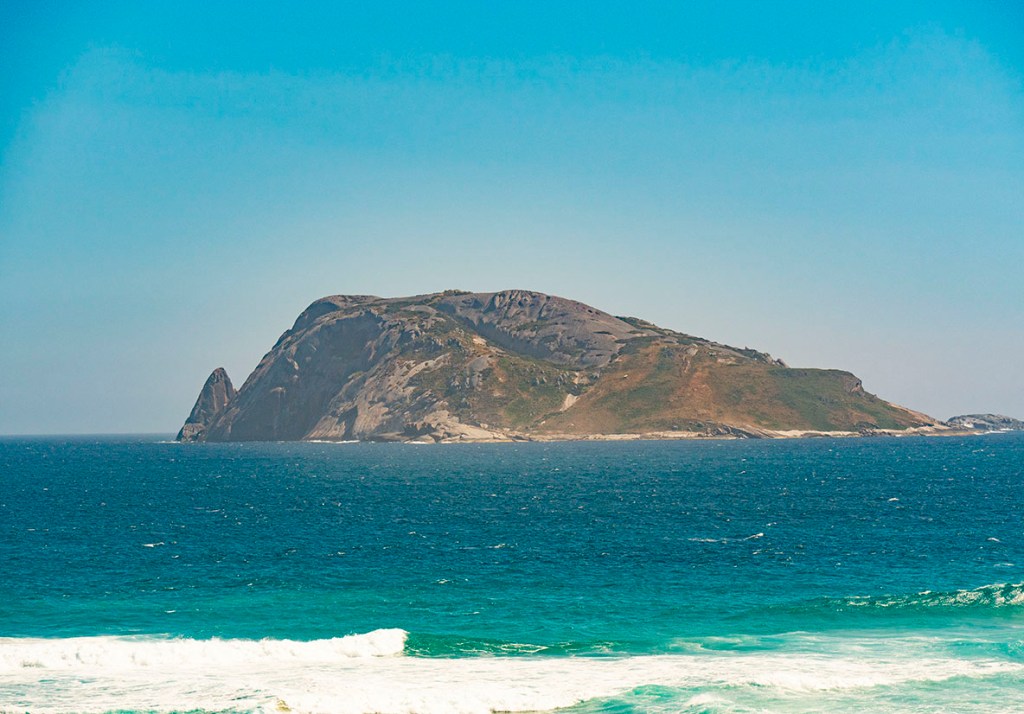
        As Captain Emile Tonnessen saw the sheer granite walls of Chatham Island loom into sight, he knew his ship and crew of 12 men were in serious trouble. He had been pushed dangerously close to Western Australia’s southern coast by unrelenting gale-force wind and high seas for the past several days. And now his 913-ton iron barque Mandalay was in imminent danger. His chart showed that, should he escape crashing into Chatham Island, there was still an uninterrupted line of cliffs beyond which he knew he could not avoid

       The Mandalay had sailed from Delagoa Bay (now Maputo), Mozambique, in early April 1911, bound for Albany WA to take on a cargo of Karri logs destined for Buenos Aires, Argentina. It was to be the 68-year-old captain’s final voyage before retiring to spend time with his children and grandchildren, whom he had seen little of during his more than half a century at sea. But for a last-minute change of plan, he would have returned to his home in Norway directly from Southern Africa.

       The voyage was largely uneventful until Saturday, 13 May, when they neared the Western Australia coast in the vicinity of Cape Leeuwin. The weather had rapidly deteriorated. South-westerly winds grew to hurricane strength, and mountainous seas washed over the vessel. All canvas was taken in, and the Mandalay was swept along under bare poles. The ferocious weather continued for two days, pushing the helpless vessel towards the rugged and sparsely populated coast.

       The crew tried everything they could to get control of the ship. But the only sail they could put up was on the fore-top mast. It was insufficient to deviate the ship from the course the storm was relentlessly pushing them. They had no chance of putting out into open water.

    Chatham Island viewed from Mandalay beach. Photo C.J. Ison.

       On Monday morning, 15 May, they cleared the kilometre-wide and 90-metre-high granite outcrop that is Chatham Island with only a few hundred metres to spare. Tonnessen later recalled that the waves were so large and powerful they crashed completely over the island as his ship raced past.

       While they had escaped being smashed against the granite slopes of the island, it was clear they would not be so lucky to get past the sheer cliffs of Long Point now lying somewhere ahead through the torrential rain. The captain took the only action he could.

       He would have to sacrifice his ship to give his crew a fighting chance of survival. In all his years seafaring, he had never been shipwrecked, but now he was going to deliberately run his vessel aground. It was no doubt made doubly hard for him, as he was a part-owner of the Mandalay, and he knew her to be underinsured.

    The Mandalay stranded on the beach.

       It was now about one o’clock in the afternoon. Tonnessen lined up to run the ship ashore on the only beach he could see, hoping for the best. The crew hoisted as much sail as they could, then donned their cork lifebelts and braced for the impact. About 100 metres from the beach, the bow struck the sand hard. The top main mast came crashing down, and the ship bounced along the seabed as successive waves lifted the ship and pushed it a little closer to shore. Then the Mandalay swung broadside to the ocean swells, and breakers crashed over the deck, sweeping it clean of anything not securely tied down.

       The crew lowered a lifeboat over the lee side, but the seas were too turbulent to safely cross the short distance to land. One of the young seamen, Knut Knutsen, tied a rope to his lifebelt and dived into the sea, intent on getting a line ashore.

       Unfortunately, the rope became entangled around his legs, and he floundered in the chaotic surf. Knutsen was close to drowning when a second sailor, Frank Ward, dived into the maelstrom to rescue him. Ward managed to get his friend to shore, and the two of them anchored their end of the rope. With one end of a line attached to the ship and the other end with Ward and Knutsen on shore, the lifeboat was able to ferry the rest of the men to safety.

    L-R Frank Ward and Knut Knutsen at Fremantle after the wreck of the Norwegian barque Mandalay. Photo published in the Western Mail, 3 June 1911, p. 27.

       The castaways were able to get sufficient materials ashore to build a shelter using some of the ship’s sails and spars. Unfortunately, they soon discovered that most of the food they salvaged had been contaminated with seawater.  They ate it regardless, figuring it was better than starving.

       They spent several miserable days camped on the beach, hoping they might be rescued. They placed a pole high on a sand dune with a distress signal flying. Several ships were seen passing in the distance, but none deviated from their course. Thonnessen knew it would have been suicide to try to get a boat ashore in the appalling conditions. But he hoped that at least one of the ships had seen the wreck and the fluttering flags and reported the disaster to the port authorities in Albany.

    The crew of the barque Mandalay. Photo courtesy Walpole Nornalup and District Historical Society.

       While Captain Tonnessen and the others remained camped on the beach, the first mate, Lars Gjoem, and two seamen set off on Tuesday, the day after the wreck, with compass and chart to see if they could find their way cross-country to the nearest settlement. Two days later, they returned to the beach cold, wet and exhausted, unable to find a path through the dense bush.

       On Friday, 19 May, the day after the party returned, the second mate, Frederick Fincki, climbed the highest hill behind the beach, and from that vantage point, he thought he could see a route through the maze of broken ground. He briefly returned to the camp to collect a staff and a knife and set off towards what he would later learn was Nornalup Inlet.

       He soon found himself wading through a swamp. But he doggedly pushed on for several hours, praying he would eventually reach dry land. Fincki made it to Nornalup inlet, arriving just as a local settler, Frank Thompson, was returning in his boat with supplies from Albany. Fincki was lucky, for that was a trip Thompson only did once every three months.

       Thompson, picked up Fincki and took him to his home, wondering to himself what would have happened had he not been passing when he did. It was bitterly cold, night was fast approaching, and the young Norwegian had been far from dry land. Thompson thought his chances of surviving would have been poor.

       The following day, Thompson, his son and the second mate returned to the beach to rescue the remaining men. Over the next several days, the shipwrecked sailors were cared for by Thompson and other settlers until they could be delivered to the small settlement of Denmark, located further down the coast. From there they were taken on to Albany, where they caught the train to Perth.

    Mandalay Beach with Long Point in the background. The wreck lies approximately in the centre of the photo. Photo C.J. Ison.

       Frank Thompson was presented with a gold fob watch by a grateful Norwegian Consul. Thompson and the other settlers who came to the crew’s aid earned the undying gratitude of Captain Tonnessen and his men. The Mandalay was never refloated and slowly rusted away on the beach that now bears her name. Its remains are periodically exposed when the conditions are right.

    ©Copyright C.J. Ison / Tales from the Quarterdeck, 2020.

    To receive notification of future blog posts, enter your email address below.