Category: South Pacific Islands

  • Loss of La Astrolabe and La Boussole: a 40 Year Mystery

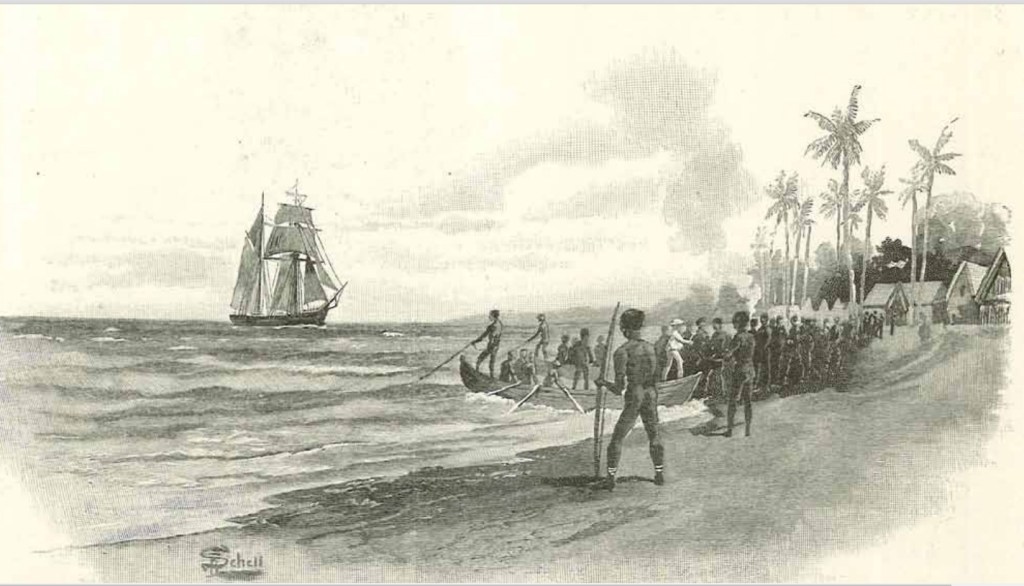
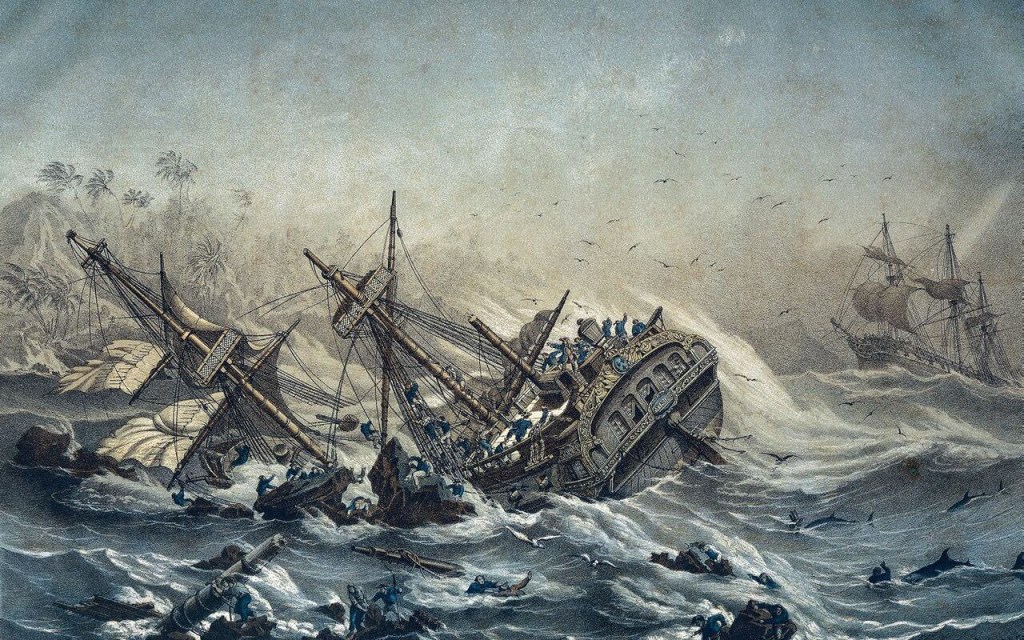
    19th Century lithograph of the sinking of La Astrolabe at Vanikoro by Louis Le Breton. Courtesy Public domain, Wikimedia commons.

    One of the great maritime mysteries of the late 18th and early 19th centuries was the disappearance of the French ships La Astrolabe and La Boussole under the command of La Perouse. They were last sighted leaving Botany Bay in 1788 but it would be another 40 years before the world discovered what became of them.   

    In 1785, Louis XVI appointed Jean-François Comte de La Perouse to lead an expedition of discovery to the far reaches of the world. The objectives were primarily scientific, but La Perouse was also to look out for economic opportunities that might benefit France. He was given two ships, La Astrolabe and La Boussole, with a total complement of some 220 men. The expedition included a botanist, geologist, physicist, astronomer, and several naturalists and illustrators – ten men of science in all. Even the ships’ two chaplains had received scientific training. Rarely had such a body of learned men been assembled for such a voyage.


    Louis XVI giving La Pérouse his instructions on 29 June 1785, by Nicolas-André Monsiau – Chateau de Versailles, Public Domain, https://commons.wikimedia.org

    The La Astrolabe and La Boussole sailed from Brest on 1 August 1785 and bore south into the Atlantic Ocean to round Cape Horn. They stopped briefly in Chile and then proceeded to the Sandwich Islands (now known as Hawaii). From there, they continued north as far as Alaska and then traced the North American coast south to a point that is now Monterey in California. La Perouse then took his two ships across the Pacific Ocean to the Portuguese colony of Macau and then headed north again. They arrived at the Russian outpost of Petropavlovsk on the Kamchatka Peninsula in September 1787 to find fresh orders awaiting them. The French Court was aware that the British had assembled a fleet of ships to sail for New South Wales. La Perouse was instructed to make directly for Botany Bay to investigate the new settlement being established there.   

    La Perouse arrived at Botany Bay on 24 January 1788, only days after the First Fleet under Governor Phillip had arrived from England. The French mariners spent six weeks there, resting and replenishing their food and water supplies. Before sailing, La Perouse left a package of letters, journals and charts with the captain of a returning British convict transport to be forwarded to Paris. In his correspondence, La Perouse wrote that he intended to sail to New Caledonia and the Santa Cruz Islands before turning back for home. They had been gone for two and a half years when they sailed from Botany Bay. He also anticipated that they would be back in France by June the following year. On 10 March 1788, the two French ships set sail and were never seen again, at least not by any Europeans.
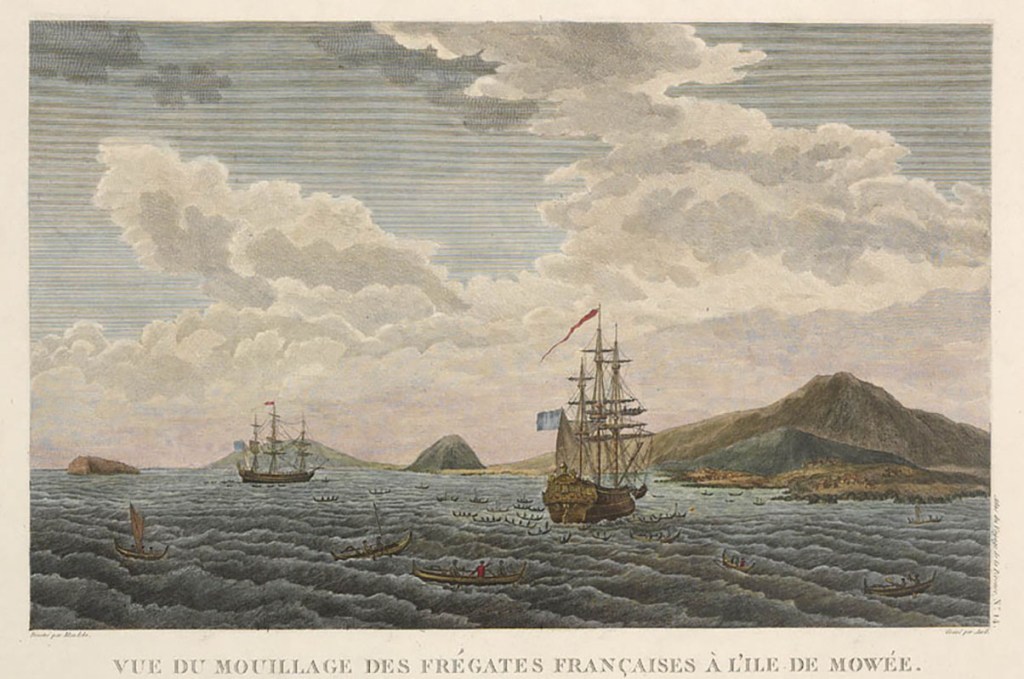
    French frigates La Astrolabe and La Boussole in Hawaii. Image courtesy State Library of NSW.

    Then, in 1826, an Irish mariner, Peter Dillon, made a startling discovery. While at Vanikoro, he came into possession of some artifacts clearly of French origin. He learned that relics from the French ships had been circulating among the inhabitants of Santa Cruz and neighbouring islands for years. On inquiring about the origin of the pieces, he was told that they had come from two large ships that had been wrecked there many years earlier.

       Dillon was sure the artifacts, one of which was a sword guard of French design, had come from La Perouse’s expedition. Upon returning to India, he reported his discoveries to the East India Company, which provided him with a ship to explore the waters around Vanikoro more closely.   

    In 1827, Dillon found the wreck site and retrieved several artefacts, including a bell which had clearly belonged to a French ship. He also learned from the older villagers on Vanikoro that the two French ships had run aground on a coral reef during a violent storm with great loss of life. The survivors had built a new vessel from timbers salvaged from the wrecks and sailed away. They had probably tried making for Kupang in the Dutch East Indies (Indonesia). That would have been the closest port where they might find help and passage back home. It would, however, require them to cross the Great Barrier Reef and pass through Torres Strait. Most of the French seamen left in the new ship, but a few men opted to remain on Vanikoro, where they lived out their days. By the time Dillon visited the island, they had all since passed away.

    Map showing Vanikoro and Murray Island. Courtesy Google Maps.

    There is a final clue as to what may have happened to La Perouse’s men who sailed away from Vanikoro. An Indian seaman had been found living among the inhabitants of Murray Island (Mer) in 1818. His name was Shaik Jumaul, a seaman on the Morning Star, which had been wrecked in Torres Strait four years earlier, while on a voyage from Sydney to Batavia.

       He said that he had come across many items of European manufacture, including muskets, cutlasses, a compass, and even a gold watch, while visiting nearby islands. When he asked where they had come from, he was told that about 30 years earlier, a large ship had been wrecked near Murray Island. Several boatloads of men came ashore, but a fight ensued, and most were killed. Some fled to other islands where they met the same fate. The only survivor was a young boy. He lived among the Islanders for many years and rose to be held in high esteem in his adopted community.

    Jean Francois Comte de La Perouse. Image: public domain, https://commons.wikimedia.org.

    More recently, ANU academic Dr Garrick Hitchcock came across the original newspaper article published in the Madras Courier in 1818. Jumaul’s story was later republished in the Sydney Gazette in July 1819. The Sydney Gazette article even speculated that the ship might have been one of La Perouse’s, but it appears that possibility was never seriously followed up.   

    Hitchcock thinks the vessel might have been the one constructed from salvage on Vanikoro. The timing certainly fits. After some detective work, Hitchcock discovered that a boy named Francois Mordelle had accompanied the expedition, and it was possible that he was the one who had lived among the Torres Strait Islanders for all those years.

    © Copyright C.J. Ison / Tales from the Quarterdeck, 2022.

    To be notified of future blogs, please enter your email address below.

  • The Wanderer and a Miraculous Rescue

    Schooner Wanderer. Painting by Oswald Brierly From the collections of the State Library of New South Wales, a128927.

    Far out in the middle of the Pacific Ocean, a seaman on board a small schooner thought his imagination was getting the better of him.     It was daybreak on 5 February 1850.   His ship, the 140-ton schooner Wanderer was en route from Sydney to San Francisco and still under storm canvas having just survived a powerful storm.  

    They had sailed from Sydney three months earlier and were slowly island-hopping across the Pacific.   The ship’s owner, Scottish entrepreneur Benjamin Boyd, was in no great hurry.   He was still licking his wounds after the spectacular failure of his grandiose enterprises centred around Boydtown at Twofold Bay (near present-day Eden on the NSW south coast).   He now hoped to turn his luck around on the booming California goldfields.     

    Most recently the Wanderer had departed Papeete in the Society Islands (French Polynesia) bound for Hawaii.  It was on this leg of their voyage that they weathered the cyclonic conditions and performed a miraculous rescue.

    Benjamin Boyd portrait. Source: Australian Town and Country Journal 29 Aug 1906 Page 28.

    The sailor reported that he thought he had glimpsed something bobbing in the mountainous seas even though they were hundreds of miles from land.   A man was sent aloft with a telescope and after a few minutes he called down that there was a whaleboat in distress several miles to windward.   The Wanderer bore down on the stricken craft and discovered it contained six occupants.     

    The seas were still running high and it was not until their third attempt that a line was got across to the boat.   The only words the men on the Wanderer could discern were plaintive cries for water.   Then all six passengers, three men, and three women were hauled across and safely got aboard the schooner, very lucky to be alive.

    It turned out the whaleboat belonged to Jose Davis, “a Brazilian man-of-colour”1 who had since resided in Hawaii for the past 17 years.   With his wife and four others, (all South Pacific Islanders) he had set off from Oahu nine days earlier intending to reach Maui.    They were only about 50kms from home when disaster struck.

    The whaleboat was caught in a severe storm that raged for days.   The sail was ripped to shreds and they lost their rudder during the tempest which made the whaleboat uncontrollable.   What’s more, the planking had sprung so they were also taking on water.    The boat drifted at the mercy of the wind and waves for nine days and it was ultimately pushed some 600kms south.   They had no drinking water and the only food Davis and his comrades had was a few pumpkins.  

    Map of the Pacific Ocean showing where the whaleboat was found.

    But Jose was not one to give up hope.   Once the weather abated, he planned to use the women’s dresses to make a new sail and then bear east towards the South American coast using the sun and stars to guide him.  

    With the new passengers on board and being cared for, the Wanderer continued north to Hawaii.   The whaleboat sank shortly after it was abandoned.   In time Jose and the others were landed at Maui to be reunited with their astonished and grateful families and friends who had since given them up for dead.

    The Wanderer continued on to San Francisco, but Boyd failed to strike it rich on the goldfields and decided to return to Australia.   On the homeward voyage, they stopped at Guadalcanal where he vanished while out hunting.   His body was never found.

    1.      Colonial Times, 31 May 1850, p. 4.

    © Copyright C.J. Ison / Tales from the Quarterdeck, 2022.

    Please enter your email address below to be notified of future blog posts.

  • The Douro and its Piratical Captain

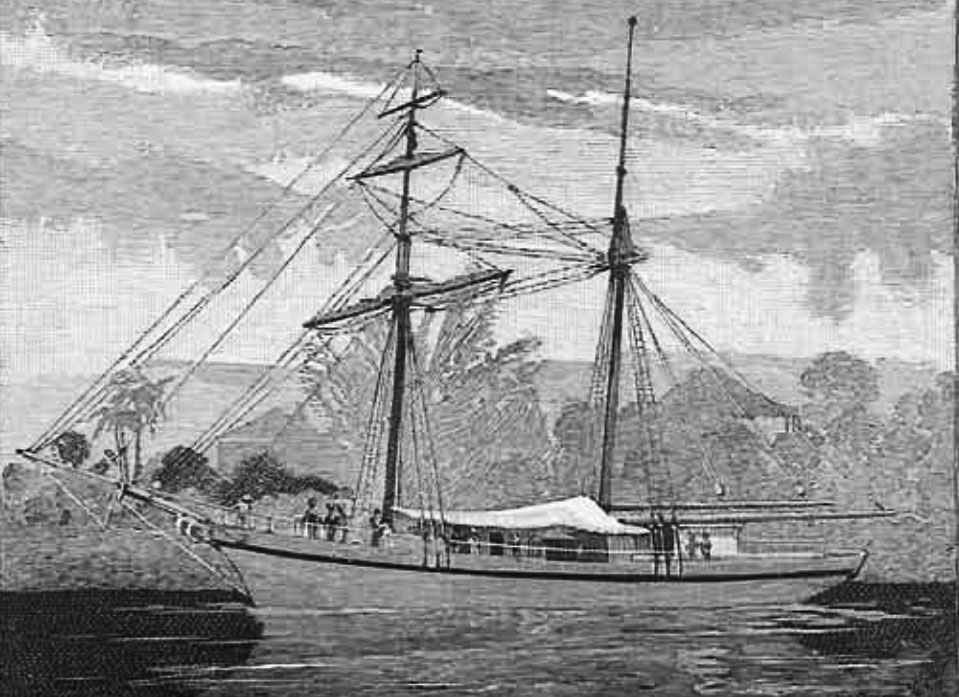
    A typical trading schooner in the South Seas. Source: Picturesque atlas of Australasia, 1886.

       In the 19th Century, the ship’s captain often considered himself the undisputed master of his vessel, especially when they were at sea. Most, to varying degrees, kept a rein on their power, while others ruled with an iron fist. Then there were those tyrannical few, like Neil Peter Sorensen, who went completely rogue. And, out among the South Pacific islands where the Royal Navy only sporadically patrolled, there were few restraints on those bent on causing trouble.

       In August 1885, a portion of the crew from the schooner Douro put ashore in Cooktown with a harrowing tale of kidnapping and piracy. The culprit, they said, was their own former captain. The Douro’s first mate, Otto Ashe, and two other seamen told authorities that Captain Sorensen was out of control and terrorising communities in the Solomon Islands. They had grown so concerned with Sorensen’s behaviour that they preferred to risk being charged with deserting their ship than to be implicated in their captain’s depredations.

       As he and the others had only joined the Douro in Sydney four months earlier, they had no idea what they were signing on for. Until recently, the Douro had been registered as a British vessel named the Albert, and as such, had been subject to British laws. The ship’s owner registered her as a Portuguese-flagged ship at that country’s Sydney Consulate. They claimed they had done so to save their ship from being seized in the event of war breaking out between Britain and Russia, a genuine concern at the time. In reality, the change in registration and name had more to do with placing the ship and its captain outside the bounds of the British legal system. Sorensen was installed as the Douro’s new captain. He was formerly the Albert’s first mate and was no stranger to the South Pacific or operating outside the law. But this would be his first taste of command.

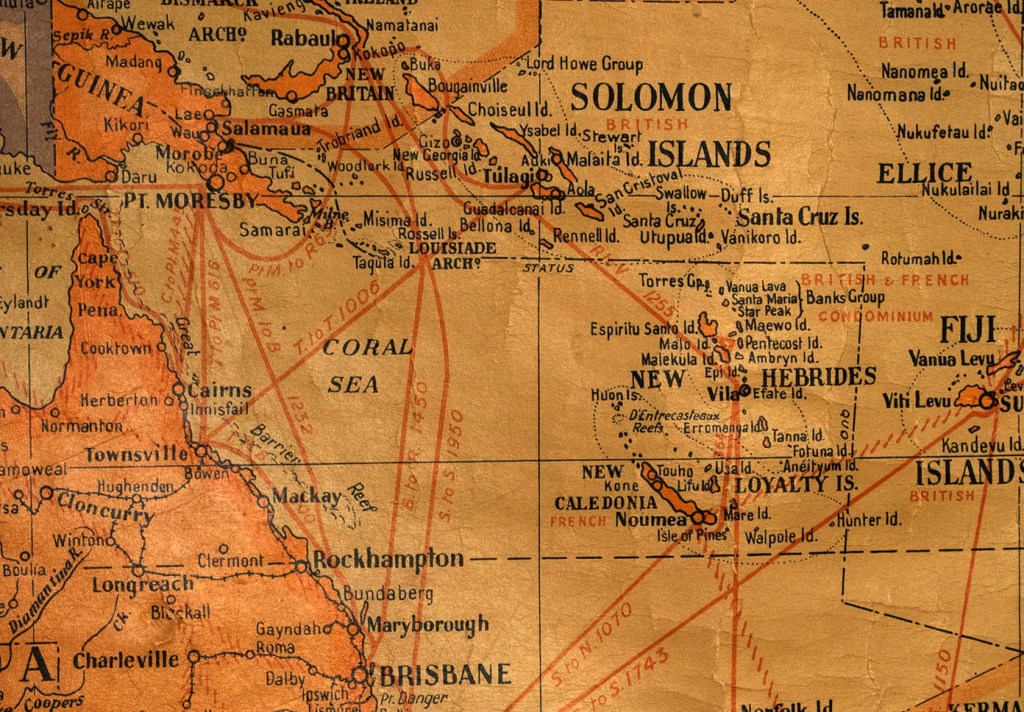
    Map showing Australia and the Solomon Islands.

       The Douro sailed from Sydney in late April, on a fishing venture around the Solomon Islands. Pearl shell and beche-de-mere both commanded high prices in Sydney, but Sorensen needed to hire local divers. Sorensen landed at a village on San Cristobal Island for recruits, but the village chiefs remembered him from a previous visit. Sorensen had promised to return the men at the end of his last fishing trip, but he never did. Now, no one trusted him.

       Sorensen was forced to go further afield to find his much-needed divers and fishermen. The Douro stopped at a couple of other islands and was able to recruit men on the promise that they would be gone from their villages for only four or five months. This was a lie, for Sorensen expected to be away for at least a year and probably longer.   

    As time passed, the situation on the Douro became intolerable for the crew. Otto Ashe claimed that Sorensen relentlessly bullied and threatened his men. While anchored off Guadalcanal, he beat the schooner’s cook senseless over some perceived infraction of his rules. None of the crew was prepared to stand up to him, for Sorensen was always heavily armed. But as bad as the treatment of his white crew was, it was nothing compared to how he treated most of the Solomon Islanders.

    Newspaper coverage at the time.

       At Isobel Island, he had two chiefs forcibly brought out to the schooner and only released them in exchange for six recruits. Off Wagina Island, the Douro came across a chief and several of his men out fishing in their canoes. He welcomed them aboard and then invited the chief to dinner in his cabin. Sorensen clapped the chief in irons and kept him hostage. He then went back on deck armed with a rifle and ordered the rest of the Islanders to leave. Sorensen only released the village chief after his people had handed over 4000 beche-de-mer, 24 sea turtles, a pig and three “boys,” whom he would exploit as unpaid labour.   

    On one of the Carteret Islands, he took his plundering to a new level.   Sorensen kidnapped four girls and brought them back to the schooner for the men’s entertainment. He then went ashore, armed to the teeth, at the head of a band of Solomon Islanders who had no qualms about following his orders. Sorensen forced the local chief to sign over possession of the island to him. Sorensen and his men then went from hut to hut, gathering up all the weapons. The haul included an assortment of traditional spears, clubs, and tomahawks, as well as an old Snider rifle and two shotguns. After everyone had been disarmed, he forced the menfolk to collect pearl shell and beche-de-mer on his behalf.

    A typical South Sea Islands trading schooner circa 1885.

    By now, the first mate had seen enough and wanted no part of it.   Fearing that Sorensen would continue his reign of terror through the islands, he took the first opportunity to escape. On 23 June, he took off in the schooner’s longboat with two other white seamen and seven Solomon Islanders. They landed in New Britain and reported Sorensen’s crimes to the German Consul there. They then set off in the boat for Australia, eventually landing at Cooktown, where they told the Queensland authorities the same story.

       When the Douro finally sailed into Brisbane in March the following year, the police were waiting. The schooner was seized, and Sorensen was charged with assault and robbery and placed under arrest. He was also charged with sodomy, but that was later dropped because the principal witness was “now in a lunatic asylum,” as the Brisbane Courier reported it at the time. Sorensen denied all the allegations, but a jury found him guilty, and he was sent to prison for ten years. While this episode was particularly heinous, it is a sad indictment that the conviction and hefty sentence were unusual for the times.

    © Copyright C.J. Ison / Tales from the Quarterdeck, 2022.

    1    Brisbane Courier, 25 Mar 1886, p.6.

    To be notified of future blog posts, please enter your email address below.
  • The Norna and the Conman Commodore

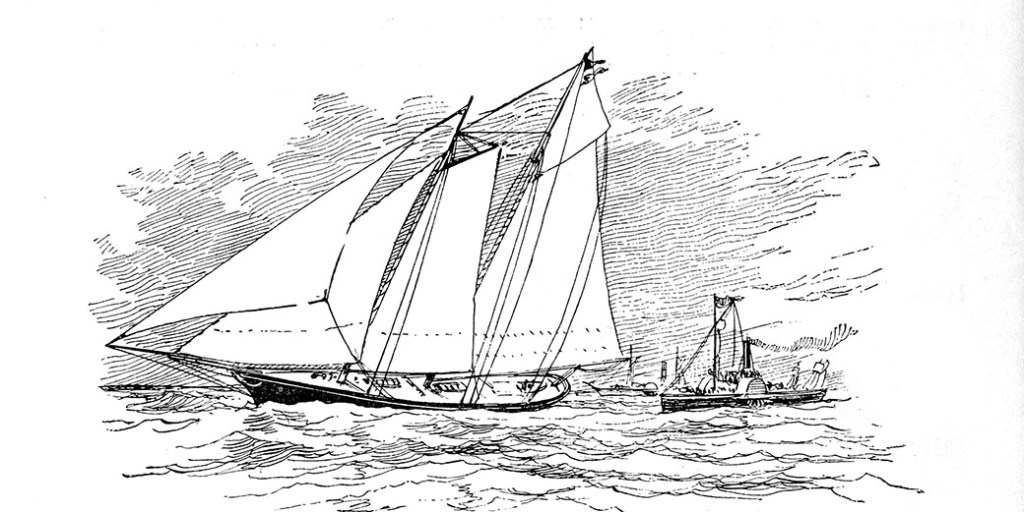
    The Norna’s sister ship Cornet.

       In the early 1900s, many hard-working sailing vessels saw out their days plying the waters between Australia and the islands of the South Pacific. Few, however, would have had such a fascinating history as that of the Norna.

       The Norna was built in New York in 1879 as a luxury ocean-going schooner rigged yacht. She was lavishly fitted out and built to be a fleet-footed racer. For the next decade or more, she held her own in many long-distance ocean races.

       Then, in 1895, she was purchased by self-styled “Commander” Nicholas Weaver, who claimed to represent a Boston newspaper empire seeking to establish a presence in New York. He was, in fact, a brazen conman.

       A few years earlier, Weaver had fallen foul of the law and only escaped gaol by testifying against his partner. He then hustled himself off to the West Coast, where he no doubt perfected his craft.

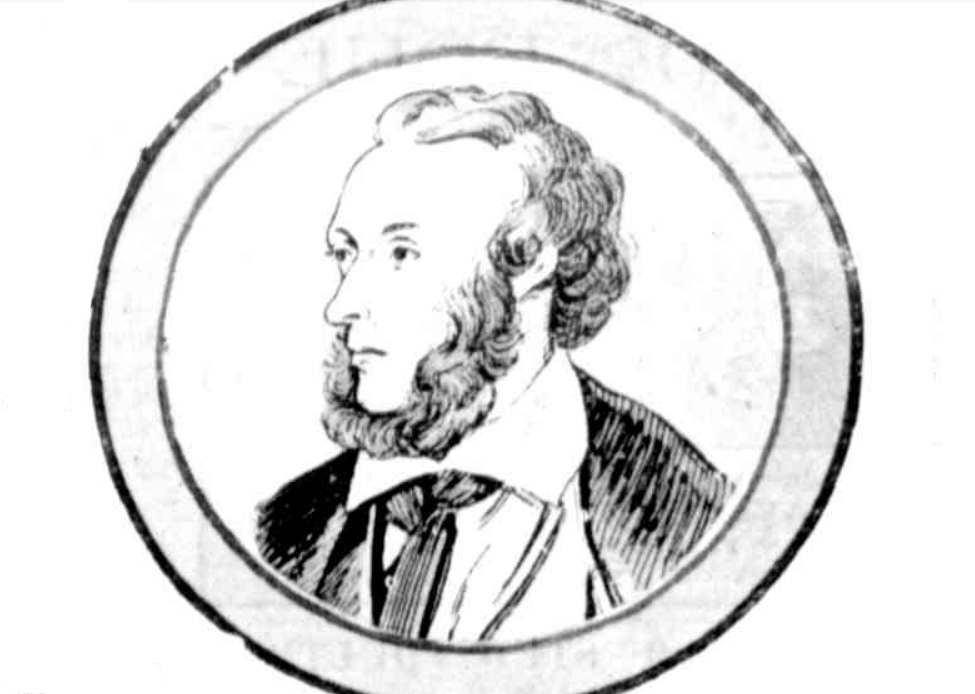
    Nicholas J Weaver, The Pacific Commercial Advertiser (Honolulu), 17 April 1900, p. 7.

       Now back in New York, he planned to take the Norna on a round-the-world cruise, sending back stories of his adventures which would be syndicated in America’s Sunday newspapers. He found several financial backers willing to cover his expenses in exchange for a share of the syndication fees. They founded a company, and Weaver sailed for the warm climes of the Caribbean.

       There, he made himself a favourite among the members of the Royal Bermuda Yacht Club, representing himself as the “Acting Commodore” of the prestigious Atlantic Yacht Club. The good people of Bermuda were not necessarily any more gullible than anyone else whom Weaver had separated from their money. But when someone sails into harbour aboard a 115-foot luxury yacht with a sailing crew of ten plus a cook and steward, few questions are likely to be raised. It also helped that Weaver himself was handsome, self-assured, and very charismatic.

       Weaver lived life to the full and spared himself no expense. He began hosting poker parties on his yacht, inviting only Bermuda’s most well-heeled residents. Though he proved to be uncannily lucky at cards, the winnings could not have covered his expenses. He funded his lavish lifestyle by chalking up credit with local merchants where possible, passing dud cheques if necessary, or forwarding invoices to his financial backers in New York.

       However, it was only a matter of time before things began to unravel. But before the inevitable day of reckoning, Bermudans awoke one fine morning to find the Norna and its flamboyant owner had cleared out in the dead of night.

    Yacht Norna leaving Honolulu. The Pacific Commercial Advertiser (Honolulu), 17 April 1900, p. 7.

       Weavers’ backers eventually realised they had been scammed and that they would never recoup their money. They wound up the company and stopped sending him money. But that did not deter Weaver from continuing on his round-the-world cruise.

       He visited many ports over the next couple of years, where he dazzled the wealthy with his largesse, while taking them to the cleaners at the poker table. He cruised around the Mediterranean, stopping long enough to run his con but always skipping out before debts became due.

       At the outbreak of the Spanish-American War, in April 1898, he and his American-flagged Norna found themselves in hostile waters. Realising his yacht might be seized, he set sail at his best speed with the Spanish navy in hot pursuit. Despite Weaver’s many character flaws, he was a superb mariner. Thanks to his skill and the luxury yacht’s fast sailing lines, the Norna outpaced the Spaniards, crossing into the safe waters of British-owned Gibraltar. There, he repaid his welcome by passing a fraudulent cheque for $5,000 and was once again on his way.

       During his travels around Europe, Weaver made the acquaintance of a man named Petersen, a fellow grifter. Together, they would prove a formidable team.

       Weaver and Pedersen would arrive in a new city independently, only to be introduced to one another by someone local, or they would fabricate a chance meeting as if they were strangers. Regardless of how they met, the result was always the same. They would get a high-stakes poker game going where one or the other would clean up.

       When Weaver reached Ceylon (present-day Sri Lanka), he was introduced to Petersen, who just happened to have recently arrived by steamer. They quickly got to work separating the wealthy from their wealth before moving on again. The pair repeated the same stunt in Sumatra, in the Dutch East Indies (now Indonesia), as well as in Hong Kong and Yokohama, Japan. At each port, they fleeced the local high society and vanished before alarm bells rang.    In Yokohama, Weaver passed himself off as the commodore of the New York Yacht Club and flew its pennant from his vessel. Weaver and Pedersen befriended each other and enjoyed many an evening with others playing poker on the Norna. Then, one morning, the yacht was gone. Pedersen joined the chorus baying for Weaver’s blood, claiming he, too, had been taken for a fortune. He then quietly slipped away on the next steamer leaving port.

    Schooner Norna circa 1911 now sporting a cabin on her aft deck. The Sun, 17 July 1911, p. 1.

       From Yokohama, the Norna made its way to Honolulu, where Weaver and Petersen briefly reunited. But when Weaver left Hawaii, Petersen remained. It seems as though the partnership had come to an end. The Norna stopped at Samoa long enough for Weaver to fleece the locals, then sailed on to New Zealand. At Auckland, Weaver began his now well-honed con, though this time without the able assistance of Petersen.

       Weaver racked up considerable debts, but before he could make his departure, the Norna was seized as surety. Realising the game was up, Weaver caught the next steamer bound for Sydney, vowing he would return to Auckland with the necessary funds to have his beloved yacht released. Not surprisingly, he vanished, and the yacht was put up for sale. It was purchased by a Sydney merchant and brought across the Tasman in June 1900.

       The Norna was stripped of her luxurious fittings, and the cabins were removed to make way for a spacious hold more fitting for her new working life. The Norna passed through several hands over the next 13 years. She served as a pearling lugger in Torres Strait and a trading vessel among the Pacific Islands. One owner even used her to salvage copper and other valuables from old shipwrecks far out in the Coral Sea. But, in June 1913, she, herself, was wrecked on Masthead Reef 50 km northeast of Gladstone Harbour. So ended the Norna’s fascinating and colourful career.

    © Copyright Tales from the Quarterdeck / C.J. Ison, 2022.

    To be notified of future blog posts, enter your email address below.