Category: New South Wales

  • Sydney’s First Convict Escape by Sea – 1790

    One of the first concerted efforts to escape from Sydney that did not involve trying to stow away on a homeward-bound ship took place in the latter part of 1790. Convicts, John Turwood, George Lee, George Connaway, John Watson, and John Strutton stole a boat and headed out to sea.

       Turwood and his mates had endured unimaginable hardships since leaving England, for they had come out on the infamous Second Fleet. Unsanitary living conditions and malnutrition had taken their toll on the voyage out. One-quarter of the 1006 convicts who left England died before ever reaching New South Wales. Of those who were put ashore, nearly 500 were immediately hospitalised. Of those, 124 would soon be dead. By September 1790, Turwood and his mates had been in the penal settlement for just eight weeks, but they had no desire to remain any longer to see if their fortunes might improve.

       Strutton had tried to escape once already. He had been smuggled aboard the Neptune and hidden among the firewood shortly before she was to sail back to England. However, sentries found his hiding place, and he was taken off the ship. He was flogged for trying to abscond, but the punishment only made him more determined to try again.

    Map of Sydney Cove Port Jackson, April 1788. Published by R. Cribb, London, 1789 original attributed to Fowkes, Francis – National Library of Australia, http://nla.gov.au/nla.map-nk276

    Soon after sunset on the night of 26 September, the five convicts stole a small flat-bottomed punt at Rose Hill and rowed down the Parramatta River into Sydney Harbour. Crammed in the small boat with them was one week’s supply of food, some cooking pots and other utensils, a few spare clothes and some bedding. At Watson’s Bay, just inside Sydney Heads, they put ashore and found another, much larger boat. Though it did not look particularly sturdy, it did have a mast and sail. Despite its shortcomings, the runaways thought they would have a better chance of surviving the open ocean in the larger boat. They transferred their belongings and headed out through Sydney Heads. By the time the bolters were reported missing and the two boats stolen, they were well on their way.

       Turwood had told friends before he had set off that they were going to sail to Tahiti, a place elevated in his mind to a tropical paradise where they could live freely among the Islanders. Tales from sailors who had visited Tahiti and other Pacific Islands had returned to England with fanciful stories about their time spent there. However, just how he intended to accomplish the 6,000-kilometre voyage without a sextant, charts, a compass, or any other navigation aids is a mystery.

       John Turwood was serving a life sentence for highway robbery. George Lee and George Connaway had stolen a pair of bullocks valued at £20. They had been sentenced to death, but that was later commuted to transportation for life. Watson and Strutton were each serving seven-year terms for stealing. Though nothing in their convict records suggests any of them had a nautical background, at least one of them knew how to handle a small vessel under sail.

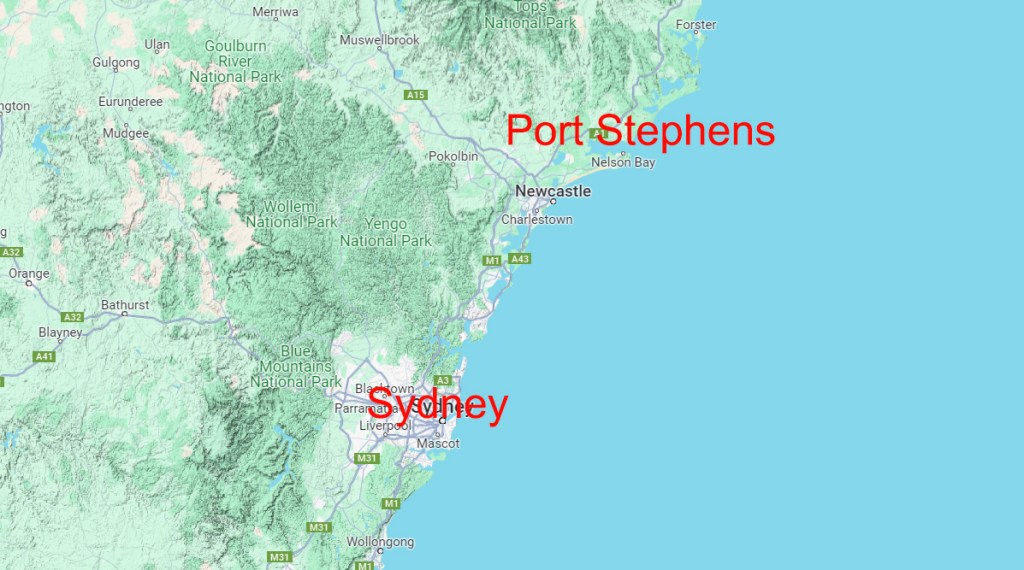
        After leaving Sydney Harbour, they set a course north, always remaining close to the coastline. When the sheltered waters of Port Stephens beckoned, they pulled in, and that’s where they stayed. After sailing 150 km, that was as close as they got to Tahiti. The local Aboriginal people, the Worimi, made them welcome and adopted them into their community. Over time, Turwood and the others learned to speak their language and were given Worimi names. They also seem to have undertaken formal initiation rituals, and at least a couple of the men took wives and began raising their own families. However, life was a constant struggle for the men, who were unaccustomed to the diet and customs of the Worimi people, especially in the beginning. Strutton died, although the circumstances and date of death were never recorded. Nonetheless, the other four lived there for five years and would have remained longer had a British warship not shown up.

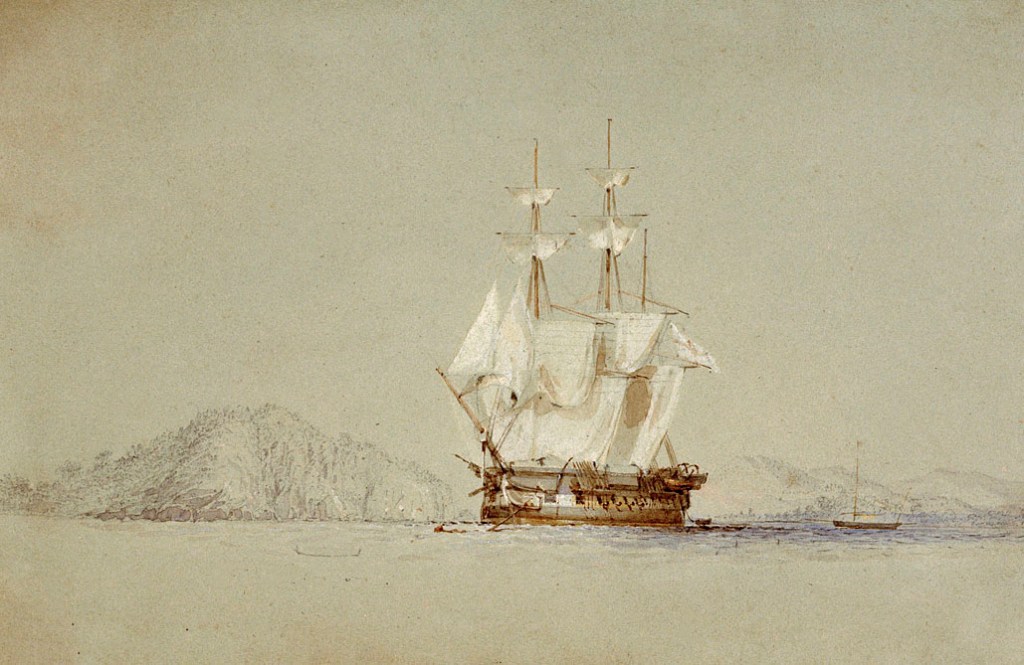
       HMS Providence pulled into Port Stephens in mid-August 1795. She had just crossed the Pacific Ocean but had been unable to enter the Heads because of a strong westerly wind blowing off the land. Captain Broughton thought he would wait a few days in these sheltered waters before trying again. While there, he discovered Turwood and the other three white men living with the Aborigines. Broughton described them in his log as “miserable, half-starved objects, depending on the hospitality of the natives for their subsistence …” He offered to return them to Sydney, assuring them that they would likely not face punishment. Lee, Connaway and Watson immediately accepted the offer; however, Turwood was initially reluctant, but Broughton was eventually able to convince him to return as well. The arrival back in Sydney after a five-year absence was met with considerable surprise and of the runaway convicts in Sydney caused some consternation among the authorities, for they had long been given up for dead. But, true to Broughton’s word, they appear to have escaped punishment. Perhaps the Governor thought five years in the wilderness had been punishment enough.

    Families camped in the Port Stephens area, New South Wales, 1826 by Augustus Earle. Courtesy National Library of Australia.

       John Turwood and George Lee would flee from Sydney again in September 1797. They joined 13 other runaways who seized the small colonial cutter Cumberland near the mouth of the Hawkesbury River. After putting the captain and crew ashore, they headed out to sea. Neither the Cumberland nor the runaway convicts were ever seen again.

      © Copyright C.J. Ison / Tales from the Quarterdeck, 2025.

    Please enter your email address below to be notified of future blogs.

  • BOLTERS: An Unruly Bunch of Malcontents

    Convict crewed boats crossing the bar to unload ships at Norfolk Island. Courtesy National Library of Australia.

    More than 160,000 of Britain’s most unwanted souls were banished to Australia between 1788 and 1868.   These convicts ranged from petty thieves to hardened criminals.   Fraudsters, burglars and pickpockets rubbed shoulders with highway robbers, rapists and murderers in the fetid prison cells of transport ships bound for Australia.    Political prisoners, social reformers and ordinary men and women struggling to feed their families also found themselves trapped in a brutal judicial system determined to rid Britain of its undesirables.  

    The vast majority of these men and women made the best of the hand fate had dealt them.   They earned their freedom and took up land and farmed it, started businesses, married, raised children, and helped found the country we know today.   But this book is not about them.   Library shelves are lined with volumes praising the accomplishments of those worthy and not-so-worthy folk.   Rather, Bolters tells the stories of those unruly malcontents who stepped ashore and thought, “This place is not for me,” and began plotting their escape.  

    Those who tried to abscond and failed, or flout any of the many other rules and regulations governing their lives were often sent to places of “secondary transportation.”   These isolated penal settlements established at Newcastle, Port Macquarie, Moreton Bay and Macquarie Harbour were intentionally harsh.   They were places where floggings were frequent, work was backbreaking, living conditions were wretched and life expectancy was short.     Norfolk Island would later surpass them all for its brutality.  

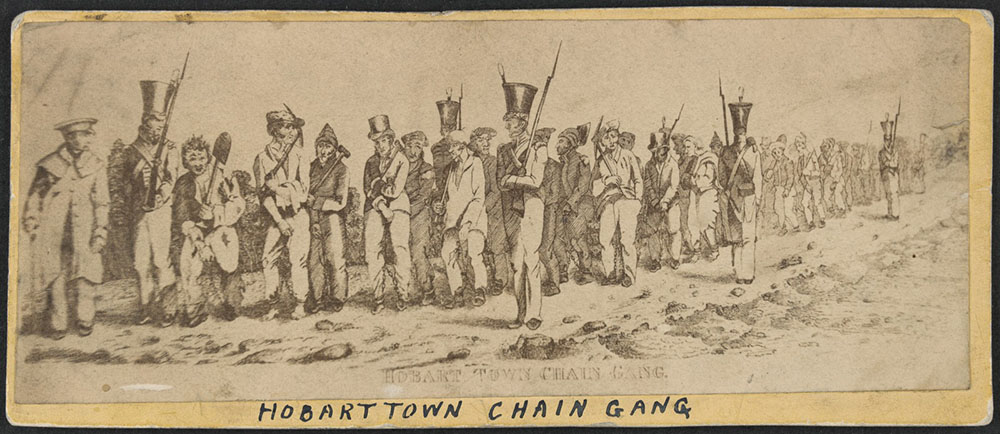
    Hobart Town convict chain gang. Photo courtesy State Library of Victoria.

    Australia’s penal settlements were gaols without bars.   There was often very little to prevent anyone from taking their leave and hiding out in the bush.    But what could they do then?   The countryside was wildly unfamiliar, and the already dispossessed Aboriginal peoples were often hostile towards anyone encroaching further onto their land.   Despite this, there were several bolters who lived for many years in Aboriginal communities.   Alternatively, runaways could hole up on the outskirts of settlements, preying on whoever presented themselves as easy targets.   These “bushrangers” were the scourge of early administrators in New South Wales and Van Diemen’s Land.   The authorities went to great lengths to hunt them down and bring them to justice, often at the end of a rope.   Eking out an existence on society’s fringes was not a viable long-term proposition.   Those truly serious about escaping had to look not towards the country’s interior, but out to sea.    Where townsfolk, farmhands, labourers and the like viewed the expansive ocean with justifiable trepidation, it was seen in a very different light by the many seamen and mariners in the convict ranks.

    A flogging as Illustrated in The Fell Tyrant published in 1836. Courtesy Mitchell Library, State Library of NSW

    Ships had brought them out to the colonies.   They could whisk them away.    Stowing away was the most frequent method of absconding, especially for those without seafaring skills.   A cat-and-mouse game soon developed, with stowaways finding ever more inventive places to hide while the authorities devised new ways of flushing them out.   Rarely did a ship leave Australia during the convict era without someone trying to stow away.

    For men of a more ruthless and violent temperament, seizing control of a ship and sailing to some far-flung port proved an irresistible temptation.    Ships transporting prisoners between settlements were always on alert for trouble, but that did not stop some desperate characters from trying their luck.  Captains of vessels, complacent of port regulations, risked their ships being taken by convicts ever vigilant for lapses in security.   A few enterprising convicts even built their own craft to make their escape.   Few of these endeavours ended well, for the distances to be traversed were vast and the ocean unforgiving to frail and unseaworthy watercraft.  

    Detail from an 1828 watercolour of Hobart by Augustus Earle showing the brig Cyprus (centre), which was seized by convicts en route to Macquarie Harbour. Courtesy State Library of NSW.

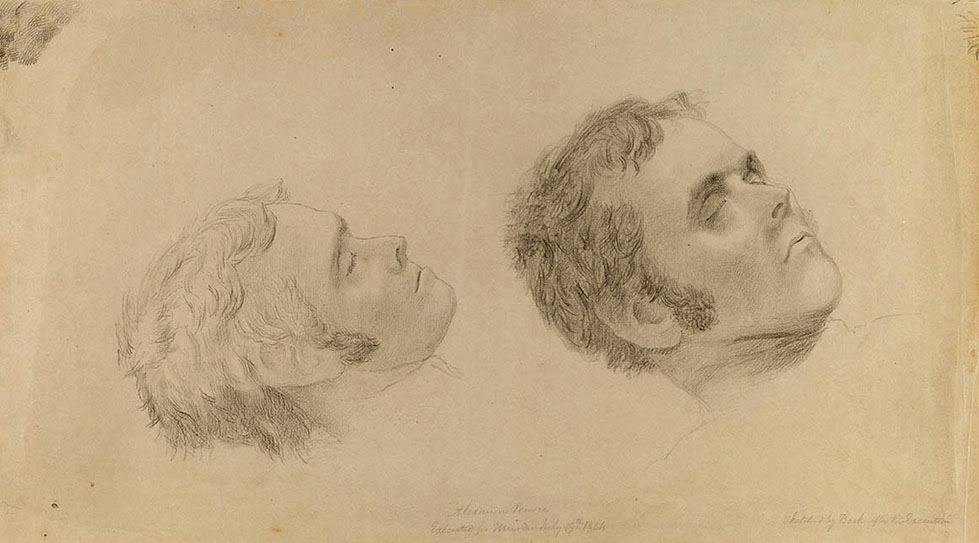
    Bolters tells the stories of many of those convicts who chanced their luck to regain their liberty.   The narratives draw heavily on the personal accounts left behind by those determined to escape and official reports written by the men whose job it was to stop them.    In 1791 William and Mary Bryant and a band of runaways made off with Governor Phillip’s cutter and sailed it to Timor in the Dutch East Indies (Indonesia).   To this day it is still recognised as an outstanding feat of seamanship and survival.    It was unfortunate for them that their luck ran out shortly after.   However, Mary and a handful of others reached England and were later pardoned. They proved escape was possible, inspiring many others to follow their lead.    In 1803, William Buckley fled from a short-lived settlement on the shores of Port Phillip Bay.   He was taken in by the local Aboriginal people and remained with them for the next 32 years.   Macquarie Harbour saw many inmates try to escape that god-forsaken place.   No story is more chilling than that of the infamous cannibal Alexander Pearce and the men who fled into the wilderness with him.  

    Sketches of Alexander Pearce made shortly after he was hanged. Artist: Thomas Bock. Courtesy State Library of NSW.

    When a group of determined prisoners captured the Cyprus in 1829, few could have imagined that they would sail the vessel to Japan before scuttling it off the coast of China.  Several men made it back to England before being arrested. Then, five years later, the prisoners entrusted with completing the Frederick at Macquarie Harbour took off for South America rather than deliver her to Port Arthur as supposed.    The book ends with the liberation of six Irish rebels from Fremantle Prison by the American whaler Catalpa in 1876.   This was arguably the most carefully planned and executed escape during the convict era.   Along the way, the book delves into many lesser-known but no less desperate and dramatic attempts to flee Australian shores.

    © Copyright C.J. Ison / Tales from the Quarterdeck, 2024.

    Please enter your email address below to be notified of future blogs.

  • The search for the Sydney Cove – 1797

    On the night of 2 October 1797, fourteen convicts stole a boat and made their way down the Paramatta River across Sydney harbour and out through the Heads.  When the men were discovered missing, the authorities sent boats in pursuit, but they returned a few days later, having never caught sight of the runaways.    As a storm had swept the area shortly after they had escaped, it was thought the bolters had died at sea.   However, that was no more than wishful thinking.    Their story is one of desperation, betrayal, and ultimately defeat.

    The runaways’ leaders were John Boroughbridge and Michael Gibson.   They had been labouring away in the back blocks of Paramatta when they convinced 12 other desperate men to join them in an audacious escape.    Their plan was to find the remains of the 250-ton Sydney Cove, a ship that had recently been wrecked somewhere far to the south of Sydney.   Boroughbridge and Gibson were sure they could build a new vessel from the timbers and fittings and make for some distant port far from the clutches of British law.   That the Sydney Cove had been carrying a massive cargo of rum and other alcoholic spirits added to its allure.

    Painting of Sydney, Port Jackson. circa 1804.

    Boroughbridge was serving 14 years for some unspecified crime and had landed in New South Wales only four months earlier and was keen to leave at the first opportunity.  Gibson had already spent five long years there, but with nine more to serve, he was no less eager to put the place behind him.     It seems they had little difficulty finding 12 others willing to join them.

    With nothing more than a small pocket compass and the knowledge that the wreck lay somewhere far to the south, they headed out through Sydney Heads and turned right.    A day or so later, the weather turned nasty, but Boroughbridge and his mates ploughed on.   Twice, their boat was driven ashore, and both times, they were lucky to avoid serious damage.  

    In time, the weather eased, and they continued following the coast and unknowingly strayed into Bass Strait.   In 1797, no one knew that a body of water separated Van Diemen’s Land from the rest of Australia.    All Boroughbridge and the others would have known was that the Sydney Cove was aground on an island somewhere off the coast.   They likely had no accurate idea how far they had come or how much further they had to go.   They certainly could not have known that they needed to cross 200 km of open water to reach the beached ship.   By now, the compass would have shown that they were heading in a south-westerly rather than southerly direction as they doggedly follow the contours of the coast.

    Finally, they ran out of food and fresh water.   In desperation, they put ashore on one of the small islands in the vicinity of Wilson’s Promontory.   There, they found a ready supply of fresh water, while seabirds and seals made easy prey for the starving men.    But, the trying conditions took their toll.   By now, many of the runaways would have gladly returned to Sydney to face any punishment short of death if it meant an end to their suffering.  

    Any sense of common purpose they may have once possessed had since evaporated.   They could not agree on what they should do next.   Should they stick to their original plan and continue searching for the elusive Sydney Cove?   Or should they abandon the search and head back north?   Then, one night, in a callous act of betrayal, Boroughbridge, Gibson and five others quietly set off in the boat, abandoning the rest of the men as they slept. 

    After leaving their comrades to their fate and giving up the search for the Sydney Cove, they returned north again.   Bypassing the entrance to Sydney Harbour, they continued on to the mouth of the Hawkesbury River, where it emptied into Broken Bay.   It cannot have been lost on the weary men that after three or four months on the run, they were now barely a day’s sailing from where they had started.   

    After months at sea, their boat was in such a derelict state that they did not trust it to carry them any further.    The men agreed they would continue sailing north, but to do so, they would have to find another boat.     They did not have long to wait.

    Boroughbridge and his men seized a passing vessel and set a course north. Their plan now was to make for Timor in the Dutch East Indies as William Bryant, his wife Mary and others had done some six years earlier.   News that Mary and some of the other runaways had reached England and been pardoned had only recently reached Sydney offering hope for anyone contemplating following in their wake.   

    Nothing more was heard of them for another couple of months.  Then, in late March 1798, they returned to Broken Bay and hailed down a passing boat.  Boroughbridge handed a letter to the boatswain asking him to deliver it to the NSW Governor.   The letter, signed by Boroughbridge, Gibson and three remaining runaways, claimed they wished to give themselves up and begged for clemency.   They wrote that they had sailed about 400 nautical miles (750 km) north, which would have put them on either Stradbroke or Moreton Island.   Then, they claimed, disaster struck.    When they tried to run ashore, their boat was caught in the surf and driven hard onto the beach, where it broke apart with the pounding of successive waves.   They were stranded on an inhospitable stretch of coast.   But all was not lost.   They were able to salvage enough timber from the wreckage to build a smaller craft and put back out to sea.   However, by now, they had all had enough of life on the run.  They decided that rather than continue sailing north, they would return to Sydney and beg for mercy. 

    Their plea for mercy fell on deaf ears, for the Governor had learned that Boroughbridge and the rest of the men seeking clemency had callously abandoned half their mates to die on the island in Bass Strait.   In an unlikely turn of events, they had been found by George Bass while he was endeavouring to prove the existence of the body of water which now bears his name.   Unable to carry all seven back to Sydney on his small boat, he ferried five across to the mainland, gave them a compass, a musket and as much food as he could spare and told them to follow the coast north to Sydney.   They were never heard of again.   Two men, too weak to walk, remained with Bass.   He returned to Sydney on 25 February and handed the pair to the authorities and they reported what had befallen them.     

    In April, Boroughbridge and the four remaining runaways were returned to Sydney, where they were tried for piracy and found guilty.   Jonathon Boroughbridge and Michael Gibson were hanged, while their three companions were only given clemency at the last minute as they stood before the gallows contemplating their final moments of life.

    © Copyright C.J. Ison / Tales from the Quarterdeck, 2024.

    Please enter your email address below to be notified of future blogs.

  • The Loss of the SS Cawarra: Bad luck or an avoidable tragedy?

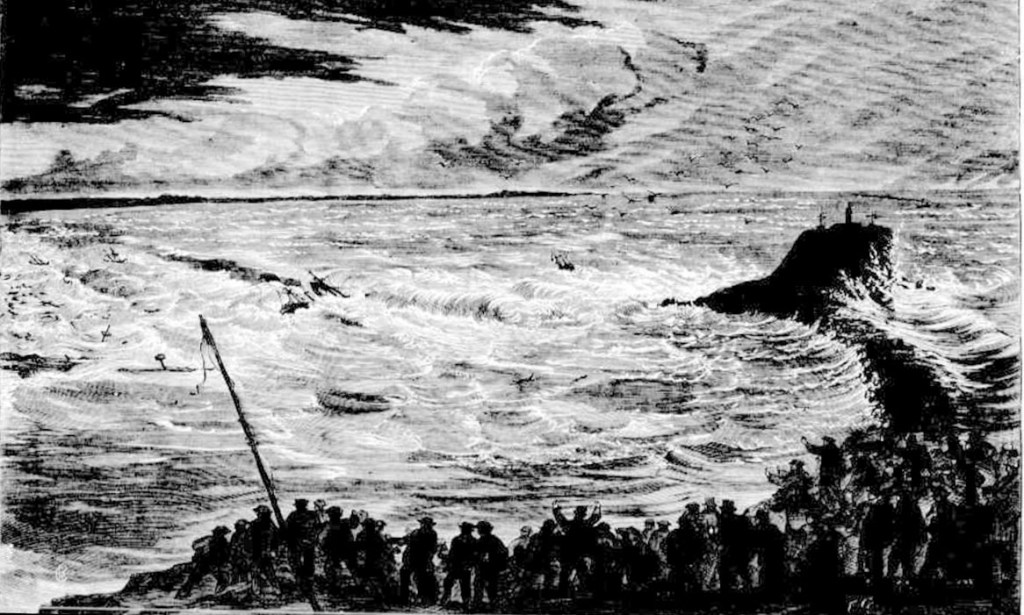
    “Foundering of the S.S. Cawarra off Newcastle.’ Source: Australian News for Home Readers, 27 Aug 1866, p. 4.

       When, in 1866, the Board of Inquiry into the Loss of the Steam Ship Cawarra handed down its report, it was met with much incredulity. After poring over the evidence for six weeks, the commissioners could only conclude that the catastrophe was simply the result of bad luck. That was despite evidence presented to them that the steamer had been grossly overloaded when she had left port.

       The SS Cawarra was a 439-ton side paddle steamer owned and operated by the Australian Steam Navigation Company, and regularly made the passage between Sydney and Brisbane. On what would be her last voyage, she had a crew of 36 and 25 passengers. In all, there were 61 souls on board. Around 6 p.m. on Wednesday, 11 July 1866, she passed through Sydney Heads on her way to Rockhampton via Brisbane. The northern settlement of Rockhampton had not been visited for some time, and basic provisions had run low. So, when the Cawarra’s hold was packed to capacity and no more would fit below, the remaining cargo was stowed on deck.

       As soon as the steamer was heading north through open seas, she was assisted on her way by a strong south-easterly breeze. But during that first night, the weather steadily worsened. By morning, the winds were shrieking at gale force, the seas were mountainous, and the ship was being lashed by torrential rain. In the face of such foul weather, Captain Henry Chatfield decided to take shelter at Newcastle until it was safe to resume his journey.

       Chatfield sighted the distinctive outline of Nobby Head at 2 o’clock in the afternoon, and shortly after that, the steamer rounded the headland to enter the port. However, as the Cawarra was approaching the mouth of the Hunter River, she was struck by a series of large waves that swept over her deck and pushed her around so she was now facing back out towards Nobby Head.

    “Position of Cawarra previous to foundering …” Source: Illustrated Sydney News, 16 Aug 1866, p. 5.

       It is thought that when Captain Chatfield realised his ship was in grave peril, he ordered the foresail to be set and tried to steam back out to sea. However, before he could do so, the Cawarra was hit by several more huge waves. They would spell her end. Water poured through the hatchways snuffing out the steamers’ fires. Now she was dead in the water at the mercy of the large seas. The ship then began to sink by the bow. Chatfield ordered the lifeboats to be made ready, but the treacherous seas swirling around the steamer made abandoning the ship impossible.

       Around 3 o’clock, the Cawarra was driven onto Oyster Bank. The foredeck soon disappeared below the waves, and everyone had gathered on the poop deck or had climbed into the rigging to escape the rising water. Fifteen minutes later, the mainmast and funnel toppled into the sea, taking with them all those sheltering on the poop. The foremast went a few minutes later, tossing the remaining three or four men into the water, and the Cawarra quickly sank from sight. It was as if she had never been there to observers watching the horror unfold from Nobby Head. Only a few pieces of wreckage and cargo washed ashore to testify that a ship had been lost.

       Sixty people died, while one man somehow managed to survive. Frederick Valliant Hedges had only joined the Cawarra eight months earlier. As the steamer began sinking by the bow, he had climbed high into the mainmast rigging only to be flung into the sea when the mast came crashing down. Hedges was later found clinging to a red buoy by a boat sent out from the lighthouse. Ironically, one of the rescuers was a man named John Johnson, who had himself been the sole survivor of the Dunbar when it sank off Sydney nine years earlier.

    The Rescue of F.V. Hedges, the only survivor from the Cawarra. Source: Illustrated Sydney News, 16 Aug 1866, p. 4.

        The violent storm wreaked havoc on shipping up and down the coast between Sydney and Port Stephens. Four more vessels foundered or were driven ashore at Newcastle, and another was wrecked near Port Stephens, further north. Several more were lost around Sydney. In all, 15 vessels were wrecked or driven ashore, adding another 17 fatalities to the grim final tally.

       It is perhaps easy to blame the weather for the Cawarra’s loss. In fact, the commission established to investigate the circumstances found just that. Its report concluded: “We are of the opinion that the catastrophe was one of those lamentable occurrences which befall at times the best ships and the most experienced commanders, and which human efforts are powerless to avert.”

       However, that explanation did not sit well with many folk. It had the whiff of a cover-up. Accusations that the Cawarra had been overladen when she left Sydney flew around maritime circles. She was reportedly carrying 450 tons of coal and cargo, which was 50 tons more than recommended by the ship’s builders. An engineer and surveyor from the Steam Navigation Board testified at the inquiry that when he had seen the Cawarra shortly before her departure, he thought she was sitting lower in the water than usual and believed she had been overloaded. But when he had raised his concerns with his superior and the ship’s owners, they both dismissed his concerns, telling him the Cawarra was a strong ship.    The possibility that overloading could have contributed to the loss was even raised in the New South Wales parliament. The outspoken former clergyman and politician, Dr J.D. Lang, called for the Commission’s findings to be rejected, pointing out the contradictory evidence presented at the inquest. But it was all to no avail. The findings stood, and the loss was attributed to bad luck.

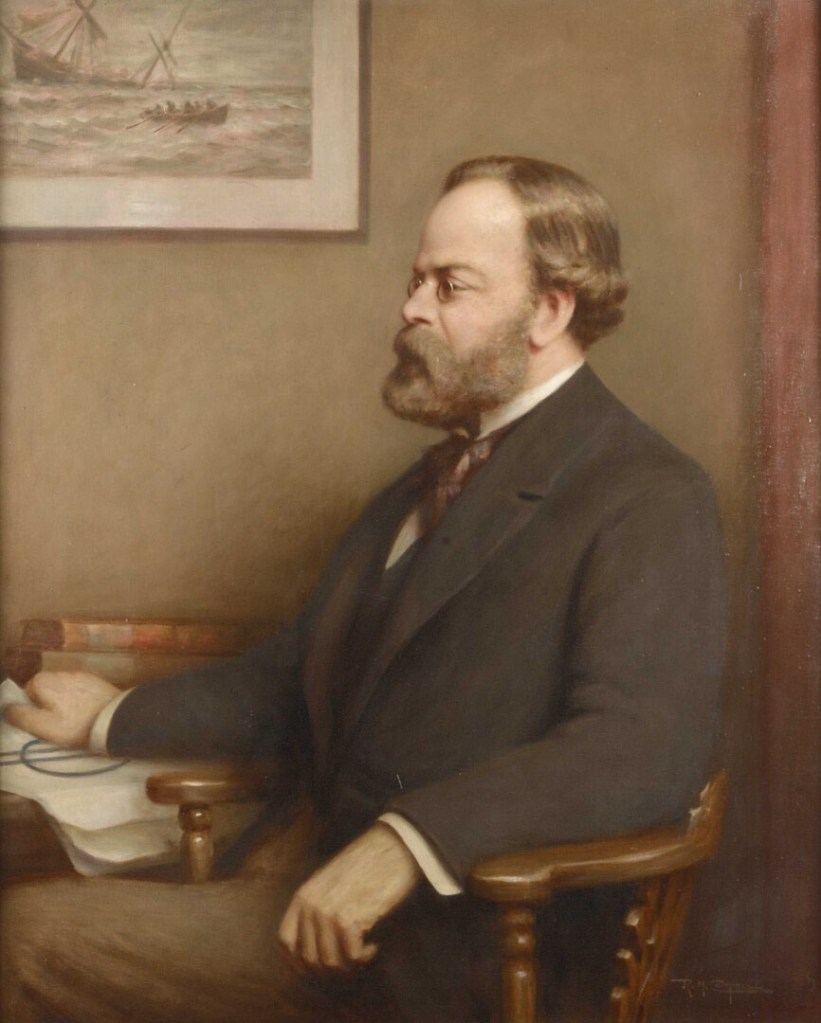
    Samuel Plimsoll. Wikimedia/creative commons.

       However, there were calls for a line to be marked on the hull of cargo ships to show when they were fully loaded. It would take another ten years before British parliamentarian Samuel Plimsoll was able to persuade his colleagues to take action. He was appalled by the number of ships and lives lost due to overloading. In 1876, the British Parliament passed legislation requiring markings on the sides of cargo ships, which would be submerged below the surface if the vessel was overloaded. This became known as the Plimsoll Line and is still in use today.

    © Copyright C.J. Ison / Tales from the Quarterdeck, 2023.

    To be notified of future blogs, please enter your email address below.

  • The Loss of the Sydney Cove – 1797

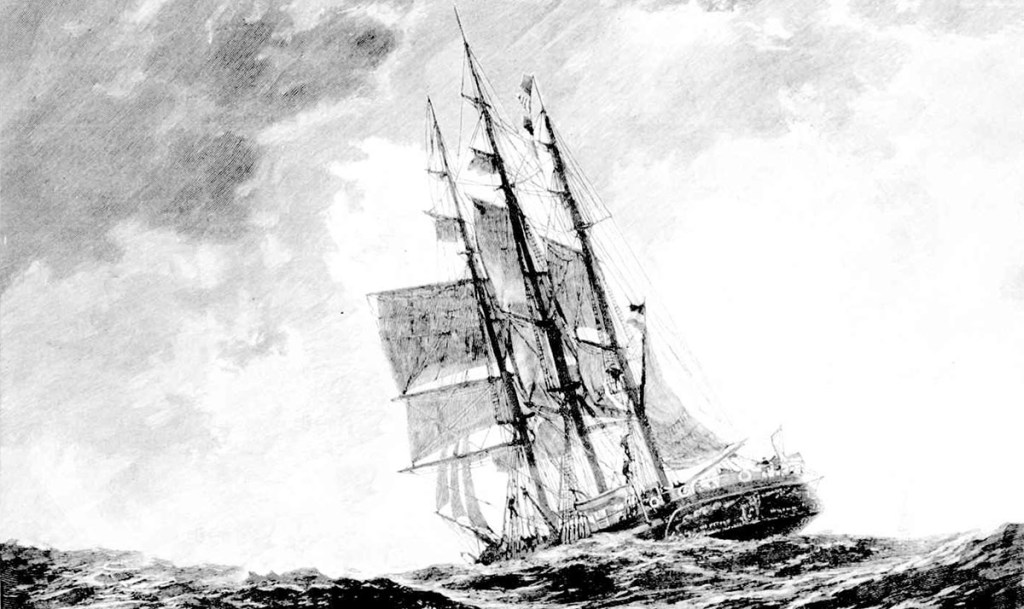
    A barque caught in heavy weather. Source: Tales of Shipwrecks and Adventures at Sea, 1856.

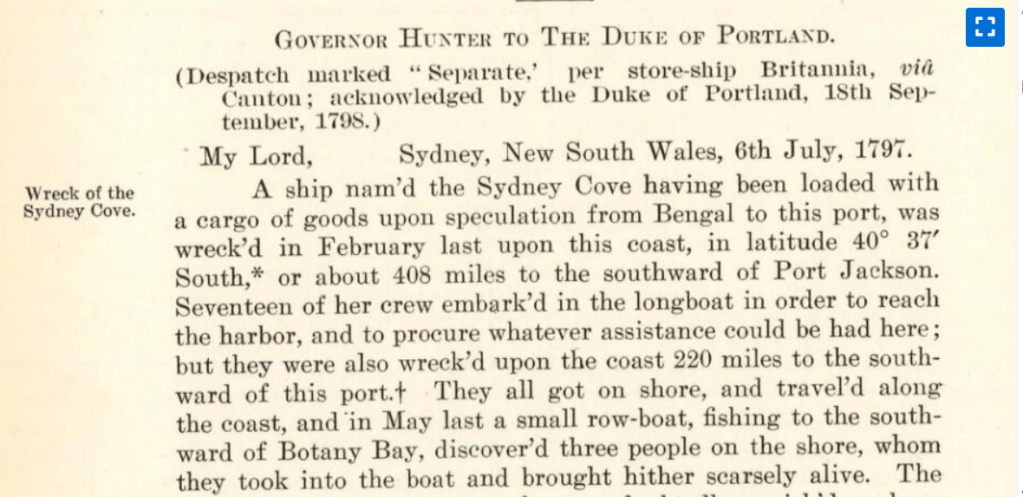
       In May 1797, a fishing party returned to Sydney with more than their daily catch. They had found three shipwreck survivors south of Botany Bay who told them that the merchant ship Sydney Cove had been wrecked somewhere far to the south. The survivors had trekked over 600 km along New South Wales’s rugged southern coast seeking help for their captain and shipmates who were still stranded with the ship.

       On 10 November 1796, the 250-ton Sydney Cove had sailed from Calcutta with her hold full of Indian goods and produce the owners hoped to sell in Sydney. The crew, numbering close to fifty men, was a mix of Indian and European seamen under the command of Captain Guy Hamilton. About a month out, as she cleaved her way south through the Indian Ocean, the Sydney Cove was caught in a terrible storm and began taking on water. Initially, the leak was easily managed with the pumps, so Hamilton continued on his course to round Van Diemen’s Land (Tasmania) before heading north again and on up the New South Wales coast to Sydney.

       By January, as they sailed into the latitudes south of Tasmania, the ship was caught in the grip of another powerful storm. The leak began to worsen, and soon the pumps had to operate continuously to prevent the ship from sinking.

       As they headed up Tasmania’s east coast, they encountered yet more wild weather and heavy seas. By now, water was pouring into the hold faster than the men at the pumps could clear it. The barque was slowly filling with water. Captain Hamilton ordered all non-essential gear to be jettisoned to lighten the load, but that only put off the inevitable.   

    By 9 February, the water in the hold was lapping at the lower-deck hatches. Captain Hamilton realised he had no choice but to beach his ship to save her from foundering in deep water. If that were to happen, he would not only lose his ship and its precious cargo but also much of his crew, for they would not all fit on the Sydney Cove’s two boats. He found a sandy beach on what is today called Preservation Island in the Furneaux group and ran her ashore. Although Hamilton had saved the ship from sinking, his troubles were far from over.

    No illustration of the Sydney Cove exists but it likely looked similar to this example. Source: Nautical Dictionary by Arthur Young, published in 1863.

       Exhausted from constant bailing and battling through rough seas, Hamilton got the crew unloading much of the ship’s stores and cargo onto Preservation Island. But then the weary men discovered the casks of rum stacked among the cargo. Hamilton had to have the liquor taken to a neighbouring island to prevent his men from pillaging it. Captain Hamilton then organised his crew for a prolonged stay, for they had come ashore at a very remote part of the world. The crew erected shelters using sails and spars to give them refuge from the elements. Hamilton rationed everyone to one cup of rice per day, and though they sank a well and found water, it proved so brackish it was barely drinkable. However, their immediate needs were met. Then he turned his mind to their rescue.

       If they were ever to leave Preservation Island, they would have to send for help. It was agreed that the First Mate, Hugh Thomson, with 17 men, would sail north, keeping close to the New South Wales coast until they reached Sydney. Captain Hamilton and the remaining crew, numbering about 30, would remain with the ship.

       Several days after setting off, the longboat was driven ashore on Ninety-Mile Beach and smashed to pieces. Thomson and his men escaped with their lives, but they had little else. With no way to return to the Sydney Cove, their only chance of survival lay in continuing to Sydney, 600 km away, on foot.

       Thomson hugged the coast, knowing that as long as they kept the sea on their right, they would eventually arrive at the young settlement. However, that meant crossing many wide river mouths and scrambling over numerous rocky promontories along the way. The journey was gruelling and took a heavy toll on the men. Encounters with the indigenous peoples varied in nature. Some provided the castaways with food and water, while others were less sympathetic but allowed them to pass unhindered. Yet others set upon the interlopers on their land. Their numbers dwindled as some drowned crossing rivers or otherwise fell victim to the harsh and unforgiving terrain.

    The Sydney Cove party as depicted by Smiths’ Weekly in 1939. Smith’s Weekly 30 Sep 1939 p. 8.

       By late April, there were only three men left. However, they had managed to reach within 20 km of Botany Bay when fishermen finally discovered them. The fishermen took the survivors the rest of the way to Sydney in their boat. On learning of the loss of the Sydney Cove, Governor Hunter ordered vessels to be sent to rescue the remaining sailors and salvage the ship’s cargo.

       After being marooned for some four months, Captain Hamilton and the rest of the crew were in dire straits. Winter was fast approaching. Successive storms had mercilessly battered their shelters, and now they had gaping tears, offering the men little protection from the bitter weather. While they had been able to supplement their rice ration with seabirds nesting on the island, their diet still barely sustained life. To add to their sense of abandonment, they had seen several ships pass in the distance but had been unable to alert any of them to their presence.

       Then, on 10 June 1798, salvation arrived when the sloop Eliza sailed into view and dropped anchor a short distance off the beach. It was later joined by the schooner Francis, under the command of Lt Matthew Flinders. Both ships had left Sydney 10 days earlier under Governor Hunter’s orders. The crews loaded as much of the salvaged cargo as they dared, leaving five volunteers behind to watch over the remaining goods until it could be collected at a later date. Captain Hamilton and his men boarded the Francis and Eliza, and they headed for Sydney.   

    The weather was no less kind as the two small ships battled their way home. It took 15 days of hard sailing through storms and high seas for the Francis to reach Port Jackson. The Eliza never made it back to Sydney and was presumed to have sunk in the terrible weather with the loss of her own crew, plus eight shipwreck survivors. In total, about half of the crew of the Sydney Cove lost their lives.

       The shipwreck is historically significant for the trek undertaken by Thomson and the others. They were the first Europeans to note an outcrop of coal in the Illawarra, which has defined the region to this day. Also, Captain Hamilton recorded strong south-westerly currents during his time on Preservation Island, suggesting there was a large body of water separating Van Diemen’s Land and the Australian mainland. The existence of the strait would later be confirmed by Matthew Flinders and George Bass and named after the latter.

    © Copyright C.J. Ison / Tales from the Quarterdeck, 2023.

    To be notified of future blogs, please enter your email address below.