Category: Convict History

  • A Textbook Escape – The Badger 1833.

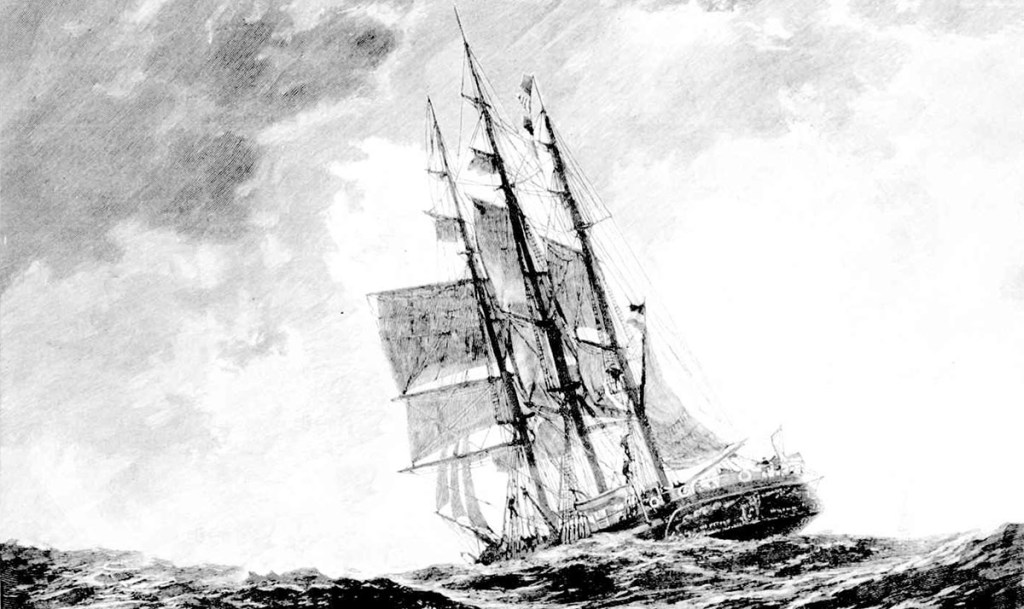
    Example of an English Cutter of early 1800s. Source: All About Ships, Dorling, 1912.

       In July 1833, the colonial cutter Badger left Hobart with its hold filled with supplies intended for Port Arthur. Only this time, as she set off down the Derwent River instead of rounding Cape Raoul and delivering her stores, she kept heading east, past Tasman Island, past Cape Pillar and out to sea. The captain and crew, all convicts still under sentence, had likely been planning their escape for some time. Now they were putting it into action.

       The Badger had a crew of four under the command of Captain William Philp.   All the men had been mariners before they had run afoul of the law and been banished to Van Diemen’s Land. All but one were serving life sentences, meaning there was no likelihood they would ever return home. Their captain was a former master mariner who had been found guilty of “Wilfully and maliciously destroying the sloop Jane”. Philp had been a part-owner of the vessel as well as its captain. Late one night, he loaded it with gunpowder and blew it up in Penzance Harbour after a falling out with his business partners.

       He was tried, found guilty and sentenced to transportation for life. Aged 51, Philp was sent out to Van Diemen’s Land on the convict transport Argyle in 1831. During the passage, he was suspected of conspiring with others to seize the ship and make their escape. The evidence was circumstantial and most likely supplied by a convict informant, but that was enough for Philp and eight or so others to be clapped in chains and separated from the rest of the prisoners. On the Argyle’s arrival in Hobart, the conspirators, including Philp, were tried, found guilty and sentenced to serve hard labour at Macquarie Harbour. 

       On his eventual return to Hobart, Philp finally got a break. He was put in charge of the 25-ton schooner Badger, ferrying stores from Hobart to Port Arthur about 70 kilometres sailing down the Derwent River. Port Arthur had recently been established to replace Macquarie Harbour, which was about to be shut down the following year.

    The Colonist, 6 Aug 1833, p. 3.

       By 1833, the Badger’s entire crew were experienced seamen. It was not uncommon for the authorities to assign sailors to work on government vessels, for they already had the necessary skills. However, there was always the obvious risk that the colonial administrators were giving them the means of effecting their own escape. Such was the case with the Badger. Governor Arthur was mercilessly criticised for allowing such a situation to eventuate.

       On Tuesday, 23 July 1833, William Philp took the Badger out of Sullivan Cove and headed down the Derwent River much as he had done many times before. As well as carrying plenty of provisions, on this trip the Badger was also well equipped with nautical charts, navigation instruments and several muskets recently procured by Philp and his men. What’s more, as many as a dozen convicts had also been smuggled aboard and hidden in the hold.

       The Badger left the wharf unchallenged and did not raise any suspicion as she sailed under the guns of Battery Point. To everyone but those on board, she was on her regular passage to Port Arthur. But before she had gone more than five kilometres down the Derwent, she briefly pulled into shore and picked up a final passenger, one George Harding Darby.

       Darby, like all the rest of the men on the Badger, was a convict still under sentence. But he enjoyed many privileges not accorded to ordinary convicts sent out to the colonies. A gentleman by birth, he was a member of the same class as the military officers and administrators governing Van Diemen’s Land. At the time, he was employed as a signalman at Mount Nelson Signal Station, which relayed messages from Port Arthur to Hobart. He had also worked at the Water Bailiff’s office and was likely the person who got Philp his job as the Badger’s master and ensured he had a crew of loyal and competent sailors.

    Courtesy Google Maps

       Darby and Philp, both nautical men, had become friends while held in a prison hulk awaiting transportation. Darby had come out to Van Diemen’s Land on the William Glen Anderson the same year as Philp had come out on the Argyle. George Darby had served in the Royal Navy and, during Greece’s war of independence from the Ottoman Empire, had commanded a naval vessel under Lord Cochrane. He was also reputed to have served with distinction during the battle of Navarino in 1827 further enhancing his reputation among Hobart’s administrators. However, by 1830, he had left the navy and had found employment as a clerk. By 30 March 1830, he was standing in the docks answering charges of stealing £90 from a fellow gentleman. He was found guilty and sentenced to be transported for life.

       Several days passed before anyone realised the Badger had not delivered her stores to Port Arthur. Boats were sent out to track her down. It was thought that Philp might have sought refuge in the Bay of Islands in New Zealand.   So, the brig Isabella was even sent to investigate with a party of soldiers on board. However, she returned to Hobart in late September, having found no trace of the missing Badger. Philp, Darby, and the others had somewhere much further afield in mind when they sailed away from Hobart. They had made their way north, first through the Tasman and from there into the Coral Sea. In September, they pulled into Lifuka in the Friendly Islands (present-day Tonga) before resuming their journey north across the equator and on towards the Philippines.

       Philp, Darby and the rest of the runaways eventually arrived in Manila in a longboat, claiming their ship had sunk not far from that port. It is certainly possible that they ran into trouble close to their destination, as they claimed. But it is more likely they had deliberately scuttled the ship rather than risk it being identified as the missing Badger. Philp and Darby would have known that Governor Arthur would have sent a description of the Badger and its runaways far and wide in his effort to track them down.

    The Pria Granda, Macao, by Thomas Allom, from a sketch by Lieut. White, Royal Marines. (1843)

       The bolters did not linger in Manila for very long. They boarded a Spanish ship bound for the Portuguese colony of Macau. But in Macau, their luck nearly ran out. William Philp was spotted by the master of the British merchant ship Mermaid, which happened to be in port. Before taking command of the Mermaid, Captain Stavers had served as the mate on the convict transport Argyle. He immediately recognised Philp as one of the convicts who was suspected of plotting to seize his ship.

       Stavers tried to have the Portuguese colonial authorities detain the Philp and his mates. He showed the officials an old copy of the Sydney Herald newspaper, which included a report on the seizure of the Badger as evidence. Philp and Darby were picked up and questioned by a Portuguese official, but they claimed to have never heard of the Badger.

       As Philp and the others had kept their noses clean while in Macau, the Governor was not inclined to lock them up on the say-so of a foreigner brandishing an old newspaper in a language he did not understand. Philp and Darby were released to go about their business unmolested, but now that their true identities were known, they thought it was time to move on in. Apparently, most of the runaways had already found berths on an American-flagged ship about to leave port. Philp was last seen in Macau after kindly declining an invitation to join a ship bound for Sydney, telling the British captain, “[he] did not wish to go so far southward.”

    Philp, Darby and the rest of the men who fled from Van Diemen’s Land on the Badger are among a very select group of convicts. Of the many hundreds who escaped in stolen or seized vessels, very few are known to have made it to a friendly port. None of the Badger’s men were ever heard of again after leaving Macau.


    © Copyright C.J. Ison / Tales from the Quarterdeck, 2024.

    Please enter your email address below to be notified of future blogs.

  • BOLTERS: An Unruly Bunch of Malcontents

    Convict crewed boats crossing the bar to unload ships at Norfolk Island. Courtesy National Library of Australia.

    More than 160,000 of Britain’s most unwanted souls were banished to Australia between 1788 and 1868.   These convicts ranged from petty thieves to hardened criminals.   Fraudsters, burglars and pickpockets rubbed shoulders with highway robbers, rapists and murderers in the fetid prison cells of transport ships bound for Australia.    Political prisoners, social reformers and ordinary men and women struggling to feed their families also found themselves trapped in a brutal judicial system determined to rid Britain of its undesirables.  

    The vast majority of these men and women made the best of the hand fate had dealt them.   They earned their freedom and took up land and farmed it, started businesses, married, raised children, and helped found the country we know today.   But this book is not about them.   Library shelves are lined with volumes praising the accomplishments of those worthy and not-so-worthy folk.   Rather, Bolters tells the stories of those unruly malcontents who stepped ashore and thought, “This place is not for me,” and began plotting their escape.  

    Those who tried to abscond and failed, or flout any of the many other rules and regulations governing their lives were often sent to places of “secondary transportation.”   These isolated penal settlements established at Newcastle, Port Macquarie, Moreton Bay and Macquarie Harbour were intentionally harsh.   They were places where floggings were frequent, work was backbreaking, living conditions were wretched and life expectancy was short.     Norfolk Island would later surpass them all for its brutality.  

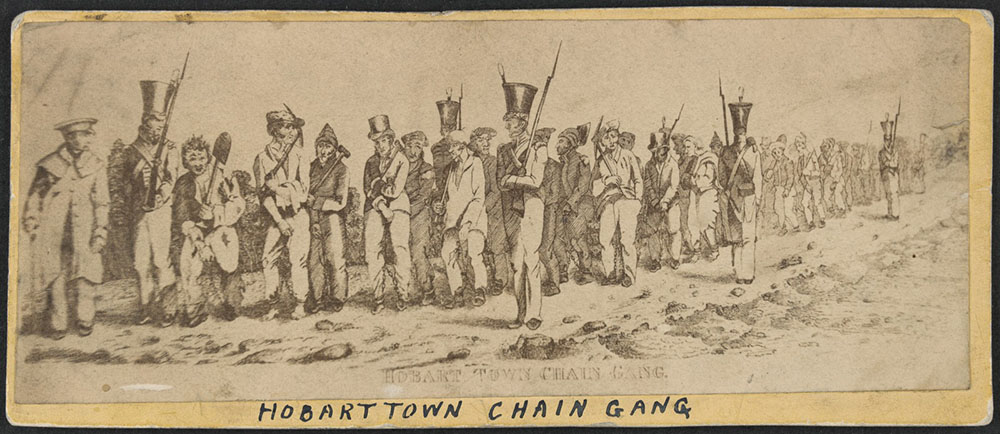
    Hobart Town convict chain gang. Photo courtesy State Library of Victoria.

    Australia’s penal settlements were gaols without bars.   There was often very little to prevent anyone from taking their leave and hiding out in the bush.    But what could they do then?   The countryside was wildly unfamiliar, and the already dispossessed Aboriginal peoples were often hostile towards anyone encroaching further onto their land.   Despite this, there were several bolters who lived for many years in Aboriginal communities.   Alternatively, runaways could hole up on the outskirts of settlements, preying on whoever presented themselves as easy targets.   These “bushrangers” were the scourge of early administrators in New South Wales and Van Diemen’s Land.   The authorities went to great lengths to hunt them down and bring them to justice, often at the end of a rope.   Eking out an existence on society’s fringes was not a viable long-term proposition.   Those truly serious about escaping had to look not towards the country’s interior, but out to sea.    Where townsfolk, farmhands, labourers and the like viewed the expansive ocean with justifiable trepidation, it was seen in a very different light by the many seamen and mariners in the convict ranks.

    A flogging as Illustrated in The Fell Tyrant published in 1836. Courtesy Mitchell Library, State Library of NSW

    Ships had brought them out to the colonies.   They could whisk them away.    Stowing away was the most frequent method of absconding, especially for those without seafaring skills.   A cat-and-mouse game soon developed, with stowaways finding ever more inventive places to hide while the authorities devised new ways of flushing them out.   Rarely did a ship leave Australia during the convict era without someone trying to stow away.

    For men of a more ruthless and violent temperament, seizing control of a ship and sailing to some far-flung port proved an irresistible temptation.    Ships transporting prisoners between settlements were always on alert for trouble, but that did not stop some desperate characters from trying their luck.  Captains of vessels, complacent of port regulations, risked their ships being taken by convicts ever vigilant for lapses in security.   A few enterprising convicts even built their own craft to make their escape.   Few of these endeavours ended well, for the distances to be traversed were vast and the ocean unforgiving to frail and unseaworthy watercraft.  

    Detail from an 1828 watercolour of Hobart by Augustus Earle showing the brig Cyprus (centre), which was seized by convicts en route to Macquarie Harbour. Courtesy State Library of NSW.

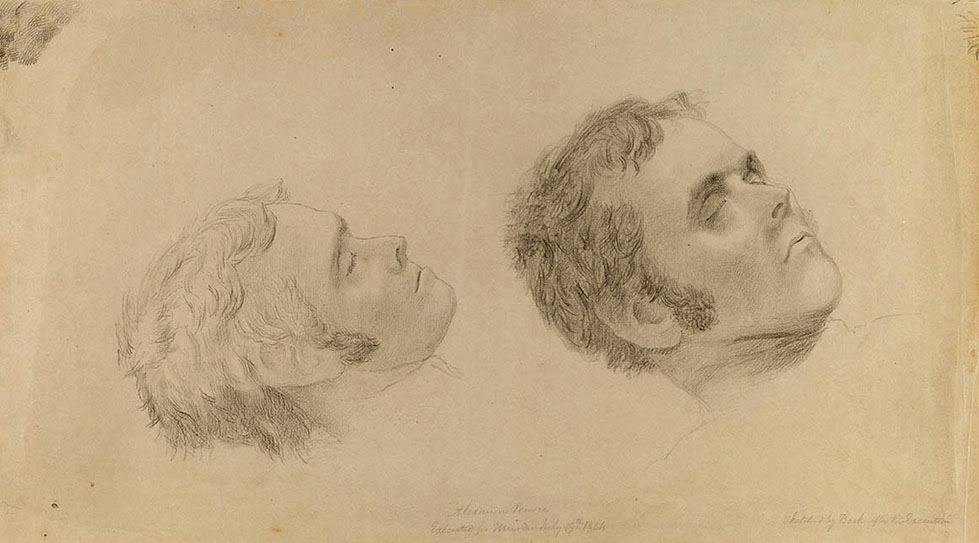
    Bolters tells the stories of many of those convicts who chanced their luck to regain their liberty.   The narratives draw heavily on the personal accounts left behind by those determined to escape and official reports written by the men whose job it was to stop them.    In 1791 William and Mary Bryant and a band of runaways made off with Governor Phillip’s cutter and sailed it to Timor in the Dutch East Indies (Indonesia).   To this day it is still recognised as an outstanding feat of seamanship and survival.    It was unfortunate for them that their luck ran out shortly after.   However, Mary and a handful of others reached England and were later pardoned. They proved escape was possible, inspiring many others to follow their lead.    In 1803, William Buckley fled from a short-lived settlement on the shores of Port Phillip Bay.   He was taken in by the local Aboriginal people and remained with them for the next 32 years.   Macquarie Harbour saw many inmates try to escape that god-forsaken place.   No story is more chilling than that of the infamous cannibal Alexander Pearce and the men who fled into the wilderness with him.  

    Sketches of Alexander Pearce made shortly after he was hanged. Artist: Thomas Bock. Courtesy State Library of NSW.

    When a group of determined prisoners captured the Cyprus in 1829, few could have imagined that they would sail the vessel to Japan before scuttling it off the coast of China.  Several men made it back to England before being arrested. Then, five years later, the prisoners entrusted with completing the Frederick at Macquarie Harbour took off for South America rather than deliver her to Port Arthur as supposed.    The book ends with the liberation of six Irish rebels from Fremantle Prison by the American whaler Catalpa in 1876.   This was arguably the most carefully planned and executed escape during the convict era.   Along the way, the book delves into many lesser-known but no less desperate and dramatic attempts to flee Australian shores.

    © Copyright C.J. Ison / Tales from the Quarterdeck, 2024.

    Please enter your email address below to be notified of future blogs.
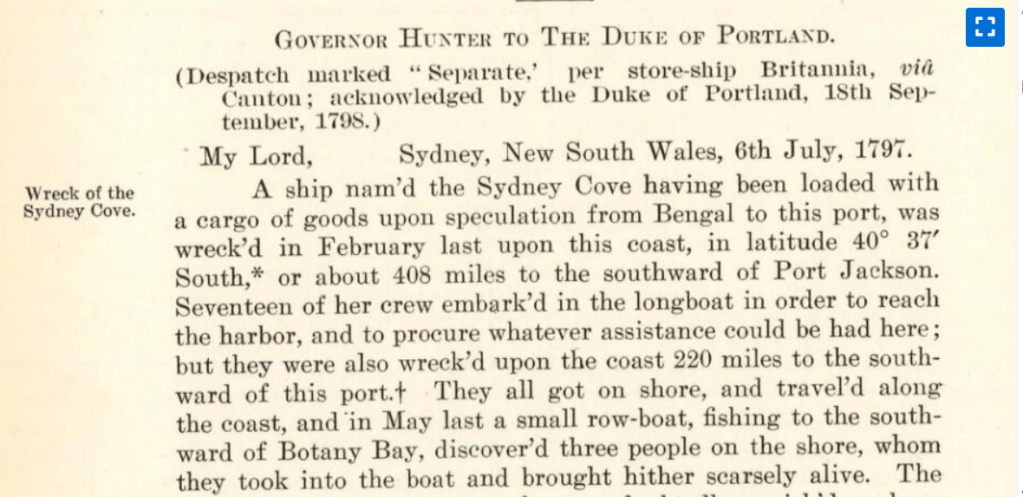
  • The search for the Sydney Cove – 1797

    On the night of 2 October 1797, fourteen convicts stole a boat and made their way down the Paramatta River across Sydney harbour and out through the Heads.  When the men were discovered missing, the authorities sent boats in pursuit, but they returned a few days later, having never caught sight of the runaways.    As a storm had swept the area shortly after they had escaped, it was thought the bolters had died at sea.   However, that was no more than wishful thinking.    Their story is one of desperation, betrayal, and ultimately defeat.

    The runaways’ leaders were John Boroughbridge and Michael Gibson.   They had been labouring away in the back blocks of Paramatta when they convinced 12 other desperate men to join them in an audacious escape.    Their plan was to find the remains of the 250-ton Sydney Cove, a ship that had recently been wrecked somewhere far to the south of Sydney.   Boroughbridge and Gibson were sure they could build a new vessel from the timbers and fittings and make for some distant port far from the clutches of British law.   That the Sydney Cove had been carrying a massive cargo of rum and other alcoholic spirits added to its allure.

    Painting of Sydney, Port Jackson. circa 1804.

    Boroughbridge was serving 14 years for some unspecified crime and had landed in New South Wales only four months earlier and was keen to leave at the first opportunity.  Gibson had already spent five long years there, but with nine more to serve, he was no less eager to put the place behind him.     It seems they had little difficulty finding 12 others willing to join them.

    With nothing more than a small pocket compass and the knowledge that the wreck lay somewhere far to the south, they headed out through Sydney Heads and turned right.    A day or so later, the weather turned nasty, but Boroughbridge and his mates ploughed on.   Twice, their boat was driven ashore, and both times, they were lucky to avoid serious damage.  

    In time, the weather eased, and they continued following the coast and unknowingly strayed into Bass Strait.   In 1797, no one knew that a body of water separated Van Diemen’s Land from the rest of Australia.    All Boroughbridge and the others would have known was that the Sydney Cove was aground on an island somewhere off the coast.   They likely had no accurate idea how far they had come or how much further they had to go.   They certainly could not have known that they needed to cross 200 km of open water to reach the beached ship.   By now, the compass would have shown that they were heading in a south-westerly rather than southerly direction as they doggedly follow the contours of the coast.

    Finally, they ran out of food and fresh water.   In desperation, they put ashore on one of the small islands in the vicinity of Wilson’s Promontory.   There, they found a ready supply of fresh water, while seabirds and seals made easy prey for the starving men.    But, the trying conditions took their toll.   By now, many of the runaways would have gladly returned to Sydney to face any punishment short of death if it meant an end to their suffering.  

    Any sense of common purpose they may have once possessed had since evaporated.   They could not agree on what they should do next.   Should they stick to their original plan and continue searching for the elusive Sydney Cove?   Or should they abandon the search and head back north?   Then, one night, in a callous act of betrayal, Boroughbridge, Gibson and five others quietly set off in the boat, abandoning the rest of the men as they slept. 

    After leaving their comrades to their fate and giving up the search for the Sydney Cove, they returned north again.   Bypassing the entrance to Sydney Harbour, they continued on to the mouth of the Hawkesbury River, where it emptied into Broken Bay.   It cannot have been lost on the weary men that after three or four months on the run, they were now barely a day’s sailing from where they had started.   

    After months at sea, their boat was in such a derelict state that they did not trust it to carry them any further.    The men agreed they would continue sailing north, but to do so, they would have to find another boat.     They did not have long to wait.

    Boroughbridge and his men seized a passing vessel and set a course north. Their plan now was to make for Timor in the Dutch East Indies as William Bryant, his wife Mary and others had done some six years earlier.   News that Mary and some of the other runaways had reached England and been pardoned had only recently reached Sydney offering hope for anyone contemplating following in their wake.   

    Nothing more was heard of them for another couple of months.  Then, in late March 1798, they returned to Broken Bay and hailed down a passing boat.  Boroughbridge handed a letter to the boatswain asking him to deliver it to the NSW Governor.   The letter, signed by Boroughbridge, Gibson and three remaining runaways, claimed they wished to give themselves up and begged for clemency.   They wrote that they had sailed about 400 nautical miles (750 km) north, which would have put them on either Stradbroke or Moreton Island.   Then, they claimed, disaster struck.    When they tried to run ashore, their boat was caught in the surf and driven hard onto the beach, where it broke apart with the pounding of successive waves.   They were stranded on an inhospitable stretch of coast.   But all was not lost.   They were able to salvage enough timber from the wreckage to build a smaller craft and put back out to sea.   However, by now, they had all had enough of life on the run.  They decided that rather than continue sailing north, they would return to Sydney and beg for mercy. 

    Their plea for mercy fell on deaf ears, for the Governor had learned that Boroughbridge and the rest of the men seeking clemency had callously abandoned half their mates to die on the island in Bass Strait.   In an unlikely turn of events, they had been found by George Bass while he was endeavouring to prove the existence of the body of water which now bears his name.   Unable to carry all seven back to Sydney on his small boat, he ferried five across to the mainland, gave them a compass, a musket and as much food as he could spare and told them to follow the coast north to Sydney.   They were never heard of again.   Two men, too weak to walk, remained with Bass.   He returned to Sydney on 25 February and handed the pair to the authorities and they reported what had befallen them.     

    In April, Boroughbridge and the four remaining runaways were returned to Sydney, where they were tried for piracy and found guilty.   Jonathon Boroughbridge and Michael Gibson were hanged, while their three companions were only given clemency at the last minute as they stood before the gallows contemplating their final moments of life.

    © Copyright C.J. Ison / Tales from the Quarterdeck, 2024.

    Please enter your email address below to be notified of future blogs.

  • Capture of the Harrington, 1808

    Brig – similar to the Harrington.

    Robert Stewart was not your typical convict born into England’s poverty-stricken underclass and sentenced to transportation for committing some petty crime. Rather, he came from a comfortable though modest middle-class family. Born in 1771, the first ten years of his life would have likely been idyllic, but then his father died, and a year later, his widowed mother enrolled him into the Royal Mathematical Institution. There, he joined the ranks of boys learning maths and celestial navigation, preparing them for apprenticeships in the merchant marine or Royal Navy. Had he graduated, Stewart would have had a respectable and rewarding career that would one day see him master of his own ship. However, Stewart harboured ambitions of one day enjoying the sort of wealth and privileges that “higher-born” gentlemen took for granted.   

    In June 1785, Robert Stewart’s rebellious nature and frequent absences led to his expulsion from the institute.  He then joined the Royal Navy as an ordinary seaman and over the next 12 years rose to the rank of Petty Officer. But in 1798, aged 27, he deserted, likely embittered that he would never be promoted into the officer ranks.  Three years later, he stood trial on fraud and forgery charges. Stewart had purchased goods while posing as a Lieutenant in the Royal Navy and paid for them with a forged cheque. Caught, charged and found guilty, he was sentenced to transportation for life and sent to Van Diemen’s Land.

    Sydney Cove c1809. Courtesy State Library of NSW.

       Stewart arrived in Hobart on the Calcutta in 1803 and did not attract any undue attention for a year or so. However, twice, he attempted to escape by seizing small colonial vessels and setting sail. Both times ended in dismal failure, and he was returned to Hobart to face punishment. After his second attempt, he was sentenced to death. Stewart was only spared that punishment due to a blanket pardon given to all prisoners under capital sentence by the recently appointed Governor of NSW, William Bligh. However, in 1808, he was sent to Sydney to serve a period of time at hard labour.

       But Stewart never gave up hope of regaining his freedom. This time, he had his eye on the 180-ton brig Harrington anchored in Sydney Cove. She had recently returned to Port Jackson from China with her hold filled with tea after delivering a cargo of Fijian sandalwood. So lucrative was the trade that the Harrington’s captain was set to do it again.   The ship was stocked with enough supplies to last the crew several months and was to sail any day.   

    At 10 o’clock on the night of 15 May 1808, Stewart led as many as 30 fellow convicts out to the waiting ship in two boats they had just stolen. They came alongside as quietly as they could so as not to alert any sentries. But when Stewart climbed over the side, he found he had the deck to himself. The rest of the men swarmed over the gunwales. Some went forward to secure the crew. Others went aft to take care of the officers. The Harrington’s Chief Officer, Arnold Fisk, woke to the sight of Stewart holding a pistol to his head. The brig’s captain and owner could not be found, for he had gone ashore earlier that day. As Stewart and his men took control of the ship, the captain was blissfully asleep in his home overlooking Sydney Harbour.

    Sydney Gazette 22 May 1808, p. 2.

        With the ship’s company under guard, the convicts cut away the anchors and used the two stolen boats to tow the Harrington the length of Sydney Harbour. Once they reached the Heads, the sails were unfurled and the wind took them out to sea. By 7 a.m., they were about 20 nautical miles (40 kilometres) off the coast.

       Stewart ordered the Harrington’s crew into the two boats so they could make their way back to Sydney. They pulled into Sydney Cove later that afternoon to learn the alarm had already been raised. Earlier that morning, Captain Campbell had looked out across the Harbour to find his ship was not there.

       It took authorities three days to organise a ship, the Pegasus, to go in pursuit. By then, Stewart and the Harrington were long gone. The Pegasus cruised the Fijian Islands and then sailed on to Tonga before returning to Sydney via New Caledonia. She was gone nine weeks and arrived back empty-handed. For a time, it looked as if Robert Stewart and his band of bolters had made good their escape. Stewart had sailed the brig nearly 8000 kilometres north and was approaching Manila in the Philippines when their luck ran out. HMS Dedaigneuse spotted the unfamiliar vessel, and her captain sent a boarding party across to investigate. By then, the Harrington was flying American colours, and Stewart presented the officer with papers purporting that the ship was of American origin. The forged documents did not fool the officer in charge of the boarding party who seized the ship. Stewart, now calling himself Robert Bruce Keith Stuart, was taken back to the Dedaigneuse while the rest of the convicts were locked in the Harrington’s hold, now under the command of a British naval officer and a prize crew.

       Shortly thereafter, the Harrington ran aground off the island of Luzon. Most of the convicts were reported to have got ashore where they fled on foot. However, there is some evidence to suggest that their “escape” might have been fabricated, and they were actually press-ganged into Royal Navy service.

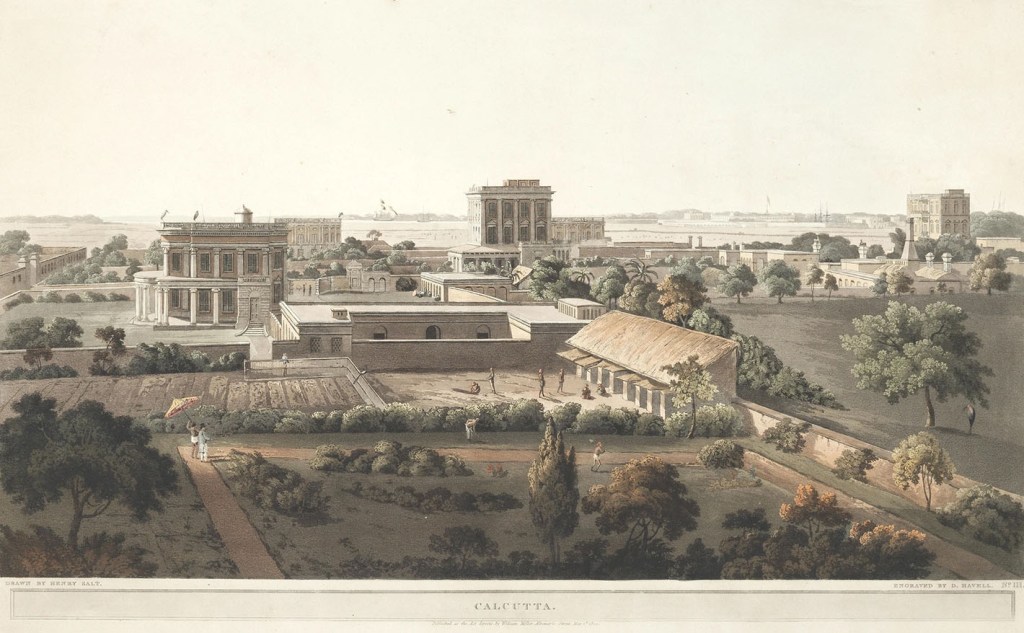
       Stewart, on the other hand, had a much easier time of it. He spoke and carried himself in a gentleman-like manner, professed to have enjoyed a liberal education and that he had connections to some of Britain’s most prestigious families. Stewart claimed to have once been a lieutenant in the Royal Navy before he fell victim to the penal system. As a result, he was accorded considerable leniency by the Dedaigneuse’s captain.    Captain Dawson allowed Stewart “every reasonable indulgence and forbade to place him under personal restraint.” That was until Stewart tried to escape and came very close to succeeding. After that, he was placed under close confinement. Stewart was eventually delivered to British officials in India, where he continued masquerading as a gentleman in need of help rather than the escaped convict that he was.

    Calcutta circa 1809.

       He knew he could not hide the fact that he had committed an offence serious enough to warrant transportation to New South Wales. So, instead, he fabricated a preposterous story about his conviction. Stewart claimed he had eloped with a young lady from a very respectable family, though chivalry required him to leave her unnamed. But, after they were secretly wed, a junior Baronet who also had desires for the lady broke into their apartment. Stewart said he had shot and injured the young aristocrat in what he described as an affair of honour. Stewart said he had been unfairly found guilty of attempted murder and sent to New South Wales. That sounded more in keeping with a gentleman than being caught for the more tawdry crime of passing a forged cheque. His tale garnered much sympathy from the colonial administrators in Calcutta. The Chief Magistrate even went as far as to champion Stewart’s cause, penning a letter to his superior suggesting he should be released.

       But then, in August 1809, Stewart’s time ran out. The British officials could not ignore that he was a fugitive from justice, and the Governor General ordered him to be returned to Sydney. He was placed on board a ship bound for Australia, but before it sailed, Stewart went missing. At first, the captain claimed he had jumped overboard and likely drowned, but it later transpired he had been whisked away in a boat by one of his many admirers and taken back to Calcutta.

       So, Robert Stewart may have escaped justice and settled in India under yet another assumed name, or caught the next ship leaving port. No one knows for the trail grows cold then. One thing is certain: he never returned to New South Wales to serve out his sentence. Nor did he face punishment for masterminding the seizure of the brig Harrington.

    © Copyright C.J. Ison / Tales from the Quarterdeck, 2024.

    Please enter your email address below to be notified of future blogs.

  • The Loss of the Convict Ship Neva – 1835

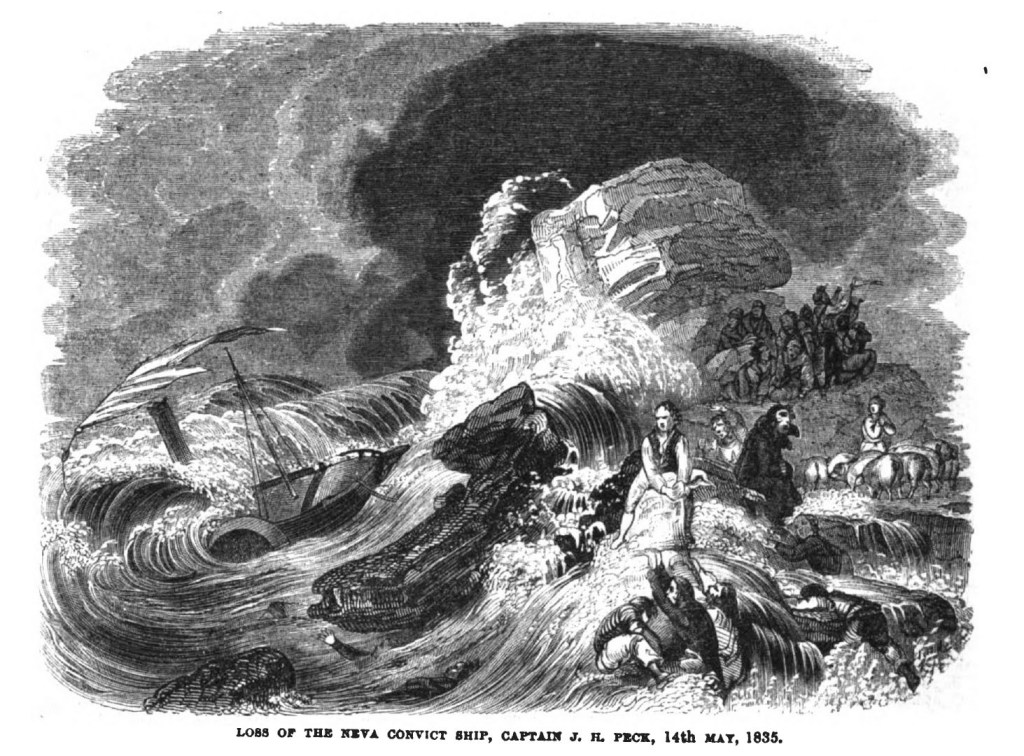
    Loss of the Neva. Source: Tales of Shipwrecks and Adventures at Sea, 1846.

       Between 1788 and 1868, more than 162,000 convicts were loaded onto transport ships and banished to the colonies to serve out their sentences. Such were the living conditions onboard some of these vessels, coupled with the hazards of sailing such vast distances in isolated waters, perhaps as many as one in one hundred perished before ever setting foot on Australian soil. When the Neva struck a reef in Bass Strait, of her 226 casualties, nearly 150 of them were convicts.

       The 337-ton barque Neva set sail from the Irish port of Cork on 8 January 1835, bound for Sydney, New South Wales. On board were 153 female prisoners of the crown, 55 children and nine free female emigrants. The crew, under the command of Captain Benjamin H. Peck, numbered 26. During the passage, three people died and one baby was born, so by the time they were nearing their destination, the ship’s complement numbered 241, passengers and crew.

       By 12 May, the Neva had rounded the Cape of Good Hope, stopped briefly at the island of St Paul for fresh supplies and was about to enter Bass Strait. At noon, Captain Peck calculated they were about 90nm (170 km) west of King Island. As daylight faded into night, he posted a lookout to warn of any dangers lying in their path. He would remain on deck through the night, but for a two-hour break, as his ship negotiated that dangerous stretch of water.   

    A stiff breeze was blowing, and the ship was being pushed along under double-reefed topsails. Around 2 o’clock in the morning, the lookout sighted the dark silhouette of land against the lighter night sky in the distance. Peck ordered the course altered a little to the north to ensure he safely cleared King Island. Then, about two or three hours later, the frantic call came from the lookout, “breakers ahead,” as a line of white water emerged from the pre-dawn gloom. 

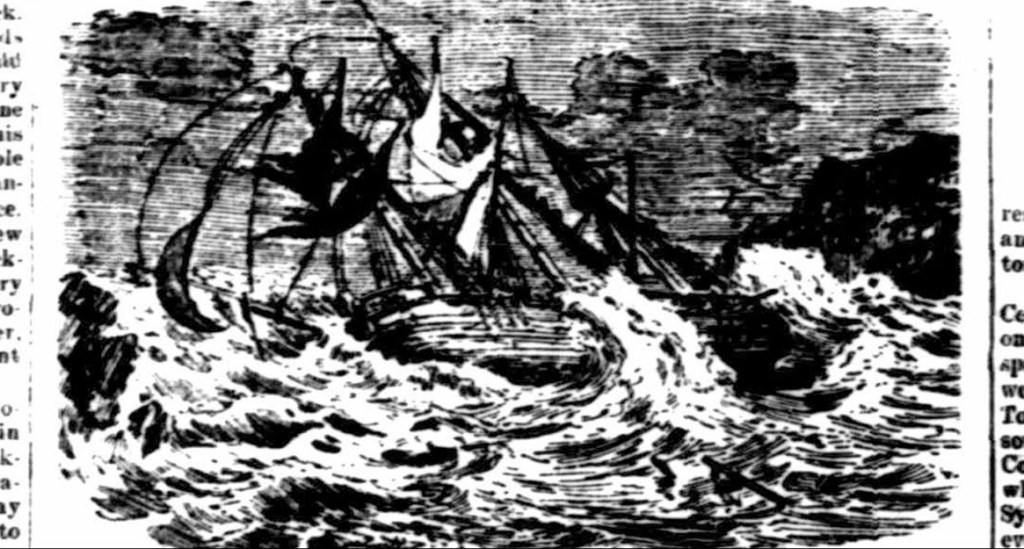
    Neva Shipwreck. illustration from The Capricornian, 26 May 1927.

       Captain Peck immediately gave the order to tack, but it came too late. As the Neva was turning into the wind, she struck a rock and lost her rudder. With the wheel spinning freely, the stricken ship was now at the mercy of the wind and current. They had likely struck Navarine Reef about three kilometres northeast of Cape Wickham, the northernmost point of King Island.

       Suddenly, the Neva struck hard a second time. She hit on her port bow and swung broadside against the reef and immediately started taking on water. Below decks, the prison cages collapsed under the violent force of the collision, and the terrified female convicts rushed on deck.

       The gig, one of the four available lifeboats, was lost as it was being lowered into the water. Captain Peck then ordered the pinnace over the side, and he, the ship’s surgeon, several sailors and some of the female passengers climbed in. But before they could put away, it was overwhelmed by a deluge of terrified women, frantically trying to escape the ship. The boat sank under their weight, and everyone was spilled into the churning water. Only Peck and the two seamen made it back to the ship alive.

       The captain then set about launching the longboat. However, this time, as he boarded, he made sure his panicking passengers were kept at bay. But this time, as soon as the boat was lowered, it was swamped by the surging seas crashing around the ship. Everyone was tossed into the water. Only Captain Peck and his first mate made it back to the ship this time.

       After the loss of three boats, the cutter was their only remaining lifeboat. It is not clear from reading survivor accounts why it was never launched. Considering the sea conditions it would likely have met with the same fate as the longboat. The most likely reason the cutter was never launched is that the Neva began to break up before it could be lowered.

    Account of the Neva shipwreck. Courtesy, State Library of NSW, FL3316306

       Part of the deck sprang away from the superstructure and then split in half, effectively forming two rafts. Captain Peck, some of the crew and several women made it onto one of them while the first mate and several other people were lucky enough to find themselves on the second. The two rafts drifted clear of the wreckage, leaving the remaining convict women clinging to those parts of the ship still jutting out of the surging seas.

       The rafts and several other pieces of wreckage with people clinging to them drifted with the currents for several hours before they came to ground in a sandy bay at the northern end of King Island. The mate’s raft rode the surf in and washed up high on the beach, and most of the people who had clung to it survived.

       The captain’s raft was not so lucky. The timber platform had come away with a large section of the foremast protruding below the surface. As they entered the shallows, the mast caught on the bottom some distance from the beach. Waves swept everyone from the raft, drowning anyone who could not swim. Only the captain, a seaman and one woman made it through the pounding surf to reach shore alive.

       Twenty-two people made it onto King Island, but seven of them died within 24 hours either from exposure or from injuries sustained during their escape from the wreck. The remaining 15 survivors used sails and spars washed ashore to build makeshift shelters, and then they began collecting what provisions had been washed ashore. Over 100 bodies were found scattered among the debris, and they were buried in several mass graves in the coming days.

       Having resigned to waiting it out until they could be rescued by the next passing ship, Peck and the others began foraging for food to supplement the provisions that had washed ashore from the Neva. But unbeknown to them, there was another party of castaways on King Island. They had been shipwrecked earlier on the south-eastern end of King Island and had come to investigate when they saw wreckage drifting down the coast. They eventually came upon the Neva survivors. A short time later all the survivors were discovered by a sealer and his Aboriginal wife who lived permanently on the island. They cared for the castaways until help finally arrived.

       After being marooned for a month, the castaways were found by Charles Friend, the master of the schooner Sarah Ann. He had touched at King Island on his way back to Launceston after delivering provisions to a whaling station elsewhere in Bass Strait. He took off all the survivors except two of the Neva’s sailors and a convict woman, who had been out foraging for food at the time. Unable to find a safe place to anchor, he was not prepared to risk losing his ship waiting for them to return.

       The Sarah Ann reached Launceston on 27 June, and a cutter was immediately dispatched to King Island to collect the remaining three castaways. In all, just fifteen of the 241 passengers and crew survived, making it one of Australia’s worst maritime disasters.

    © Copyright C.J. Ison / Tales from the Quarterdeck, 2023.

    To be notified of future blogs, please enter your email address below.