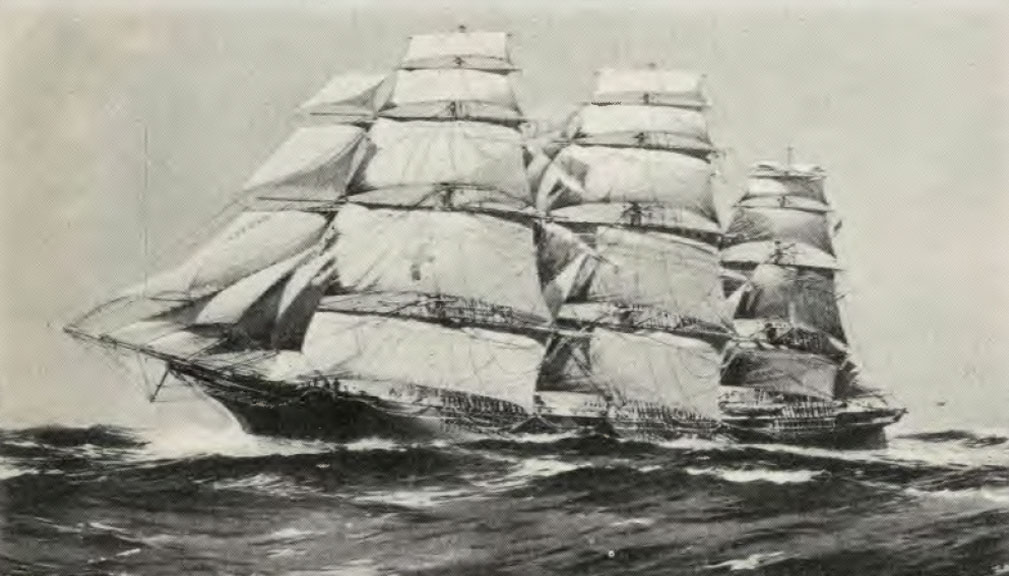
Example of an American Clipper similar to the Ticonderoga.
In November 1852 a migrant ship dropped anchor in Port Phillip Bay with some 700 passengers, many of them gravely ill. The 1,200-ton American Clipper Ticonderoga had been chartered to bring immigrants out to start a new life in Australia, but the three-month journey to their new home proved a nightmare for many of the mostly Scottish passengers.
Victoria was experiencing a labour shortage and had started offering assisted passage for workers to come and settle in the colony. Most of the passengers comprised of farmhands and their young families. But, not surprisingly, there was an incentive to get the most people out at the lowest cost to the Government.
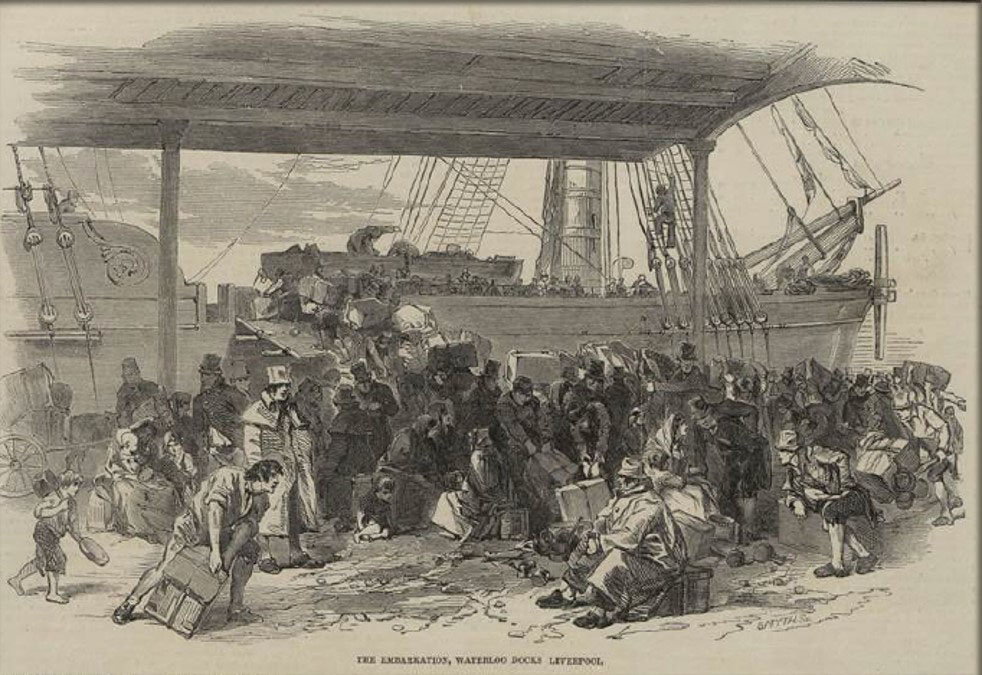
When the Ticonderoga left Liverpool she was overcrowded, even by the standards of Victorian England. Not long into the voyage passengers, many of them young children, started developing a red rash, high fever and sore throat. At the time the disease was sometimes called scarlet fever or Scarlatina, but it is generally thought today that it was Typhus that wreaked so much havoc on the passengers. Easily treated with antibiotics today, it had a devastating effect on those trapped onboard the ship.
The Embarkation, Waterloo Docks. Illustrated London News, 6 July 1850.
It was impossible to separate the sick from the healthy passengers in the overcrowded, poorly ventilated and unsanitary passenger accommodation spread across two decks. Consequently, the disease spread unchecked.
Passengers died in such numbers that as many as ten would be bundled together into a sheet of canvas for burial at sea. By the time they reached the port city of Melbourne more than 100 people had lost their lives. Another 150 were sick and in desperate need of medical attention, for they had long run out of medical comforts and the ship’s surgeon had been felled by the disease while attending to his patients. Many of those, 82 to be precise, died in the days and weeks that followed.
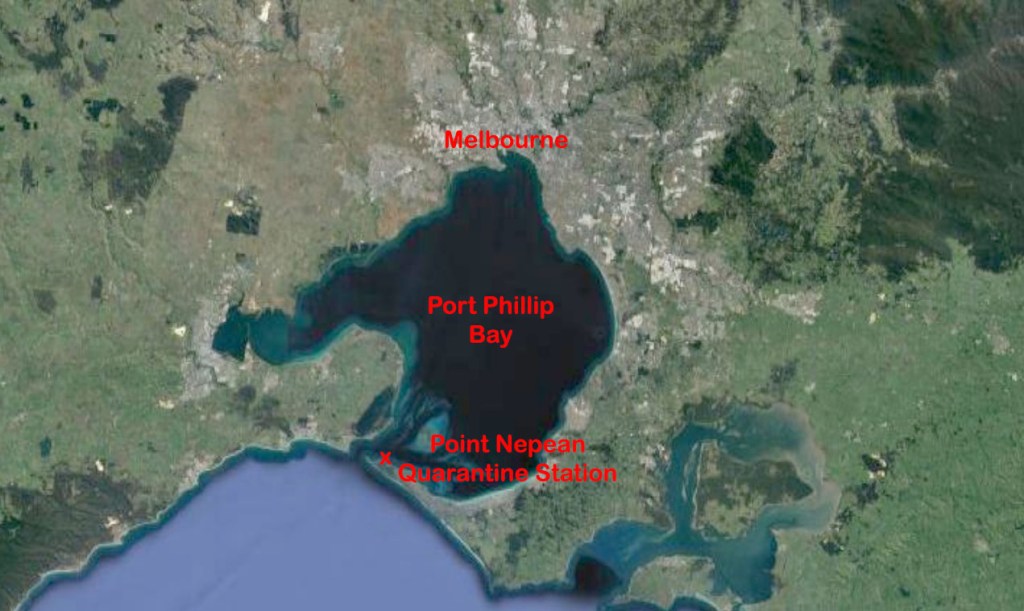
Port Phillip Bay. Source: Google Maps.
The passengers and crew were quarantined at Point Nepean just inside the Port Phillip Bay heads for the newly formed Victorian Government had already earmarked a parcel of land there to build a quarantine station. Tents were hastily erected using spars and ship’s sails and two nearby houses owned by lime burners were used as makeshift hospitals and staffed with medical men brought out from Melbourne. A ship was also dispatched to the Quarantine Station to serve as a hospital for the more serious cases.
The quick response contained the highly infectious disease and kept it from spreading to the general population. By January 1853 the epidemic had run its course. The surviving passengers were taken to Melbourne and the Ticonderoga was released to go on its way but not before being thoroughly fumigated.
Empire, 15 Nov 1852 Page 2.
The Emigration Commissioners who had chartered the ship in the first place were roundly condemned for allowing so many migrants, especially families with young children, to be sent out in such unhealthy conditions. The Ticonderoga was just the last and worst of several recent migrant ships coming to Australia to suffer such an appalling loss of life.
Between the Bourneuf, the Wanota, Marco Polo, and Ticonderoga, 279 passengers had died at sea as a result of infectious diseases on the passage out to Melbourne. The lesson was learned and future migrant ships were reduced to carrying no more than 350 passengers.
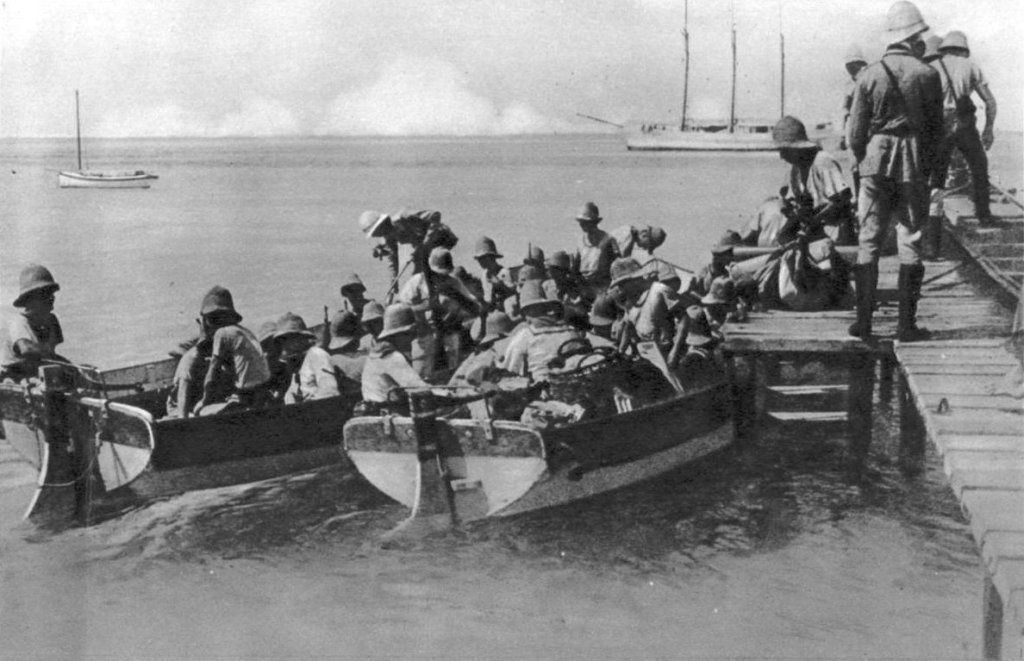
The Emden shore party at Cocos Island with the Ayesha moored in the distance. Photo courtesy Australian War Memorial.
Before the German Cruiser Emden was engaged by HMAS Sydney, a fifty-strong party was sent ashore at Cocos Island to destroy the telegraph station linking Australia to South Africa. As the two ships exchanged shells in a battle that lasted ten hours, the shore party could do little but watch on and hope for the best.
On 9 November 1914 Lt von Mucke had been ordered to lead a party ashore to disable the cable station on Cocos Island. But shortly after the Germans had disabled the station and rounded up the telegraph operators, the Emden signalled for them to return to the ship. Then von Mucke saw the Emden raise its battle flag and fire a salvo at a target then hidden from his sight.
The Emden then steamed off leaving the shore party stranded on the island. They had no chance of catching up to the fast-moving cruiser then fighting for its life. As the Emden continued to engage HMAS Sydney, von Mucke immediately declared Martial Law over the island and deployed his four machine guns and 30 or so sailors to defend against any landing.
Lt. Hellmuth von Mucke. Photo by Oscar Brockhus, Novitas Verlag Berlin.
At one time German sailors and Australian telegraph operators stood together watching the naval battle play out in front of them. But eventually, the two ships disappeared over the horizon, the Emden clearly the worse for the ongoing encounter.
Von Mucke held out little hope that his ship would return for them victorious. The mortally damaged Emden was deliberately run aground the next day and the survivors surrendered to HMAS Sydney. Von Mucke also realised that he and his men would eventually have no choice but to surrender should they remain on the island. He decided to leave while they still could, seizing the schooner Ayesha.
The three-masted schooner was the property of John Clunies-Ross, who also happened to own the Cocos Islands themselves. His Great Grandfather had claimed the uninhabited islands in the 1820s and began a coconut plantation using workers brought from Malaya.
Von Mucke requisitioned provisions to last his men 8 weeks at sea and had them loaded onboard. The departure had an oddly festive quality to it. Residents asked for autographs from the Germans, and also had them pose for photographs. Then, as the sun set in the west, von Mucke bid the residents “auf wiedersehen” and sailed out of the harbour to three resounding cheers.
Schooner Ayesha.
Before leaving he hinted they were bound for East Africa to throw any pursuers off his scent. However, his real intention was to head north to the Dutch port of Padang on the island of Sumatra. Von Mucke and his men arrived at Padang on 26 November after 17 days sailing. There, he hoped to get help from any German ships in port while he planned the next leg of his return to Germany. While the Dutch were neutral during the First World War, that meant they would neither hinder nor aid any of the combatants. “The master of the port declined to let us have, not only charts, but also clothing and toothbrushes,” as he rigorously enforced the port’s neutrality, von Mucke later lamented. The Dutch authorities asked von Mucke and his men to surrender themselves to internment but the German officer declined and 24 hours later they left the harbour.
For two weeks they remained close to the Sumatran coast hoping to cross paths with a German ship while avoiding Allied naval vessels patrolling those waters. Their luck held out and on 16 December the German merchant ship Choising, which had been undergoing repairs at Padang, came into sight.
Map showing von Mucke’s escape route. Source: The Story of the Great War, Vol 3.
Von Mucke and his men transferred onto the ship and with heavy hearts, they scuttled the schooner which had been their home for the past six weeks. The Choising to the port of Al Hudaydah in the Red Sea. From there the men made their way to Damascus and then on to Constantinople in Turkey. Von Mucke finally reported to the German Embassy there on 9 May 1915. For his efforts, he was awarded an Iron Cross.
Source: The Story of the Great War, Vol III, Chapter 31, “Story of the Emden.”
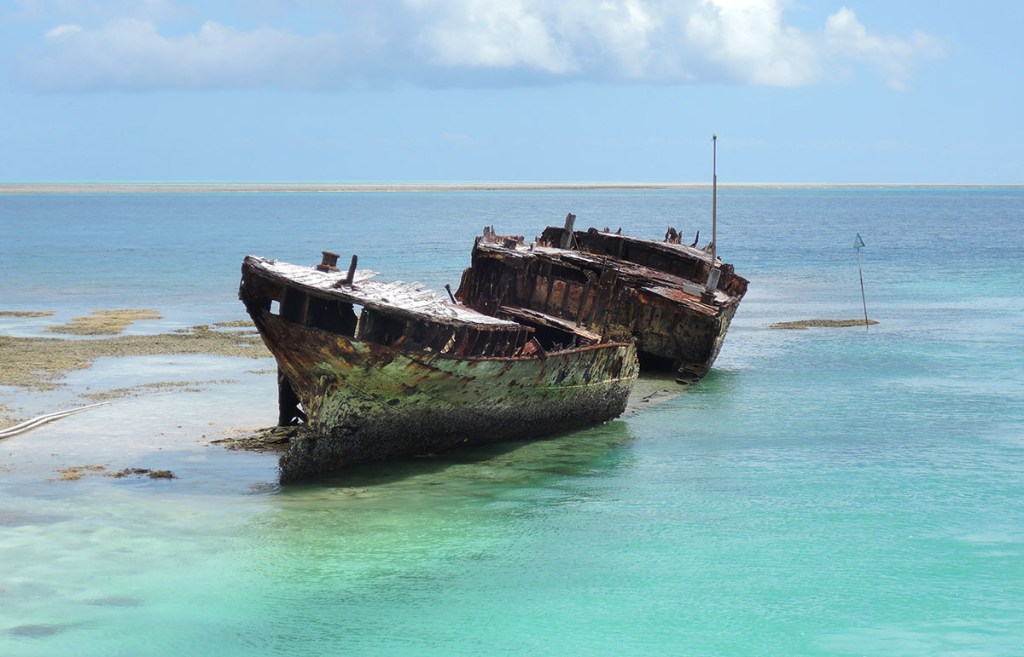
HMCS Protector at Heron Island during low tide. Photo: C.J. Ison.
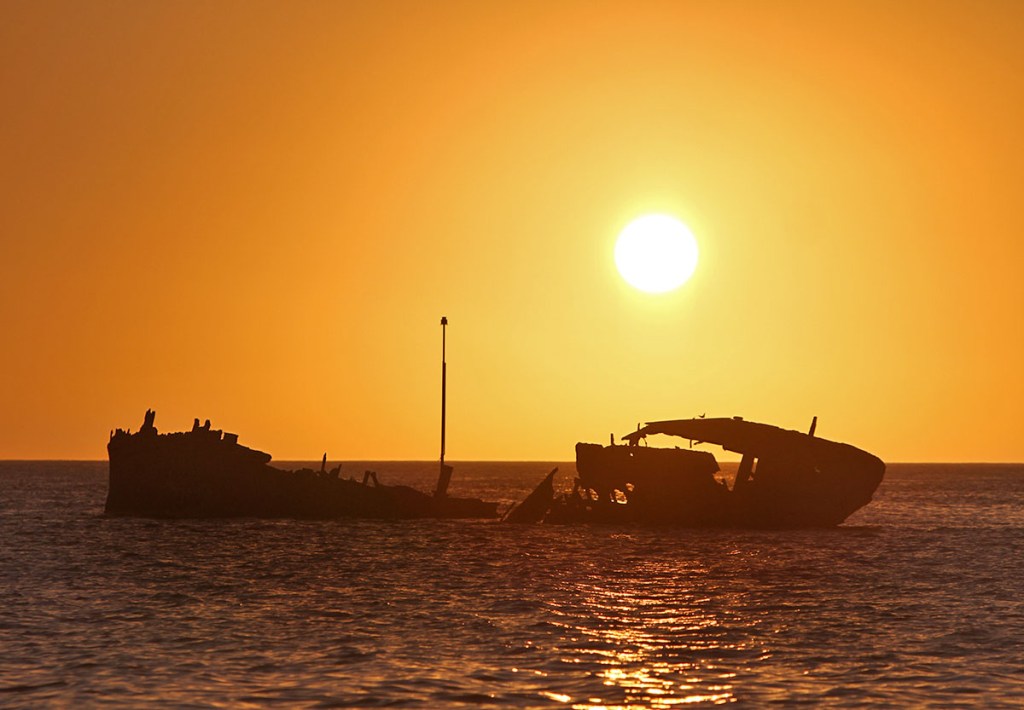
There lie the remains of an old ship on the Southern Great Barrier Reef which holds a fascinating story spanning almost 140 years. The rusting hull now serves as a breakwater protecting the entrance to the boating channel accessing Heron Island, but its history goes back to 1884.
Her Majesties Colonial Ship (HMCS)Protector was launched at Newcastle on Tyne in 1884 to see service in South Australian waters. The colonial government had sought the ship at a time when there were heightened fears of a Russian invasion. The 55metre long F1 flat-iron gunboat displaced 920 tons and had a top speed of 14 knots (26km/h). Originally she was crewed by about 90 men.
South Australian gunboat Protector circa 1885. Photo Courtesy SLV.
Her armaments included one 8-in breech-loading gun on the bow, as well as five 6-in guns, four 3-pounder quick-firing (QF) guns and five Gatling machine guns. From 1914 that was changed to three QF 4in MkIII guns, two QF 12-pounder guns and four QF 3-pounders.
HMCS Protector regularly patrolled the South Australian coast for the next fifteen years and not surprisingly made an uneventful time of it. Then, on the eve of Federation, she was called upon to join the international force assembled to suppress the “Boxer Rebellion” in China.
HMCS Protector. Courtesy State Library of South Australia, B18116.
In August 1900 she farewelled Adelaide and was commissioned as HMS Protector for the duration of her overseas service. She arrived in Shanghai in late September but was not needed for combat operations. She spent a few weeks carrying out surveys and running despatches between Shanghai and forces in Pechili Gulf further north. Then, in November she was released to return home to Australia.
In January 1901 HMCS Protector was transferred to the Commonwealth Government and stationed in Sydney where she mainly functioned as a training ship for Naval Militia Forces. Then, with the formation of the Royal Australian Navy in 1913, she was renamed HMAS Protector and for a period served as a tender to HMAS Cerberus stationed at Williamstown in Port Phillip Bay.
With the outbreak of the First World War, HMAS Protector was sent to Sydney and served as a depot ship to Australia’s two submarines, AE1 and AE2. In August 1914 she and her submarines were sent to help capture the German colonies in New Guinea. HMAS Protector remained based at Rabaul until October when she was ordered to return to Sydney.
HMAS Protector after being rearmed in 1914. Photo Courtesy SLV.
Then, in October 1915 she was dispatched to report on the wreck of the German cruiser Emden which had been destroyed by HMAS Sydney at the Cocos Islands almost a year earlier. See my blog Australia’s first “ship on ship” naval action.
On 1 April 1921, the Protector was briefly renamed HMAS Cerberus, before being decommissioned three years later. Her guns and engines were removed and she was sold off. In November 1929 she was converted to a lighter and renamed Sidney. But her military service was not quite over yet. In July 1943 the Protector was brought back into service as a lighter for the U.S. Army in New Guinea. However, as she was being towed north she collided with a tug off Gladstone, Queensland. The wreck was abandoned on a beach until a local businessman bought it reputedly for £10. He floated it off and towed it to Heron Island where it was used as a breakwater. HMAS Protector’s rusting hull is still there today.
1930s era illustration of the 1791 convict escape led by William Bryant. Source: The World’s News 9 Sep 1931 Page 9.
It is an odd piece of Australian history that some of the first people to repeat Captain Cook’s voyage up Australia’s east coast were not other intrepid navigators or explorers, but a motley band of prisoners bent on escape.
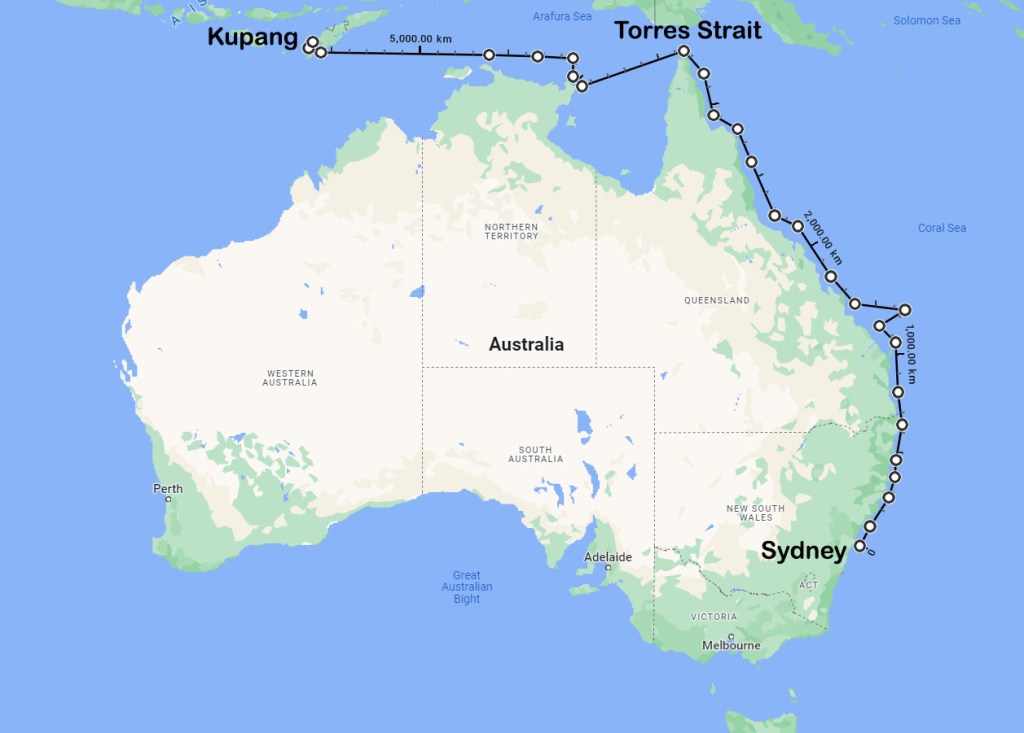
In March 1791, nine convicts stole Governor Phillips’ six-oared whaleboat and made their way out through Sydney Heads. That was the start of a 5000 km voyage that would take them up Australia’s east coast, around the tip of Cape York and across the Arafura Sea. On 5 June, after 69 days at sea, they sailed into the Dutch settlement of Kupang on Timor Island. It was a remarkable achievement then, and remains so to this day.
Their leader was a 34-year-old fisherman from Cornwall called William Bryant. He had been sent to New South Wales for impersonating Royal Navy sailors so as to collect their wages. That was back in December 1783. Bryant had been sentenced to transportation for seven years, and by the end of 1790, he had technically completed his sentence and should have been released. However, no one had thought to send the appropriate documentation out with the convicts on the First Fleet, so he had no way to prove his claim. What’s more, the colony was still struggling to feed itself, and Bryant was a valuable man to Governor Phillip and his administration. Bryant kept the colony supplied with fish, even when other sources of sustenance failed.
Map showing their approximate route from Sydney to Timor. Source: Google Maps.
It seems likely that Bryant had started planning his escape shortly after the seven-year anniversary of his sentence. Even had he been allowed to leave, he probably could not have done so. His wife, Mary, still had a couple of years to serve, and there were two young children to consider. He shared his plans with seven trusted mates, and they began preparations to escape. Those seven were all members of the colony’s fishing fleet, and all had years of maritime experience to draw on.
In the weeks and months leading to their departure, they began stashing away provisions for the long journey. That must have been no easy task, for flour, rice, salted pork, and other staples were all in limited supply. Sydney was starving, and all food was closely monitored and carefully rationed out. However, Bryant was known to have skimmed fish from the catch before handing it over to the Government store. Perhaps he used some of that to trade for the supplies he needed. He also purchased a couple of muskets, a compass, a quadrant and a chart from the captain of a Dutch ship which had recently delivered supplies to Sydney. He likely also paid for these by selling or trading fish on the black market.
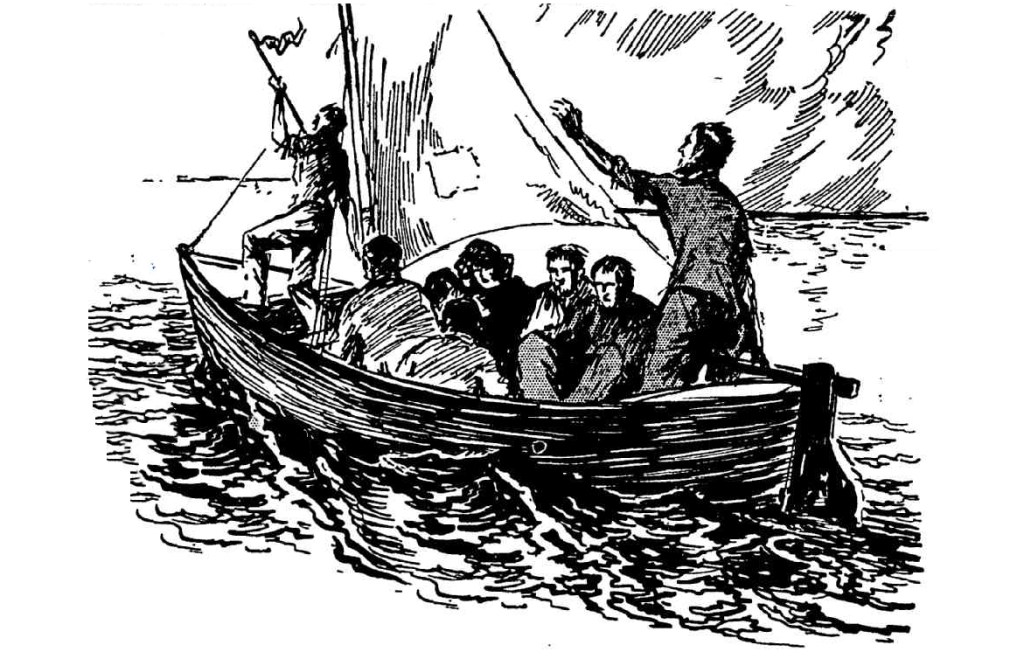
William Bryant and the convicts in the six oar Governor’s cutter which they sailed from Sydney to Kupang. Source: Smith’s Weekly 23 Oct 1937 Page 18
On the night of 28 March, they were ready to leave. The Bryants, their two children and the rest of the runaways gathered together everything they had amassed for the voyage and carried it down to Sydney Cove. There, they loaded it into Governor Phillips’ cutter, which happened to be the largest and the sturdiest of the boats in the colony’s small fishing fleet. They then headed across Sydney Harbour and out to sea.
It is hard to imagine what was passing through their minds as they put Sydney behind them. They must have known that the voyage they were embarking on would be fraught with danger. None of them would have been naïve enough to think it would be smooth sailing. They could only rely on their own resourcefulness and a bit of luck to make it to Kupang. On the one hand, remaining in Sydney was hardly a safe alternative. Conditions had grown dire in the struggling colony. Starvation and disease were constant companions. In the previous year alone, 143 people had perished; all but a handful had been convicts.
The first place they pulled in to replenish water and look for fresh supplies was the Hunter River. There, they were visited by the local inhabitants, the Awabakal people, and after being given a few gifts, the convicts were left unmolested. However, that would be the only time they received a friendly reception. The next time they pulled in to make repairs to the cutter, they were run off by the local Aborigines. A little while later, they were blown far out to sea, and by the time they had returned to the coast, they found few opportunities to put ashore due to the dangerous surf conditions.
One month after leaving Sydney, they had travelled about 540 nm (1000 km) or only one-fifth of the way to Kupang. This would have placed them somewhere between the Sunshine Coast and Fraser Island (K’gari), where they were forced to land to make urgent repairs to the cutter. It had been taking on water and needed to be recaulked before they continued on their journey north. They were soon heading into Australia’s tropical waters, where they were caught in an unseasonal storm that lashed them for several days without mercy. They were kept bailing continuously to keep afloat, but they survived. They were blown far out into the Coral Sea, and it would take them more than one full day’s sailing west until they found a small deserted island. This was likely Lady Elliot or one of the islands in the Bunker Group a little further north. After weeks of struggle and misfortune, they seized the opportunity to recuperate and escape the cramped conditions on the boat.
The sailing conditions finally improved, and they made steady progress up the Queensland coast, pushed along by the prevailing southerlies. Shortly after rounding Cape York, they replenished their water and then headed out across the Gulf of Carpentaria. It would take them four and a half days to reach East Arnhem Land. Bryant then followed the coastline for several days, looking for a place to refill their water casks. The search proved fruitless, so he decided to head out to sea and make a direct course for Timor. Thirty-six hours later, they made it to Timor Island. It was now 5 June. They had completed their 5000 km voyage in 69 days with no loss of life. That was no mean feat of seamanship and tenacity. Unfortunately, things would soon turn against the runaways.
Bryant and the others passed themselves off as shipwrecked sailors to the Dutch authorities, and for a while, they were treated as such. But then it seems someone blabbed about who they really were, and the Governor locked them in gaol. Shortly after Captain Edwards and his crew arrived in the settlement, genuine survivors of HMS Pandora wrecked on the Great Barrier Reef. When Edwards left for England, Bryant and the rest of the bolters went with him.
William Bryant and his son would die in a Batavia gaol. Three other convicts, plus the Bryants’ daughter, perished on the voyage back to England. Mary Bryant and the four remaining prisoners were put on trial, charged with returning from transportation. They could have been sentenced to death or returned to New South Wales for the rest of their lives. Instead, news of the atrocious conditions in Sydney and their ordeal trying to escape them touched a nerve. They were allowed to serve out their original sentences in England, and by November 1793, Mary Bryant and the four other convicts had all been pardoned and allowed to walk free. A detailed account of the voyage from Sydney to Kupang can be found in “Memorandums” written by James Martin, one of the convicts who made it back to England.
The long and perilous voyage remains one of the great feats of seamanship in an open boat. It is told in more detail in Bolters: An Unruly Bunch of Malcontents.
Example of a fully rigged ship of the early 17th Century, similar to the Tryall. Source: Sailing Ships by Chatterton, 1909.
Some people might be surprised to learn that the oldest recorded shipwreck off the Australian coast dates back to 1622. That predates Cook’s voyage up the east coast by 148 years. It occurred 20 years before Abel Tasman partially circumnavigated the island of Tasmania. Or just six years after the Dutch navigator Dirk Hartog nailed a pewter plate to a post near Shark Bay, recording his discovery of a big lump of land that had until then been unknown to anyone but its inhabitants.
The Tryall* was a 500-ton East India Company merchant ship launched in 1621. Her maiden voyage was meant to take her from England to the East Indies to deliver cargo before returning home with her hold filled with spices. The East India Company chose a master mariner named John Brooke to command the vessel on this most important voyage.
The Tryall departed from Plymouth on 4 September 1621 with a crew of about 140 men. Captain Brooke sailed down the west coast of Africa and pulled into Table Bay for water and fresh supplies. While there, he learned that a new route across the Indian Ocean had been established, cutting the sailing time to Batavia by several months. The traditional route to the East Indies had ships follow the coast around Africa’s southern tip, then pass through the Mozambique Channel. Once north of Madagascar, they would venture out into the Indian Ocean. The new “Brouwer Route,” as it was called, took full advantage of the roaring forties, which swirled around the bottom of the world unimpeded by any significant land mass. Captain Brooke received orders to take the Tryall below 35 degrees South and use the Brouwer Route. Brooke tried to hire a sailing master for this leg of the voyage, for neither he nor anyone else on the ship had sailed the southern route before. He was unable to recruit anyone, so on 19 March 1622, Captain Brooke sailed the Tryall out of Table Bay and into the unknown. Six weeks later, they were off the coast of Western Australia.
Map of Western Australia coast. Courtesy Google Maps.
Brooke likely sighted land in the vicinity of Point Cloates around 22.7 S 113.6 E, mistaking it for Barrow Island about 200 km further north. It would appear that he had underestimated the strength of the roaring forties and had been blown too far east before he turned his ship north, something easily done with the rudimentary navigation instruments of the day. But it was an error he would never admit to having made.
For the next couple of weeks, the Tryall struggled to make progress against fresh northerly winds, but when the wind swung around to the south again, they got underway. Then, on the night of 25 May 1622, disaster struck.
The Tryall slammed into submerged rocks near the Montebello Islands. Stuck fast on the reef and being smashed by powerful swells, the Tryall began to break apart. Brooke and a handful of men, including his son, managed to get a small skiff over the side and escaped the doomed ship, apparently leaving everyone else to their fate. Soon after, some of the crew were able to launch the ship’s longboat, and 35 sailors clambered aboard and got clear of the Tryall. They landed on one of the Montebello Islands, where they remained for about a week, preparing the boat for the 2,000 km-long voyage to Batavia. Ninety-three men lost their lives. Captain Brooke reached Batavia on 5 July, where he penned a letter to the ship’s owners reporting the ship’s loss. In it, he claimed that he had followed the proscribed route precisely, but had struck a reef not laid down on his chart. Brooke probably thought that they were the only survivors, and his version of events would go unchallenged. His letter, he hoped, would absolve him of any blame for the loss of the ship, its valuable cargo, and so many lives.
Translates to read “Here the English ship Trial was wrecked in June 1622” from copy of Hessel Gerritsz’ 1627 map of the north west coast of Australia. Source: National Library of Australia.
When the longboat finally made it to Batavia, those survivors had a very different story to tell. One of them, a trader named Thomas Bright, wrote his own scathing letter to London condemning Captain Brooke. Bright blamed the wreck on Brooke’s poor navigation that had brought them so close to New Holland and the fact that he had not posted a lookout despite knowing he was in those dangerous waters. He also claimed that Brooke had abandoned the wreck as quickly as he could in the partially filled skiff, leaving the rest of the men to their fate.
In his report to the ship’s owners, Brooke had also recorded that the wreck site was much further west than where it had occurred to mask his error in navigation. For the next three centuries, the non-existent rocks caused some confusion and uncertainty among navigators sailing those waters. It was not until 1936 that the historian Ida Lee established that the wreck site was likely to be off the northwest of the Montebello Islands. Then, in 1969, amateur scuba divers found the wreck site where Lee had said it would be.








 Tales from the Quarterdeck